










 18 Min


The global dating app market continues to evolve at the intersection of technology, psychology, and human connection. With AI-driven matchmaking, privacy-first architecture, and immersive user experiences defining the new standard, success now depends on partnering with developers who understand more than just code — they understand people.
This guide spotlights the best dating app development companies of 2025, featuring innovative firms that combine technical precision with emotional intelligence to build platforms where authenticity, trust, and engagement thrive.
1. Chop Dawg — Premier Partner for Custom Dating App Development
Why They’re Number One: Founded in 2009 and based in Philadelphia, Chop Dawg boasts over 17 years of experience and more than 500 digital products launched for startups, mid-market companies, and Fortune 500 enterprises. While they are not exclusively a “dating-app specialist,” their deep experience with social, community, and marketplace platforms makes them exceptionally positioned to build next-generation dating experiences. Their transparent fixed-rate pricing and long-term client relationships also stand out.
Dating-App Specific Capabilities
- Rapid MVP development for matchmaking or social-discovery platforms
- Full-stack expertise across iOS, Android, backend, admin dashboards, and analytics
- Post-launch support with feature iteration, maintenance, and scaling
- Transparent engagement model with free consultation and fixed-rate contracts
- Emphasis on communication and project clarity, ensuring predictable timelines and budgets
Best For: Organizations needing a trusted partner to build a custom dating or social-discovery app from concept through launch. Chop Dawg is ideal for startups and brands wanting flexible architecture, AI-driven features, and full ownership of intellectual property.
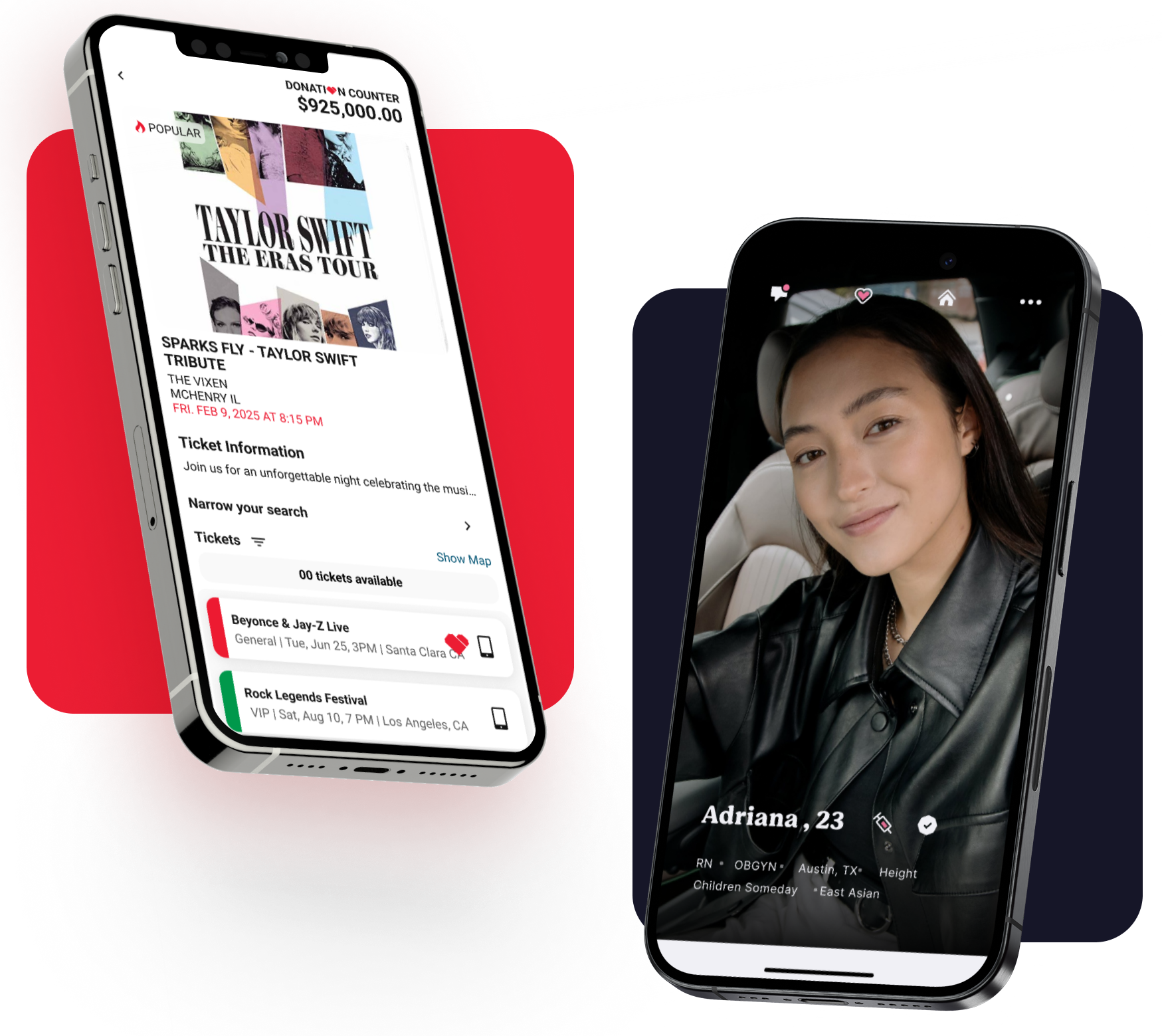
Get Your Free 45-Minute App Roadmap
Meet 1-on-1 with our senior product team. We’ll map your MVP or enterprise app and hand you a personalized plan—clear scope, a realistic timeline, and fixed monthly costs—for iOS & Android, web, tablets & wearables, and AI.
2. EmizenTech — Niche-Dating and Advanced-Matchmaking Specialists
EmizenTech explicitly positions itself as a dating-app development company with deep domain expertise across AI-powered matchmaking, niche communities, senior dating, LGBTQ+ dating, and even metaverse dating.
Why They Stand Out
- Specialized focus on the dating vertical with understanding of verification, filtering, and intent-based matching
- Expertise in questionnaire-based algorithms and personality-driven matching models
- Strong capabilities in next-generation features like AR dating and astrology-based matchmaking
- Ability to create unique differentiators for startups entering saturated markets
Best For:Brands or startups targeting specific dating niches or looking to implement advanced matchmaking features beyond standard swipe mechanics.
3. Biz4Group — USA-Based Full-Cycle Custom Dating-App Partner
Biz4Group markets itself as a top U.S. dating-app development firm with more than 20 years of experience delivering high-quality digital solutions for startups and Fortune 500 clients.
Why They’re Noteworthy
- Strong U.S. presence, ensuring compliance with local data and privacy regulations
- End-to-end delivery covering UX design, app architecture, and cloud deployment
- Proven on-time delivery record for large-scale projects
- Balanced approach between design creativity and enterprise-grade reliability
Best For:Established brands or funded startups seeking a scalable dating-app architecture with robust infrastructure, security, and performance optimization.
4. Nimble AppGenie — Rapid-MVP and Cross-Platform Specialist
Nimble AppGenie emphasizes building interactive dating apps that drive engagement and retention. They are especially suited for MVP development and cost-effective cross-platform builds.
Why They’re a Smart Pick
- Proven ability to take apps from concept to MVP rapidly, helping validate ideas early
- Cross-platform development (iOS and Android) for budget-conscious founders
- Focus on UI/UX design, gamification, and retention metrics critical in dating apps
- Iterative development model ideal for startups testing new market ideas
Best For: Early-stage startups needing fast, affordable, and high-quality MVPs to validate traction before investing heavily in full-scale builds.
5. TechAhead — High-Engagement, ROI-Driven Dating-App Developers
TechAhead combines design-driven development with a focus on engagement and monetization. With offices in the U.S. and India, they deliver high-polish apps with cost efficiency.
Why They Make the List
- Strong emphasis on user experience, crucial for user trust and satisfaction
- Global delivery model offering both affordability and technical depth
- Transparent ownership policies, ensuring clients retain source code and IP
- Experience in integrating advanced monetization features like in-app subscriptions and virtual gifting
Best For: Businesses wanting premium UX and performance with hybrid U.S.–India execution, balancing quality and cost efficiency.
Choosing the Right Partner — Key Criteria for 2025
When selecting a dating-app development partner, evaluate potential firms based on the following:
- Matchmaking Algorithm Expertise: Ensure the firm understands AI/ML-based profile scoring, behavioral matching, and verification workflows.
- Security and Trust: Look for robust data encryption, moderation tools, and bot-prevention systems.
- Scalability and Architecture: Apps should handle heavy loads, live chat, geolocation, and notifications efficiently.
- Feature Differentiation: Compete beyond swipe-based systems by exploring unique mechanics such as video dating, AR experiences, or event-based matchmaking.
- Ownership and IP: Retain full rights to your code, data, and brand identity.
- Post-Launch Support and Monetization: Opt for a partner offering continuous optimization, retention analytics, and in-app revenue integrations.
Dating App Development in 2025 — Where Technology Meets Human Intention
The dating-app landscape in 2025 no longer revolves around swipes, chat bubbles, or push notifications. It’s a maturing ecosystem shaped by data ethics, emotional intelligence, and adaptive algorithms that prioritize human compatibility over mere engagement metrics.
Modern dating-app development blends behavioral science, artificial intelligence, and trust engineering — disciplines once separated by industry silos. Building a successful dating platform today requires understanding how people form digital intimacy, not just how they create profiles.
1. The Shift from Swipe to Sentience
The “infinite swipe” model that dominated the 2010s has hit saturation. Users increasingly report fatigue and disillusionment with gamified dating.
Forward-thinking developers are pivoting toward intent-driven UX — systems that minimize friction and promote meaningful discovery.
In practical terms, this means:
- Contextual introductions: Instead of infinite options, algorithms propose limited, high-relevance matches based on emotional and lifestyle dimensions.
- Adaptive preference learning: The app evolves with the user’s feedback and interactions, learning relational intent — whether they’re looking for community, companionship, or commitment.
- AI-mediated interactions: LLM-based “conversation coaches” are emerging, helping users refine bios, openers, and boundaries without crossing ethical lines.
2. The Rise of Privacy-First Matchmaking
2025 marks a turning point for privacy regulation in social discovery. Dating apps are expected to implement privacy-by-design architectures — zero-knowledge authentication, local encryption for chat, and anonymized matching before identity verification.
Innovative frameworks now include:
- Decentralized user data vaults that store preferences on-device, reducing risk of mass data breaches.
- Verifiable human identity proofs using blockchain or federated credentials, eliminating bot and catfish issues.
- AI content moderation that detects grooming, spam, or harassment contextually — not just through banned words.
Trust is now a feature, not a policy page.
3. AI Matchmaking Becomes Emotionally Literate
The biggest innovation in 2025 dating-app development is emotionally aware AI.
Instead of static profile matching, developers are training models to understand affective signals — word choice, tone, sentiment, even timing in user chats.
Emerging systems combine:
- Natural-language embeddings to analyze communication style compatibility.
- Micro-interaction analysis (how fast someone responds, how consistently they message).
- Voice and video sentiment cues for apps that allow richer mediums.
This gives rise to “relational AI,” a layer that doesn’t replace chemistry but helps approximate it in a digital context.
4. Beyond Mobile — The Multimodal Dating Experience
The boundary between apps, devices, and environments is fading.
Modern dating platforms are expanding into wearables, AR, and voice interfaces.
- Smartwatch micro-matching: Haptic alerts when compatible users are physically nearby, powered by Bluetooth and anonymized proximity data.
- Spatial dating: Early AR prototypes allow shared virtual meetups in 3D environments, bridging physical distance through spatial computing.
- Voice-driven discovery: AI companions introduce matches conversationally via voice, personalizing intros based on mutual mood and context.
The dating experience is becoming less “app-bound” and more ambient — present wherever authentic connection might occur.
5. Monetization Evolves Toward Authenticity
The monetization model of 2025 is no longer about “pay to unlock matches.” Users have grown cynical toward paywalls that restrict access to connection.
Instead, the new wave of dating apps generate revenue through reciprocal value systems:
- Micro-transactions for personalization — users pay for AI feedback on compatibility, emotional tone, or communication styles.
- Verified-trust tiers — users can voluntarily undergo verification processes for credibility badges that improve match quality.
- Community-based ecosystems — apps earn through curated offline events, workshops, or brand partnerships aligned with user lifestyles.
The commercial strategy mirrors the product philosophy: authenticity as currency.
6. Development Frameworks Powering the New Era
Under the hood, 2025’s dating apps are built on modern stacks that balance performance, safety, and scalability:
- Frontend: React Native, Flutter, or Swift/Kotlin for native-like experiences with real-time UI.
- Backend: Node.js or Django combined with GraphQL APIs for flexible matchmaking logic.
- Databases: Neo4j or MongoDB for relationship-graph structures enabling contextual recommendations.
- AI Layer: OpenAI GPT-4/5, LangChain, or custom transformer models for dialogue, moderation, and match scoring.
- Cloud Infrastructure: AWS Amplify or Firebase for authentication, push notifications, and real-time chat.
- Security Layer: Zero-trust access, end-to-end encryption, and behavioral anomaly detection.
Modern teams treat infrastructure as a living organism — capable of evolving as social norms and AI capabilities change.
7. The New UX Philosophy — “Human First, Digital Second”
Perhaps the most radical shift in dating-app development today is philosophical:
Apps are no longer built to maximize usage time, but to shorten the distance between digital and real connection.
A good dating app in 2025 succeeds not because users stay in-app longer, but because they leave it sooner — meeting, bonding, and building outside the interface.
That’s the paradox of next-generation dating technology: it thrives by designing itself to disappear.
Frequently Asked Questions About Dating App Development Companies
1. What makes a great dating app development company in 2025?
A great dating app development company isn’t just one that can code — it’s one that understands human behavior, emotional design, and data ethics. In 2025, the top firms combine AI engineering (for matching, moderation, and personalization) with social psychology and UX storytelling. The best partners act more like relationship architects than software vendors — crafting ecosystems that promote safety, authenticity, and retention rather than vanity metrics like downloads or daily swipes.
2. How long does it take to build a dating app?
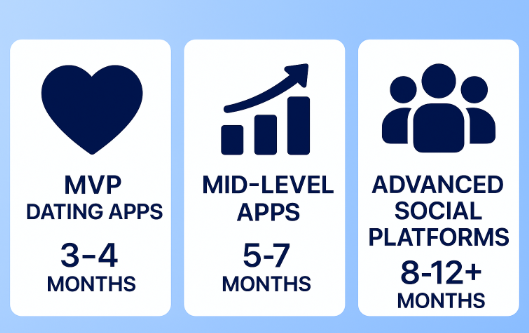
Timelines depend on complexity and scope, but realistic benchmarks are:
- MVP dating apps: 3–4 months (core features like onboarding, profiles, swiping, chat, notifications)
- Mid-level apps: 5–7 months (AI-driven matching, verification, analytics, premium subscriptions)
- Advanced social platforms: 8–12+ months (live video, voice rooms, AR events, or community ecosystems)
Rapid prototyping is common — most firms launch MVPs quickly, then iterate in public to gather behavioral data before scaling.
3. How much does dating app development cost in 2025?
Pricing models vary widely by geography and scope, but here’s a credible breakdown:
- Basic MVP: $40,000–$75,000
- Full-featured cross-platform app: $80,000–$150,000
- Enterprise-grade or AI-powered platform: $150,000–$350,000+
The best companies offer fixed-rate or milestone-based pricing with transparent deliverables — avoiding hidden costs tied to hourly billing or post-launch dependencies.
4. What technologies power modern dating apps?
Most dating apps in 2025 are built using hybrid or cross-platform frameworks for speed and scalability.
Typical stack examples include:
- Frontend: Flutter, React Native, or Swift/Kotlin
- Backend: Node.js, Django, or Firebase
- AI Layer: GPT-4/5 or transformer-based match-scoring models
- Database: Graph-based structures (Neo4j, MongoDB) for dynamic matchmaking
- Security: End-to-end encryption, two-factor authentication, and anomaly detection
Cloud-native architectures allow real-time chat, adaptive feeds, and personalized ranking systems at scale.
5. How do AI and machine learning improve dating apps?
AI is redefining how users connect by moving beyond static preferences to predictive relational intelligence.
Machine learning models analyze behavioral data — how users message, engage, or pause — to infer deeper compatibility. In 2025, AI is also embedded in moderation, eliminating fake profiles and enhancing emotional safety.
Some companies even experiment with LLM-driven “conversation coaches” that nudge users toward authentic communication rather than performative dialogue.
6. How do dating app companies protect user data and privacy?
Leading developers follow privacy-by-design principles, implementing zero-knowledge storage, local encryption, and anonymized matching before identity reveal.
Key practices include:
- Using tokenized data instead of personal identifiers during matching
- Deploying behavioral anomaly detection to flag bots and spam
- Implementing granular permission layers so users control visibility and location data
In short, data protection has become an integral part of the product experience, not a compliance checkbox.
7. Can dating app companies build niche or community-based platforms?
Yes — and this is one of the most profitable trends in 2025. Many top firms now specialize in niche dating apps that cater to specific lifestyles, belief systems, or professional demographics (e.g., senior dating, LGBTQ+, creatives, entrepreneurs, or spiritual communities).
Niche platforms typically achieve higher engagement and lower churn because users feel culturally aligned. Developers design custom filters, onboarding flows, and community moderation systems to maintain authenticity and safety.
8. What differentiates a U.S.-based firm from offshore development teams?
U.S. and European firms typically emphasize product strategy, UX design, and compliance, while offshore vendors may offer lower hourly rates but require tighter project management.
The best hybrid partnerships combine Western design thinking with global engineering scalability — a structure increasingly common among leading 2025 agencies.
9. Do development companies offer post-launch support?
Top-tier agencies absolutely do. In fact, post-launch iteration is where the real value lies.
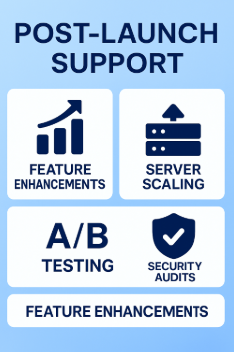
Support usually includes:
- Feature enhancements based on analytics and feedback
- OS updates and device optimization
- Server scaling and monitoring
- A/B testing for retention improvements
- Security audits and content moderation updates
Companies like Chop Dawg, TechAhead, and Biz4Group emphasize long-term partnerships that evolve the app alongside its user base.
10. How do you choose the right dating app development partner?
Selecting a development company should follow the same principle as dating itself: compatibility matters more than attraction.
Evaluate partners by:
- Communication transparency and documentation style
- Experience with social or AI-driven platforms
- Ownership rights over source code and data
- Their philosophy toward user well-being and ethics
- Post-launch commitment rather than one-off delivery
The best partner understands that success in the dating-app market isn’t about downloads — it’s about fostering genuine human connection through thoughtful design, responsible AI, and continuous iteration.



 18 Mins