


























 24 Mins


Mobile commerce is projected to reach $2.51 trillion globally in 2025, accounting for 59% of all retail eCommerce sales. With development costs ranging from $10,000 for basic implementations to $300,000+ for feature-rich applications, selecting the right development partner directly impacts your bottom line.
This analysis profiles the top eCommerce app developers at Chop Dawg—specialists who combine strategic architecture, scalable infrastructure, and proven results to transform retail concepts into profitable digital experiences.
Ready to build your eCommerce app? Explore how Chop Dawg‘s experienced developers bring the technical expertise and strategic thinking needed to create shopping experiences that drive measurable revenue growth.
1. Asad Kabir — Developer
Asad is a skilled developer specializing in eCommerce applications. He focuses on building scalable, high-performance interfaces, handling complex product catalogs, checkout flows, and inventory systems. His work ensures smooth user experiences and reliable functionality across web and mobile platforms.
Get Your Free 45-Minute App Roadmap
Meet 1-on-1 with our senior product team. We’ll map your MVP or enterprise app and hand you a personalized plan—clear scope, a realistic timeline, and fixed monthly costs—for iOS & Android, web, tablets & wearables, and AI.
2. Farhan Jameel — Developer
Farhan brings expertise in full-stack development for eCommerce apps. He excels at creating responsive designs, optimizing performance, and implementing features like product filtering, customer accounts, and order management. His focus is on building apps that are both user-friendly and capable of handling high traffic.
3. Kamran Khan — Developer
Kamran is experienced in crafting dynamic user interfaces and backend logic for eCommerce platforms. He contributes to features such as shopping carts, wishlists, and order histories, ensuring apps feel seamless, fast, and reliable. His attention to detail makes complex eCommerce systems easy to navigate for end users.
Why eCommerce App Development Requires Specialized Expertise
The Technical Complexity Behind Seamless Shopping
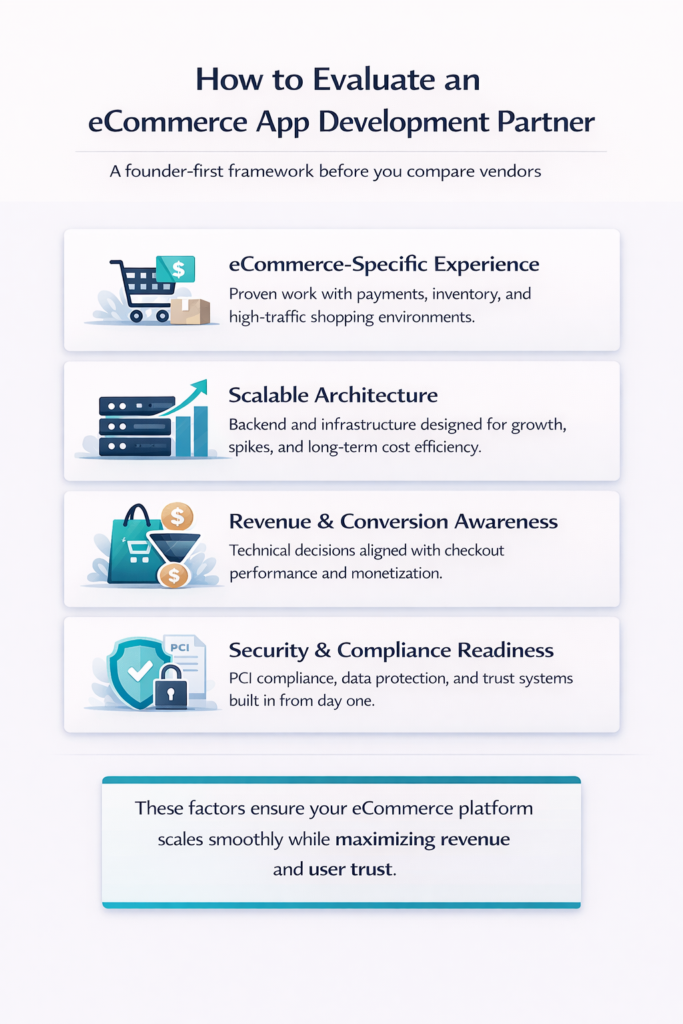
eCommerce apps appear simple on the surface—product listings, shopping cart, checkout. Behind the scenes, they process payments at scale, manage inventory in real-time, handle concurrent users during traffic spikes, and integrate with warehouse systems, payment processors, and fulfillment networks.
The average eCommerce app handles thousands of concurrent transactions daily while maintaining sub-second load times. Backend architecture must support growing product catalogs (from hundreds to millions of SKUs), synchronize inventory across sales channels, process payments securely, and provide personalized recommendations powered by user behavior data.
Developers lacking eCommerce-specific experience often build platforms that work initially but collapse under growth. Payment processing fails during peak traffic, inventory falls out of sync, or personalization systems can’t scale—each failure directly reduces revenue.
The Business Impact of Architecture Decisions
Technical decisions made during initial development determine whether scaling costs skyrocket or remain manageable. Choosing the right backend framework, database architecture, and infrastructure approach can reduce long-term hosting costs by 40% while improving performance.
Security and compliance decisions matter equally. Payment Card Industry (PCI) compliance, GDPR, and CCPA requirements aren’t afterthoughts—they must be architected from day one. A single security vulnerability can cost thousands in breach remediation and destroy customer trust permanently.
Meet Chop Dawg’s eCommerce Development Team
Iqbal Shezada: Backend Architecture & Scalable Infrastructure
With 25+ years of senior engineering leadership, Iqbal brings the architectural vision that separates thriving eCommerce platforms from platforms that crumble under growth. His Node.js expertise directly addresses eCommerce’s core challenge: handling thousands of concurrent transactions while maintaining performance.
For eCommerce Specifically:
- Node.js backend architecture supporting high-transaction-volume payments without bottlenecks
- Real-time inventory synchronization across multiple sales channels
- AI-powered recommendation engines that analyze user behavior and increase average order value
- Headless commerce architecture separates product data from the presentation layer
Iqbal’s finance and software engineering background bring a unique perspective to eCommerce monetization. He understands subscription logic, revenue analytics, and how technical decisions impact profitability. His mentorship ensures your team gains knowledge throughout the project, reducing dependency on any single developer.
Moeed Farooq: High-Performance Shopping Experiences
As a core developer at Chop Dawg, Moeed specializes in the user experience side of eCommerce: responsive, intuitive interfaces paired with rock-solid underlying performance. His React and React Native expertise directly impacts conversion rates—slow apps lose customers instantly.
For eCommerce Specifically:
- React/React Native shopping interfaces that feel native on iOS, Android, and web
- Performance optimization preventing slowdown as user bases and catalogs grow
- Firebase and real-time infrastructure for instant inventory updates and notifications
- Secure payment integration and one-click purchasing flows
Moeed’s focus on scalable architecture means checkout pages remain responsive during Black Friday traffic spikes. His API integration expertise ensures seamless communication with payment processors, inventory systems, and fulfillment networks—critical for order accuracy and customer trust.
Wikram Das: Full-Stack eCommerce Infrastructure
Wikram brings rare full-stack capability spanning frontend, backend, and infrastructure—enabling complete eCommerce systems without handoffs between specialists. As a full-stack developer at Chop Dawg, he owns the entire technical stack from user interface to payment processing to cloud infrastructure.
For eCommerce Specifically:
- React Native and ReactJS for responsive shopping interfaces across all devices
- NestJS backend frameworks handling complex eCommerce logic (cart management, order processing, returns)
- Firebase and AWS LightSail infrastructure providing cost-efficient, scalable hosting
- Code optimization and performance tuning preventing slowdown under growth
Wikram’s AWS and LightSail expertise is particularly valuable for cost-conscious brands. His infrastructure choices can reduce hosting costs by 30-40% compared to over-engineered solutions, while maintaining the performance needed for high-traffic sales events. His experience with third-party API integrations ensures your eCommerce app connects reliably to Shopify, WooCommerce, payment processors, and analytics platforms.
Proven Results: LA Gear Case Study
Building Fitness + Commerce + Community
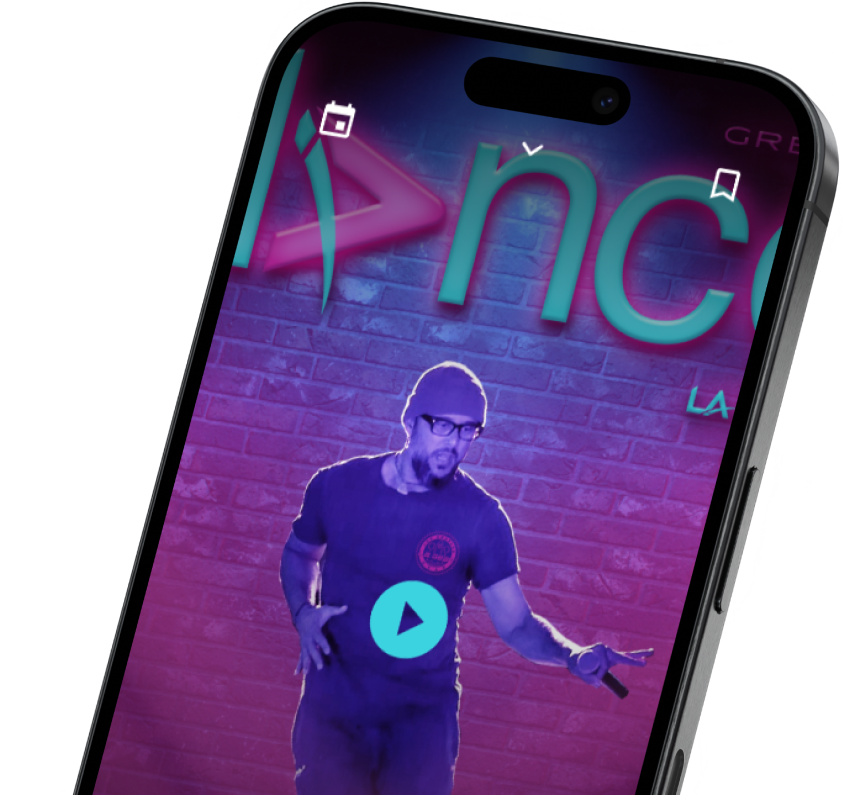
Chop Dawg built LA Gear’s dance-fitness app integrating workout content, social competition, and direct merchandise sales—a complex technical challenge requiring real-time performance, inventory management, and gamification logic.
The platform features celebrity-led dance classes, weekly competitive challenges, and integrated shopping where users purchase LA Gear footwear directly in-app. The technical achievement: gamified commerce integration where users earn badges and discount codes through workout completion, driving both engagement and conversion. LA Gear’s team updates product catalogs, modifies class offerings, and adjusts campaigns through a real-time admin dashboard without developer intervention.
Results That Matter
Within weeks of launch, registrations surged into the thousands, 80% of users returned monthly, and in-app merchandise sales increased significantly through the gamified rewards system. This demonstrates the impact of architecture decisions: the app scaled seamlessly as users grew, payment processing handled concurrent transactions reliably, and inventory remained synchronized across the shopping interface.
Technical Capabilities Across Your eCommerce Needs
Payment Processing & Transaction Security
eCommerce apps must process payments reliably while meeting PCI DSS compliance requirements. Iqbal and Wikram architect payment systems handling payment processor integrations, transaction logging, refund management, and compliance auditing—preventing the security vulnerabilities that destroy customer trust.
Real-Time Inventory & Omnichannel Sync
Modern eCommerce requires inventory synchronization across online, mobile, and retail channels. Moeed’s real-time infrastructure (Firebase) and Wikram’s backend expertise (NestJS, AWS) ensure inventory updates instantly across all sales channels, preventing overselling and order fulfillment failures.
AI-Powered Personalization & Recommendations
AI-driven product recommendations increase average order value by 15-30%. Iqbal’s AI expertise enables recommendation engines analyzing user behavior, search history, and browsing patterns to personalize product feeds and improve search relevance.
Performance Under Growth
eCommerce apps face traffic spikes during sales events. Wikram’s performance optimization and Moeed’s scalable architecture ensure apps maintain sub-second load times as user bases grow from thousands to millions—directly preventing revenue loss from abandoned shopping carts.
eCommerce App Development Costs & Timelines
Investment Ranges for 2025
Basic eCommerce apps ($10,000-$50,000): Standard product catalogs, shopping cart, basic checkout, simple payment integration, user account management.
Mid-range eCommerce apps ($50,000-$150,000): Enhanced product filtering, personalized recommendations, loyalty programs, social sharing, advanced analytics, inventory management.
Advanced eCommerce apps ($150,000-$300,000+): AI-powered personalization, AR product visualization, subscription management, omnichannel inventory sync, custom checkout flows, CRM integration.
These represent initial development costs. Budget additionally for ongoing maintenance (15-20% annually), app store fees, hosting/infrastructure ($100-$1,000+ monthly), and iterative feature additions based on user behavior.
Timeline Expectations
Basic eCommerce apps typically require 3-6 months from kickoff to launch. Mid-range applications need 6-9 months. Advanced platforms may take 9-12 months or longer. These timelines include discovery, design, development, testing, app store review, and initial optimization.
MVP strategies make sense for testing market fit before full investment. Launching with core functionality (product catalog, shopping cart, checkout, payments) accelerates time-to-market while reducing initial costs. Add sophisticated features like personalization and AR based on user feedback and behavior data.
Technical Architecture Decisions That Impact Long-Term Success
Native vs. Cross-Platform Development
Native development (Swift for iOS, Kotlin for Android) provides highest performance and best access to Apple Pay, biometric authentication, and hardware features. Cross-platform frameworks like React Native (Moeed’s specialty) achieve near-native performance while reducing costs by 30-40%.
For eCommerce specifically, React Native makes sense for brands needing predictable scalability. Its ecosystem and plugin availability simplify payment integration, push notifications, and analytics tracking across both platforms.
Backend Architecture for Scale
Modern eCommerce relies on Node.js (Iqbal’s expertise) or NestJS (Wikram’s framework) for performance under high transaction volume. In 2025, headless commerce architectures are standard—apps pull product data from modular services rather than monolithic systems.
Headless platforms like Shopify Hydrogen and BigCommerce APIs separate presentation layers from backend logic, supporting omnichannel consistency. Your product data, customer accounts, and order histories stay synchronized across web, mobile, and physical retail.
Infrastructure & Cost Efficiency
AWS, Google Cloud, Firebase, and Vercel dominate mid-market eCommerce. Wikram’s AWS and LightSail expertise provides real-time databases, serverless functions, integrated authentication, and automated scaling. For enterprise-grade reliability, Kubernetes deployments on AWS or GCP offer higher control.
What to Look for in an eCommerce Developer
Proven Results with Measurable Outcomes
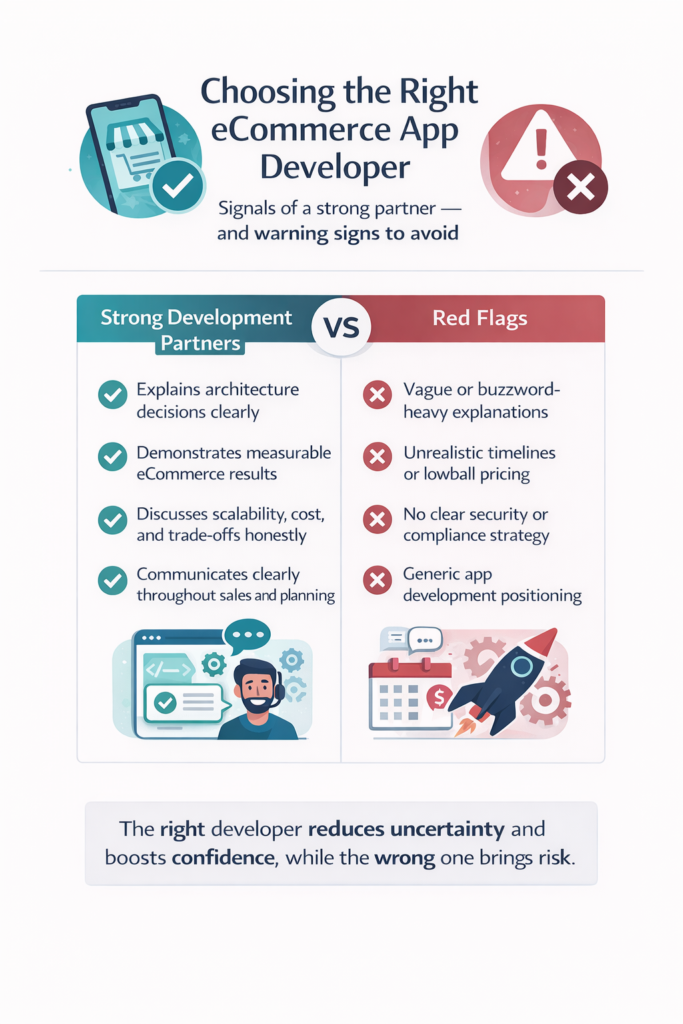
Ask prospective developers for specific metrics: conversion rate improvements, average order value changes, customer retention data, revenue impact. Companies tracking and sharing these measurements demonstrate results-oriented approaches.
Review projects similar to your business model. A developer strong in B2C consumer apps may lack expertise in B2B wholesale platforms or subscription commerce. Iqbal, Moeed, and Wikram’s work across diverse retail categories (fitness, fashion, general merchandise) demonstrates this breadth.
Security & Compliance Expertise
eCommerce developers must demonstrate PCI DSS compliance expertise, secure authentication and encrypted data transmission, GDPR and CCPA compliance, and regular security audits. These aren’t optional—they’re fundamental to customer trust and legal compliance.
Post-Launch Support & Optimization
Launching represents the beginning of your eCommerce journey. Evaluate whether developers provide ongoing maintenance, bug fixes and security patches, OS compatibility updates, A/B testing and conversion optimization, performance monitoring, and feature additions based on user feedback.
Frequently Asked Questions
How much does it cost to develop an eCommerce mobile app in 2025?
ECommerce app development costs range from $10,000 for basic functionality to over $300,000 for sophisticated platforms. Most mid-range eCommerce apps cost between $50,000-$150,000. Factors influencing price include platform choice (iOS, Android, or both), feature complexity, design customization, third-party integrations, and development team expertise.
How long does it take to build an eCommerce app?
Development timelines vary based on scope. Basic eCommerce apps typically require 3-6 months, mid-range applications need 6-9 months, and advanced platforms may take 9-12 months or longer. Timelines include discovery and planning, UI/UX design, development and testing, app store review, and initial optimization.
Should I build for iOS, Android, or both platforms?
Platform selection depends on your target audience and budget. If your customer base primarily uses one platform, launching there first reduces initial investment. Cross-platform development using React Native or Flutter can reduce costs by 30-40% compared to building separate native apps. Most brands eventually need presence on both platforms to maximize market reach.
What features are essential for an eCommerce app?
Core features include a product catalog with search and filtering, a shopping cart and checkout flow, secure payment processing, user account management, order tracking, and push notifications. Additional valuable features include personalized recommendations, loyalty programs, one-click purchasing, AR product visualization, and customer reviews.
How do I ensure my eCommerce app is secure?
Security requires multiple layers: PCI DSS compliant payment processing, SSL encryption for data transmission, secure user authentication (including two-factor options), regular security audits, secure backend infrastructure, and compliance with data protection regulations like GDPR and CCPA.
What ongoing costs should I budget for after launch?
Post-launch expenses include app maintenance and updates (15-20% of development cost annually), app store fees ($99/year for Apple, $25 one-time for Google), hosting and backend infrastructure ($100-$1,000+ monthly), customer acquisition and marketing, and iterative feature additions based on user feedback.
Can I start with a minimum viable product and add features later?
Yes, launching with an MVP focusing on core functionality reduces initial investment and accelerates time-to-market. This approach allows you to validate market demand, gather user feedback, and prioritize feature additions based on actual user behavior. Many successful eCommerce brands launched with basic functionality and added sophisticated features iteratively.
How important is design for eCommerce app success?
Design quality directly impacts conversion rates and user retention. Studies show users form opinions about apps within seconds, and poor user experience drives abandonment. Invest in user-centric design prioritizing intuitive navigation, fast load times, streamlined checkout processes, and visually appealing product presentation.
What’s the difference between native and cross-platform development?
Native apps are built specifically for iOS or Android using platform-specific languages, providing best performance and access to latest platform features. Cross-platform apps use frameworks like React Native to build once and deploy to both platforms, reducing costs and timelines with minimal performance tradeoffs for most eCommerce use cases.
How do I choose between different eCommerce developers?
Evaluate developers based on proven eCommerce experience with measurable results, technical expertise in required features and integrations, communication processes and project management approaches, pricing models fitting your budget, post-launch support offerings, and cultural alignment with your business goals.




 18 Mins