



















 14 Min



Building an on-demand service app in 2026 means delivering a two-sided marketplace with real-time matching, secure payments, GPS tracking, in-app messaging, and ratings, on a realistic timeline of about 6 to 8 months and a budget that usually falls between $25,000 and $60,000 for a focused minimum viable product, while more complex or multi-market builds run $75,000 to $150,000 or more. That is the honest scope behind apps like Uber, Instacart, or a local home-services platform. The opportunity is substantial: the global on-demand services market is projected to reach $216 billion in 2026, according to Business Research Insights. If you have been stuck wondering how to connect supply and demand in real time without a runaway budget, this guide breaks down every step, the true cost, and the traps that catch most founders.
Key Takeaways
- A focused on-demand MVP typically costs $25,000 to $60,000 and takes about 6 to 8 months, including 24 to 48 hours of app store review, plus a one to two week buffer in case of rejections; complex or multi-market builds run $75,000 to $150,000+.
- You are building two connected experiences, one for customers and one for providers, plus an admin console, which makes scoping discipline essential.
- Core features include real-time matching, GPS tracking, secure payments with split payouts, in-app chat, scheduling, and a ratings system.
- React Native is the smart default for shipping both sides of the marketplace to iOS and Android from one codebase.
- Solve the “cold start” problem early: a marketplace is only useful when both supply and demand are present, so plan your launch market carefully.
What Is an On-Demand Service App and Its Core Features
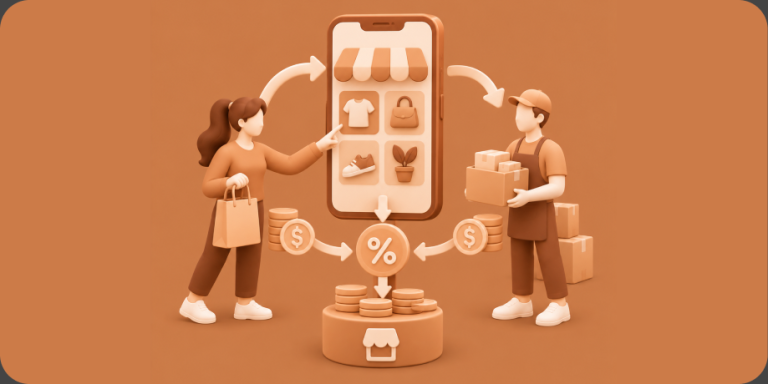
An on-demand service app connects customers who need something now (a ride, a cleaning, a parking spot, a handyman) with providers who can deliver it, handling discovery, booking, payment, and fulfillment in one mobile experience. It is fundamentally a two-sided marketplace, which is what makes it more complex than a single-audience app and why thoughtful planning pays off.
The defining features are consistent across categories. Customers need search and discovery, real-time availability, booking or instant matching, secure in-app payment, GPS tracking, and the ability to rate and review. Providers need a separate flow to manage listings or availability, accept jobs, communicate, and get paid, often through split payouts handled by a processor like Stripe. Tying it together is an admin dashboard for approving providers, setting pricing or commission rules, resolving disputes, and reading analytics. Our overview of what we do shows how these layers come together in a real product.
How to Build an On-Demand Service App: Step by Step
- Validate the idea. Confirm both sides of your marketplace actually want this: are there enough providers to serve demand, and enough customers to keep providers earning? Talk to both before you build.
- Define the minimum viable product. Resist building for every city and edge case at once. Pick one service, one launch market, and the smallest feature set that proves the matching loop works.
- Design from wireframes to a clickable prototype. Map both the customer and provider journeys as wireframes, refine them into high-fidelity mockups, then build a clickable, non-functional prototype (NFP) in Figma to test real flows before coding. An NFP is a clickable mockup of the flows, not a working coded app, so you catch problems while they are cheap to fix. Our design services cover this stage in depth.
- Choose the stack. Lock in technology that supports real-time data, location, and payments before development begins (see the recommended stack below).
- Build. Develop in two-week sprints with code reviews and a shared backlog, building both apps and the admin console in parallel. Our proven process keeps every milestone visible.
- Test and run quality assurance. Stress-test concurrency: double bookings, dropped connections, payment failures, surge demand, and location accuracy. Marketplace bugs erode trust on both sides fast.
- Launch and pass store review. Submit to the Apple App Store and Google Play Store, budgeting 24 to 48 hours for review in 2026 plus a one to two week buffer for any rejections, and seed your launch market so both sides find value on day one.
- Iterate. Use real booking and payout data to refine matching, pricing, and retention. The first release is where learning begins.
Recommended Tech Stack
- React Native lets you ship both the customer and provider apps to iOS and Android from one codebase, a major saving when you are building two experiences.
- Native Swift or Kotlin is added selectively for features like precise background location or platform-specific performance needs.
- React powers a responsive admin dashboard for approvals, pricing rules, dispute handling, and analytics.
- Node.js drives the backend and real-time logic, coordinating matching, notifications, and payments through clean application programming interface (API) endpoints.
- Google Cloud Platform, Amazon Web Services, or Microsoft Azure provides the scalable, reliable infrastructure a marketplace needs to handle real-time traffic and demand spikes.
We favor this proven, native-friendly stack over no-code tools because an on-demand marketplace lives or dies on real-time reliability and must scale and stay fully yours. See our development services for more.
Get Your Free 45-Minute App Roadmap
Meet 1-on-1 with our senior product team. We’ll map your MVP or enterprise app and hand you a personalized plan—clear scope, a realistic timeline, and fixed monthly costs—for iOS & Android, web, tablets & wearables, and AI.
Realistic Timeline and Cost by Phase
| Phase | Timeline | Cost Band |
|---|---|---|
| Planning and validation | About 1 month | Included in project scope |
| User interface and user experience (UI/UX) design and prototype (both sides) | 1.5 to 2 months | $10,000 to $20,000 |
| Development and QA | 3.5 to 4.5 months | $15,000 to $40,000 |
| Launch and store review | About 1 to 2 weeks (24 to 48 hour review, buffer for rejections) | Included in project scope |
| Focused MVP total | About 6 to 8 months | $25,000 to $60,000 |
| Complex or multi-market build | 8 to 12+ months | $75,000 to $150,000+ |
Artificial intelligence (AI) and agent-assisted coding (using tools like Claude Code and Cursor, with engineers reviewing and editing every change rather than “vibe coding”) have cut 2020-to-2023 costs and timelines roughly in half, which is reflected in these bands. For a fuller view, see our app development costs and pricing guide.
Common Pitfalls
- Ignoring the cold-start problem. A marketplace with customers but no providers (or the reverse) feels broken. Concentrate your launch in one market so both sides find value immediately.
- Building both apps for every scenario at once. Two-sided scope balloons fast. Prove the core matching loop before adding tiers, regions, and edge cases.
- Underestimating payments complexity. Split payouts, refunds, cancellations, and provider payment timing are core marketplace mechanics, not afterthoughts.
- Weak trust and safety. Ratings, verification, photo confirmation, and dispute resolution are what keep users coming back. Skipping them invites churn and fraud.
- Forgetting the admin console. Without tools to approve providers, tune pricing, and resolve disputes, your team cannot run the marketplace once it launches.
How Chop Dawg Built the Park King Marketplace
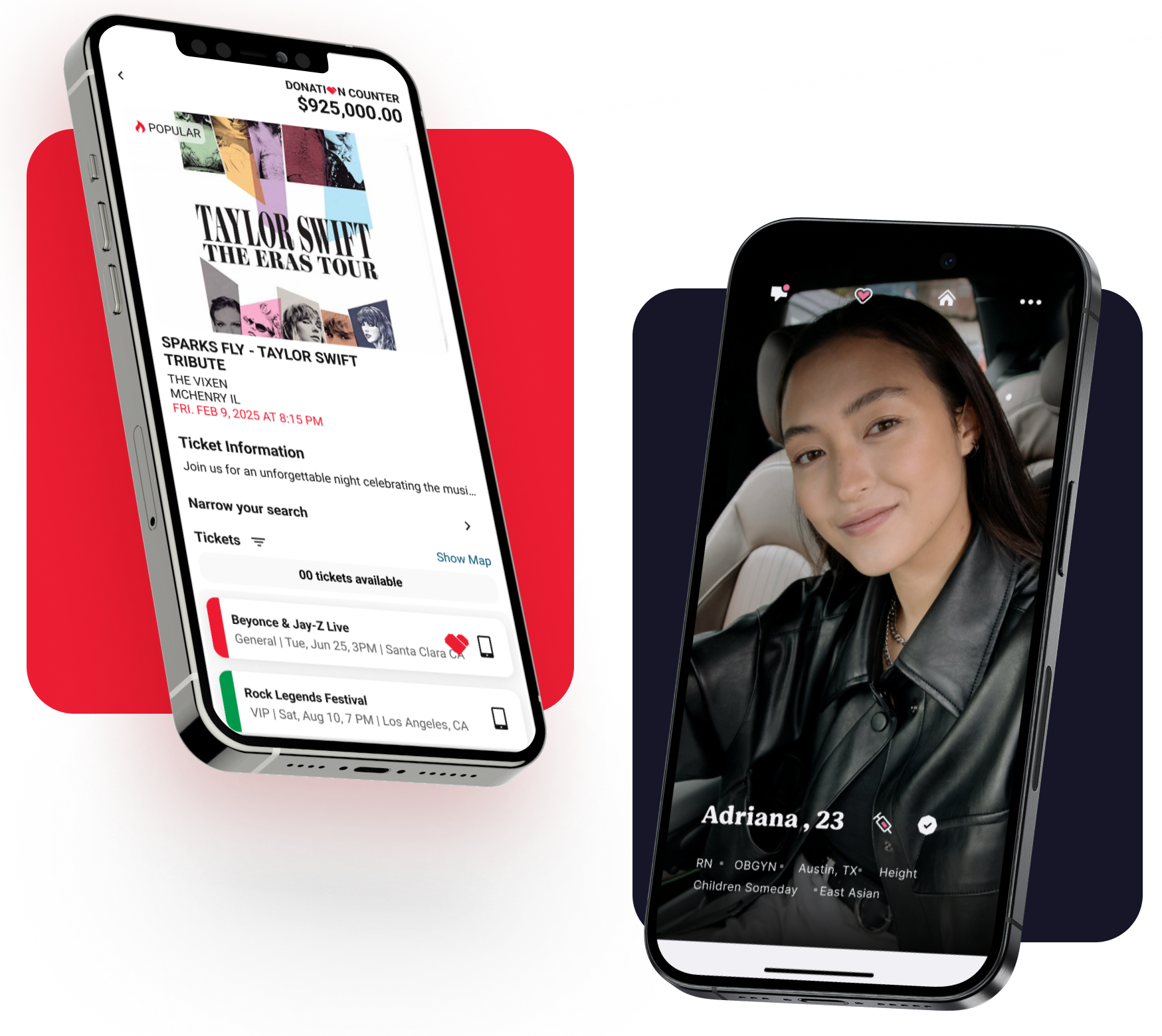
Park King set out to turn every empty driveway into revenue with a two-sided parking marketplace where owners list a spot in under a minute and drivers book in seconds. Chop Dawg designed every screen, then built it in React Native with real-time listings, transaction-safe booking to prevent double-booking even during stadium surges, Stripe-powered split payouts, in-app chat with photo verification, and a web dashboard with role-based moderation and a dynamic pricing engine. It launched simultaneously in the Apple App Store and Google Play Store, ready to scale from one driveway to entire downtown districts. Read the full Park King success story to see how a real-time marketplace comes together. We applied the same on-demand engineering to Currently, an app that disrupted electric vehicle charging by dispatching on-demand mobile charging to drivers in real time, matching supply to demand the moment it appears. Together they reflect the rigor that has made Hilton, Innovative Vending Solutions, and other recognized brands trust Chop Dawg with product work.
Frequently Asked Questions
How much does it cost to build an on-demand service app in 2026?
A focused on-demand MVP typically costs $25,000 to $60,000, while complex or multi-market builds run $75,000 to $150,000 or more. Because you are building two connected apps plus an admin console, disciplined scoping is the single biggest lever for controlling cost on a marketplace project.
How long does it take to build an on-demand app?
Plan for about 6 to 8 months for a quality minimum viable product. That spans roughly one month of planning, then design, development and testing, and about 24 to 48 hours for Apple App Store and Google Play Store review in 2026 plus a one to two week buffer for any rejections. Building both sides of the marketplace adds time you should plan for upfront.
Do I need separate apps for customers and providers?
Functionally yes, you need two distinct experiences, but they can share one React Native codebase and backend. This keeps the customer app and provider app in sync, reduces cost versus building them separately, and lets you ship both to iOS and Android efficiently.
How do payments and payouts work in a marketplace?
Most on-demand apps use a processor like Stripe to handle customer payments and split payouts to providers automatically, taking a platform commission. Planning refunds, cancellations, and payout timing during design prevents the costly rework that comes from treating payments as a late add-on.
How do I solve the chicken-and-egg problem at launch?
Focus on one geographic market and seed both sides before launch so customers find available providers and providers find paying customers. A marketplace only delivers value when supply and demand are present together, so a narrow, dense launch beats a thin, broad one.
Do I own the code once the app is built?
With Chop Dawg, yes, always. You see and own everything, code and intellectual property, throughout the engagement. We operate as a partner, not an agency, with fixed-monthly pricing and the freedom to end anytime.
Ready to Build Your On-Demand App?
An on-demand marketplace is one of the most rewarding products to build and one of the easiest to scope incorrectly, so the planning you do before development matters more here than almost anywhere. Since 2009, Chop Dawg has launched 500+ products used by more than a billion people, with 92% of partners returning and 300+ five-star reviews across trusted directories like Clutch, GoodFirms, G2, Google, and TopDevelopers. We are United States-headquartered and United States-led, with leadership, product and project management, and senior development, design, and QA all on the American team, backed by an in-house Brazilian design team and in-house development, QA, and project-management teams in Pakistan and India. No one is a subcontractor or middleman; every person is in-house Chop Dawg assigned straight to your project. So you can run a fully-American team for government or regulated work, or choose a cost-effective United States-plus-offshore blend that delivers the same quality, timelines, and experience, with direct access to the real senior team throughout. That structure lets us help both new founders launching a marketplace and established operators scaling one into new services or markets. Book your free 45-minute consultation and let’s work through exactly what your app will take, whether or not you build with us.


 15 Min