





















 15 Min



Pre-revenue valuation is a negotiation, not a formula: with no revenue to multiply, your app startup’s worth is anchored by comparable deals, the strength of your team, traction proxies like waitlists and letters of intent, and the size of your market. The market context shifts constantly, which is why current data matters: Carta’s Data Desk reports $30.4 billion in venture capital raised in Q1 2026, with over 60% of funding flowing to AI companies, a concentration that stretches valuations in one category while compressing others. This guide explains how investors actually arrive at a pre-revenue number, what SAFE caps and priced rounds mean in plain English, and why a strong prototype supports a stronger answer. One note up front: this is education, not financial, legal, or investment advice.
Key Takeaways
- Pre-revenue startups are valued by negotiation anchored on comparables, team strength, traction proxies (waitlist, letters of intent, prototype quality), and market size, not by spreadsheet math.
- Most pre-seed app rounds use a SAFE (simple agreement for future equity) with a valuation cap rather than a priced round, because it is faster and cheaper to close.
- In recent years, US pre-seed SAFE caps have commonly landed in the mid single-digit millions to low teens, varying with team, category, and cycle; always verify current market data before you set terms.
- A higher cap is not automatically better: it raises the bar your next round must clear.
- A polished, working-feeling prototype and a clean technical story are among the few valuation levers a founder fully controls before revenue.
How Pre-Revenue App Startups Actually Get Valued
Investors price pre-revenue startups by triangulating four anchors: what similar companies at similar stages recently raised at (comparables), who is building (team), what evidence of demand exists (traction proxies), and how big the outcome could be (market). Your valuation is where those anchors and your negotiating leverage meet.
Each anchor is specific. Comparables come from recent deals in your category and geography, which investors see weekly and founders must research. Team covers domain expertise, prior exits or shipped products, and whether this group can plausibly build and sell the thing. Traction proxies substitute for revenue: a waitlist with real emails, signed letters of intent (LOIs) from future customers, pilot commitments, engaged beta users, or a prototype that makes the product feel inevitable. Market determines the ceiling, because a great team in a small market still caps the outcome. Weak anchors do not mean no deal; they mean the negotiation starts lower.
SAFE Caps vs Priced Rounds in Plain English
A SAFE (simple agreement for future equity) is a promise that today’s investor gets shares later, when a priced round happens, at terms set now; a priced round sells shares today at an agreed valuation. Most app startups raise their first money on SAFEs because they close in days, not months, and involve almost no legal cost.
The number that matters in a SAFE is the valuation cap: the maximum company value at which the investment converts to shares. An investor who puts $100,000 into a SAFE with an $8 million post-money cap will own at least 1.25% once it converts. The cap is not technically your valuation, but everyone treats it as the working proxy for one. Y Combinator, which created the instrument, publishes the standard post-money SAFE documents for free on its official documents page, and notes that cap is usually the only term negotiated. Priced rounds arrive later, typically at seed or Series A, when a lead investor sets an actual share price, a board takes shape, and legal costs climb accordingly. Have a lawyer review anything you sign; this article is not legal or financial advice.
Typical Pre-Seed Cap Ranges (Verify Current Data)
In recent years, US pre-seed SAFE caps for app startups have most commonly landed between the mid single-digit millions and the low teens, with the exact number tracking your anchors. These ranges move with market cycles and category heat, so before setting terms, check current sources like Carta’s State of Pre-Seed reports rather than quoting last year’s market.
| Signal set at pre-seed | Commonly seen SAFE cap range (US) | What moves you up |
|---|---|---|
| Idea plus a credible team | Roughly $3 million to $8 million | Domain expertise, prior shipped products, technical co-founder |
| Clickable prototype plus demand signals | Roughly $5 million to $12 million | Polished prototype, waitlist with real intent, early press or community |
| LOIs, pilots, or pre-launch commitments | Roughly $8 million to $15 million | Signed pilot agreements, distribution partnerships, repeat-founder credibility |
| Hot-category outliers (AI in 2026) | Above $15 million, case by case | Category momentum plus exceptional teams; treat as exceptions |
Remember the tradeoff inside the number: a higher cap means less dilution now but a higher bar at your next round, because new investors will ask what changed since the cap was set. Founders who take the biggest number they can get sometimes regret it eighteen months later. Not financial advice; model both scenarios.
Traction Proxies That Move the Number
Before revenue, investors buy evidence, and evidence is manufacturable with work. The proxies that consistently move pre-revenue valuations: a waitlist that grew through something repeatable rather than one viral spike, LOIs or pilot commitments from named organizations, an engaged community in your niche, and a prototype good enough to demo without apologies.
Rank them by cost-effectiveness for your situation. Business-to-business (B2B) founders should chase LOIs first, because three signed letters from recognizable companies compress more risk than a thousand consumer emails. Consumer founders should build the waitlist and the community, then show retention intent through beta engagement. Everyone benefits from the prototype, which is the one proxy that also accelerates everything else: it makes customer conversations concrete, LOIs easier to sign, and demos easier to believe.
Get Your Free 45-Minute App Roadmap
Meet 1-on-1 with our senior product team. We’ll map your MVP or enterprise app and hand you a personalized plan—clear scope, a realistic timeline, and fixed monthly costs—for iOS & Android, web, tablets & wearables, and AI.
Why a Strong Prototype Supports the Number
A pre-revenue valuation is mostly a risk discount, and a high-quality prototype removes the biggest risk on the table: that this team cannot turn the idea into a product. A clickable, non-functional prototype (NFP) that looks and feels like a finished app lets investors experience the product instead of imagining it.
The technical story matters alongside the screens. Investors and their advisors ask what the prototype is built to become: a sensible stack, a plan for the hard parts (payments, compliance, scale), and a credible path from prototype to minimum viable product (MVP) with known costs and timelines. A founder who can hand over a polished prototype plus a clean build plan is negotiating from evidence. One who pitches from a deck alone is negotiating from hope, and the cap reflects it.
How Chop Dawg Builds Prototypes That Raise
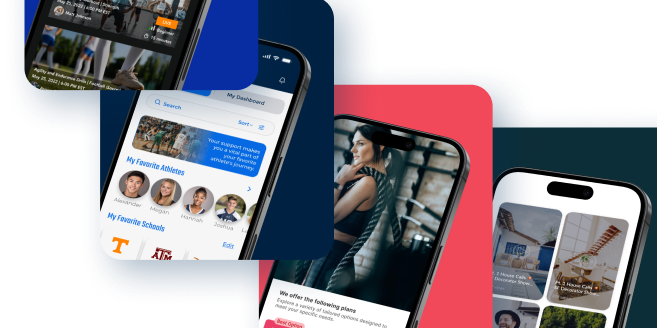
Investor-ready prototypes are one of the things we are best known for, and 2026 has us actively designing and building them across several categories. When Pitt defensive lineman Elliot Donald brought us DLD, Donald Legacy Defined, his virtual sports university concept, we mapped the entire product end to end in Figma as a clickable prototype built for fundraising. In his words: “Chop Dawg made the entire experience easy to understand and genuinely exciting… Thanks to their guidance, I was able to secure investor funding.” For NIL Live, a Name, Image and Likeness crowdfunding platform with escrow funds and NCAA compliance to navigate, the non-functional prototype came first and captured investor interest before a line of production code existed. Portfolio companies we have built for have gone on to raise from serious investors, including Currently by SparkCharge, which secured a $1 million+ Shark Tank investment.
Prototype work here runs from about $10,000, reaching $20,000 to $25,000 for the largest design efforts, through our design services, with strategic planning shaping the pitch-ready story around it. The team behind it is US-headquartered and US-led (leadership, product management, senior design, senior engineering, senior quality assurance), backed by our in-house Brazilian design team and in-house development, QA, and project management teams in Pakistan and India, every one a Chop Dawg employee on US hours. That structure erases the two fears founders carry into this industry: the American salesperson fronting hidden offshore subcontractors, and the faceless overseas shop with no US business norms and no time-zone overlap. You own all designs, code, and intellectual property (IP) from day one, which is exactly what investor diligence wants to hear.
Frequently Asked Questions
How do investors value an app startup with no revenue?
They triangulate comparables from recent deals, the team’s track record, traction proxies like waitlists, letters of intent, and prototype quality, and the market’s size, then negotiate. There is no formula. Your job is strengthening each anchor before the conversation so the negotiation starts higher.
What is a SAFE valuation cap?
A SAFE is a simple agreement for future equity: money now, shares later. The cap is the maximum company valuation used when the investment converts to shares, so a lower cap gives the investor more ownership. In practice, the cap functions as the negotiated proxy for your valuation.
Is a higher valuation cap always better for founders?
No. A higher cap means less dilution today but sets a bar your next round must clear, and a flat or down round later damages momentum and morale. Take a number you can grow past within 12 to 18 months. This is general education, not financial advice.
How much should an app startup raise at pre-seed?
Raise enough to hit the milestones that unlock the next round, typically 18 to 24 months of runway. For many app startups that means $250,000 to $1 million to fund an MVP, launch, and early traction data. Back into the number from milestones, not from what sounds impressive.
How much does an investor-ready prototype cost?
A clickable, non-functional prototype typically starts around $10,000 and reaches $20,000 to $25,000 for the largest design efforts. A full MVP runs $25,000 to $60,000, with complex builds at $75,000 to $150,000 or more. Many founders raise on the prototype, then fund the MVP with the round.
Do I need a priced round for my first raise?
Usually not. Most first checks into app startups arrive on SAFEs because they close quickly with minimal legal cost, and standard documents are freely available from Y Combinator. Priced rounds typically make sense at seed or Series A, when a lead investor sets terms and board structure. Have counsel review either path.
Make Your Number Defensible
Your pre-revenue valuation is built, not discovered: strengthen the comparables you cite, the team story you tell, the traction you can screenshot, and the prototype you can hand an investor, and the number follows. Whether you are a first-time founder preparing a raise or an established company valuing a new venture, we will talk through your prototype, technical story, and fundraising timeline in a free 45-minute consultation, offered whether or not you ever hire us. Since 2009, now in our 18th year, Chop Dawg has launched 500+ products used by over 1 billion people, with 92% of partners returning and 300+ five-star reviews across trusted directories like Clutch, GoodFirms, G2, Google, and TopDevelopers. Book your consultation and walk into your raise with evidence.




 13 Min