













 13 Min


Most app startups need 12 to 24 months to reach profitability, and the honest range runs from a few months for niche business-to-business (B2B) software to several years for marketplaces. The money is out there: consumers spent $166.8 billion on apps and games in 2025, up 11.1% year over year, according to Business of Apps. But how long until an app startup is profitable depends far more on your business model than on your ambition, and founders who plan for the wrong timeline run out of cash chasing the right idea. Here are the real timelines by model, the burn math that governs them, and why the famous overnight stories are outliers, not plans.
Key Takeaways
- Niche B2B software-as-a-service (SaaS) apps reach profitability fastest, often within 6 to 18 months, because a small number of paying customers can cover a small team.
- Consumer subscription apps typically need 12 to 24+ months of retention building before revenue outruns acquisition and operating costs.
- Marketplaces take longest, commonly 24 to 48+ months, because they must reach liquidity before their take rate produces meaningful revenue.
- Profitability is arithmetic: monthly revenue minus monthly burn. Knowing your runway and your default-alive date matters more than any industry average.
- Profitable-in-hours launches happen, but they ride pre-built audiences. Treat them as outliers, never as the plan.
How Long Until an App Startup Is Profitable? Timelines by Model
Business model sets the clock. B2B products charge real prices to a few customers and can break even on a small team quickly. Consumer subscriptions need months of cohorts to prove retention. Marketplaces must build both sides of a market before their percentage of transactions amounts to anything.
| Business model | Typical time to profitability | What actually gates it |
|---|---|---|
| Niche B2B SaaS | 6 to 18 months | A modest number of customers at $100 to $1,000+ per month covers a lean team |
| Consumer subscription | 12 to 24+ months | Retention curves and payback periods take months of cohorts to prove and improve |
| Ad-supported consumer | 24 to 36+ months | Ad revenue per user is tiny, so only large scale pays the bills |
| Marketplace | 24 to 48+ months | Liquidity first: both sides must show up reliably before the take rate matters |
| Audience-first outlier launches | Days to weeks (rare) | A pre-built audience converts instantly; this is an exception, not a strategy |
Within each row, three levers move you toward the early end: pricing that reflects real value, retention that holds cohorts, and a team that stays small while the model proves out.
The Burn Math Every Founder Should Run
Profitability is not a mystery; it is one subtraction. Take your monthly revenue, subtract your monthly costs (team, infrastructure, marketing, tooling), and the sign of the result tells you whether you are profitable. Burn is the negative gap, and runway is your cash divided by that burn.
Make it concrete. A two-founder app spending $18,000 per month all-in, with $120,000 in the bank, has about 6.7 months of runway at zero revenue. If revenue grows $2,500 per month starting in month three, the gap closes steadily and the company breaks even around month ten, with cash to spare only if growth holds. Run this table for your own numbers monthly, because every hire, price change, and marketing push rewrites it. Paul Graham’s default-alive question is the discipline: on current growth and spend, do you reach profitability before the money runs out? If yes, you control your destiny. If no, you are betting the company on fundraising, and the funding market grades harshly: CB Insights’ 2026 shutdown analysis found the median failed startup died 22 months after its last raise.
Why Niche B2B SaaS Gets There Fastest
B2B apps reach profitability fastest because businesses pay real prices for solved problems. Fifty customers at $300 per month is $15,000 in monthly recurring revenue, enough to cover a lean founding team, and you can find fifty customers in a niche you know without a consumer-scale marketing budget.
The pattern we see repeatedly: a founder from an industry builds the tool their old job needed, sells it through relationships and one or two channels, and reaches break-even within the first year to eighteen months. Retention helps too, since businesses that adopt a workflow tool rarely churn casually. The tradeoff is ceiling and speed of growth, but for founders optimizing for a durable, self-sustaining company rather than a moonshot, niche B2B is the shortest road to profitable.
Consumer Subscriptions: Retention Before Profit
Consumer subscription apps usually need 12 to 24 months or more because profitability arrives only when lifetime value reliably exceeds acquisition cost, and proving that takes months of cohort data. You cannot know your twelve-month retention any faster than twelve months.
The early quarters are spent tuning onboarding, pricing, and habit loops so each cohort retains better than the last, while marketing spend keeps the top of the funnel alive. This is why well-run subscription apps often look unprofitable on purpose: they are buying data and compounding retention improvements. The danger is scaling spend before the retention curve flattens, which turns every new user into a bigger loss. Marketplaces stretch the same logic further: until enough buyers and sellers show up reliably (liquidity), a 15% take rate is 15% of almost nothing, which is why marketplace profitability commonly lands in years three or four.
Get Your Free 45-Minute App Roadmap
Meet 1-on-1 with our senior product team. We’ll map your MVP or enterprise app and hand you a personalized plan—clear scope, a realistic timeline, and fixed monthly costs—for iOS & Android, web, tablets & wearables, and AI.
Our Outliers, Presented as Outliers
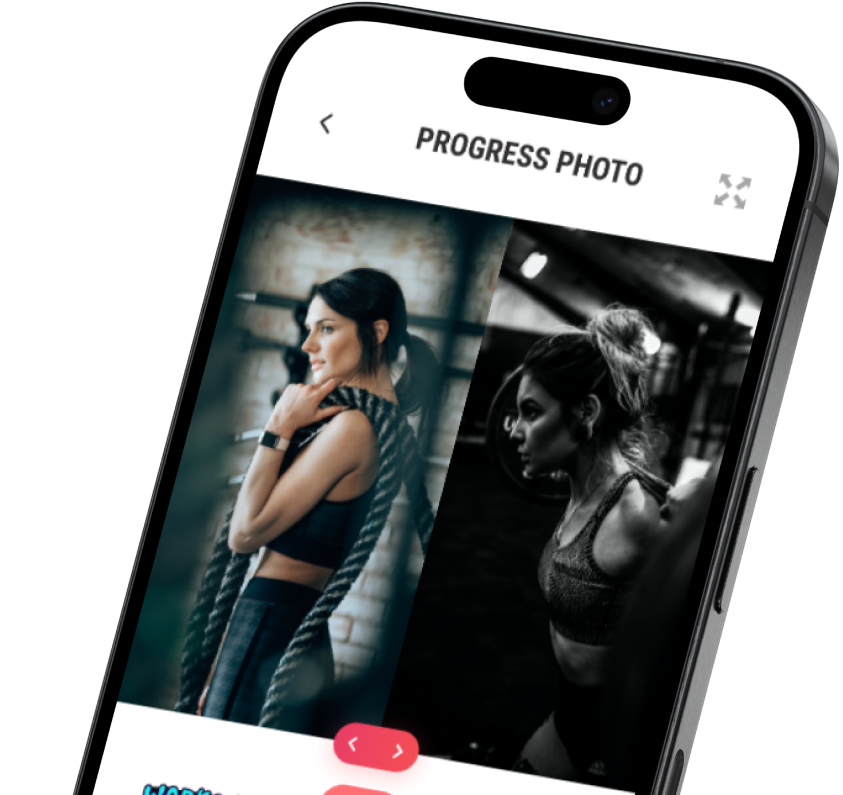
Yes, we have seen profitability arrive in hours, and no, you should not plan for it. When we launched Slay by Mari, fitness influencer Mari Llewellyn’s app, it gained 15,000+ users in 24 hours, hit the Top 10 in both stores, and delivered 100% return on investment in under 12 hours. Mari told us, “I can’t begin to express my gratitude for the entire Chop Dawg team.” That result is real and it is exceptional for one reason: years of audience building happened before launch day, so demand was waiting. Without a pre-built audience, that curve is not available to you, and pretending otherwise is how launch budgets die.
The repeatable version of fast is early traction that shortens the runway to break-even. Mangia Rewards, a premium dining membership app, launched with 15+ major partner deals, 200+ curated restaurants, and 3,000+ membership codes distributed through luxury partners, with over 80% of beta users redeeming two or more offers weekly. Lining up partners and distribution before launch is a plan; expecting the internet to show up unannounced is not. Across 500+ launches since 2009, that is the difference we push every partner toward in strategic planning.
How Chop Dawg Helps You Reach Profitable Faster
Our job is to shorten your timeline from both directions: lower the cost side and speed up the revenue side. On cost, AI and agent-assisted engineering (Claude Code and Cursor, with our engineers reviewing every change) has roughly cut 2020 to 2023 build costs and timelines in half, which means a focused minimum viable product (MVP) now runs $25,000 to $60,000 and complex builds $75,000 to $150,000+, with fixed monthly budgets so burn is predictable. On revenue, we design monetization, retention loops, and launch traction into the product from the first sprint rather than after. The team doing it is US-headquartered and US-led (leadership, product management, senior engineering, senior design, senior quality assurance), backed by our in-house Brazilian design team and in-house development, QA, and project management teams in Pakistan and India, all Chop Dawg employees on US hours with fluent English. That model was built to kill the industry’s two fears: the American salesperson fronting hidden offshore subcontractors, and the faceless overseas shop you cannot reach during your business day. Choose fully American for regulated work or the blended team most partners pick, and see how engagements run in our proven process and development services.
Frequently Asked Questions
How long does it take the average app to become profitable?
Most app startups that get there need 12 to 24 months. Niche B2B SaaS products can reach profitability in 6 to 18 months, consumer subscriptions typically need 12 to 24 or more, and marketplaces commonly take 24 to 48 months because liquidity must come first.
Can an app be profitable in its first year?
Yes, most often when it is niche B2B software with real pricing, a service business adding software margin, or a product launching into a pre-built audience. It requires a lean team, honest pricing from day one, and acquisition channels that do not depend on heavy paid spend.
How much runway should an app startup keep?
Raise or reserve 18 to 24 months of runway against your planned burn. That covers a realistic build, launch, and at least a year of iteration toward break-even. Update the math monthly, because the important number is the date your current trajectory makes you profitable or broke.
What does default alive mean for a startup?
A startup is default alive if, on its current growth and spending, it reaches profitability before cash runs out. Default dead means the plan requires new funding to survive. Knowing which one you are changes decisions about hiring, marketing spend, and when to start fundraising conversations.
Why do marketplaces take the longest to become profitable?
Because a marketplace earns a percentage of transactions, and transactions require both sides showing up reliably, which is liquidity. Building supply and demand simultaneously is slow and often subsidized, so meaningful revenue lags product quality by years. Take rates only matter once volume exists to apply them to.
How much does it cost to build an app startup MVP in 2026?
A focused MVP runs $25,000 to $60,000, with lean versions near $25,000 to $30,000 and ambitious ones near $55,000 to $60,000; complex platforms run $75,000 to $150,000 or more. AI-assisted development has roughly halved costs and timelines compared with a few years ago, which shortens the road to break-even.
Plan for the Timeline You Actually Have
Profitability is a date you can calculate, not a hope: pick the honest timeline for your model, run the burn math monthly, and build traction before launch instead of after. Whether you are a founder choosing between models or an established company weighing a new product’s path to break-even, we will run those numbers with you in a free 45-minute consultation, useful whether or not you ever hire us. Chop Dawg has been at this since 2009, now in our 18th year, with 500+ launches, over 1 billion users reached, 92% partner retention, and 300+ five-star reviews across trusted directories like Clutch, GoodFirms, G2, Google, and TopDevelopers. Book your free consultation and put a real date on profitable.


 15 Min