

















 17 Min


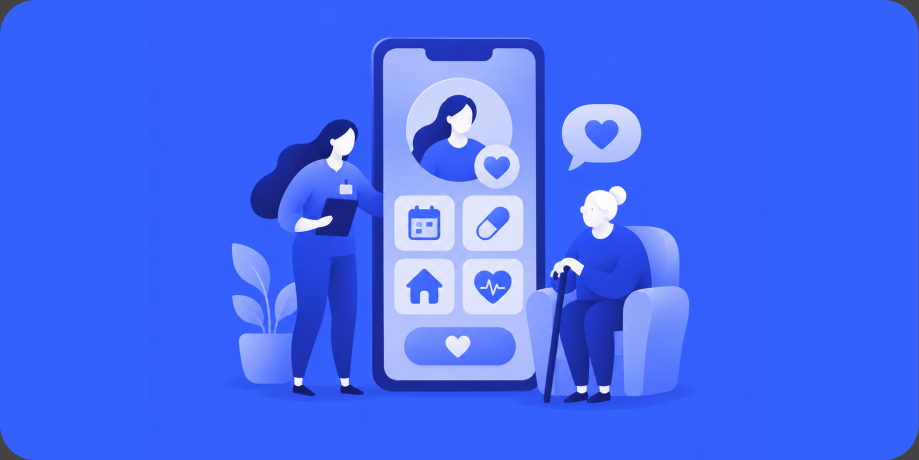
To build a caregiving or senior care app in 2026, you need to solve three problems at once: proving care actually happened (electronic visit verification), coordinating a distributed workforce (scheduling and care plans), and keeping families informed without violating health privacy law. The demographics make this one of the most durable app categories of the decade. The Population Reference Bureau projects the number of Americans ages 65 and older will grow from 58 million in 2022 to 82 million by 2050, a 42% increase. Demand for care software is compounding faster than agencies can hire. This guide covers the features, compliance realities, costs, and design decisions that separate caregiving apps that agencies adopt from ones they abandon.
Key Takeaways
- Caregiving apps come in three models: caregiver marketplaces, agency operations platforms, and family-facing safety apps, and each has different compliance stakes.
- Electronic visit verification (EVV) with GPS clock-in and clock-out is federally required for Medicaid-funded personal care, and offline support is essential because caregivers work in connectivity dead zones.
- The Health Insurance Portability and Accountability Act (HIPAA) applies when your platform handles protected health information for providers or agencies; design for encryption, role-based access, and audit logs from day one.
- Automated payments with 1099 compliance remove the administrative burden that makes agencies switch software.
- A focused MVP runs about $25,000 to $60,000 over 3 to 6 months, with complex multi-portal platforms reaching $75,000 to $150,000 or more.
What Counts as a Caregiving or Senior Care App
A caregiving or senior care app is any platform that coordinates, verifies, or supports care for aging adults, and the category splits into three distinct product types. Choosing which one you are building is the first scoping decision, because it drives your compliance load, your buyers, and your feature list.
- Caregiver marketplaces connect facilities or families with verified caregivers and nurses on demand, competing on speed of credentialed onboarding.
- Agency and registry operations platforms give home care businesses scheduling, EVV, care plans, payroll, and compliance tooling in one system.
- Family-facing safety and check-in apps serve seniors aging in place and the adult children coordinating their care, monetized by subscription.
Many successful products blend two of the three, for example an agency platform with a family portal bolted on, but every strong build starts with one primary user whose day gets measurably easier.
Must-Have Features to Build a Caregiving or Senior Care App
Every caregiving platform serves at least three audiences: the caregiver in the field, the coordinator in the office, and the family at home. Feature planning goes faster when you organize by role rather than by screen, because each role has one job your app must nail.
For caregivers
- Shift schedules with one-tap GPS clock-in and clock-out
- Patient profiles and care plans with task checklists for each visit
- Care logs with photo and video documentation
- Offline mode that stores visits locally and syncs when connectivity returns
For coordinators and agencies
- Recurring shift scheduling with overrides, open-shift claiming, and conflict detection
- Credential tracking with expiration alerts for licenses and certifications
- Timecard editing, shift approvals, and automatic change logs for audit trails
- Automated payment processing with direct deposit and 1099 tax compliance
- Reporting dashboards covering hours, visit compliance, and payroll
For families and seniors
- A family portal with real-time visit status and care notes, scoped by permission
- Scheduled check-ins with escalation to designated contacts when one is missed
- Senior-friendly user interface and user experience (UI/UX): large tap targets, high contrast, minimal navigation depth, and one large obvious action per screen
Electronic Visit Verification: The Compliance Feature That Anchors the Category
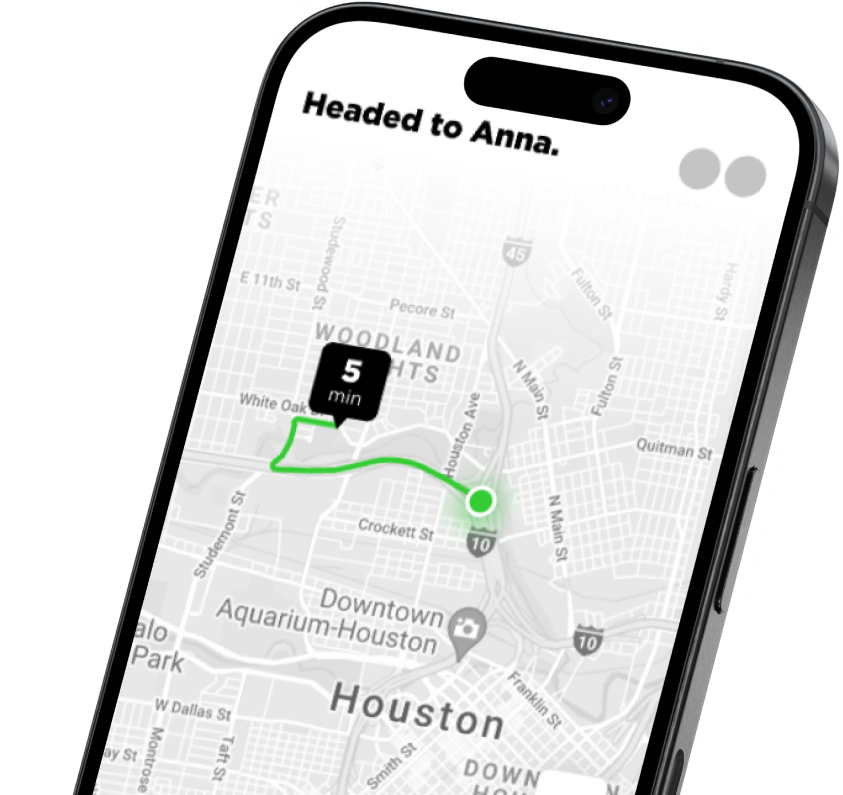
EVV is the system of record proving a caregiver was physically present for a visit, capturing who provided care, where, when, and what was done. The federal 21st Century Cures Act requires EVV for Medicaid-funded personal care and home health services, so any platform serving agencies that bill Medicaid must treat EVV as core infrastructure, not an add-on.
A dependable EVV implementation needs geolocation-verified clock-in and clock-out tied to the client’s address, tamper-resistant timestamps, visit task documentation, and an exception workflow for legitimate edge cases like a client meeting the caregiver at a pharmacy. Two design details matter more than founders expect. First, offline capture: rural homes and large facilities have dead zones, and a visit that fails to record is a visit the agency cannot bill. Second, state variance: each state chose its own EVV model and aggregator, so build your data layer to export to different state systems rather than hard-coding one.
Compliance and Edge Cases: HIPAA, 1099s, and Background Checks
Health compliance in this category is very manageable when scoped early, and it becomes a selling point rather than a burden. Agencies buy software that keeps them audit-ready. Here is the honest map of what applies and when.
- HIPAA: if your platform stores or transmits protected health information on behalf of agencies, providers, or facilities, you are operating as a business associate. That means encryption in transit and at rest (AES-256 is the standard), role-based access controls, audit logging, session timeouts, and business associate agreements with your cloud vendors. It shapes architecture, not just paperwork.
- Worker classification and 1099s: registries and marketplaces paying independent caregivers need automated payout records and year-end 1099 generation. Getting this right saves agencies dozens of administrative hours per month.
- Background checks and registries: caregiver screening should include identity verification and state-required checks, refreshed on a cadence, with results gated by role-based access.
- Change logs: every edited timecard or shift needs an automatic, immutable record. Department of Labor and Medicaid audits are where sloppy platforms fail their customers.
Get Your Free 45-Minute App Roadmap
Meet 1-on-1 with our senior product team. We’ll map your MVP or enterprise app and hand you a personalized plan—clear scope, a realistic timeline, and fixed monthly costs—for iOS & Android, web, tablets & wearables, and AI.
Recommended Stack, Timeline, and Cost
Across 500+ launches since 2009, including multiple caregiving platforms, the stack we trust for this category is React Native for the caregiver and family mobile apps (one codebase, native-quality GPS and camera access), React for the agency web portal, Node.js on the backend, and Amazon Web Services (AWS) or Google Cloud Platform configured for HIPAA workloads, with Stripe for payment automation and Twilio for SMS alerts.
Cost scales with how many portals you build and how deep compliance goes. AI-assisted engineering, with tools like Claude Code and Cursor under senior engineer review, has roughly cut in half what these builds cost between 2020 and 2023.
| Build tier | Scope | Typical cost | Timeline |
|---|---|---|---|
| Focused MVP | Caregiver app with EVV, scheduling, and basic admin portal | $25,000 to $60,000 | 3 to 6 months |
| Full agency platform | EVV, care plans, payments with 1099s, family portal, compliance reporting | $75,000 to $150,000 | 6 to 12 months |
| Multi-state platform | State EVV aggregator integrations, payer billing, advanced analytics | $150,000+ | 12+ months |
Many founders and agency owners start with a clickable, non-functional prototype (NFP), from about $10,000, to validate workflows with real caregivers before committing to development. See our app development costs and pricing guide for how these bands break down.
Common Pitfalls in Caregiving App Builds
The most expensive mistakes in this category are predictable: treating EVV as a later phase, designing for the office instead of the field, and underestimating how much trust design matters to families. Each is avoidable with honest scoping before development begins.
- Shipping without offline mode, then losing agency customers to missed billable visits
- Building caregiver screens that assume young, tech-fluent users when the workforce spans ages and languages (bilingual support wins deals)
- Giving families unrestricted access to care records instead of permission-scoped views
- Manual payroll exports that reintroduce the spreadsheet work the agency bought software to eliminate
- Ignoring the senior directly: a check-in flow a 78-year-old can complete in one tap is a feature, not a nice-to-have
Where Chop Dawg Fits: Caregiving Platforms We Have Shipped
Caregiving and senior care is one of the categories we know best. For AllyMS, we built a caregiver registry platform unifying scheduling, geolocation EVV, and automatic direct-deposit payments with 1099 compliance; the platform saves registries 40+ administrative hours monthly with audit-ready, HIPAA-compliant records. For CarePool, a marketplace connecting healthcare facilities with verified caregivers, co-founder Jazmine Dredd told us: “Chop Dawg has been instrumental in translating our goals into a technical product… They understood our vision and transformed it into a functional prototype that has impressed our investors.” We also built ZBritt, a bilingual home care platform with one-tap GPS clock-in and offline sync, and ERIC, a senior check-in app with escalation cascades engineered for 200,000+ concurrent users. Organizations that have trusted Chop Dawg include Penn Medicine and Jefferson Health.
What makes those builds work is the team model. Chop Dawg is US-headquartered and US-led: American leadership owns product management, senior development, senior design, and QA, supported by our in-house Brazilian design team and our in-house development, QA, and project management teams in Pakistan and India. No middlemen, no subcontractors, everyone assigned directly to your project with fluent English and US-hours overlap. That eliminates the two classic outsourcing fears: the American salesperson hiding an anonymous offshore bench, and the overseas shop you can never get on a call. Regulated work can run fully American; most partners choose the blend for the same quality at lower cost, with transparent fixed monthly pricing and 24/7 visibility through Figma, GitHub, and Jira. Start with strategic planning or explore our development services.
Frequently Asked Questions
How much does it cost to build a senior care or caregiving app?
A focused MVP with EVV, scheduling, and a basic admin portal costs about $25,000 to $60,000. Full agency platforms with payments, 1099 compliance, and family portals typically run $75,000 to $150,000, and multi-state Medicaid integrations push past that. AI-assisted development has roughly halved 2020 to 2023 pricing.
How long does it take to build a caregiving app?
Plan 3 to 6 months for a focused MVP and 6 to 12 months for a complete multi-portal platform. Add time for Apple and Google developer account setup (2 to 3 weeks) and agency pilot testing, which we recommend running with one real registry before wide release.
Is EVV legally required for caregiving apps?
EVV is required for Medicaid-funded personal care and home health services under the federal 21st Century Cures Act, with each state running its own model and aggregator. If your platform serves private-pay care only, EVV is optional but still valuable, because families and agencies both want verified proof of visits.
Does my caregiving app need to be HIPAA compliant?
If you store or transmit protected health information for agencies, facilities, or providers, yes: you act as a business associate under HIPAA. That means encryption, role-based access, audit logs, and business associate agreements with vendors. Purely consumer wellness features may fall outside HIPAA, but designing to its standard builds trust either way.
Should I build a caregiver marketplace or an agency tool first?
Pick the model that matches your unfair advantage. If you have relationships with facilities and a caregiver pool, a marketplace monetizes matching. If you run or sell to agencies, an operations platform with EVV and payroll automation has clearer willingness to pay and lower cold-start risk. Blend the models later.
What makes an app senior-friendly?
Large tap targets, high-contrast text, generous font sizes, shallow navigation, and one obvious action per screen. Voice prompts and SMS fallbacks help users who never adopted smartphones. Test with real older adults early; a design that works for a 40-year-old coordinator can fail completely for an 80-year-old client.
Build the Platform That Makes Care Provable
Caregiving software wins on verified visits, effortless scheduling, and records that keep agencies audit-ready, all wrapped in interfaces both caregivers and seniors can actually use. Whether you are a founder entering the space or an established agency replacing spreadsheets, bring us your idea and we will map the honest scope with you. Book your free 45-minute consultation, valuable whether or not we ever work together. Since 2009, now in our 18th year, Chop Dawg has launched 500+ products used by more than 1 billion people, with 92% of partners returning for more and 300+ five-star reviews across trusted directories like Clutch, GoodFirms, G2, Google, and TopDevelopers.


 15 Min