




















 20 Min


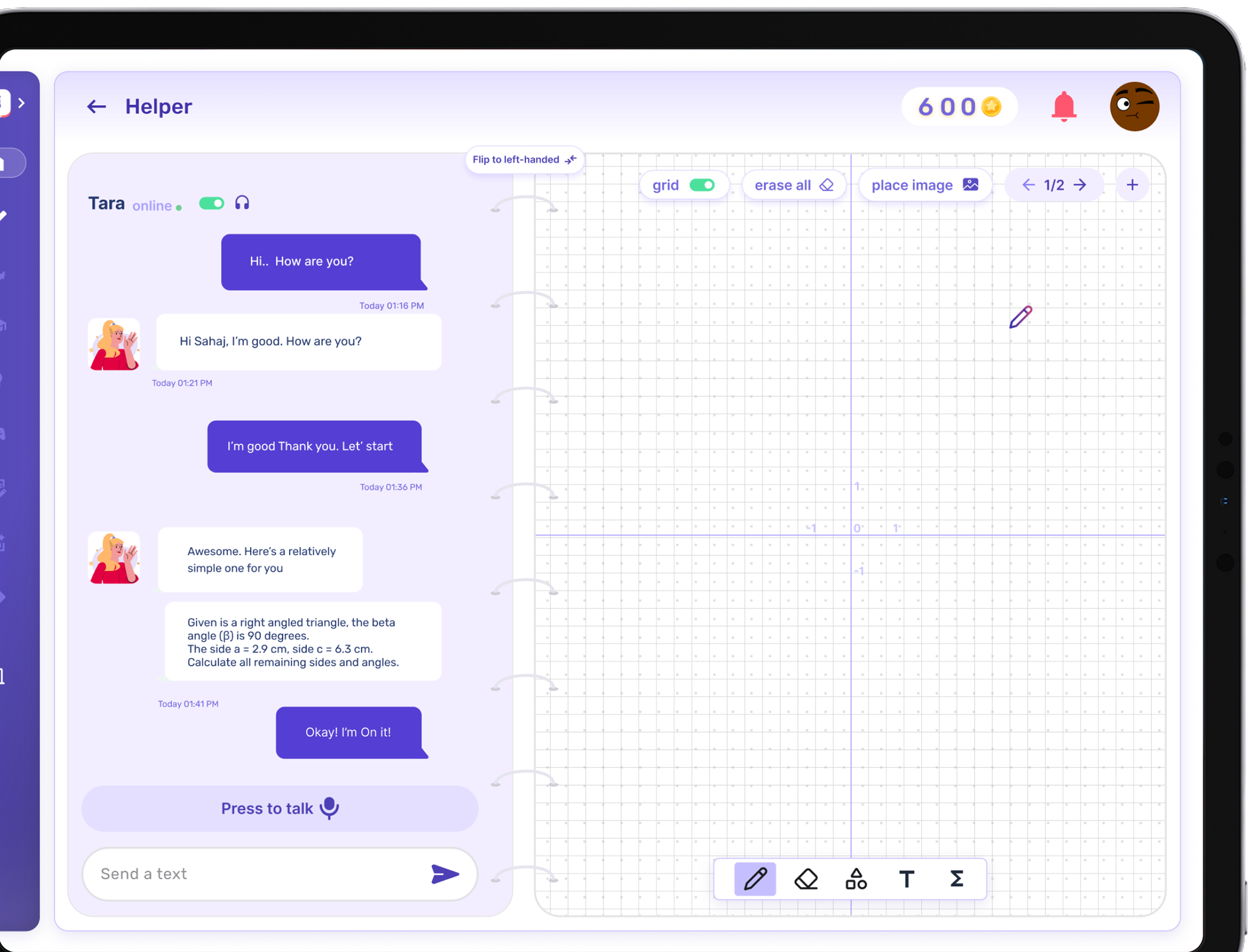
Why do vibe coded projects fail? There is a post making the rounds right now that answers this question perfectly. A developer on Reddit described a pattern we are seeing constantly in 2026: someone uses Claude Code or another AI tool to build a chat app in 20 minutes, then immediately announces they have “killed Slack and Discord.”
The response from experienced engineers was swift and unanimous. You have not killed anything. You have built a college homework assignment.
This is not a post to make anyone feel bad about vibe coding. AI tools are genuinely incredible for building prototypes and internal tools. But there is a dangerous confidence gap forming between people who have built a working demo and people who have shipped real software to real users at scale. Understanding why vibe coded projects fail is the difference between wasting months of your life and actually building something people will pay for.
TL;DR: Key Takeaways
Your prototype is maybe 0.5% of what makes a product actually work in production. The remaining 99.5% is infrastructure, reliability, edge cases, security, and years of iteration on problems that only surface when real humans use your thing at scale. AI tools let you skip the easy part faster, but the hard part of software has never been writing the first 200 lines of code. It has always been everything that comes after.
The Prototype Is Not the Product
Let’s start with the core misunderstanding. When you use Claude Code, Lovable, Replit, or any other AI coding tool to build something in an afternoon, what you have created is a demonstration. It proves that the concept can work in a controlled environment with one or two users on your laptop.
That is valuable. Seriously, it is. Five years ago, getting to that point would have cost you $10,000 to $30,000 and taken weeks or months. Now you can do it for the cost of a monthly subscription. That is real progress.
But here is what the prototype does not prove: that it works when 50,000 people are using it simultaneously. That the data stays consistent when two users edit the same thing at the same time. That the app recovers gracefully when the database goes down at 2 AM. That someone cannot steal every user’s data through a vulnerability you did not know existed. That it loads in under 3 seconds on a phone with a spotty cellular connection in rural Ohio.
As one engineer put it: your app works on localhost with 2 connections. That is not the same thing as a product. That is a homework assignment.
You Do Not Know What You Do Not Know
This is the part that is hardest to explain to someone who has never shipped software at scale, and it is the core reason why vibe coded projects fail.
There is an entire universe of engineering problems that simply do not exist when you are building a prototype. They only appear when real people start using your thing in ways you did not anticipate, at volumes you did not plan for, on devices and networks you did not test.
Here are some examples that non-technical founders almost never think about:
Database replication. When your app grows, one database server is not enough. You need copies of your data across multiple servers, sometimes across multiple continents. Keeping those copies in sync, especially when users are writing data simultaneously, is one of the hardest problems in computer science. Companies like Slack pay engineers $300,000+ a year who have spent a decade solving just this problem.
Race conditions. What happens when two users try to book the last available appointment at the exact same millisecond? What happens when a payment processes but the confirmation fails? What happens when a user hits the submit button twice because the first click seemed slow? These edge cases do not show up in demos. They show up in production, and they corrupt data, lose money, or break trust.
Message ordering and eventual consistency. If your app has any real-time features (chat, notifications, live updates), you need to guarantee that messages arrive in order, even when the network is unreliable. This is not something you can solve with a simple WebSocket connection. It requires careful architecture around message queues, acknowledgment systems, and retry logic.
Search indexing at scale. Searching through 1,000 records is trivial. Searching through 10 million records and returning results in under 200 milliseconds requires Elasticsearch or similar infrastructure, careful index design, and ongoing optimization. Your prototype’s basic text search will not cut it.
File storage and content delivery. Storing files for 100 users is easy. Storing and serving files for 100,000 users across the globe requires CDN infrastructure, compression strategies, caching layers, and storage cost management. A single poorly optimized image upload feature can cost you thousands of dollars a month in cloud bills.
Security. Not just “add authentication.” Real security means input validation on every endpoint, protection against SQL injection, XSS, CSRF, rate limiting, brute force protection, encryption at rest and in transit, proper session management, dependency vulnerability scanning, and regular penetration testing. According to Veracode’s 2026 GenAI Security Report, 45% of AI-generated code contains security vulnerabilities. Your prototype almost certainly has holes you do not know about.
None of these problems are visible in a demo. All of them will surface in production. And the person who vibe coded the prototype has no idea they are coming.
Get Your Free 45-Minute App Roadmap
Meet 1-on-1 with our senior product team. We’ll map your MVP or enterprise app and hand you a personalized plan—clear scope, a realistic timeline, and fixed monthly costs—for iOS & Android, web, tablets & wearables, and AI.
The Confidence Is the Most Dangerous Part
Here is what experienced developers find most concerning about the vibe coding trend. It is not that people are building prototypes with AI. It is the confidence that follows.
The pattern goes like this: someone builds a working demo, sees it actually function, and concludes that the hard work is done. “It is not perfect, but AI one-shotted it. I just need to adjust a few things and deploy.”
Those “few things” they need to adjust? That IS the entire product.
Think of it this way. Pouring a concrete foundation is an essential step in building a skyscraper. But nobody pours a slab and then claims they basically built a skyscraper and just need to adjust a few things. The foundation is maybe 2% of the total work. The prototype is the same: a necessary starting point, not a nearly finished product.
A principal engineer with 16 years of experience commented on this exact phenomenon: roughly 10% of his work on any project is building the proof of concept. The other 90% is making it not fall apart when real people depend on it. That ratio has not changed with AI tools. If anything, the 90% has gotten more important because the 10% is now faster.
The “Replace My SaaS” Trap
There is a growing trend of people using AI to build internal replacements for tools like Slack, Notion, Trello, or CRMs. The logic seems sound: “Why am I paying $200 a month for Slack when I can build my own version?”
Here is what those people discover within a few months:
You now own the uptime. When your homegrown chat tool goes down at 10 AM on a Monday, there is no support team to call. You are the support team. You are debugging production issues while your team sits idle.
You own the backups. If the database gets corrupted or accidentally deleted, there is no disaster recovery team. Did you set up automated backups? Did you test restoring from them? Do you have point-in-time recovery?
You own the security updates. Every dependency in your codebase gets security patches. Are you monitoring them? Are you applying them? One unpatched vulnerability in a chat application could expose every message your company has ever sent.
You own the feature requests. Your team will want threads, reactions, file sharing, search, notifications, integrations with other tools, mobile support. Each feature is a mini-project. You have not saved money. You have taken on a part-time job maintaining your own inferior version of a tool that thousands of engineers already maintain full-time.
Code is a liability, not an asset. Every line of code you write is a line you have to maintain, debug, update, secure, and eventually refactor or replace. The SaaS tool you were paying for handled all of that for you. You traded a predictable monthly expense for an unpredictable, growing maintenance burden.
Marketing and Product-Market Fit Still Matter More Than Code
Here is a truth that gets lost in the excitement about AI coding tools: nobody cares about your architecture. Nobody cares whether AI wrote your code or a human did. Users care about one thing: does this solve my problem better than the alternatives?
The hard part of building a successful app has never been writing the first 200 lines of code. It never was. The hard part is figuring out what to build (product discovery), getting people to find it (marketing), convincing them to try it (positioning), getting them to pay for it (monetization), and keeping them around (retention).
AI tools do not help with any of that. You can build a pixel-perfect app in a weekend, but if nobody knows it exists or nobody wants what it does, you have built nothing. According to CB Insights, the number one reason startups fail is not technical problems. It is building something nobody wants.
The founders who succeed in 2026 are not the ones who build the fastest prototype. They are the ones who validate demand first, build the right thing, and then invest in making it work at scale.
What AI Tools Are Actually Great At
Let’s be clear about what AI coding tools do well, because the answer is: a lot.
Validating ideas fast. You can test whether a concept resonates with users before spending $30,000 to $75,000 on professional development. That is genuinely transformative for founders.
Building internal tools. If you need a dashboard for your team of 10, a data entry form, or a simple automation, AI tools can build these quickly and they do not need to scale to millions of users.
Creating detailed specifications. A working prototype is the single best specification document you can hand to a professional development team. It shows exactly what you want in a way that words and wireframes never could.
Accelerating professional developers. The best use of AI coding tools is in the hands of experienced engineers who know what good architecture looks like, understand security requirements, and can evaluate whether the AI’s output is production-ready. According to developer productivity research, 92% of professional developers now use AI tools in their workflow, and they see 30-55% speed improvements on specific tasks.
The pattern is consistent: AI tools amplify existing skill. They do not replace it. A great developer with AI tools is dramatically more productive. A non-developer with AI tools can build a demo but not a product.
The Gap Is Real, and Closing It Requires Humans
The gap between prototype and production is not shrinking. If anything, user expectations are higher than ever. People expect apps to load instantly, work offline, sync across devices, handle their data securely, and never lose their work. Meeting those expectations requires:
Architecture designed for your specific scale. Not every app needs the same infrastructure. A fitness app for 10,000 users has different requirements than a marketplace for 500,000. Getting this right requires experience building and scaling similar systems.
Security tailored to your compliance requirements. Healthcare apps need HIPAA compliance. Fintech apps need PCI DSS. Kids’ apps need COPPA. These are not checkboxes. They are architectural decisions that affect every layer of your application.
Testing that catches bugs before users do. Professional QA engineers think about edge cases, load testing, accessibility, device compatibility, and regression testing in ways that AI tools fundamentally cannot.
Design that actually works for real people. A functional UI is not the same as a good UI. Professional designers understand user psychology, accessibility requirements, and how to create experiences that people want to use repeatedly.
Project management that keeps everything on track. Real software projects involve dozens of decisions per week about scope, priorities, timelines, and tradeoffs. Someone needs to make those decisions with the full context of your business goals, budget, and user needs.
So What Should You Actually Do?
If you have built a prototype with AI tools and you are wondering what comes next, here is the honest answer:
Use your prototype as validation. You have proven the concept works. That is step one, and it is a real accomplishment. Now you know what to build.
Get honest about the gap. Look at your prototype and ask: would I trust this with my credit card number? Would I trust this with my medical records? Would I bet my business on this not going down during a product launch? If the answer to any of those is no, you know what needs to happen.
Talk to people who have shipped real products. Not to sell you something, but to help you understand what the road from prototype to production actually looks like. Most reputable development firms, including Chop Dawg, offer free initial consultations specifically for this purpose.
Budget for the real work. AI has made development significantly more affordable. Projects that cost $75,000 to $150,000 in 2020-2023 now typically run $30,000 to $75,000 and deliver in 4 to 6 months. That is real money, but it is also the cost of building something that actually works, scales, and does not embarrass you when real users find the bugs.
Do not skip the hard parts. The entire value of your product is in the hard parts: the reliability, the security, the performance, the polish, the edge case handling, the graceful error recovery. Those are the things that separate a toy from a tool people depend on.
The Bottom Line
AI lets people skip the easy part faster. That is genuinely great. But the hard part of software development has not changed: architecture, scalability, security, edge cases, deployment, maintenance, and iteration based on real user feedback. That still requires experienced developers who have shipped real products and learned from real failures.
When someone says “I can just build this myself with AI,” what they are really saying is “I do not yet understand how much I do not know.” That is not an insult. It is just the reality of software development, and it has not changed despite the tools getting dramatically better.
Your prototype is valuable. Your ambition is admirable. But the next step is not deploying what you have. It is partnering with people who can turn what you have into something real.
Book a free 45-minute consultation at chopdawg.com. Bring your prototype. We will tell you exactly where it stands, what it needs, and the fastest path to making it production-ready.
Frequently Asked Questions
Is my vibe coded prototype completely useless?
Not at all. Your prototype is extremely valuable as validation and as a specification document. It proves the concept works and shows exactly what you want to build. What it is not is a production-ready product. Think of it as a detailed blueprint, not a finished building.
Can I just hire one freelance developer to fix my prototype?
Maybe for very simple apps. But for anything handling user data, payments, or expecting significant traffic, you need more than one person. You need architecture review, security expertise, QA testing, and ongoing maintenance. A single freelancer typically does not cover all of those disciplines.
How much does it cost to take a prototype to production?
AI-accelerated development has reduced costs significantly. Projects that ran $75K-$150K in 2020-2023 now typically cost $30K-$75K and deliver in 4-6 months. The exact cost depends on complexity, compliance requirements, and scale. A free consultation with a development firm can give you a specific estimate.
What if my app only needs to serve 100 users?
Scale changes the equation. A simple internal tool for 100 known users has much lower requirements than a consumer app. For small internal tools, a vibe coded solution might work fine with some professional security review. For anything public-facing or handling sensitive data, professional development is still the smart path.
Do professional developers even use AI tools?
Yes, 92% of developers use AI tools in their workflow as of 2026. The difference is that professional developers know how to evaluate the output, catch security issues, design proper architecture, and build for scale. AI tools make good developers faster. They do not make non-developers into developers.
Is this just developers trying to protect their jobs?
Look at the evidence. The people most vocal about vibe coding limitations are the same people who use AI tools every day and love them. They are not anti-AI. They are pro-reality. They have seen what happens when untested code hits production, and they are trying to save founders from expensive lessons.
What problems will I hit first when I deploy my prototype?
Security vulnerabilities and performance issues are usually first. Then data consistency problems when multiple users are active simultaneously. Then scaling issues as traffic grows. Then maintenance burden as dependencies need updates. Each of these can be a showstopper if you are not prepared.
Can AI tools ever replace the need for developers?
Not in the foreseeable future. AI tools are getting better at writing code, but software development is not primarily about writing code. It is about understanding requirements, making architectural decisions, handling edge cases, ensuring security, and maintaining systems over time. AI assists with all of these but cannot own any of them independently.



 15 Min