
































 20 Min

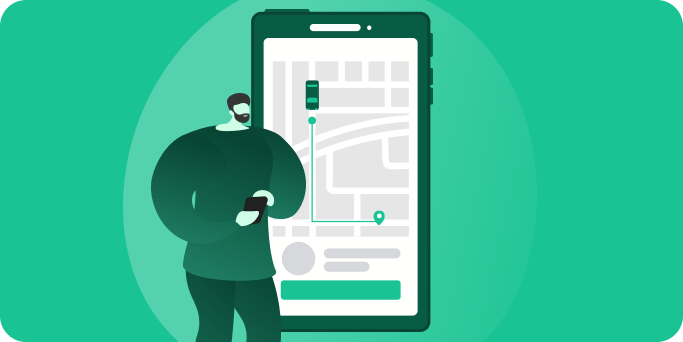
Everyone thinks they can build Uber.
The concept is simple: connect drivers to riders, handle the payment, and take a cut. In reality, ride-sharing app development is one of the most complex, expensive, and heavily regulated software projects you can undertake.
We’ve built several on-demand transportation applications, and we want to be direct about what you’re getting into.
This guide covers the real infrastructure, engineering challenges, compliance requirements, and costs for building a ride-sharing app in 2026.
The Core Technology Stack You Cannot Skimp On
A functional ride-sharing app requires real-time GPS tracking, intelligent driver-rider matching, surge pricing logic, secure payment processing, and integrations with background check systems. Each of these is not a checkbox feature; each is a complex subsystem.
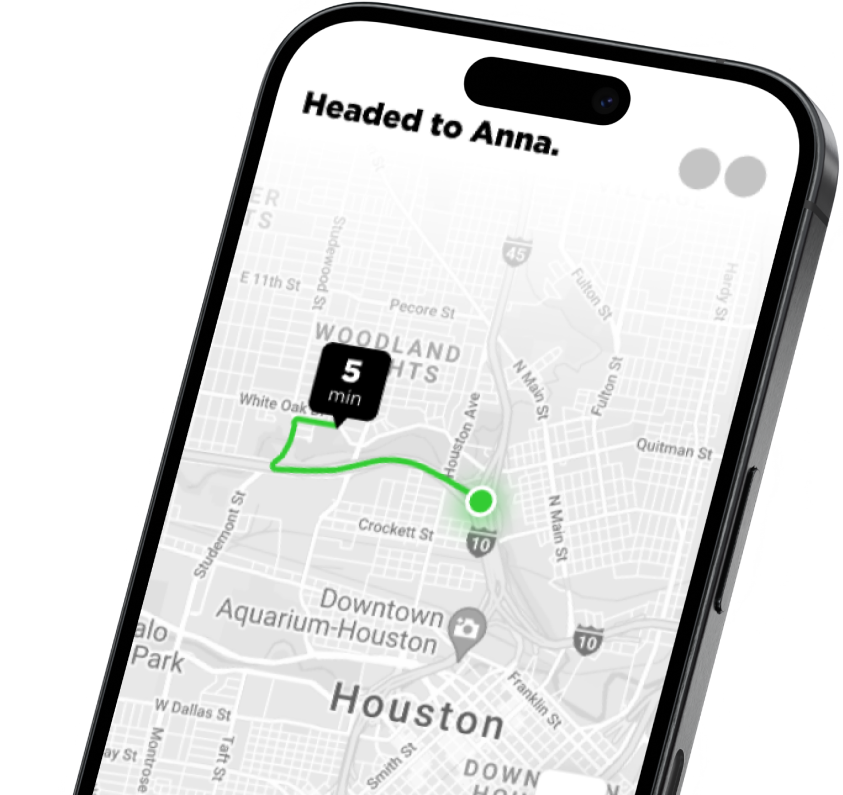
Real-Time Location Services at Scale. Your app must track driver location continuously, update it to riders in near real-time, and route requests to the closest available driver. This sounds straightforward until you realize you need to handle thousands of concurrent connections, geographic clustering, and latency under 100 milliseconds.
Google Maps Platform provides mapping, directions, and distance calculations. AWS location services gives you geofencing, route optimization, and real-time tracking infrastructure. But these are starting points. You still need custom logic for handling edge cases: what happens when GPS signal drops? How do you prevent drivers from spoofing location? How do you sync state when a user loses connection for 30 seconds?
Most founders underestimate the engineering effort here by a factor of two.
Driver-Rider Matching: The Algorithm That Looks Easy
Matching sounds simple: when a rider requests a ride, show them available drivers sorted by distance and time, pick the closest one, and connect them. The algorithm is exponentially more nuanced. You’re trying to optimize for multiple conflicting goals simultaneously:
- Minimize rider wait time (user experience)
- Maximize driver utilization (economics)
- Respect driver preferences (some drivers won’t accept long rides, some have vehicle type limits)
- Account for real-time traffic patterns and predicted travel times
- Account for surge pricing conditions (high-demand areas)
- Handle geographic hot spots (pickup locations that are optimal vs suboptimal)
- Handle edge cases (driver goes offline mid-route, rider cancels, traffic spike)
This is a constraint satisfaction problem that becomes computationally expensive as your user base grows. With 100 drivers online, you might iterate through each one for each request (brute force). With 5,000 drivers online, that approach becomes impossibly slow. You need spatial indexing (dividing geographic areas into grids and searching only relevant grids), probabilistic matching (machine learning models that predict driver acceptance probability), and real-time decision trees that balance competing objectives.
Most ride-sharing apps use a combination of geographic proximity matching and machine learning-based ranking. Your MVP can start with basic proximity matching (closest available driver within X radius), but you’ll hit performance walls around 5,000 concurrent drivers. At that point, you need more sophisticated matching infrastructure. The companies that scale beyond local markets build dedicated teams around matching algorithm optimization because it directly impacts profitability and user satisfaction.
Surge Pricing: The Logic That Angers Users
Surge pricing adjusts driver pay and rider costs based on demand relative to available drivers. It sounds like a simple multiplier, but it becomes a political problem fast. Riders hate surge pricing. Drivers expect it during high-demand periods but feel exploited by unfair multipliers.
Your surge logic needs to:
- Calculate demand-to-supply ratio in real-time across your service area
- Apply surge multipliers consistently without appearing arbitrary
- Handle the edge case where surge pricing actually drives riders away, reducing demand
- Comply with local regulations (some cities have capped surge pricing)
The technical implementation is straightforward. The business logic is not.
Payment Processing and Marketplace Economics
Riders pay via credit card, debit card, or wallet. Drivers need to receive payouts. You are operating a marketplace, which means you are holding funds temporarily and moving money between parties.
Stripe Connect for marketplaces handles driver onboarding, payment disbursement, and compliance reporting. Stripe takes a percentage cut (2.2% + $0.30 per transaction for most ride-sharing use cases), so you will see that cost reflected in your unit economics.
You still need to handle:
- Tipping (separate transaction flow)
- Refunds and disputes (rider claims driver took wrong route)
- Tax reporting (Stripe Connect generates 1099s, but you are responsible for accuracy)
- Chargeback management (Stripe disputes claims with credit card networks)
Payment processing is reliable, but payment operations are labor-intensive. Plan for customer support overhead around billing disputes.
Get Your Free 45-Minute App Roadmap
Meet 1-on-1 with our senior product team. We’ll map your MVP or enterprise app and hand you a personalized plan—clear scope, a realistic timeline, and fixed monthly costs—for iOS & Android, web, tablets & wearables, and AI.
Background Checks and Insurance
You cannot legally operate a ride-sharing service without vetting drivers. Checkr background checks integrates with your onboarding flow, but the process is not instantaneous. Checkr takes 24-72 hours to complete a background check, and results can be disputed.
You need policies for what disqualifies a driver: felonies, certain misdemeanors, driving violations, drug convictions. These policies vary by jurisdiction. Some cities have explicit driver qualification standards; others defer to the app operator.
Insurance is another layer. Riders expect coverage if they are injured. Drivers expect coverage if they are liable for an accident. Insurance requirements vary by state and city. Some jurisdictions require you to carry coverage; others require drivers to carry their own coverage. Many ride-sharing apps carry a hybrid model.
Budget for ongoing background check costs (typically $20-50 per driver, recurring annually) and legal consultation for insurance requirements in your target cities.
Regulatory Compliance: Different Rules in Every City
This is the unglamorous reality of ride-sharing apps: every city has different rules.
- Some cities cap driver earnings or require minimum base fares
- Some cities require driver training certifications
- Some cities mandate data sharing with municipal authorities
- Some cities prohibit surge pricing
- Some cities require you to operate through licensed taxi or transportation companies
Texas, Florida, and California have relatively permissive regulations. New York City has strict requirements. Some cities have banned ride-sharing entirely or require partnership with local taxi services.
You cannot build a national ride-sharing app with a single regulatory model. You need legal consultation for each city you enter. Plan to allocate 10-15% of development budget to regulatory compliance and legal counsel.
Real-Time Communication: SMS and In-App Messaging
Riders need to know when a driver is arriving. Drivers need to confirm they accepted the ride. Both need real-time navigation and customer support chat.
Twilio for SMS/voice handles outbound SMS notifications (driver is 4 minutes away) and voice calls (rider cannot find the car). In-app messaging requires a WebSocket or long-polling infrastructure to push updates in real-time.
Most ride-sharing apps combine SMS for critical notifications with in-app chat for secondary updates. Plan for Twilio costs around $0.01-0.05 per message, which adds up at scale.
Insurance and Liability Considerations
Riders expect to be protected if they’re injured during a ride. Drivers expect to be protected if they’re liable for an accident. Insurance is not optional.
The insurance landscape varies by state and city. Some jurisdictions require the app operator (you) to carry commercial ride-sharing insurance. Others require drivers to carry their own coverage or have it verified through the app. Some require a hybrid model: you carry primary coverage up to a certain amount, drivers carry secondary coverage.
Insurance costs vary widely ($0.50-2.00 per ride on average, built into your pricing). You need a broker who understands ride-sharing to navigate this correctly. Making insurance decisions wrong creates legal liability if someone is injured and coverage doesn’t apply.
The Operating Reality: Scaling Ride-Sharing
Building the MVP is one thing. Operating and scaling a ride-sharing service is another.
Driver Supply Management. Your app only works if drivers are available. You need enough drivers in your service area to keep rider wait times low (under 5 minutes). This usually requires 200-400 drivers for a city of 100,000 people. Attracting drivers requires competitive pay, simple onboarding, and good support. A good driver support team is essential.
Demand Management. Similarly, you need enough riders to make driver income worthwhile. If a driver only gets 2 rides per hour, they won’t use your app. You need minimum density: enough rider demand that drivers can make reasonable income.
Customer Support. Riders call when pickups are late. Drivers call about app issues or payment problems. You need multilingual support (if you’re in a diverse city) and extended hours (6am-midnight at minimum).
Pricing and Unit Economics. You take a cut of each ride (typically 15-25%). Drivers keep the rest. For both parties to be happy, pricing needs to make sense. Too low and drivers won’t participate. Too high and riders use competitors.
The Total Cost: Building a Ride-Sharing MVP in 2026
A functional ride-sharing app MVP that supports real-time GPS tracking, driver matching, surge pricing, payments, background checks, and regulatory compliance costs $75,000 to $150,000.
Here is a realistic cost breakdown:
- Backend infrastructure and real-time services (WebSocket infrastructure, geographic clustering, database): $20,000-40,000
- Mobile app development (iOS and Android, both driver and rider apps): $30,000-60,000
- GPS, location, and mapping infrastructure (Google Maps, AWS Location Services): $5,000-10,000
- Payment processing setup and integration (Stripe Connect marketplace setup): $3,000-5,000
- Background check and compliance systems (Checkr integration, legal consultation for your city): $2,000-5,000
- Project management, testing, quality assurance: $10,000-20,000
- Contingency for unexpected challenges (delays, scope changes, integration issues): $5,000-15,000
This estimate assumes you are building in the US, starting with one city, and aiming for a functional MVP that works for hundreds of users daily, not a fully polished, heavily marketed product. Adding features (in-app tipping, driver ratings, ride scheduling), scaling to multiple cities, and building driver-side analytics and marketing add significantly to the cost.
Chop Dawg has built several on-demand transportation applications. Based on our experience, most founders underestimate the complexity of real-time location services and regulatory compliance by 50%. The operational complexity (driver support, customer support, unit economics) is often underestimated by 100%. Plan accordingly.
Common Pitfalls and How to Avoid Them
Underestimating real-time infrastructure. Founders often prototype with a simple API that fetches driver location every 10 seconds from the server. This doesn’t work at scale. You’re creating constant server load and drivers aren’t seeing truly real-time updates. Real-time location at scale requires persistent WebSocket connections (driver and rider maintain an open connection to your server, pushing location updates whenever the driver moves), geographic clustering (dividing your service area into cells and managing connections per cell), and message queuing (Redis or RabbitMQ) to handle spikes. Start with this architecture from day one, even if your MVP only serves 100 drivers. You want the architecture to scale before you need it to.
Ignoring regulatory risk early. Do not build your entire app and then discover your target city requires driver licensing exams, prohibits surge pricing above certain thresholds, or requires you to partner with local taxi services. Legal consultation should happen in weeks 1-2, not week 12. You might discover your business model is illegal in your target market.
Underinvesting in driver onboarding. A smooth driver onboarding process (background check, insurance verification, payment setup, vehicle inspection, document uploads, training) directly impacts driver supply. Friction here costs you drivers. If your onboarding process takes 3 hours and competitors take 30 minutes, you lose drivers. Invest heavily in UX here. Automate everything possible.
Assuming payment processing is a commodity. Stripe Connect is excellent for marketplace payments, but it handles payment mechanics, not the operational complexity of driver payouts, tax reporting, dispute management, and compliance. You still need to manage payouts (weekly, monthly, per-ride). You need to handle disputes (rider claims the price was wrong, driver claims they weren’t paid). You need tax reporting (1099s for drivers, sales tax for your service fees). Budget for payment operations as a distinct function, not something you can ignore.
Treating background checks as a one-time step. You screen a driver once, they’re approved. But screening is ongoing. You need to re-screen drivers periodically. Most ride-sharing companies re-run background checks annually. Plan for recurring costs and operational overhead. Track which drivers failed re-screening and remove them.
What Comes Next
Building a ride-sharing app is feasible, but it requires realistic expectations about cost, timeline, and complexity. You are not just building an app. You are building infrastructure, integrating with multiple third-party services, and navigating city-by-city regulatory requirements.
If you are serious about building a ride-sharing or on-demand transportation app, we recommend starting with a single city, a specific niche (luxury rides, corporate transportation, or rural shuttle service), or a specific use case (airport pickups, event transportation). This gives you room to solve technical and regulatory challenges before scaling nationally.
Chop Dawg can help. We have built several on-demand transportation applications and understand the full stack: real-time infrastructure, payment processing, regulatory compliance, and driver onboarding. Our typical transportation app projects range from $75,000 to $150,000 for a fully functional MVP.
Ready to discuss your ride-sharing app? Schedule a free 45-minute consultation with Chop Dawg today.
Frequently Asked Questions
What is the average cost to build a ride-sharing app in 2026?
A functional ride-sharing MVP that includes real-time GPS tracking, driver-rider matching, payment processing, background checks, and basic compliance support costs $75,000 to $150,000. Costs vary based on complexity, number of initial cities, and desired feature set.
How long does it take to build a ride-sharing app?
A basic MVP typically takes 4-6 months with a dedicated team. This assumes a single city launch, straightforward regulatory environment, and standard feature set. Complex regulatory landscapes or multi-city launches add 2-3 months.
Do I need real-time GPS tracking from day one?
Yes. Real-time location tracking is fundamental to the ride-sharing experience. Drivers and riders expect updates within seconds. Prototyping with slower polling will not work at scale. Invest in proper real-time infrastructure from the beginning.
What payment processing solution should I use for a ride-sharing app?
Stripe Connect is the industry standard for marketplace payments. It handles driver onboarding, fund disbursement, and compliance reporting. Plan for Stripe’s 2.2% + $0.30 per transaction fee and additional operational costs for payment support.
Which cities have the most permissive ride-sharing regulations?
Texas, Florida, and California generally have permissive regulations. New York City has strict driver and vehicle requirements. Regulations vary widely, and some cities have banned ride-sharing entirely. Always consult local legal experts before launching in a new city.
How often should I re-screen drivers for background checks?
Most ride-sharing apps re-run background checks annually. Some companies check every 6 months for high-risk roles. Budget for recurring background check costs around $20-50 per driver per year.
Can I build a ride-sharing app with a single engineering team?
Yes, but it requires diverse skills. You need backend engineers for real-time services and payment processing, mobile developers for iOS and Android, and DevOps engineers for infrastructure. A team of 3-5 engineers is typical for a ride-sharing MVP.
What is surge pricing and why is it controversial?
Surge pricing adjusts driver pay and rider costs based on demand relative to available drivers. It incentivizes drivers to work during peak hours and balances supply and demand. Riders often perceive it as unfair, and some cities have regulations capping surge multipliers.




 15 Min