













 15 Min


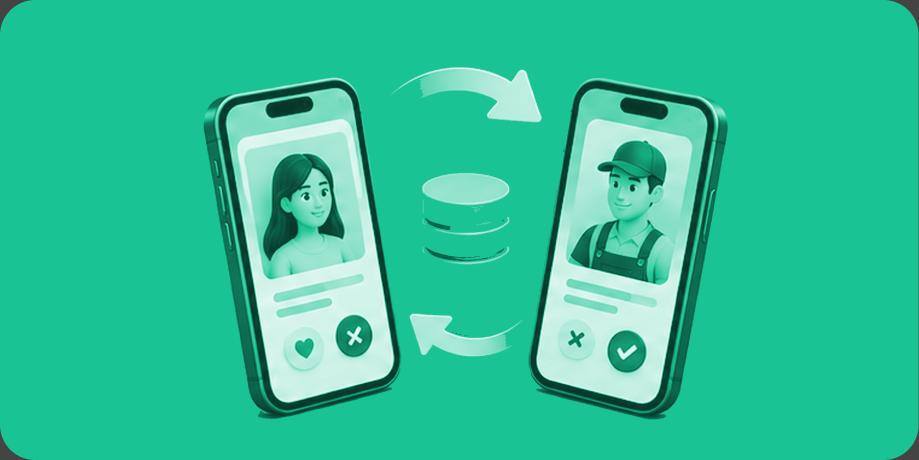
Two-sided apps take longer to build and test because they are not one product: they are a customer app, a provider app, and an admin platform wearing a single brand. That hidden multiplier surprises more founders than any other scoping fact we know. The prize explains the appetite: Uber, the archetypal two-sided app, drove $162 billion in gross bookings in 2024 with 156 million monthly users, per Business of Apps. But every marketplace, gig platform, and booking product inherits the same structural weight: matching logic, money moving in two directions, and every flow tested from both ends. Here is exactly where the extra months and dollars go, so you can scope with eyes open.
Key Takeaways
- A two-sided app is really three builds: the consumer side, the provider side, and the admin panel that governs both.
- Matching logic, availability, and booking states form an invisible engine that has no equivalent in single-sided apps.
- Payments run in two directions: collecting from customers, then holding, splitting, and paying out to providers.
- Quality assurance (QA) effort roughly doubles, because every connected flow must be verified on both screens at once.
- Two-sided products typically land in the complex build tier, from about $75,000, versus $25,000 to $60,000 for a focused single-sided minimum viable product (MVP).
Two-Sided Apps Are Two Products in One (Actually Three)
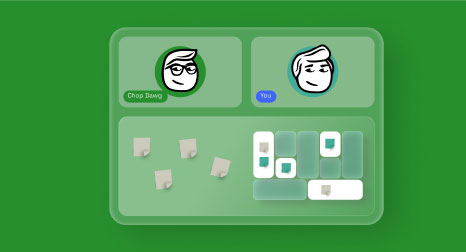
The consumer side and the provider side of a marketplace are separate products: different users, different screens, different onboarding, different jobs to be done. Add the admin platform every marketplace needs to verify providers, resolve disputes, and tune the market, and the honest count is three.
Consider a home-services marketplace. Homeowners need search, profiles to browse, booking, payment, and reviews. Providers need onboarding with credential verification, a calendar, lead management, earnings dashboards, and payout settings. Almost nothing is shared but the login screen and the brand. Then comes the side founders forget to budget: the admin panel where your team approves providers, moderates content, referees disputes, adjusts fees, and watches marketplace health. Across 500+ launches since 2009, the pattern we see is consistent: the admin platform for a two-sided product carries as much scope as a small standalone app, because it is one.
Matching Logic Is Its Own Engine
Between the two sides sits the machinery that connects them: search and filtering, availability, matching rules, and the state machine that walks every transaction from request to acceptance to completion to review. None of this exists in a single-sided app, and all of it is invisible until you scope it.
Matching sounds simple (“show homeowners nearby plumbers”) until the real questions arrive. What happens when two customers request the same provider for the same slot at the same second? A marketplace has to guarantee a booked slot can never double-book, which is a genuine engineering problem in distributed systems. What states can a booking pass through, and what happens on cancellation at each one? Who gets notified, when, on which side? Every arrow in that diagram is code, and every code path is a test case. This engine is routinely a third of the development effort, and it is the part no customer ever sees when it works.
Payments Flow in Two Directions
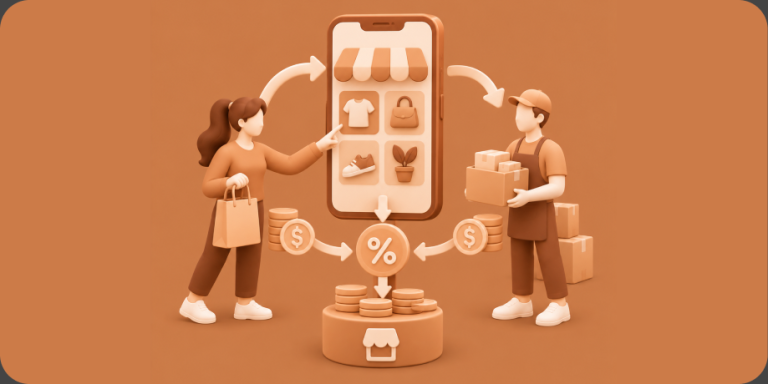
Single-sided apps collect money. Two-sided apps collect it, hold it, split it, and send it back out. That means charging customers, escrowing funds until service completion, deducting platform fees, paying providers out on schedule, and unwinding all of it cleanly when a refund or dispute lands.
Purpose-built rails like Stripe Connect handle the plumbing, but integrating them correctly is real scope: provider identity verification for payouts, fee logic on every transaction, partial refunds, dispute holds, and the tax reporting that follows from paying thousands of independent providers. Each money path also doubles for testing, because a refund is not one event but two: money returning to the customer and a clawback or adjustment on the provider side. Payments are where marketplace budgets most often meet reality, and where cutting corners is least forgivable.
Every Flow Gets Tested From Both Ends
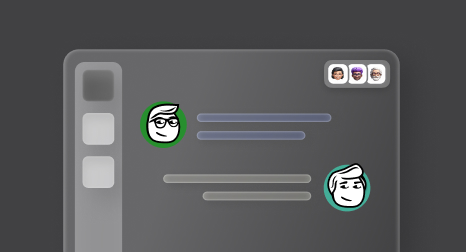
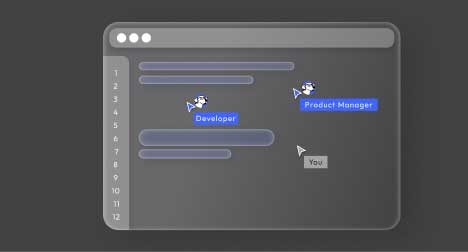
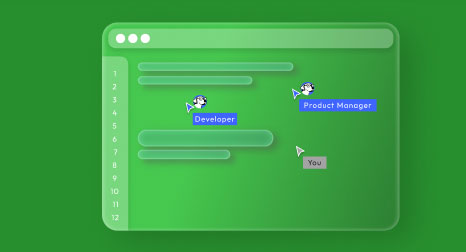
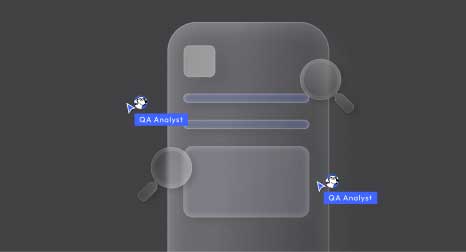
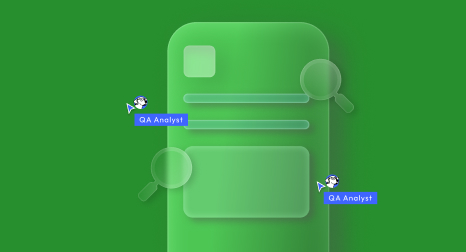
Two-sided QA is cause-and-effect testing at full scale: one tester acts on the consumer side while another verifies the result on the provider side, and a third checks that the admin view agrees. A booking is not tested when it can be created; it is tested when it appears correctly, exactly once, everywhere it should.
Run the multiplication on a single feature. A cancellation must work from the customer side and the provider side, at every booking state, with correct refund behavior, correct notifications to the other party, and a correct audit trail in the admin panel, across the device and operating system matrix on both apps. That is why testing effort roughly doubles even though the feature list only looks moderately longer, and why disciplined marketplaces run QA in parallel with development sprints rather than saving it for the end.
| Dimension | Single-sided app | Two-sided app |
|---|---|---|
| Products to design and build | One app plus a light admin | Consumer app, provider app, full admin platform |
| Onboarding flows | One | Two, with provider verification and credentialing |
| Core engine | Feature logic only | Search, matching, availability, booking state machine |
| Payments | Collect only | Collect, escrow, split fees, pay out, handle disputes |
| QA approach | Single perspective plus devices | Every flow verified from both ends plus admin |
| Typical 2026 budget | Focused MVP $25,000 to $60,000 | Usually the complex tier, from about $75,000 to $150,000+ |
| Typical timeline | 3 to 6 months | 6 to 12 months |
Get Your Free 45-Minute App Roadmap
Meet 1-on-1 with our senior product team. We’ll map your MVP or enterprise app and hand you a personalized plan—clear scope, a realistic timeline, and fixed monthly costs—for iOS & Android, web, tablets & wearables, and AI.
What This Means for Scope and Budget
Plan a two-sided product as a complex build, not a standard MVP. Honest marketplace floors start around $75,000 and run to $150,000 or more, on six-to-twelve-month timelines, while a focused single-sided MVP runs $25,000 to $60,000 over three to six months. The gap is structural, not vendor greed.
You can manage the multiplier without pretending it away. Launch one category in one metro instead of everything everywhere. Keep version one of the provider side lean and let the admin panel absorb early operational work your team does by hand. Cut every feature that is not booking, paying, or trust. And take the modern tailwind: AI-assisted engineering with senior engineers reviewing every change has roughly halved what these builds cost and took from 2020 to 2023, which is why $75,000 now buys what $150,000 once did. One more build implication worth planning for: both sides launch into an empty room, so your admin tooling should make it easy to hand-recruit, verify, and feature early supply. The strategies for seeding a marketplace are a growth topic of their own; the build lesson is simply that your first fifty providers will be onboarded semi-manually, and your platform should expect that.
Where Chop Dawg Fits: Marketplaces Are a Home Game
Two-sided platforms are among the products we build most, in development engagements that begin with strategic planning sized for three products, not one, on fixed monthly budgets with transparent pricing and timelines we publish before you commit. We are actively designing and building marketplace products in 2026, and the playbook stays consistent: React Native for both mobile sides, a React admin, Node.js and cloud infrastructure behind it, and Stripe rails for two-directional money.
The team is built for this weight: US-headquartered and US-led, with Americans owning leadership, product and project management, senior development, senior design, and senior QA, alongside our in-house Brazilian design team and in-house development, QA, and project management teams in Pakistan and India. Everyone is in-house, assigned by name to your project, fluent in English, on US hours. That structure eliminates the two fears that haunt this industry: the American salesperson quietly outsourcing your marketplace to strangers, and the offshore shop that cannot join a payments-debugging call during your business day. It is the same team organizations like Hilton and Big Brothers Big Sisters have trusted.
Three marketplaces show the range. CarePool connects healthcare facilities with verified caregivers, cutting onboarding from weeks to days; co-founder Jazmine Dredd: “They understood our vision and transformed it into a functional prototype that has impressed our investors.” The Bartender Host Marketplace pairs event hosts with verified bartenders using Stripe escrow, automated payouts, and a dispute console, taking bookings from days to minutes. And QuickPro matches homeowners with background-checked service providers through mutual swipe-to-match; founder Cameron Vollerthum reports, “Chop Dawg has consistently hit every milestone on time while sticking to our monthly deadlines.”
Frequently Asked Questions
Why do two-sided apps cost more to build than regular apps?
Because they contain three products: a consumer app, a provider app, and an admin platform, plus a matching engine and two-directional payments none of which exist in single-sided apps. Design, development, and testing all multiply accordingly, which is why marketplaces price in the complex tier rather than the standard MVP range.
How much does a two-sided marketplace app cost in 2026?
Honest marketplace builds start around $75,000 and commonly run to $150,000 or more, versus $25,000 to $60,000 for a focused single-sided MVP. AI-assisted engineering has roughly halved 2020 to 2023 costs, so today’s floors buy far more than they used to, but the three-products-in-one structure keeps marketplaces the pricier class.
How long does a two-sided app take to build?
Plan on six to twelve months for a well-scoped marketplace, versus three to six months for a focused single-sided MVP. The added time goes to the second user experience, the matching and booking engine, payout infrastructure, and cause-and-effect testing of every flow from both sides.
Can I launch one side of my marketplace first?
Not really, because a booking requires both parties, but you can launch lean: hand-recruit early providers through your admin panel, keep the provider app minimal, and constrain launch to one city or category. Both sides must exist at launch; they do not have to be equally polished.
Do I really need an admin panel at launch?
Yes. The admin platform is where your team verifies providers, moderates content, resolves disputes, adjusts fees, and monitors marketplace health, and early on it also compensates for missing automation. Skipping it does not remove the work; it just forces your team to do it in spreadsheets and database queries.
How is testing different for a two-sided app?
Every connected flow is tested from both ends simultaneously: one tester acts as the customer while another verifies the provider side and a third checks the admin record. Payments add refund and payout paths in both directions. Testing effort roughly doubles compared with a single-sided app of similar screen count.
Budget for Three Products, Celebrate One Platform
The two-sided multiplier is not a reason to shrink the ambition; it is a reason to scope it like the platform business it is. If you are weighing a marketplace, gig, or booking product, bring it to a free 45-minute consultation and we will map both sides, the admin, and the honest budget together, whether you are a founder at the napkin stage or an established company adding a marketplace arm, and whether or not you hire us. Since 2009, and now in our 18th year, Chop Dawg has launched 500+ products reaching more than 1 billion users, with 92% of partners returning and 300+ five-star reviews across trusted directories including Clutch, GoodFirms, G2, Google, and TopDevelopers.


 15 Min