

















 11 Min


When comparing US app development companies vs offshore teams, the honest answer is that US firms cost more per hour but reduce rework, communication friction, and oversight overhead, while offshore teams win on raw hourly price. With the U.S. mobile application market projected to grow at a 14% CAGR through 2030, both models are fighting for your budget, so the right choice depends on how you weigh price against control and total cost.
Key Takeaways
- US agencies typically charge $100 to $250 per hour, while offshore teams can run $15 to $60 per hour depending on region.
- Offshore wins on sticker price, but time zones, communication gaps, and rework can erase those savings on complex projects.
- US-managed teams give you overlapping work hours, strong IP protection, and clearer accountability.
- Distributed models combine senior US oversight with global talent to balance cost and quality.
- Total cost of ownership, not the hourly rate, is the number that actually matters for your launch.
U.S. App Development Companies
A US-based company manages your project from American soil with developers who share your business hours, language norms, and legal protections. Many US firms now run distributed teams, so you get senior local oversight without paying for an expensive downtown office.
Pros:
- Overlapping work hours mean same-day answers and faster decisions.
- Strong IP protection under US contract and copyright law.
- Clear accountability with one team owning strategy, design, build, and quality assurance (QA).
- Easier compliance with standards like HIPAA, GDPR, and SOC 2.
- Cultural and communication alignment that reduces misread requirements.
Cons:
- Higher hourly rates, generally $100 to $250 per hour.
- Premium talent can mean longer waitlists for the best teams.
- Pure onshore staffing can inflate costs if a firm carries heavy office overhead.
Offshore Development Teams
Offshore teams sit in regions like South Asia, Eastern Europe, or Latin America, where labor costs are lower. For well-scoped, stable projects with strong documentation, they can deliver real value at an attractive price.
Pros:
- Low hourly rates, often $15 to $60 per hour depending on country.
- Large talent pools that scale headcount quickly.
- Around-the-clock progress when paired with a daytime team.
- Strong fit for clearly defined, repeatable work.
Cons:
- Time zone gaps can stretch simple questions into multi-day exchanges.
- Communication and quality issues drive a large share of failed engagements.
- IP enforcement across borders is harder and slower.
- Management and rework costs can quietly erase the hourly savings.
- You often carry more oversight yourself, which costs your team’s time.
Side-by-Side Comparison
| Factor | U.S. Companies | Offshore Teams |
|---|---|---|
| Cost (hourly) | Higher: $100 to $250/hr | Lower: $15 to $60/hr |
| Speed | Fast decisions in shared hours | Fast coding, slower feedback loops |
| Communication | Real-time, same language and norms | Delayed by time zones and language gaps |
| Quality | Consistent, accountable QA | Varies widely by partner |
| Control | High, with one accountable team | Lower, more self-management needed |
| IP and risk | Strong US legal protection | Harder cross-border enforcement |
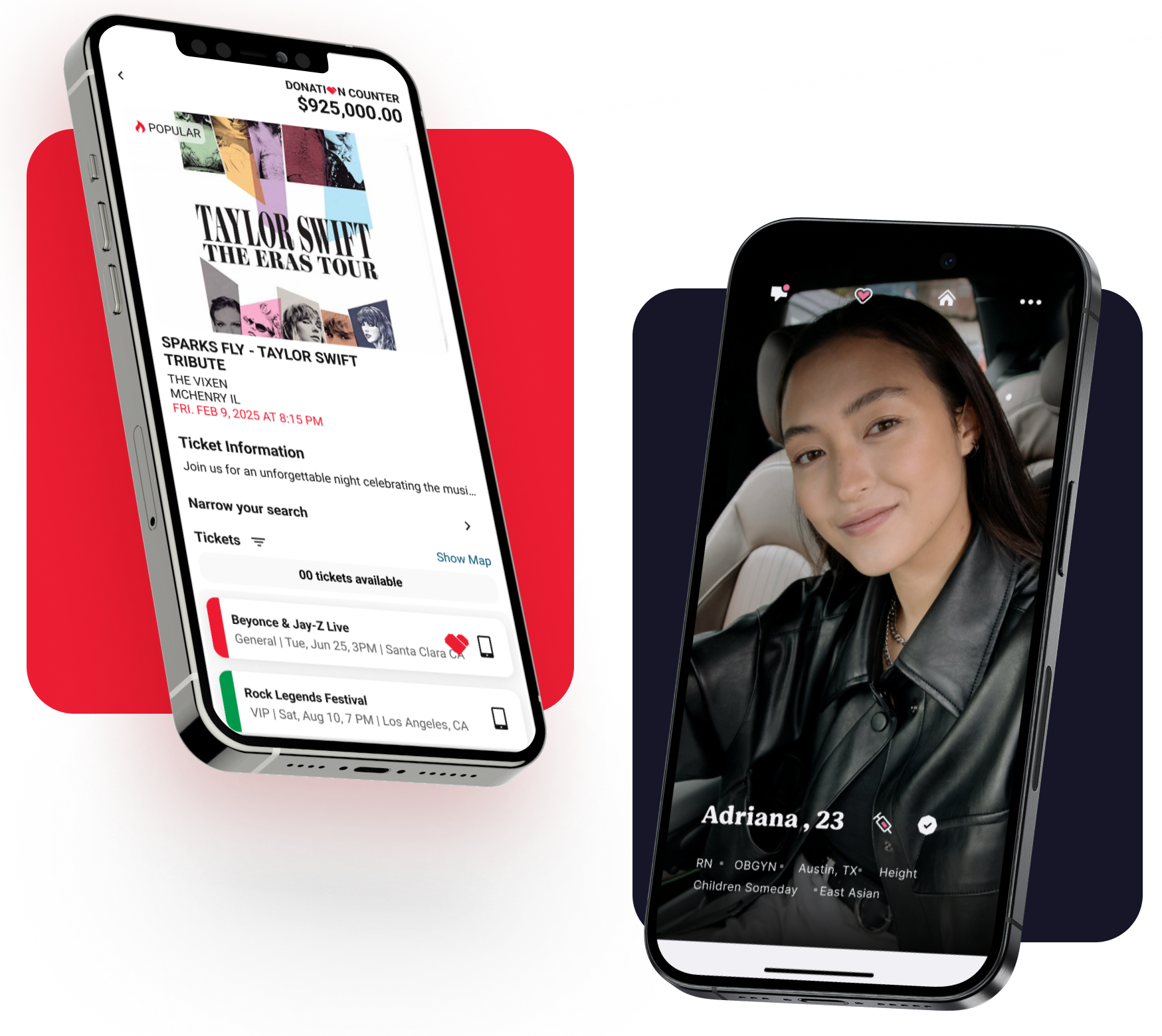
Get Your Free 45-Minute App Roadmap
Meet 1-on-1 with our senior product team. We’ll map your MVP or enterprise app and hand you a personalized plan—clear scope, a realistic timeline, and fixed monthly costs—for iOS & Android, web, tablets & wearables, and AI.
Where Chop Dawg Fits
Chop Dawg gives you a middle path that beats both failure modes this comparison exposes: the agency that fronts one American salesperson while hidden offshore developers build with no visibility or accountability, and the fully-overseas shop with no accountability, no grasp of American business norms, and no time-zone overlap. Founded in 2009, we are United States-headquartered and United States-led: leadership, product and project management, and senior development, design, QA, and marketing sit in the United States, complemented by an in-house Brazilian design team and in-house development, QA, and project-management teammates in Pakistan and India. Everyone is Chop Dawg in-house, never a subcontractor, a middleman, or a faceless salesperson, and every teammate is assigned directly to your project, so you talk to the real senior people building it. You choose a fully American team, the path we recommend for government and regulated work, or a cost-effective United States-plus-offshore blend that delivers the same quality, timelines, and customer experience for less. Either way you get United States-led delivery, overlapping work hours, and strong communication without paying for a costly physical office. We have powered 500-plus launches reaching more than 1 billion users for organizations that include NASA, Siemens, Hilton, and the NFL. We hold 300+ five-star reviews across trusted directories like Clutch, GoodFirms, and DesignRush, and carry a documented 18-plus-year track record. We work as a partner, not a faceless agency.
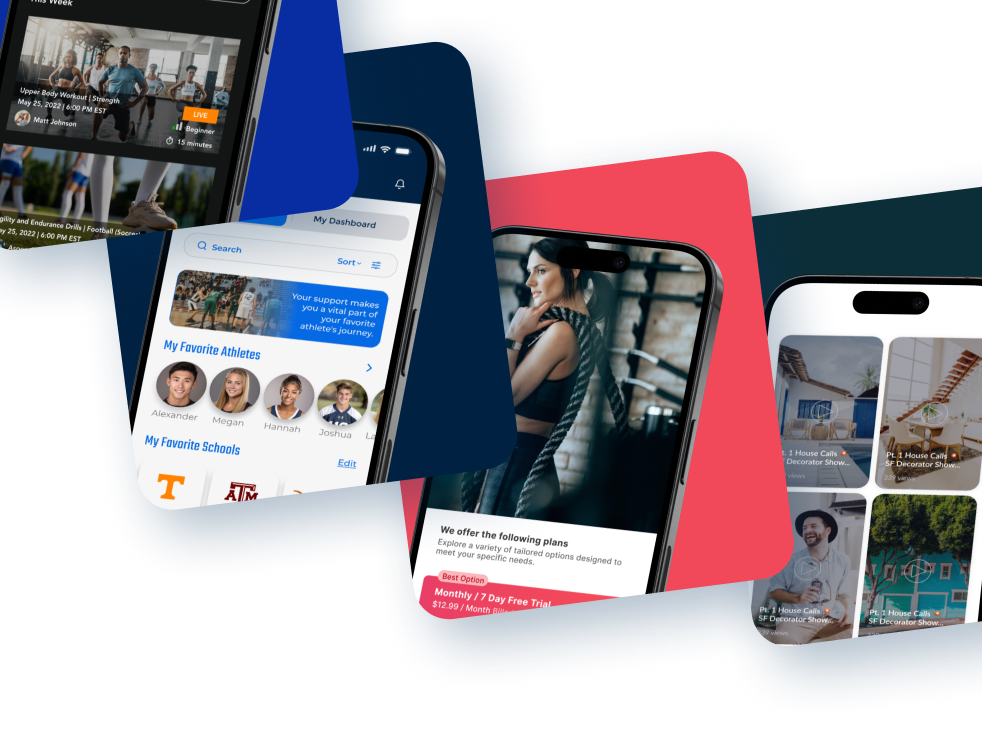
Instead of open-ended offshore hours, Chop Dawg works on fixed monthly budgets, transparent pricing, and precise timelines, so you get “on time and on budget” with no surprises. The full-time salaried team means the people who answer your Slack messages are employees invested in your product, not rotating contractors, and you own your code and IP outright. Design starts at $5,000 per month and development at $7,500 per month. A focused minimum viable product (MVP) generally runs about $25,000 to $60,000 all in, while more complex or enterprise builds run $75,000 to $150,000 or more, and ongoing maintenance starts at about $2,500 per month, and every engagement opens with a free 45-minute consultation and the most detailed proposal in the business, born from extensive planning, detailed in the pricing breakdown. A shared Slack channel, weekly and bi-weekly Zoom calls, and Figma, GitHub, Jira, and Confluence give you 24/7 visibility, and full-service coverage spans strategy, user interface / user experience (UI/UX), iOS, Android, web development, QA, launch, and maintenance with HIPAA, GDPR, and SOC 2 readiness. The result shows in our 92% repeat-partner rate. That clean, get-it-right-once delivery shows in the results from a US-managed model: the Slay by Mari fitness app drew 15,000+ users and reached the top 10 on both app stores within 24 hours of launch, and the C.A. Short employee recognition platform shows the same hybrid team handling a custom, enterprise-grade build that stayed accountable to one US point of contact. To see how the model works in practice, explore our development services and proven process, or read about cross-platform vs native tradeoffs.
Frequently Asked Questions
Is offshore app development always cheaper than a US team?
Not always. Offshore hourly rates are lower, but rework, time zone delays, and added management can raise the total cost. For simple, well-documented projects offshore can save money, while complex apps with shifting requirements often cost less overall with a US-managed team that gets it right the first time.
How do US companies protect my intellectual property?
US firms operate under American contract and copyright law, so your ownership terms are clear and enforceable in domestic courts. You sign agreements that assign all code and assets to you. Cross-border IP enforcement with offshore vendors is slower and harder, which adds legal risk to otherwise cheaper engagements.
Can a distributed US company still feel local?
Yes. A distributed US company keeps senior management and accountability in the United States while drawing on global talent. You work in overlapping business hours, communicate in clear English, and get one accountable team. Chop Dawg, for example, runs daily Slack and weekly Zoom so you always know the status.
What are the biggest risks with offshore teams?
The most common problems are communication breakdowns and inconsistent quality, which together account for a large share of failed engagements. Time zone gaps slow feedback, and weaker IP enforcement adds legal exposure. These risks are manageable with strong documentation and vetting, but they require more of your own oversight time.
How should I compare total cost, not just hourly rate?
Add up the hourly rate plus the hours you spend managing, the cost of rework and bug fixes, and any delays that push your launch. A $25 per hour team that needs heavy oversight and rebuilds can cost more than a $150 per hour team that ships clean work once. Compare the finished outcome. One more factor in 2026: artificial intelligence (AI)-assisted coding tools like Claude Code and Cursor, where senior engineers review and edit every line rather than vibe-coding, have cut build cost and timeline by roughly half since 2023, which narrows the raw-rate gap and makes total cost the number that actually decides the outcome.
Ready to Build With a US-Managed Partner?
If you want the communication, quality, and IP protection of a US team with the efficiency of a distributed model, Chop Dawg is built for you. Whether you are launching a brand-new app or improving, scaling, or modernizing an existing one, book your free 45-minute consultation and get a clear plan with fixed monthly budgets and precise timelines, no surprises.


 15 Min