
















 13 Min


A good subscription and paywall strategy decides what stays free, what sits behind a paywall, and how you price monthly versus annual plans, then accounts for the fact that the stores take a cut before you see a dollar. That cut is the part founders underestimate: Apple’s standard commission is 30%, dropping to 15% under its App Store Small Business Program, and Google Play has applied 15% to subscription transactions per its official terms, with subscription fees moving lower in 2026. If you do not price around that, your margins disappear. This guide walks you through building a paywall in 2026 that converts free users into paying ones without giving away the product or your profit.
Key Takeaways
- Apple takes about 30% of in-app subscription revenue (15% under its Small Business Program), and Google Play has applied 15% to subscriptions (moving lower in 2026), so price your plans around the store cut, not your gross number.
- Give away enough value for free to prove the app is worth paying for, then put your highest-value, recurring-use features behind the paywall.
- Incentivize annual plans with a meaningful discount: they boost cash flow upfront and dramatically improve retention versus monthly.
- Free trials lower the barrier to your first paying conversion, but only when the user hits real value before the trial ends.
- There is no single right paywall model. Match freemium, free trial, or hard paywall to how your app delivers value.
Start With the Store Cut, Because It Sets Your Real Price
Before you design a single paywall screen, internalize this: you do not keep what the user pays. The platform takes its share first. Apple’s standard commission on in-app subscriptions is 30%, which falls to 15% if you qualify for the App Store Small Business Program (generally for developers under one million dollars in annual proceeds), and Apple already drops standard subscriptions to 15% after a subscriber’s first year. On the Google Play side, the company reduced the service fee so that subscription transactions have been billed at 15%, per its published terms, and Google began moving subscription fees lower still in 2026. The exact figure depends on your platform, revenue, and enrollment, so verify your own status before you finalize pricing.
The practical takeaway is simple. If you need to net ten dollars per subscriber to make your unit economics work and you are paying a 30% cut, you cannot price at ten dollars. You price so that after the store’s share you still clear your target. Founders who skip this math launch with a price that looks healthy and a margin that is quietly underwater. We cover the full financial picture in our breakdown of app development costs and pricing, and we plan it with every partner during strategic planning.
What to Give Away and What to Put Behind the Paywall
The core tension of every freemium app is the same: free has to be generous enough to hook the user, but not so generous that no one ever pays. The way to resolve it is to give away the value that proves your app works, and charge for the value that users return for again and again.
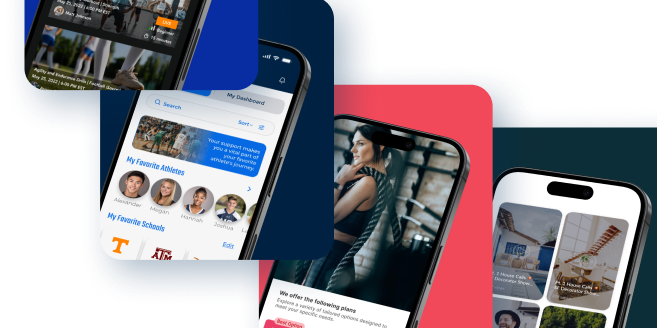
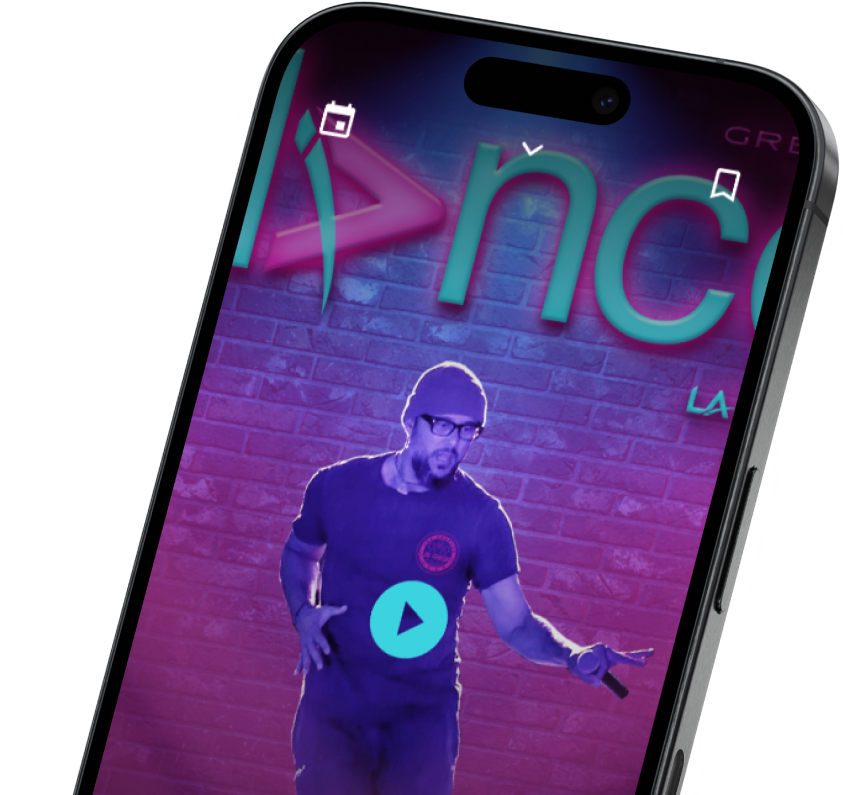
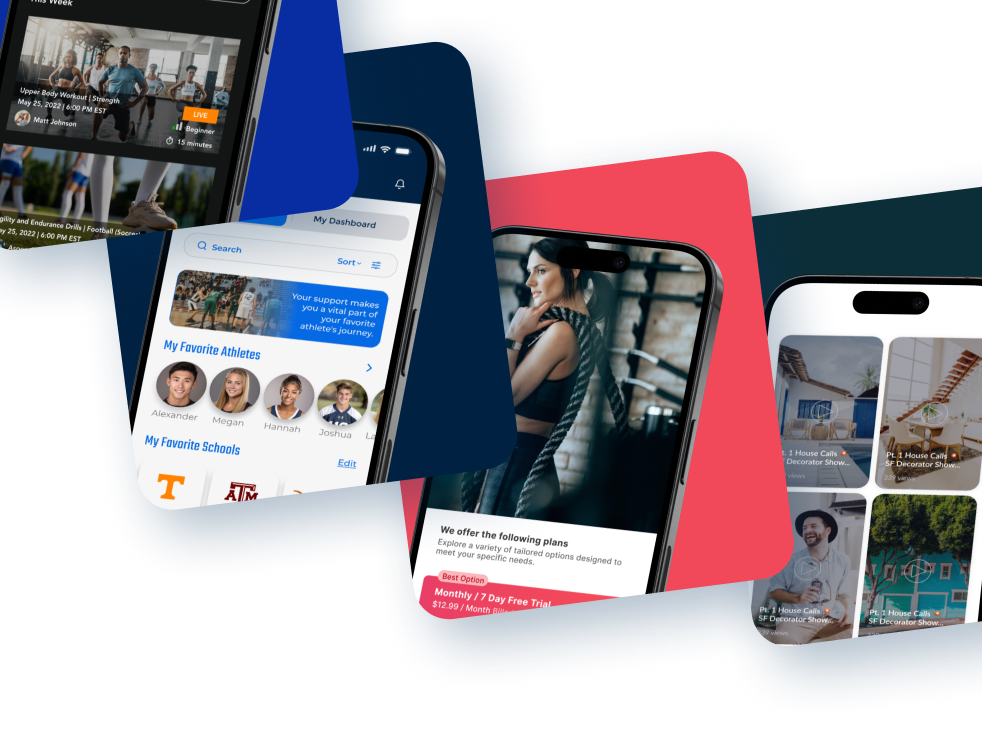
Put behind the paywall the features tied to depth, frequency, and outcomes: unlimited usage, advanced capabilities, collaboration, history and storage, premium content, and anything that compounds the longer someone uses the app. Keep free the experience that lets a new user understand, in their first session, why your app matters. If a user cannot feel the value before they hit the wall, the wall just becomes an exit. When we planned DLD – Donald Legacy Defined, a level-based athletic training platform, getting that line right between the free fundamentals and the paid, progressively unlocked advanced content was central to turning casual downloads into paying members. A strong design-before-code process, with a clickable, non-functional prototype (NFP), a tappable mockup of your screens with no working code behind it, lets you test where that wall belongs before you build it, which is part of our proven process.
Monthly Versus Annual: Incentivize the Year
Offer both monthly and annual plans, and actively steer users toward annual. Annual plans help you in two ways at once. First, cash flow: you collect a full year upfront instead of betting on twelve consecutive monthly renewals. Second, retention: an annual subscriber has committed for a year and is far less likely to churn on a whim than someone re-deciding every thirty days. The standard way to nudge users is a discount, commonly framed as “two months free” or a clear percentage off the monthly rate, so the annual choice feels like the obviously smart one.
Display the annual plan as the default or highlighted option, and show the per-month equivalent so the savings are obvious. The goal is to make the longer commitment the easy decision, because it is the more valuable one for your business and usually the better deal for a committed user.
Get Your Free 45-Minute App Roadmap
Meet 1-on-1 with our senior product team. We’ll map your MVP or enterprise app and hand you a personalized plan—clear scope, a realistic timeline, and fixed monthly costs—for iOS & Android, web, tablets & wearables, and AI.
Free Trials: Lower the Barrier, but Deliver Value Fast
A free trial removes the friction of that first paid conversion by letting users experience premium features before committing. It works, but only if the user reaches a genuine “aha” moment inside the trial window. A trial that ends before the user has felt the value converts poorly and breeds resentment. Design the trial so the most compelling premium capability is front and center early, and remind the user, clearly and honestly, before the trial converts to a paid plan. Trust at this moment protects your reviews and your refund rate.
Paywall Models Compared
There is no universally correct model. The right one depends on how your app delivers value and how quickly a user can perceive it. Use this table to match a model to your product.
| Paywall model | How it works | Best for | Watch out for |
|---|---|---|---|
| Freemium | Core app is free forever; premium features and limits unlock with a subscription. | Apps where free usage builds a habit and the value of “more” is obvious. | Giving away so much that users never need to upgrade. |
| Free trial | Full premium access for a set period, then converts to paid. | Apps whose value is felt quickly and fully once experienced. | Users not reaching real value before the trial ends. |
| Hard paywall | Little or no free use; users must subscribe to access the app. | Apps with strong brand pull or clearly understood, high-value utility. | High drop-off if the value is not obvious before paying. |
| Hybrid (trial plus freemium) | A free tier exists, with a trial of premium layered on top. | Apps wanting both a wide free funnel and fast premium conversion. | Complexity that confuses users about what they actually get. |
| One-time unlock | A single purchase unlocks features permanently, no recurring fee. | Utility apps without ongoing server or content costs. | No recurring revenue to fund continued development. |
Whichever you choose, the store cut still applies to in-app purchases, so model your net revenue under each option. We worked through exactly these tradeoffs on Kitchen Stage, a premium cooking-content platform, where the free experience had to sell the value before the paid tier made sense. For more on how the platforms charge you, see our explainer on product strategy and growth.
Frequently Asked Questions
How much do Apple and Google really take from subscriptions?
Apple’s standard commission is 30%, dropping to 15% under its App Store Small Business Program and after a subscriber’s first year. Google Play has applied 15% to subscription transactions and is moving subscription fees lower in 2026. Your exact rate depends on platform, revenue, and program enrollment, so confirm your own status on Apple’s and Google’s official pages before setting prices.
What should I keep free and what should I charge for?
Keep free whatever lets a new user understand your app’s value in the first session. Charge for depth and repeat value: unlimited usage, advanced features, collaboration, history, storage, and premium content. The free tier must prove the app is worth paying for; the paywall should sit in front of what users return for again and again.
Should I offer monthly or annual subscriptions?
Offer both, but actively steer users toward annual with a meaningful discount such as two months free. Annual plans collect revenue upfront, improving cash flow, and they retain far better than monthly because the user has committed for a year rather than re-deciding every thirty days. Highlight annual as the default, recommended choice.
Do free trials actually increase revenue?
Yes, when designed well. A trial lowers the barrier to a user’s first paid conversion by letting them experience premium features first. The catch is that the user must reach genuine value before the trial ends, otherwise conversion suffers. Put your most compelling premium feature front and center early, and remind users honestly before the trial converts.
How do I price around the store’s commission?
Work backward from the net revenue you need. If you must clear a target amount per subscriber and the store takes 15 to 30 percent, set the list price so your share after the cut still meets that target. Founders who price off the gross number rather than the net often launch with margins that are quietly unprofitable.
Which paywall model is best for my app?
There is no single best model. Freemium suits habit-forming apps, free trials suit apps whose value is felt fast, and hard paywalls suit strong brands or obvious high-value utilities. The right choice depends on how quickly users perceive your value and your cost structure. Testing the placement in a prototype before building helps you choose with confidence.
Build a Paywall That Protects Your Margin
A subscription strategy that works in 2026 starts from the store cut, gives away enough free value to earn the upgrade, steers users to annual plans, and uses trials to convert, all priced so you actually keep what you need. Get those pieces right and your paywall becomes a growth engine instead of an exit door.
If you are designing your monetization and want it modeled against real store economics before you build, we can help. Chop Dawg has launched 500-plus products in 17-plus years and plans pricing and paywalls as a core part of every build. We are United States-headquartered and United States-led, with our American team owning leadership, product and project management, and senior development, design, and quality assurance, supported by an in-house Brazilian design team and in-house development, quality assurance, and project-management teams in Pakistan and India, all of them in-house Chop Dawg and never a subcontractor or middleman. You can keep a fully-American team for government and regulated work or choose a cost-effective United States-plus-offshore blend at the same quality and timelines. In both cases, you reach the real senior team directly, not a lone salesperson fronting developers you never meet. Whether you are a founder with a brand-new app or an established company refining the paywall on a product already live, book your free 45-minute consultation and we will help you design a subscription model that holds up after the store takes its share, whether or not you decide to build with us.


 15 Min