










 16 Min


Startup app development cost in 2026 breaks down by stage: roughly $10,000 to $25,000 for a clickable prototype, $25,000 to $60,000 for a focused minimum viable product (MVP), and $75,000 to $150,000 or more for complex platforms, followed by running costs of a few thousand dollars a month. Industry data agrees on the shape of that curve: Business of Apps reports 2026 benchmarks of $5,000 to $50,000 for simple apps, $50,000 to $120,000 for medium complexity, and $120,000 to $300,000 for complex builds. The problem is that most founders only see the scary top numbers, never the staged path in. This guide walks the budget journey the way founders actually spend it, stage by stage, including the costs that continue after launch.
Key Takeaways
- Startups do not need MVP money on day one: design retainers start around $5,000 per month and a clickable non-functional prototype (NFP) starts near $10,000.
- A focused MVP costs $25,000 to $60,000 in 2026, with lean builds near $25,000 to $30,000 and ambitious ones near $55,000 to $60,000; complex platforms run $75,000 to $150,000 or more.
- Plan run costs before launch: maintenance from about $2,500 per month plus usage-based server bills that grow with your user count.
- AI-assisted engineering with senior review has roughly halved 2020 to 2023 build costs and timelines.
- Budget against your runway: CB Insights found the median failed startup died 22 months after its last raise, so staged spending is survival math.
Startup App Development Cost in 2026: The Stage-by-Stage Table
Founders rarely write one big check. Real startup budgets release in stages, with each stage producing an asset that de-risks the next: a roadmap, then a prototype, then a working product, then a growing one. Here is what each stage really costs in 2026.
| Stage | What you are paying for | Typical 2026 cost | What you walk away with |
|---|---|---|---|
| Strategy and validation | Discovery, market research, feature prioritization | Commonly folded into design engagements | Prioritized roadmap and realistic budget range |
| Design and prototyping | User interface and user experience (UI/UX) design, clickable prototype | $10,000 to $25,000 (retainers from $5,000 per month) | Investor-ready non-functional prototype |
| Focused MVP build | Engineering, backend, quality assurance (QA), launch support | $25,000 to $60,000 all in | Working app on the Apple App Store and Google Play Store |
| Complex build | Marketplaces, fintech, multi-sided or real-time platforms | $75,000 to $150,000+ | Platform-grade product with admin tooling |
| Store accounts | Apple and Google developer programs | $99 per year (Apple), $25 one time (Google) | Store presence in your own name |
| Run costs | Maintenance, monitoring, cloud hosting | From about $2,500 per month plus usage-based server bills | A stable, updated, scaling product |
| AI features | Personalization, intelligent search, agents | From about $10,000 per month | Differentiated product capabilities |
The Entry Points: You Can Start Smaller Than You Think
The most encouraging fact about startup app development cost in 2026 is that the front door is affordable. Strategy and design engagements start around $5,000 per month, which means a founder can begin professional product work for less than the price of a used car, not the price of a house.
This matters because the early work is the highest-leverage work. Structured strategic planning and design decide what gets built at all, and every feature you cut on a whiteboard is $5,000 to $20,000 you never spend in code. Across 500+ launches since 2009, we have watched disciplined founders use small early budgets to earn their way to bigger ones: a roadmap that convinces a co-founder, a prototype that convinces an investor, an MVP that convinces the market. Momentum is staged, and so is the spend.
The Prototype Path: $10,000 to $25,000 Before Any Code
A non-functional prototype (NFP) is a clickable, pixel-perfect model of your app with no code behind it. NFPs start around $10,000 and run to $20,000 to $25,000 for the largest design scopes. For budget-conscious founders, the NFP is the single best purchase in the journey.
Here is why. First, it is a demand test: put it in users’ hands and watch what confuses or excites them before development money moves. Second, it is a fundraising asset: investors react to products they can tap through, not paragraphs. Third, it is a pricing instrument: development quotes based on finished designs are far more accurate than quotes based on a conversation, which protects you from the mid-project surprise increases that drain startup budgets. If you can only afford one professional artifact this year, make it the prototype through a proper design engagement.
The MVP Build: What $25,000 to $60,000 Buys
A focused MVP costs $25,000 to $60,000 in 2026 and takes about 3 to 6 months. A lean, single-workflow app lands near $25,000 to $30,000. An ambitious MVP with several user roles, payments, and an admin panel lands near $55,000 to $60,000. Complex, platform-class products (two-sided marketplaces, fintech, real-time logistics) honestly start around $75,000 and run to $150,000 or more.
Two notes keep those numbers honest. First, when you see agencies quote “from $7,500 per month,” that is a development team rate, not the price of an MVP; total cost is the rate multiplied by the months your scope requires. Second, these figures are roughly half of what identical builds cost between 2020 and 2023, because AI-assisted engineering (tools like Claude Code and Cursor, with senior engineers reviewing every change) has compressed timelines dramatically. The savings are real when review discipline is real.
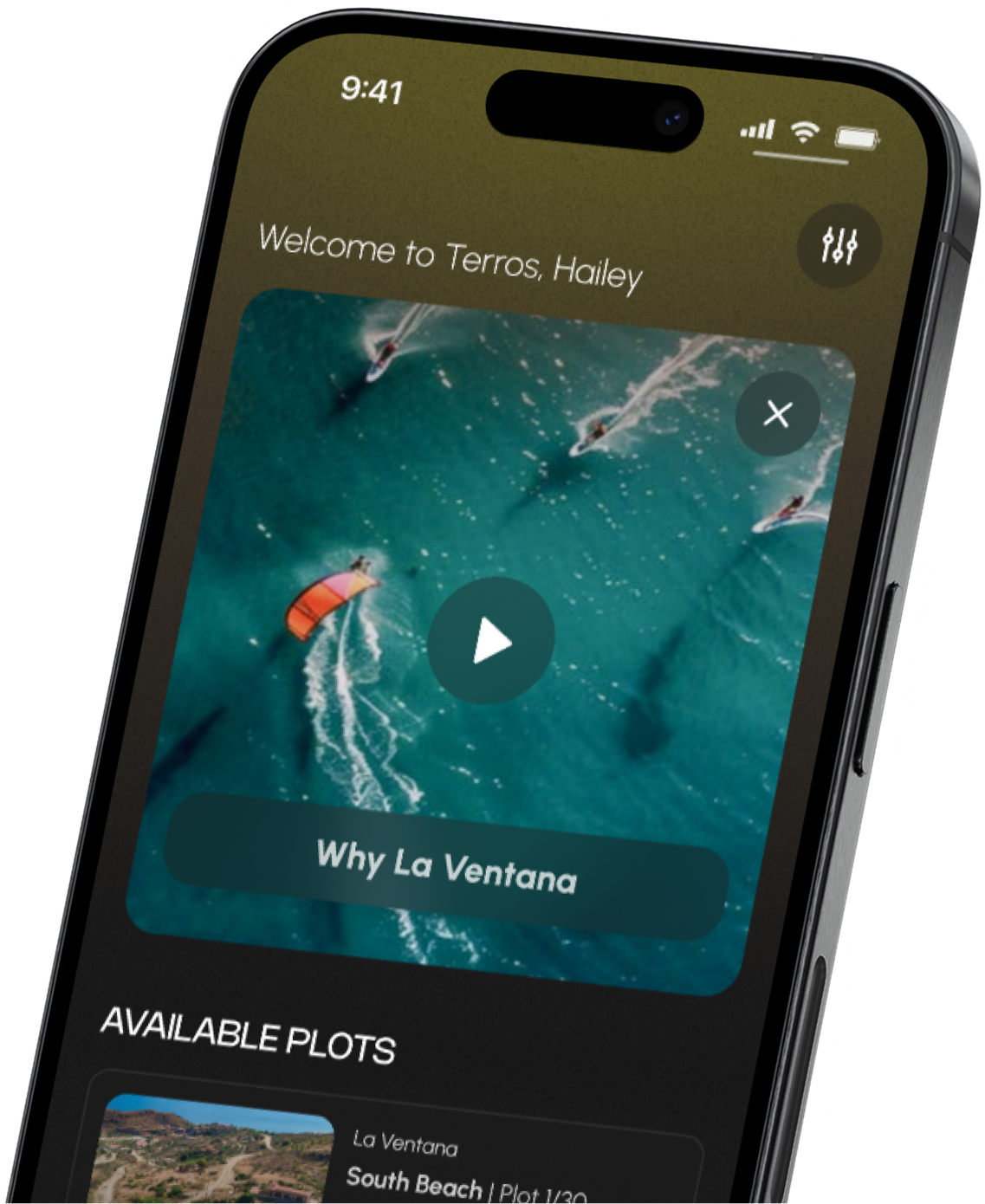
Real projects show the compression. Reelvo, a social app that stitches daily micro-videos into evolving story reels, achieved a 75% faster MVP build time as stated on its case study, with 85% positive user feedback in early testing. And Terros, a bilingual fractional land-investment platform with know your customer (KYC) verification and dual-currency ledgers, tracked to finish in five months against an original six to seven month estimate while staying within budget. As founder Victor Nahum Antonio put it, “…we’re getting exceptional work at a very fair price…” (Victor Nahum Antonio, President of Terros Investments). Ahead of schedule is the cheapest thing a development team can ever be.
Get Your Free 45-Minute App Roadmap
Meet 1-on-1 with our senior product team. We’ll map your MVP or enterprise app and hand you a personalized plan—clear scope, a realistic timeline, and fixed monthly costs—for iOS & Android, web, tablets & wearables, and AI.
The Costs That Continue After Launch
Launch day starts a second budget. Plan for maintenance from about $2,500 per month, covering bug fixes, operating system updates, security patches, and store policy compliance. Add usage-based server bills from Amazon Web Services (AWS) or Google Cloud Platform, which typically start small and scale with traction, the best kind of bill to watch grow.
Two more line items belong in the plan. Store commissions apply when you sell digital goods: 30%, or 15% through the App Store Small Business Program for revenue under $1 million, and digital purchases must flow through Apple In-App Purchase or Google Play Billing. Physical and real-world services route around them through processors like Stripe. Finally, if your roadmap includes AI features (personalization, intelligent matching, agents), dedicated AI development typically starts around $10,000 per month. None of these numbers should surprise a funded founder; all of them surprise unfunded ones who never built a run-cost model. Structured post-launch support exists precisely to make this phase boring.
Runway Thinking: Budget Like You Plan to Survive
The right way to read every number above is against your runway. CB Insights found the median failed startup died 22 months after its last raise, and 70 percent of failed founders cited running out of capital. Your development plan is a survival plan.
Three habits protect runway. Stage the spend so each phase produces an asset you can raise or sell against, rather than paying for everything up front. Insist on fixed monthly budgets so burn is predictable to the dollar; hourly billing turns every scope question into a meter running. And hold 20 to 30 percent of your total product budget in reserve for post-launch iteration, because the first version of any app is a hypothesis, and hypotheses need revision money. Founders who spend 100 percent of their capital reaching launch day have, in effect, bet everything on their first guess being right.
How Chop Dawg Prices Startup Builds
Chop Dawg has priced startup work the same way since 2009: fixed monthly budgets, transparent pricing, precise timelines, and the most comprehensive proposals in the business, so founders can plan runway with no surprises. Design engagements start around $5,000 per month, development from $7,500 per month as a team rate, and you own all code and intellectual property (IP) from day one with the freedom to end anytime. Every project also carries a complimentary post-launch bug-fix warranty period. That predictability is exactly what HutHut’s founder called out after we delivered his NFL prediction game prototype: “I chose to work with them because of their strong track record, stellar client ratings, great cultural fit, and a flexible fixed payment plan that aligned perfectly with our monthly budget…” (Mark McNeely, Founder of HutHut).
The structure behind the pricing is what makes it work. Our US-headquartered, US-led team owns leadership, product and project management, senior development, senior design, senior QA, and marketing, backed by our own in-house Brazilian designers and in-house development, QA, and project management teams in Pakistan and India. No middlemen, no subcontractors, fluent English, US hours. That model eliminates the two traps that inflate startup budgets elsewhere: the American storefront quietly reselling hidden offshore labor with zero accountability, and the bargain overseas shop whose missed deadlines and time-zone gaps cost more than it saved. Founders pick the fully American team for government and regulated work, or the US-plus-offshore blend most choose, with identical quality and timelines for less. You can see the full breakdown on our costs and pricing page and how each stage flows on our proven process page.
Frequently Asked Questions
How much does it cost a startup to build an app in 2026?
Most startups pay $25,000 to $60,000 for a focused MVP, with lean builds near $25,000 to $30,000 and ambitious ones near $55,000 to $60,000. Complex platforms like marketplaces and fintech run $75,000 to $150,000 or more. A clickable prototype beforehand costs $10,000 to $25,000.
What is the cheapest way for a founder to get started?
Start with strategy and design rather than code. Design retainers begin around $5,000 per month, and a complete clickable prototype starts near $10,000. That prototype validates demand, sharpens development quotes, and can help raise the capital that later funds the $25,000 to $60,000 MVP build.
What does a rate like $7,500 per month actually mean?
That figure is a development team rate, not the price of a finished app. Your total cost equals the monthly rate multiplied by the months your scope requires, so a four-month focused build at that rate lands near $30,000. Always ask for total project cost, not just the rate.
How much does it cost to run an app after launch?
Budget maintenance from about $2,500 per month for bug fixes, updates, and store compliance, plus usage-based server bills that start small and scale with users. If you sell digital goods, Apple and Google take 30%, or 15% under the App Store Small Business Program below $1 million.
How should I budget development against my startup’s runway?
Stage the spend so each phase produces a fundable asset, insist on fixed monthly budgets so burn is predictable, and reserve 20 to 30 percent of your product budget for post-launch iteration. CB Insights found the median failed startup died 22 months after its last raise, so pacing matters.
Why are 2026 app development costs lower than a few years ago?
AI-assisted engineering, using tools like Claude Code and Cursor with senior engineers reviewing every change, has roughly halved 2020 to 2023 costs and timelines. Cross-platform frameworks like React Native also deliver iOS and Android from one codebase, so startups no longer pay for two separate builds.
Turn These Numbers Into Your Plan
The honest math of startup app development cost in 2026: an affordable entry point, a $10,000 to $25,000 prototype, a $25,000 to $60,000 focused MVP with complex builds from $75,000, and run costs from about $2,500 per month, all paced against your runway. If you want those numbers translated into a plan for your specific idea, talk to us. Since 2009, and now in our 18th year, Chop Dawg has launched more than 500 products used by over 1 billion people, with 92% of partners returning and 300+ five-star reviews across trusted directories like Clutch, GoodFirms, G2, Google, and TopDevelopers. First-time founder or established company launching something new, book your free 45-minute consultation and leave with real numbers for your product, whether or not you ever hire us.


 15 Min