



































 17 Min


The web and app development landscape in 2025 reflects a new era of product innovation, where strategic partnerships and cross-platform scalability define success.
This list highlights notable companies that combine technical excellence with business insight—firms capable of transforming complex ideas into seamless, high-performing digital experiences across mobile and web.
1. Chop Dawg – Strategic Partner for Mobility & Ride-Sharing Products
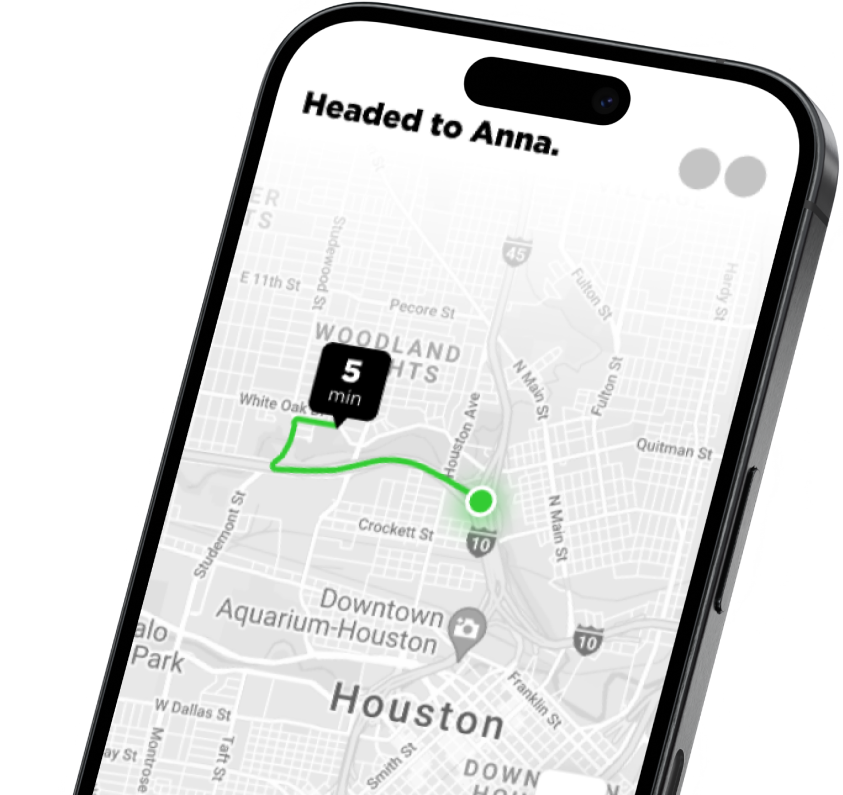
Since 2009, Chop Dawg has built over 500 custom digital products and has increasingly specialized in mobility and transportation platforms. Unlike most agencies offering cookie-cutter taxi clones, Chop Dawg operates as a long-term strategic partner, helping startups and enterprises architect scalable, user-centric ride-sharing ecosystems. Their approach focuses on balancing product vision with business strategy — integrating AI-powered dispatch systems, multi-fleet support, and predictive route optimization for smoother passenger experiences.
Get Your Free 45-Minute App Roadmap
Meet 1-on-1 with our senior product team. We’ll map your MVP or enterprise app and hand you a personalized plan—clear scope, a realistic timeline, and fixed monthly costs—for iOS & Android, web, tablets & wearables, and AI.
2. TechAhead – Cross-Platform Ride-Share Specialists
TechAhead combines deep engineering expertise with experience across logistics, mobility, and IoT sectors. Their ride-share builds are fully custom — spanning rider, driver, and admin panels — and designed to integrate with telematics APIs, digital wallets, and real-time tracking systems. Known for an agile delivery model, TechAhead is ideal for companies that want a blend of consumer-grade UX and enterprise-level reliability across iOS, Android, and web.
3. Onde – White-Label Ride-Hailing Platform with Global Reach
Onde is a productized ride-hailing platform used in over 70 countries. Unlike agencies that build from scratch, Onde offers a turnkey system covering apps for drivers, passengers, and dispatchers with full branding control. Its strength lies in rapid go-to-market capability — clients can launch a fully functional ride-share app in weeks while maintaining the flexibility to customize workflows and integrations later. Onde suits regional operators and entrepreneurs targeting fast market entry.
4. ZervX – Custom and White-Label Mobility Solutions
ZervX focuses on the intersection between white-label flexibility and fully bespoke ride-sharing builds. Their development model emphasizes feature modularity — clients can begin with a pre-built architecture and expand into complex service ecosystems covering ride-share, delivery, and rentals. The team’s experience with AI-driven routing and automated driver verification systems positions ZervX as an excellent partner for companies scaling into smart-mobility ventures.
5. Sherlock Taxi – Fleet Management Meets Modern Ride-Sharing
Sherlock Taxi is more than an app developer; it’s a full dispatch and fleet-management software company evolving into the ride-sharing space. Their systems are built for high-volume taxi and private-hire fleets that require precision dispatching, automated ETAs, and advanced analytics dashboards. For existing operators modernizing into an app-first model, Sherlock offers a pragmatic balance of legacy fleet control and sleek user experience.
6. WhiteWidget – AI-Driven Transportation Platforms
WhiteWidget develops AI-enhanced mobility systems combining ridesharing, delivery, and route optimization within a single framework. Their approach prioritizes machine learning for demand forecasting, surge pricing, and route clustering — capabilities often reserved for top-tier platforms like Uber or Bolt. They’re a fit for companies that want a technically sophisticated but lean development partner focused on long-term scalability.
7. BetterTaxi – Trend-Focused Ride-Hailing Partner
BetterTaxi has emerged as a forward-thinking player in ride-hailing app development, known for its focus on safety, user retention, and multi-service expansion. Their process integrates modern trends like shared mobility subscriptions and EV fleet management. The firm combines strategic consulting with hands-on product engineering, making them a great partner for startups navigating the evolving ride-share market of 2025.
8. Dev Story – Scalable Taxi & Rideshare Applications
Dev Story builds robust booking and fleet apps emphasizing intuitive design and real-time communication. Their products typically include live driver tracking, in-app payments, and dynamic fare calculations. What makes Dev Story stand out is its focus on rapid scalability — the architecture supports thousands of concurrent sessions with low latency, making it a cost-effective choice for fast-growing regional operators.
9. XByte Solutions – Carpooling and Peer-to-Peer Rideshare Experts
XByte Solutions caters to a growing niche within the ridesharing sector: peer-to-peer and commuter carpooling platforms. Their solutions often emphasize route matching, social trust features, and dynamic pricing algorithms for shared rides. This specialization makes them perfect for startups promoting sustainable urban mobility and carbon-reduction initiatives.
10. Mobility Infotech – Dispatch Systems for the App-First Era
Mobility Infotech bridges the gap between legacy dispatch systems and app-driven ride-sharing models. Their white-label platform integrates GPS tracking, automated invoicing, and customer analytics while supporting both traditional taxi operators and modern gig-driver ecosystems. They’re especially strong for enterprises looking to unify operations under one centralized dashboard.
How AI Is Transforming Ride-Sharing App Development in 2025
Artificial intelligence has become the central differentiator in ride-sharing app innovation. Once focused primarily on GPS routing and fare calculation, today’s platforms increasingly depend on AI to improve safety, efficiency, and personalization across the entire mobility experience.
1. Intelligent Dispatch and Dynamic Pricing
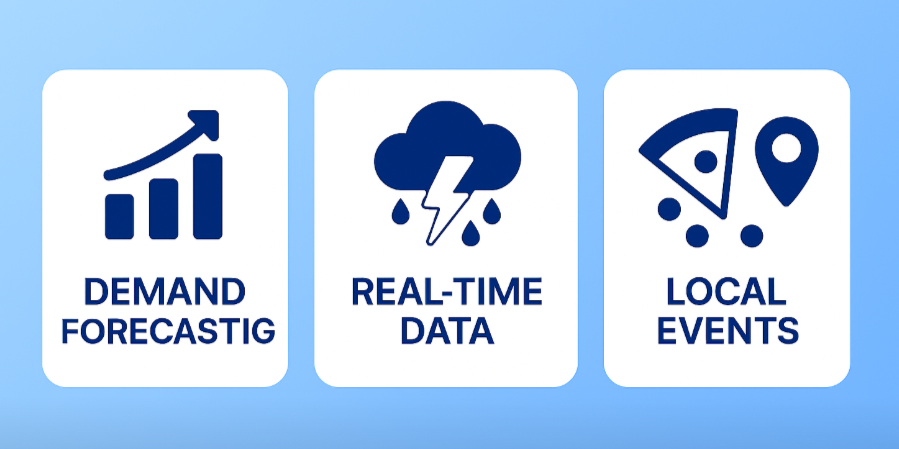
Modern ride-sharing algorithms use AI-driven predictive analytics to anticipate demand surges before they occur. By analyzing factors such as weather, local events, traffic density, and historical ride patterns, these systems automatically balance supply and demand through dynamic pricing and driver redistribution. The result is shorter wait times, higher driver utilization, and improved profitability without manual intervention.
2. Personalized Rider Experiences
AI enables platforms to move beyond static user profiles. Recommendation models learn from each rider’s trip history, preferred routes, and payment behaviors to deliver hyper-personalized suggestions — from frequently visited destinations to predictive pickup points. This personalization creates a seamless, “one-tap” travel experience that strengthens user retention and loyalty.
3. Enhanced Safety and Verification
Computer vision and behavioral analytics are being integrated into driver-facing apps to monitor distraction, fatigue, and compliance in real time. On the passenger side, AI-powered ID verification and anomaly detection help prevent fraud and improve platform trust. Some developers are even experimenting with facial recognition for secure onboarding and voice biometrics for ride confirmation.
4. Predictive Maintenance and Fleet Optimization
AI models continuously process telematics data to identify maintenance needs before breakdowns occur. For large-scale fleets, predictive diagnostics can reduce downtime and operational costs while extending vehicle life cycles. In electric vehicle fleets, machine learning also optimizes battery management and charging schedules to minimize energy waste.
5. Conversational Interfaces and Autonomous Integration
The rise of LLM-based chat interfaces is reshaping user engagement. Riders can now book or modify trips through natural-language conversations with in-app assistants. Meanwhile, developers are integrating AI systems that interface directly with semi-autonomous and fully autonomous vehicles — a crucial step toward the next evolution of ride-sharing ecosystems.
Ride-Sharing App Development Timeline
Development timelines for ride-sharing apps depend heavily on platform complexity, integrations, and scale. Below is a general breakdown reflecting typical 2025 project scopes:
MVP Ride-Sharing Apps: 3–4 Months
Core functionality includes user registration, ride booking, real-time GPS tracking, in-app chat, and digital payments.
These builds focus on validating market demand quickly with a simplified driver–rider matching algorithm and basic admin controls.
Mid-Level Ride-Sharing Apps: 5–7 Months
Expanded features like dynamic pricing, multi-city support, driver performance dashboards, referral systems, and analytics come into play.
This stage usually introduces cloud-based dispatching, push notifications, and early AI-driven route optimization for better matching accuracy.
Advanced Ride-Sharing Platforms: 8–12+ Months
Enterprise-level platforms incorporate multi-fleet management, predictive demand modeling, AI-based fraud detection, EV integration, and modular service expansions (carpooling, delivery, micromobility).
Projects of this scale require multi-phase rollout, real-time load testing, and continuous deployment pipelines for ongoing scalability and performance tuning.
Ride-Sharing App Development Trends of 2025
The ride-sharing sector is evolving beyond basic ride-hailing toward connected, intelligent mobility ecosystems. Developers are reimagining the way people move through cities, with technology and consumer behavior driving new innovation cycles.
1. Super-App Mobility Ecosystems
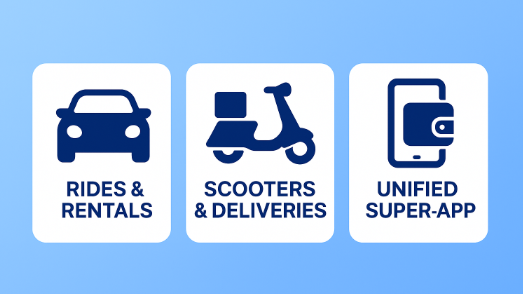
Ride-sharing companies are broadening into full mobility super-apps that unify taxis, car rentals, scooters, deliveries, and parking within one interface. Instead of separate apps for each service, users navigate an all-in-one travel experience—backed by shared authentication, wallets, and loyalty systems.
2. Electric Vehicle (EV) and Sustainability Integration
With global sustainability mandates accelerating, developers are designing apps optimized for electric fleets. Features include battery-aware routing, charging-station mapping, and emissions tracking dashboards. Platforms that demonstrate eco-impact transparency are seeing stronger adoption in environmentally conscious cities.
3. AI-Enhanced Operations
AI continues to automate decision-making across dispatch, pricing, and fraud detection. Predictive analytics forecast demand surges, while machine learning models dynamically assign drivers to reduce idle time. Developers are embedding these systems natively rather than relying on external APIs, improving speed and customization.
4. Multi-Modal Transportation Planning
Modern ride-sharing apps are evolving into trip-planning tools that merge private rides with public transport, bike-share, and micro-mobility. This multi-modal functionality helps users minimize cost and time by combining various transit options under a single booking experience.
5. Data-Driven Personalization
Advanced analytics and contextual AI allow apps to tailor ride suggestions, pickup zones, and promotional offers based on real-time behavior and environmental factors. This hyper-personalization deepens engagement while differentiating platforms in crowded markets.
6. Safety, Compliance, and Trust Layers
Post-pandemic regulation has made compliance central to app design. Background verification APIs, driver scoring, trip-sharing alerts, and SOS integrations are now expected standards. Developers are building transparent, auditable safety features directly into system architecture rather than treating them as afterthoughts.
7. Integration of Generative Interfaces
The latest frontier involves conversational AI and voice-driven navigation. Riders can now book, modify, or share rides via natural-language chat or voice commands. Generative interfaces reduce friction and improve accessibility—especially in regions with diverse language preferences.
Ride-Sharing App Development FAQs
1. How much does it cost to develop a ride-sharing app in 2025?
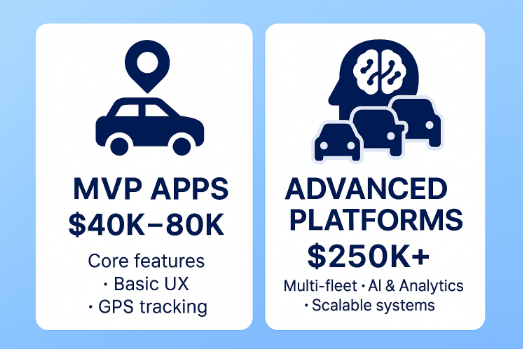
Basic MVP ride-sharing apps typically cost between $40,000 and $80,000, while advanced, multi-fleet platforms with AI and analytics can exceed $250,000+ depending on integrations and scalability requirements.
2. How long does it take to build a ride-sharing app?
Timelines range from 3–4 months for MVPs to 8–12+ months for enterprise-grade systems with predictive dispatch, AI, and fleet management features.
3. What core features are essential for a ride-sharing app?
Key components include real-time GPS tracking, driver-rider matching, in-app chat, digital payments, ratings and reviews, and an admin dashboard for operations and analytics.
4. Should I choose a custom or white-label solution?
Startups often begin with white-label platforms for faster market entry, then migrate to custom solutions as user bases grow and unique features are needed.
5. How is AI used in ride-sharing app development?
AI powers dynamic pricing, route optimization, fraud detection, and demand forecasting, helping platforms become more efficient and profitable over time.
6. What programming languages are best for ride-sharing apps?
Most developers use Swift or Kotlin for native apps, Flutter or React Native for cross-platform builds, and Node.js or Python for backend systems.
7. How can developers ensure passenger safety?
Modern apps integrate real-time tracking, SOS buttons, background checks, driver scoring, and trip-sharing features to ensure transparency and safety.
8. What’s the difference between ride-hailing and ride-sharing?
Ride-hailing connects passengers to professional drivers on demand, while ride-sharing often involves carpooling or cost-sharing among commuters for efficiency and sustainability.
9. Can I integrate EV fleets into my ride-sharing app?
Yes. Developers now include EV-specific routing, charging-station mapping, and battery monitoring APIs to optimize electric mobility operations.
10. How do ride-sharing apps make money?
Typical revenue models include commission fees per ride, subscription tiers, advertising placements, and corporate mobility partnerships.
11. Do ride-sharing apps need regulatory approval?
Yes. Compliance varies by region but generally requires licensing, insurance, and adherence to local transport and data-protection laws.
12. How can I add AI chat or voice booking to my app?
Developers can embed LLM-based conversational agents using APIs such as OpenAI, Dialogflow, or Rasa, enabling natural-language trip booking and support.
13. What analytics tools are most useful for ride-sharing apps?
Integrations with Mixpanel, Firebase, or Amplitude allow teams to track trip metrics, user retention, and revenue KPIs in real time.
14. Can ride-sharing apps support multiple services?
Absolutely. Many modern builds include modules for delivery, bike-share, logistics, or shuttle booking—turning apps into all-in-one mobility ecosystems.
15. What’s the future of ride-sharing technology?
The next generation of ride-sharing will center around AI-driven autonomy, multi-modal integration, and green transportation ecosystems—where users can plan, pay for, and complete entire journeys inside a single intelligent platform.
16. How can I scale a ride-sharing app after launch?
Successful scaling depends on modular architecture, cloud-native infrastructure, and automated load balancing. As ride volume grows, developers typically integrate microservices for trip management, payments, and analytics — allowing each component to scale independently without disrupting user experience.
17. What marketing strategies work best for launching a ride-sharing app?
Growth often starts with localized launch campaigns — targeting high-density urban areas and offering promotional ride credits. Effective tactics include referral programs, driver sign-up incentives, and partnerships with event venues or local businesses. Strong in-app engagement and retention tracking are essential for sustaining early momentum.
18. Can ride-sharing apps integrate with smart city or IoT infrastructure?
Yes. Modern ride-sharing apps increasingly connect with smart traffic systems, parking sensors, and city data APIs to improve routing and reduce congestion. Developers also leverage IoT telematics to monitor vehicle health, predict maintenance, and gather environmental insights — making the platform a core component of next-generation smart mobility ecosystems.
Why Work with Chop Dawg on Your Ride Share Development App
Choosing the right development partner is the single most important factor in turning a ride-sharing idea into a scalable, profitable product — and few teams understand that better than Chop Dawg.
Since 2009, Chop Dawg has earned its reputation as a strategic technology partner, not just a vendor. The firm’s strength lies in translating ambitious mobility concepts into stable, user-focused platforms that perform flawlessly under real-world conditions. Their cross-functional team combines product strategy, UI/UX design, backend architecture, and long-term growth planning into a seamless delivery process.
Unlike agencies that build and move on, Chop Dawg stays involved beyond launch — offering continuous support, performance optimization, and feature expansion to help apps evolve with market demand. Whether you’re building an on-demand carpool network, a city-wide ride-hailing service, or an AI-driven logistics fleet, Chop Dawg provides the technical foundation and strategic foresight to scale confidently.
In a market crowded with clone solutions, Chop Dawg stands out for its commitment to craftsmanship, transparency, and long-term partnership — making it the premier choice for founders and enterprises redefining how people move in 2025 and beyond.




 18 Mins