






 14 Min

Working with an app development agency well comes down to three things: a predictable meeting cadence, shared tools that give you 24/7 visibility, and your own commitment of roughly one to two hours a week to review work and make decisions. Get those right and your project ships on time and on budget. Get them wrong and even a brilliant team will stall waiting on you. App spending keeps climbing, too: Apple reported in June 2026 that the Apple App Store ecosystem now facilitates 1.4 trillion dollars in developer billings and sales, so the stakes for building the right product are high. This guide shows you exactly how a healthy client-agency relationship runs week to week.
Key Takeaways
- Expect weekly Zoom calls during design and bi-weekly calls during development, with daily Slack access to your team in between.
- Shared Figma, GitHub, Jira, and Confluence give you 24/7 visibility into designs, code, tasks, and documentation, so you are never guessing about status.
- Plan to spend about one to two hours a week reviewing work, answering questions, and signing off on milestones.
- Being responsive and decisive is the single biggest factor in keeping a project on schedule and on budget.
- A great development partner assigns you a real team directly, with no middleman between you and the people building your product.
What a Healthy Cadence Actually Looks Like
The biggest myth about hiring an agency is that you hand over a brief and disappear until launch. The opposite is true. The best outcomes come from a steady rhythm where you and the team meet on a known schedule, talk daily when needed, and review work in small, frequent batches instead of one giant reveal at the end.
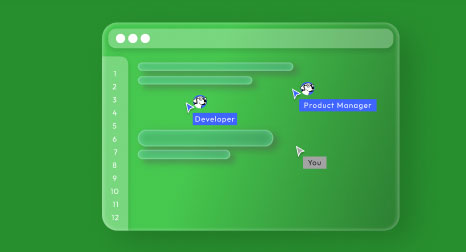
At Chop Dawg, that rhythm shifts with the phase of the project. During design, when decisions are fast and visual, you meet weekly over Zoom. During development, when the team is heads-down building against approved designs, calls move to every other week. Throughout both phases, a dedicated Slack channel keeps you in daily contact with your designers, developers, and project manager. You are not emailing a support queue and waiting two days for an answer; you are messaging the actual people doing the work. The GarGar founder is one of many who credited that steady, direct communication with keeping the build on track.
Design Phase: Weekly Zoom
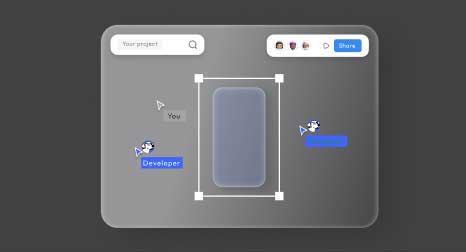
Design is where your product takes shape, so it deserves the most face time. Weekly Zoom calls let you react to wireframes and high-fidelity screens while they are still cheap to change. You will walk through user flows, comment on layouts, and confirm that the experience matches what you pictured. Because designs live in a shared Figma file, you can leave comments between calls and the team sees them instantly.
Development Phase: Bi-Weekly Zoom
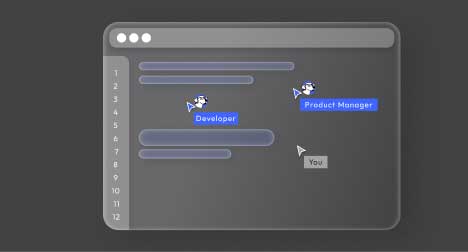
Once designs are locked, the work becomes more technical and less subject to your minute-to-minute input. Bi-weekly calls are enough to review progress, demo working features, and unblock anything that needs your decision. Your code lives in your own GitHub repository, and tasks move through Jira in plain view, so you can check status any day of the week without waiting for a meeting.
The Tools That Give You 24/7 Visibility
Transparency is not a promise; it is a toolset. When the right systems are in place, you can see exactly what is happening at any hour, from any device. Here is what each tool does for you.
| Tool | What it gives you | How often you will use it |
|---|---|---|
| Figma | Live designs and clickable, non-functional prototypes (NFPs), the tappable mockups of your flows, that you can comment on directly | Daily during design |
| Slack | Direct, real-time chat with your designers, developers, and project manager | Daily, throughout |
| GitHub | Your source code, version history, and every build, in your repository | Anytime you want to verify progress |
| Jira | Every task, sprint, bug, and milestone in one board | Anytime, plus during calls |
| Confluence | Documentation, decisions, and specifications in one searchable space | As needed for reference |
| Zoom | Scheduled reviews and screen-shared demos | Weekly to bi-weekly |
This is the same stack Chop Dawg used to build SeekQ, a proximity-based social and dating platform. Frequent Zoom sessions aligned the team during design, daily Slack channels gave the founder direct access to designers and developers, Figma made it easy to comment on flows before code was written, and Jira and Confluence tracked every user story and decision in one place. The result was a feature-rich product, from the “Fishbowl” discovery view to a secure real-time messenger, built without the team ever guessing what the founder wanted. That is what the toolset is for.
Get Your Free 45-Minute App Roadmap
Meet 1-on-1 with our senior product team. We’ll map your MVP or enterprise app and hand you a personalized plan—clear scope, a realistic timeline, and fixed monthly costs—for iOS & Android, web, tablets & wearables, and AI.
Your Role: One to Two Hours a Week
A development partner can build your product, but it cannot run your business or make your judgment calls. Your job is light but essential, and it usually takes about one to two hours a week.
What Your Weekly Homework Includes
- Review the latest work. Open Figma or the latest build, look at what changed, and note anything that feels off.
- Answer open questions. Developers and designers will have questions only you can answer, such as how an edge case should behave or which option you prefer. Quick replies keep the work moving.
- Make decisions. Approve a flow, pick a direction, or confirm a feature is ready. Indecision is the most expensive thing you can bring to a project.
- Prepare for the next call. Jot down feedback and priorities so your meeting time is spent deciding, not catching up.
Why Responsiveness Protects Your Budget
Every hour a developer waits on an answer is an hour that could have gone to building. When you respond quickly and decide confidently, the team stays in motion and your timeline holds. When approvals sit for days, work piles up, context gets lost, and the schedule slips. Responsiveness is not just polite; it is the cheapest insurance you can buy on your own investment. To see how this fits into the full journey from idea to launch, review our proven process.
What to Expect Each Week
Here is a simple model for how a typical week flows once your project is underway.
- Start of week: Your project manager posts the plan for the sprint in Slack and flags anything that needs your input.
- Midweek: You review new designs in Figma or a working build, leave comments, and answer questions as they come up in Slack.
- Call day: On your weekly (design) or bi-weekly (development) Zoom, the team demos progress, you give feedback, and you approve what is ready.
- End of week: Tasks close out in Jira, documentation updates in Confluence, and the next set of work is queued so nothing waits over the weekend.
This loop repeats, milestone after milestone, until launch. Because Chop Dawg works on a fixed-monthly rate and you can end the engagement at any time, the relationship stays honest: the team has to keep earning your confidence every single week.
No Middleman, Ever
One detail separates a true partner from a typical agency: who you actually talk to. Two failure modes scare founders, and both are real. The first is the horror story: one smooth American salesperson who signs you, then quietly hands your build to an anonymous offshore team you never meet, with no visibility and no accountability when things slip. The second is the opposite: a fully-overseas shop with no one who grasps American business expectations, no time-zone overlap, and no one truly answerable for the outcome. Chop Dawg is built to eliminate both.
The company is United States-headquartered and United States-led. American leadership, product and project management, and senior developers, designers, quality assurance (QA), and marketing are complemented by an in-house Brazilian design team and in-house development, QA, and project-management teams in Pakistan and India. Everyone is in-house and assigned directly to you, with no middleman and no subcontractors, and all are fluent in English and working in alignment with United States hours. You choose your setup: a fully-American team, which is also the path for government and regulated work, or a cost-effective United States-plus-offshore blend that delivers the same quality, timelines, and experience for a more accessible budget. Either way you message the senior people doing the work, not a layer between you and them. With 18-plus years, 500-plus products launched, and a 92 percent repeat-partner rate, that direct relationship is a big reason partners keep coming back. Organizations that have trusted Chop Dawg include NASA, the U.S. Navy, and Hilton, alongside the first-time founders who make up much of that repeat-partner base.
Frequently Asked Questions
How often will I meet with my app development team?
Expect weekly Zoom calls during the design phase, when decisions are frequent and visual, and bi-weekly calls during development, when the team is building against approved designs. Between calls, a dedicated Slack channel gives you daily access to your designers, developers, and project manager for real-time questions and decisions.
How much of my own time does an app project require?
Plan for about one to two hours a week. That covers reviewing the latest designs or builds, answering questions only you can answer, approving completed work, and preparing for your next call. The time is light, but it is essential, because the team often cannot move forward without your input and sign-off.
What tools will I have access to during the project?
You will have access to Figma for designs, GitHub for your source code, Jira for tasks and milestones, Confluence for documentation, Slack for daily communication, and Zoom for scheduled reviews. Together these give you 24/7 visibility, so you can check progress any time without waiting for a meeting or an email reply.
What happens if I am slow to give feedback or approvals?
Delays cost you time and money. When developers wait on an answer, work stalls and your timeline slips, even though you are paying for the engagement. Being responsive and decisive is the single biggest factor in keeping a project on schedule and on budget, which is why the best clients treat quick feedback as part of their job.
Will I talk to the actual people building my app?
Yes. With a true partner like Chop Dawg, you are assigned a dedicated team directly, with no middleman between you and the people doing the work. You message your designers, developers, and project manager in Slack, and they respond. Everyone is in-house, speaks fluent English, and works United States hours.
Can I keep an eye on progress without attending every meeting?
Absolutely. That is the point of shared tools. Jira shows you every task and milestone, GitHub holds your code and build history, and Figma displays the latest designs, all available 24/7. Scheduled calls are for decisions and demos, but the underlying status is visible to you any day of the week.
Ready to Build With a Partner Who Keeps You in the Loop?
A great product comes from a great working relationship, one built on a steady cadence, shared visibility, and a small but consistent commitment from you. If you want a partner who assigns you a real team, communicates daily, and gives you 24/7 visibility into your own project, we would love to talk. Book your free 45-minute consultation and we will walk you through exactly how the process would work, whether you are a founder with a brand-new idea or an established company scaling, modernizing, or extending an existing product, and whether or not you decide to work with us.

 15 Min