















 13 Min


To pitch your app idea to investors successfully, you need three assets working together: a tight 10 to 12 slide deck, a clickable prototype they can touch, and numbers that survive questioning. Investors are pattern-matching against failure. CB Insights analyzed 431 venture-backed shutdowns since 2023 and found 70% ran out of capital while 43% never found product-market fit. Every question in your pitch meeting traces back to one of those fears. The painful part is that most founders pitch a dream when investors want evidence. This guide gives you the deck skeleton, the prototype strategy, and the pre-seed math that turns a pitch from theoretical into fundable.
Key Takeaways
- A strong app pitch deck runs 10 to 12 slides, each doing exactly one job, delivered in under 20 minutes with time for questions.
- A clickable, non-functional prototype (NFP) transforms a pitch because investors evaluate what they can touch far more favorably than what they must imagine.
- Pre-seed investors expect bottom-up market math, unit-economics logic, and a specific use of funds, not five-year revenue fantasies.
- The ask should name an amount, the milestones it buys, and the runway it creates, usually 12 to 18 months.
- Honesty outperforms polish: investors fund founders who understand their own risks.
The 10 to 12 Slide Deck Skeleton
Your deck exists to earn the next meeting, not to close the deal in the room. Each slide should make one claim, support it with one piece of evidence, and move on. Here is the skeleton we see work across hundreds of founder conversations.
| Slide | Job it must do | Pass test |
|---|---|---|
| 1. Title | Name, one-line description, contact | A stranger can repeat what you do |
| 2. Problem | Show a painful, frequent, expensive problem | Investor nods before you finish |
| 3. Solution | Your app in one clear promise | No jargon, no feature list |
| 4. Product | Screens from your prototype or MVP | They ask to tap through it |
| 5. Market math | Bottom-up sizing of reachable customers | Numbers multiply cleanly |
| 6. Business model | Who pays, how much, how often | Revenue per user is stated |
| 7. Traction or signal | Waitlist, pilots, letters of intent, revenue | Evidence, not adjectives |
| 8. Competition | Honest landscape and your wedge | No “we have no competitors” |
| 9. Team | Why you specifically will win | Relevant experience, not titles |
| 10. Use of funds | What the money builds and proves | Milestones, not salaries |
| 11. Roadmap | Next 12 to 18 months of milestones | Each milestone de-risks the next round |
| 12. Ask | Amount, instrument, runway created | One number, said out loud |
Why a Clickable Prototype Transforms Your Pitch
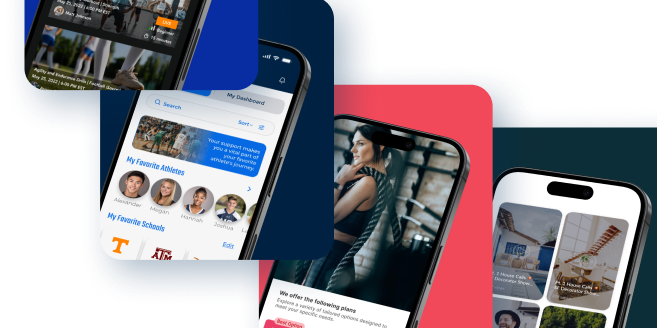
A non-functional prototype (NFP) is a fully designed, clickable version of your app with no backend code behind it. It looks and behaves like the real product in an investor’s hands, and it changes the entire dynamic of a pitch: touchable beats theoretical every single time.
Think about what an investor experiences. A deck asks them to imagine your app. A prototype lets them tap through onboarding, feel the core loop, and picture real users doing the same. It proves you can translate an idea into a concrete product decision by decision, which is the actual job of a founder. It also signals capital discipline, because an NFP runs from about $10,000, up to $20,000 to $25,000 for the largest design work, a fraction of building software nobody has validated. Across the startups we have worked with since 2009, prototype-first founders consistently walk into pitches with more confidence and walk out with more follow-up meetings. The prototype also becomes the blueprint for your minimum viable product (MVP), so the money spent pitching is never wasted.
The Numbers Investors Expect at Pre-Seed
Pre-seed investors do not expect revenue projections they can bank on. They expect logic they can check. Three sets of numbers matter: market math, unit-economics reasoning, and use of funds.
Market math should be bottom-up. Instead of “the fitness app market is $30 billion,” show reachable customers: 40,000 independent gyms in the US, times a $200 monthly subscription, times a defensible share. Small honest numbers beat giant borrowed ones. Unit-economics logic means you can explain what it costs to acquire a customer, what that customer is worth over time, and why the gap grows in your favor as you scale. Estimates are fine; hand-waving is not. Use of funds should map dollars to milestones: for example, a $500,000 raise covering an MVP build in the $25,000 to $60,000 range, a year of iteration and marketing, and the traction targets that unlock a seed round. Knowing that AI-assisted development, with engineers reviewing every change, has roughly halved build costs since the early 2020s also tells investors you scope like an operator.
Get Your Free 45-Minute App Roadmap
Meet 1-on-1 with our senior product team. We’ll map your MVP or enterprise app and hand you a personalized plan—clear scope, a realistic timeline, and fixed monthly costs—for iOS & Android, web, tablets & wearables, and AI.
Delivery: Tight Story, Honest Ask
The best pitches sound like a story, not a lecture: here is the problem I lived, here is the product that fixes it, here is the proof people want it, and here is what your money makes possible. Rehearse until you can deliver it in 15 minutes without the deck, because technology fails and conversations wander.
Then make the ask plainly. Name the amount, the instrument (most pre-seed rounds use a Simple Agreement for Future Equity, or SAFE), and the milestones it funds. Answer hard questions honestly, including “what could kill this?” Investors have seen thousands of pitches; pretending your startup has no risks reads as inexperience. A quick note here: this article is education about how pitching works, not legal or financial advice, so involve an attorney before signing any investment documents.
How Chop Dawg Helps Founders Walk In With Proof
Our job is turning your pitch from theoretical into touchable. We built the investor-ready prototype for DLD, Donald Legacy Defined, and founder Elliot Donald told us, “Thanks to their guidance, I was able to secure investor funding…” For Car Rental By Owner, founder Demerius Ware shared, “Their expertise and professionalism have not only impressed our team but also attracted interest from potential investors. Having a functional product to showcase has been essential for us…” And the co-founder of WhereUApp called out “the high-quality prototype they delivered, which we believe could attract the attention of investors if needed.”
Every project gets our US-headquartered, US-led team: American leadership, product and project management, senior design, senior development, and senior quality assurance (QA), working alongside our in-house Brazilian designers and our in-house engineering and QA teams in Pakistan and India. No subcontractors, no middlemen, everyone fluent in English on US hours. That model closes out the two fears founders bring us from past experiences: the American salesperson hiding an anonymous offshore team, and the overseas shop that disappears across time zones. You can go fully American for regulated work or choose the blended model most partners pick for lower cost at the same standard. Start with strategic planning and design services, or see what we will do for you.
Frequently Asked Questions
How many slides should an app pitch deck have?
Ten to twelve slides is the sweet spot for pre-seed pitches. Fewer usually means missing answers on market, model, or team; more usually means padding. Every slide should make one claim with one piece of evidence, and the full walkthrough should take under 20 minutes.
Do I need a working app before pitching investors?
No, but you need something touchable. A clickable non-functional prototype, which runs from about $10,000, demonstrates the product experience without backend code. Many founders raise their first round entirely on a prototype plus early demand signals like a waitlist or letters of intent.
What numbers do pre-seed investors actually expect?
Three things: bottom-up market math showing reachable customers, unit-economics logic explaining acquisition cost versus customer value, and a use-of-funds plan tying the raise to milestones. They expect reasoning they can check, not the confident five-year revenue projections that nobody at this stage believes.
How much does an investor-ready prototype cost?
A clickable non-functional prototype starts around $10,000 and reaches $20,000 to $25,000 for the largest design scopes. It doubles as the design blueprint for your MVP build, which typically runs $25,000 to $60,000, so the investment carries forward instead of being pitch-only spend.
How long should an investor pitch take?
Plan for a 15-minute core pitch inside a 30-minute meeting, leaving real time for questions at the end. The question period is where deals are actually won, because it lets you demonstrate honesty, depth, and full command of your numbers while under pressure.
What is the biggest mistake founders make when pitching an app?
Pitching the dream instead of the evidence. Claiming no competitors, quoting top-down market sizes, and dodging risk questions all signal inexperience. Investors fund founders who name their risks and show a concrete plan, backed by something clickable, to retire them.
Make Your Next Pitch Touchable
A sharp deck, a clickable prototype, and honest numbers will put you ahead of most founders an investor meets this year. If you want a partner to build the prototype and pressure-test the plan behind it, book a free 45-minute consultation, valuable whether or not you ever work with us, and open to first-time founders and established companies alike. Since 2009, now in our 18th year, Chop Dawg has launched more than 500 products used by over 1 billion people, with 92% of partners returning and 300+ five-star reviews across trusted directories including Clutch, GoodFirms, G2, Google, and TopDevelopers. Browse our success stories to see what funded pitches turn into.


 15 Min