


















 13 Min


To define your minimum viable product (MVP), strip your idea down to the single core problem it solves, then keep only the features people would refuse to live without. A minimum viable product is the leanest version of your app that real users will love and pay for, not a cheap or half-built product. That distinction matters because roughly 35% of startups fail for one brutal reason: no market need, according to CB Insights. Founders who pour their budget into nice-to-have features before proving demand are the ones who run out of runway first. This guide gives you the exact non-negotiables versus nice-to-haves exercise we use with founders so you scope smart, spend less, and launch something people actually want.
Key Takeaways
- An MVP is the smallest version users will love and pay for, not a discount product with corners cut.
- Run the removal test on every feature: if you cut it and people would still use and pay for the app, it is not part of your MVP.
- Your MVP should solve one core problem exceptionally well, not five problems adequately.
- Nice-to-haves are not deleted forever; they go on a roadmap and ship after launch data tells you they are worth it.
- A tighter feature set lowers cost, shortens timelines, and gets you real-world feedback faster.
What an MVP Actually Is (And Is Not)
The term “minimum viable product” gets misused constantly. Founders hear “minimum” and picture something flimsy, or they hear “product” and try to ship everything at once. Both readings cost money. The “minimum” describes scope, not quality. The “viable” means it has to work well enough that someone will use it repeatedly and, ideally, pay for it.
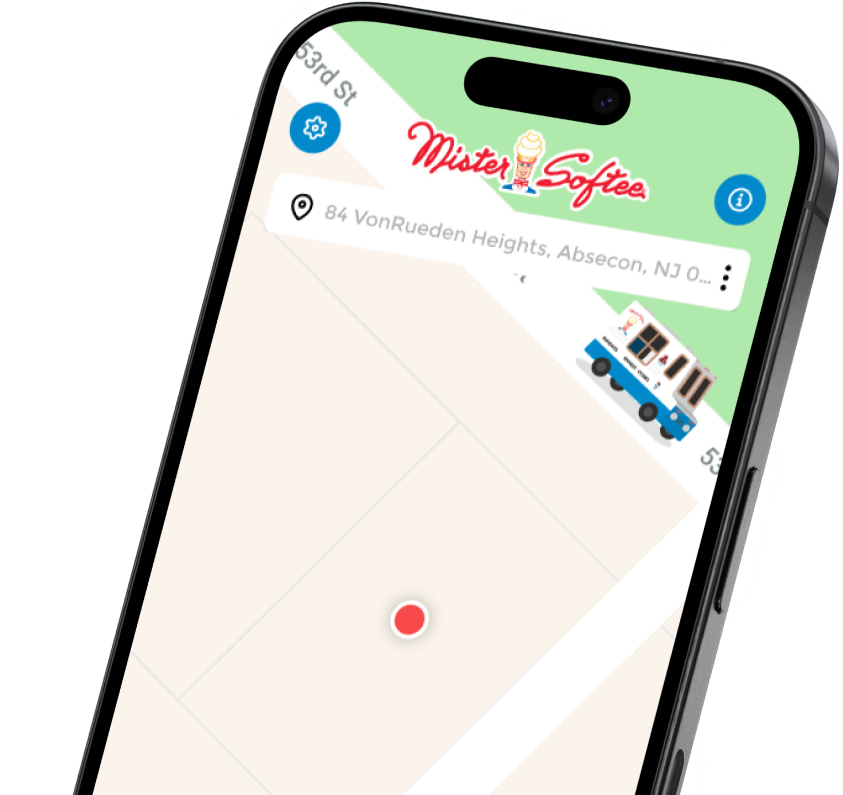
Think of it this way: your MVP is the most focused expression of your value, built to a high standard. A social app does not need feeds, marketplaces, and a dozen content formats on day one. It needs to make one kind of connection feel effortless. When Chop Dawg partnered on SeekQ, the product was built around a single core promise: turn shallow online connections into real relationships. Everything else supported that one promise rather than competing with it, and the app shipped clean to both the Apple App Store and Google Play Store. That is what a well-scoped MVP looks like in practice.
The Non-Negotiables vs Nice-to-Haves Exercise
Here is the test that cuts through every feature debate. For each feature on your list, ask one question: if I removed this, would people still use the app and still pay for it? If the answer is yes, it is not part of your MVP. If removing it breaks the core experience, it stays.
Be honest. Most founders confuse “I want this” with “users need this.” Your opinion about a feature is not the same as evidence that it drives the core value. The removal test forces that clarity.
Run Every Feature Through One Filter
Write down every feature you imagine for your app. Then sort each one into the table below. Anything that lands in the right-hand column goes on your post-launch roadmap, not into your first build.
| Question | Non-Negotiable (build now) | Nice-to-Have (roadmap it) |
|---|---|---|
| Does the core promise break without it? | Yes, the app is pointless without it | No, the app still delivers its main value |
| Would users still pay if it were missing? | No, they would not pay | Yes, they would still pay |
| Does it solve the one problem you launched to solve? | Directly | Tangentially or for a future use case |
| Can you prove demand for it today? | Yes, from user conversations | It is a hunch or a “wouldn’t it be cool” |
| Example for a ride-booking app | Request a ride, match a driver, pay | In-app chat themes, loyalty tiers, ride scheduling |
| Example for a marketplace app | List an item, browse, transact | Wishlists, social sharing, advanced filters |
Get Your Free 45-Minute App Roadmap
Meet 1-on-1 with our senior product team. We’ll map your MVP or enterprise app and hand you a personalized plan—clear scope, a realistic timeline, and fixed monthly costs—for iOS & Android, web, tablets & wearables, and AI.
Why Discipline Here Saves Your Budget
Every nice-to-have you build before launch costs design hours, development hours, and quality assurance hours, and it delays the day you learn whether anyone wants your product at all. A focused minimum viable product typically lands in the $25K to $75K range, while a feature-bloated first build pushes into $75K to $150K and beyond. Worse, the bloat often funds features your users never asked for. Scoping tightly is not about doing less; it is about spending your capital where it proves something. A disciplined scope also keeps the door open at the accessible end: at Chop Dawg a simple, focused MVP often starts around $25,000 to $30,000 all in, while a more ambitious MVP with more features or integrations runs $55,000 to $60,000 and larger or more complex products run $75,000 to $150,000 or more; design work begins at $5,000 per month, so a tight first build is within reach even on a lean budget.
How to Find Your One Core Problem
Your MVP should solve a single problem so well that users forgive everything it does not yet do. To find that problem, finish this sentence in one line: “My app helps [specific person] do [specific thing] so they can [specific outcome].” If you need three sentences, your scope is too wide.
The sharpest MVPs come from founders solving a pain they personally feel or have watched up close. That firsthand understanding tells you which features are load-bearing and which are decoration. Our strategic planning process starts here, mapping user personas and the core job your app does before anyone discusses features, so the build stays anchored to a real problem.
Pressure-Test the Scope Before You Build
Once you have your non-negotiables list, validate it before committing to development. Talk to potential users, show them the concept, and watch which features they react to. Better still, put the flow in front of them as a clickable, non-functional prototype (NFP) during the design phase, before a line of code is written. An NFP is a clickable mockup of your screens and flows that looks and feels real but has no working code behind it. Chop Dawg’s design-before-code process produces exactly that: personas, a sitemap, wireframes, high-fidelity designs, and an NFP you can test and refine. Catching a “we do not actually need this” before development is the cheapest fix you will ever make.
What to Do With Your Nice-to-Haves
Nice-to-haves are not bad ideas. They are good ideas with bad timing. The mistake is treating your roadmap like a deletion list instead of a sequencing tool. After launch, your real users will tell you, through behavior and feedback, which roadmap features deserve to move up. That is far better information than any pre-launch guess.
This staged approach also keeps your partnership efficient. You ship the core, learn from the market, and invest in version two with evidence instead of optimism. Plenty of the products we have helped build across startup app development grew feature by feature this way, guided by usage data rather than launch-day ambition.
Frequently Asked Questions
Is an MVP just a cheaper version of my app?
No. An MVP is a leaner version, not a cheaper or lower-quality one. You build fewer features, but you build them to a high standard so users will actually adopt and pay for the product. The savings come from narrower scope, not from cutting corners on the features you do ship.
How do I decide which features make the cut?
Use the removal test on every feature. Ask whether users would still use the app and still pay for it if that feature were gone. If yes, it is a nice-to-have for your roadmap. If removing it breaks the core promise, it is a non-negotiable that belongs in your first build.
How many features should an MVP have?
As few as possible while still solving your one core problem completely. There is no magic number, but most strong MVPs ship with a handful of tightly related features rather than a dozen loosely connected ones. If your feature list reads like a wish list, you have not finished scoping yet.
What does an MVP typically cost to build?
A focused minimum viable product generally runs $25K to $75K, while more complex products range from $75K to $150K or more. Artificial intelligence and agent-assisted coding have cut typical 2020 to 2023 costs and timelines by roughly half, so a disciplined scope stretches your budget further than ever.
Will cutting features hurt my chances with investors?
The opposite is usually true. Investors fund evidence, not feature counts. A focused MVP that proves real demand and early traction is far more fundable than a bloated app with no users. A clear roadmap of nice-to-haves also shows investors you understand sequencing and capital efficiency.
Can I add the nice-to-haves later?
Yes, and you should. Nice-to-haves go on a post-launch roadmap and ship once real usage data shows they are worth building. Launching lean lets your actual users, rather than your pre-launch assumptions, tell you which features deserve investment next.
Scope an Honest MVP With a Partner Who Will Tell You the Truth
Defining your MVP well is the difference between a product the market wants and an expensive collection of features nobody asked for. The non-negotiables versus nice-to-haves exercise is simple, but applying it honestly to your own idea is hard, because everything feels essential when it is yours. That is where an experienced partner helps. Since 2009, Chop Dawg has helped found and scale more than 500 products, with 92% of partners returning and 300+ five-star reviews across trusted directories like Clutch, GoodFirms, G2, Google, and TopDevelopers. We are a United States-headquartered and United States-led team, with senior American product, design, and engineering leadership plus an in-house Brazilian design team and in-house development, quality assurance (QA), and project-management teams in Pakistan and India. Every one of them is in-house Chop Dawg staff assigned directly to you, never a subcontractor or middleman. We bring that perspective to your idea, whether you are a first-time founder with a brand-new concept or an established company scoping the next version of an existing product. Keep a fully-American team for regulated work, or choose a cost-effective United States-plus-offshore blend at the same quality, and either way you reach the real senior people, not a salesperson fronting faceless developers. Book a free 45-minute consultation, bring your idea, and we will help you scope an honest minimum viable product, separate the must-haves from the maybes, and map a build you can actually afford.



 15 Min