
















 13 Min


The way to come up with an app idea that actually makes money is to start from the business model and work backward: identify who pays, why they pay, and how much, before you imagine a single screen. The money is there for ideas built this way; consumers spent $166.8 billion in apps in 2025, including $79.5 billion on subscriptions alone, according to Business of Apps. Yet most founders ideate in the wrong order, falling in love with a concept and hunting for revenue later. This guide flips the sequence: payer-first ideation, willingness-to-pay signals you can verify, why niches carry pricing power, and a scoring rubric to grade every idea you generate.
Key Takeaways
- An app idea that actually makes money starts with a payer and a painful problem, not a feature and a hope.
- Painkillers beat vitamins: people reliably pay to remove pain, save hours, or avoid fines, and only occasionally pay to feel slightly better.
- The strongest willingness-to-pay signals are existing spend, manual workarounds, and people hired to do the job by hand.
- Niche audiences grant pricing power because they compare you to the cost of their problem, not to a sea of lookalike apps.
- Score every idea on problem severity, payer clarity, reachable market, and moat potential before committing a dollar.
Start With Who Pays: The Foundation of an App Idea That Actually Makes Money
Begin ideation by choosing the payer, then find their most expensive recurring pain. That is the entire trick. A payer is a person or business with money, authority to spend it, and a problem that costs more than your price. Write the sentence “X pays $Y per month because Z costs them more” before anything else; if you cannot complete it, you have a hobby, not a business.
This is where the painkiller-versus-vitamin distinction earns its keep. A painkiller removes a cost the buyer already feels: missed calls, denied insurance claims, compliance fines, hours of manual paperwork, no-show appointments. A vitamin promises improvement the buyer can live without: inspiration, organization, marginal wellness. Vitamins can win with massive audiences and patience, but painkillers convert faster, churn less, and forgive a small marketing budget. For a first-time founder, the practical rule across the 500+ launches we have supported since 2009 is simple: sell aspirin to someone with a headache and a wallet.
Willingness-to-Pay Signals You Can Verify
Willingness to pay is observable before you build anything. Look for four signals. First, existing spend: the buyer already pays for a worse solution, an agency, a legacy tool, an extra employee, or recurring fines. Replacing a budget line is far easier than creating one. Second, manual workarounds: spreadsheets, group texts, binders, and duct-taped tool stacks are all evidence that the pain outruns the current market. Third, hiring: when businesses pay humans to do a task by hand, software priced below that wage sells itself. Fourth, urgency events: audits, new regulations, seasonal crushes, and growth spurts force purchases on a deadline. Confirm the signals in 15 to 20 direct conversations, then test with a priced landing page and ask for deposits or signed commitments. Interest is polite; payment is proof.
Pricing Power Lives in Niches
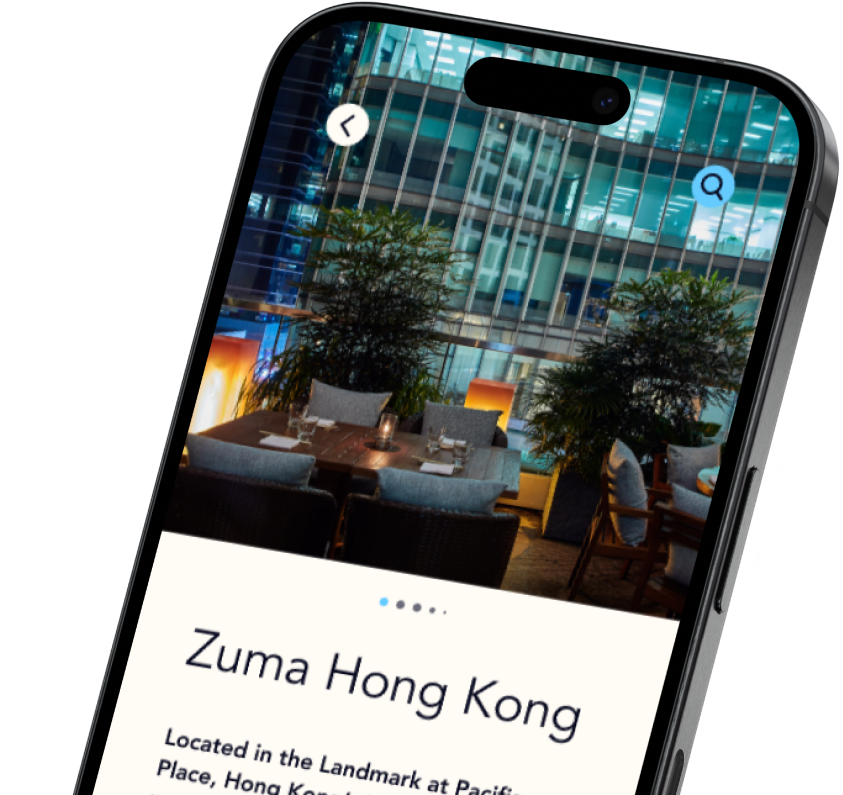
Niche audiences pay more, complain less, and stay longer, because a specific tool for their exact problem has no obvious comparison price. A generic to-do app fights a race to free against thousands of clones. A compliance tracker for fire-protection contractors is compared to the fine it prevents, and it gets priced against value instead of against the app store. Two of our favorite launches prove the range of what model-first thinking unlocks. Mangia Rewards built a premium subscription dining membership for high-spend diners, one redeemable perk per day at curated upscale restaurants, and launched with 15+ major partner deals, 200+ curated restaurants, and over 80% of beta users redeeming two or more offers weekly. Rayze went the other direction and made the fee itself the innovation: a donation platform charging just 1%, the lowest in its industry, which became the headline reason 50,000+ users joined in the first 30 days. Premium niche subscriptions and disruptive fee structures are both pricing-power plays; what they share is a model chosen deliberately, before the build.
An Idea Is Not a Business
An idea becomes a business only when four parts exist: the problem, the payer, a repeatable channel to reach that payer, and unit economics where revenue per customer comfortably exceeds the cost to acquire and serve them. Founders routinely validate the first part and skip the other three, which is how good ideas produce dead companies. Before you commit, sketch all four in a paragraph: who has the problem, who signs the payment, where those buyers gather in reachable groups, and what the rough math looks like at 100 customers. The idea-versus-business distinction deserves more depth than one section can give, and we cover it fully in a companion piece on the Chop Dawg blog; for ideation purposes, the headline is enough: judge ideas as businesses from the first minute.
Get Your Free 45-Minute App Roadmap
Meet 1-on-1 with our senior product team. We’ll map your MVP or enterprise app and hand you a personalized plan—clear scope, a realistic timeline, and fixed monthly costs—for iOS & Android, web, tablets & wearables, and AI.
A Simple Scoring Rubric for App Ideas
Grade every idea you generate on four criteria, scored 1, 3, or 5. Anything totaling 16 or higher deserves validation work; anything at 11 or lower should be shelved without guilt. The rubric keeps you honest when an idea is fun but the business is weak.
| Criterion | Score 1 | Score 3 | Score 5 |
|---|---|---|---|
| Problem severity | Mild annoyance, ignored for years | Regular frustration with workarounds | Costs real money, hours, or legal risk today |
| Payer clarity | Unclear who would ever pay | Users would pay small amounts | A named role already budgets for this pain |
| Reachable market | Diffuse audience, ads only | Some communities and channels exist | Buyers gather in associations, forums, or one industry |
| Moat potential | Cloned in a weekend | Some data or integration depth over time | Proprietary data, network effects, or compliance barriers |
Score honestly and in writing. The exercise takes ten minutes per idea and saves founders from the most expensive mistake in software: building a low scorer beautifully.
How Chop Dawg Turns Money-Making Ideas Into Products
Business-model-first is exactly how we run early engagements. Before design begins, our strategy work pressure-tests the payer, the pricing, and the channel, because a gorgeous app with no revenue engine helps nobody. That is the thinking behind Mangia Rewards, where subscription tiers, sponsor code distribution, and restaurant-facing return-on-investment dashboards were designed as one system. Co-founder Anthony Conte described the partnership this way: “Chop Dawg is excellent at listening to their clients’ needs and helping them design great apps… we have a partner who genuinely cares about what we’re building and is dedicated to our success.” It is also the thinking behind Rayze, where the 1% donation fee demanded ruthless efficiency in everything from payment processing to corporate matching tools, and businesses using those tools saw a 75% surge in employee charitable involvement. Organizations that have trusted Chop Dawg include Mister Softee, Wawa, and Big Brothers Big Sisters.
The team behind that work is fully in-house: US-headquartered and US-led, with Americans owning leadership, product and project management, senior engineering, senior design, and senior quality assurance (QA), supported by our own Brazilian design team and our development, QA, and project management teams in Pakistan and India. Everyone is assigned directly to your project, fluent in English, working US hours. That structure was built to eliminate the two stories that burn founders: the American salesperson quietly outsourcing to strangers, and the offshore shop that disappears at 5 p.m. your time. Start with strategic planning to stress-test your model, then our design team makes the money engine feel effortless to use.
Frequently Asked Questions
How do apps actually make money in 2026?
The main models are subscriptions, transaction fees, per-seat business pricing, marketplace take rates, and advertising, with subscriptions generating $79.5 billion in 2025. Business-to-business apps monetize fastest because buyers justify costs in saved hours. Digital goods sold in-app pay Apple or Google 30%, or 15% under the small business programs.
How do I know if people will actually pay for my app idea?
Verify it before building: confirm buyers already spend money or hours on the problem, interview 15 to 20 of them, then publish a landing page with real pricing and ask for deposits, pre-orders, or signed letters of intent. Commitments are evidence. Compliments, survey clicks, and social media likes are not.
Should my app be free, paid, or subscription-based?
Match the model to the pain frequency. Recurring problems justify subscriptions, transactional problems suit per-use fees or take rates, and advertising only works at large scale. Most profitable startup apps in 2026 use free trials or limited free tiers that convert to subscriptions once the value is felt.
How much does it cost to build a revenue-generating app?
A focused minimum viable product (MVP) with payments built in runs $25,000 to $60,000 in 2026, with lean builds near $25,000 to $30,000 and ambitious ones near $55,000 to $60,000. Complex platforms run $75,000 to $150,000 or more. AI-assisted engineering has roughly halved costs compared to a few years ago.
What separates an app idea from a real business?
A business adds three things to an idea: a clearly identified payer, a repeatable channel to reach that payer affordably, and unit economics where each customer generates more than they cost to acquire and serve. If any of the three is missing, you have a product concept still searching for its company.
Design the Business, Then Build the App
Coming up with an app idea that actually makes money is a discipline: pick the payer, prove the pain, price against value, and score the idea before you fund it. Do that, and development becomes the easy part. Whether you are a first-time founder or an established company weighing a new product line, book a free 45-minute consultation, offered whether or not you ever hire us, and we will work the rubric on your idea together. Chop Dawg has partnered on 500+ launches since 2009, products used by more than 1 billion people, with 92% of partners returning, now in our 18th year, and 300+ five-star reviews across trusted directories like Clutch, GoodFirms, G2, Google, and TopDevelopers. Book your consultation today.


 15 Min