





 15 Min


To build a donation or fundraising app in 2026, engineer for two moments: the three seconds it takes a moved donor to give, and the twelve months it takes to turn that gift into a recurring relationship. One-tap giving, recurring gift management, corporate matching, and clean receipts are the machinery behind both. The generosity is there to capture: Giving USA 2026 reports U.S. charitable giving rose to $617.20 billion in 2025, growing 5.7% and passing the $600 billion mark for the first time. Yet most nonprofits still push donors through clunky web forms built a decade ago. This guide covers the features, the app store rules that make or break donation economics, honest costs, and the proof that great fundraising software multiplies generosity.
Key Takeaways
- Donation apps span four models: single-nonprofit apps, multi-nonprofit giving platforms, cause-commerce products, and peer-to-peer campaign tools.
- Under Apple’s current App Review Guidelines, approved nonprofits may fundraise directly inside apps, and donations handled this way run through payment processors rather than In-App Purchase, so Apple’s commission does not apply when routed correctly.
- One-tap giving with Apple Pay and Google Pay, recurring gifts, and instant receipts are the conversion trio that defines modern donation UX.
- Corporate matching features can dramatically multiply gift value and employee participation.
- A focused MVP runs about $25,000 to $60,000 over 3 to 6 months, with multi-nonprofit platforms typically $75,000 to $150,000.
What a Donation or Fundraising App Is (and Which Model Fits You)
A donation or fundraising app moves generosity through software: discovering causes, giving in seconds, tracking impact, and automating the receipts and reporting both donors and nonprofits need. Four models cover the category, each with different builders and economics.
- Single-nonprofit apps: one organization’s donors, campaigns, events, and volunteer opportunities in one branded home
- Multi-nonprofit giving platforms: marketplaces where donors discover verified causes and give across them, monetized by a small platform fee or optional donor tips
- Cause-commerce products: purchases (tickets, goods, experiences) that route proceeds to charities the buyer chooses
- Peer-to-peer campaign tools: supporters create personal fundraising pages that feed a parent campaign, powerful for events and challenges
Fee models in 2026 skew low and transparent: platform fees in the low single digits, optional tips, or software subscriptions for nonprofits. Donors have learned to check, and low published fees are now a marketing feature.
How App Store Rules Treat Donations in 2026
The single most misunderstood fact in this category: correctly routed charitable donations do not pay Apple’s commission. Apple’s App Review Guidelines state that approved nonprofits may fundraise directly within their own apps or third-party apps, provided the campaigns follow the guidelines and offer Apple Pay support, disclose how funds are used, comply with law, and make tax receipts available. Because these donations flow to the nonprofit through a payment processor rather than through In-App Purchase, the 30% digital-goods commission does not apply.
Two important cautions. First, platforms that connect donors to many nonprofits must ensure every listed nonprofit has gone through Apple’s nonprofit approval process. Second, apps fundraising for causes outside that approved structure may not collect funds in-app at all; Apple requires such collection to happen outside the app, for example via Safari or SMS. Google Play maintains a comparable carve-out for verified charitable giving. Build your nonprofit verification pipeline (tax-exempt status checks, EIN validation, approval tracking) as core infrastructure, because it is both a compliance requirement and your donors’ trust signal. Policies evolve, so re-verify the current guideline text during your launch cycle.
Must-Have Features to Build a Donation or Fundraising App
Donation UX is conversion engineering with a conscience. Every screen between impulse and receipt loses givers, so the baseline feature set aims at speed on the front end and stewardship on the back end.
- One-tap giving: Apple Pay, Google Pay, and saved payment methods, with preset amounts and a custom option
- Recurring gifts: monthly giving with self-serve management, payment-failure recovery, and anniversary summaries
- Campaign pages: goals, progress bars, media, updates, and shareable links that render beautifully in social feeds
- Corporate matching: employer programs that match employee gifts, with verification workflows and program dashboards
- Receipts and reporting: instant email receipts, year-end giving statements, and nonprofit dashboards covering donors, campaigns, and payouts
- Impact storytelling: updates that show donors what their gift did, the single best predictor of second gifts
- Volunteer and event hooks: discovery and RSVPs that deepen engagement beyond the wallet
Compliance and Edge Cases Beyond the App Stores
Fundraising compliance is straightforward when planned early, and it doubles as donor trust design. These are the recurring items we scope into every build in this category.
- Nonprofit verification: confirm tax-exempt status and identity before listing, and re-check on a schedule
- Receipt requirements: U.S. donors need proper acknowledgment for tax purposes, including substantiation for gifts of $250 or more; automate it
- State solicitation rules: charitable solicitation registration varies by state; platforms should support nonprofits’ obligations with clean records
- Payments and fraud: use established processors (Stripe is the category standard) so card data never touches your servers, and screen for stolen-card abuse, which targets donation forms specifically
- Refund and error flows: duplicate gifts and mistaken amounts happen; a graceful refund path protects goodwill
- Donor privacy: honor anonymity preferences and never sell donor lists
Get Your Free 45-Minute App Roadmap
Meet 1-on-1 with our senior product team. We’ll map your MVP or enterprise app and hand you a personalized plan—clear scope, a realistic timeline, and fixed monthly costs—for iOS & Android, web, tablets & wearables, and AI.
Recommended Stack, Timeline, and Cost
Across 500+ launches since 2009, our nonprofit and giving builds standardize on React Native for iOS and Android from one codebase, React for campaign pages and nonprofit dashboards, Node.js on the backend, and Google Cloud Platform or Amazon Web Services (AWS) with Firebase for real-time updates and notifications. Stripe handles payments, payouts, and recurring billing, with Apple Pay and Google Pay on top.
| Build tier | Scope | Typical cost | Timeline |
|---|---|---|---|
| Focused MVP | One-tap giving, recurring gifts, campaigns, receipts, basic admin | $25,000 to $60,000 | 3 to 6 months |
| Multi-nonprofit platform | Verification pipeline, discovery, corporate matching, payout automation | $75,000 to $150,000 | 6 to 12 months |
| Full giving ecosystem | Volunteering, gamified challenges, sponsor tools, advanced analytics | $150,000+ | 12+ months |
Artificial intelligence (AI) assisted engineering with senior review has roughly halved 2020 to 2023 costs for equivalent scope. Many organizations start with a clickable, non-functional prototype (NFP), from about $10,000, to align boards and early funders before development; our costs and pricing guide details the phases. The classic pitfalls: burying the give button behind browsing, skipping recurring-gift recovery flows (where failed cards quietly bleed revenue), launching a multi-nonprofit platform without an approval pipeline, and treating receipts as an afterthought until tax season generates support tickets.
Where Chop Dawg Fits: Giving Platforms With Documented Results
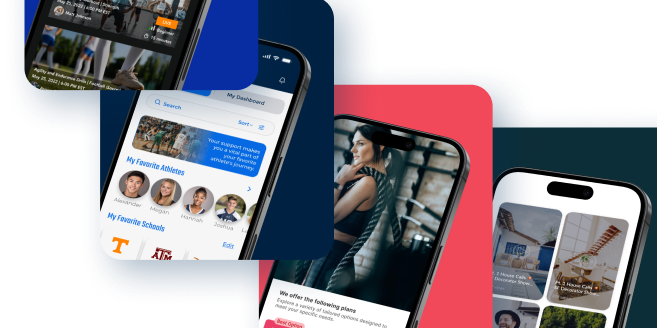
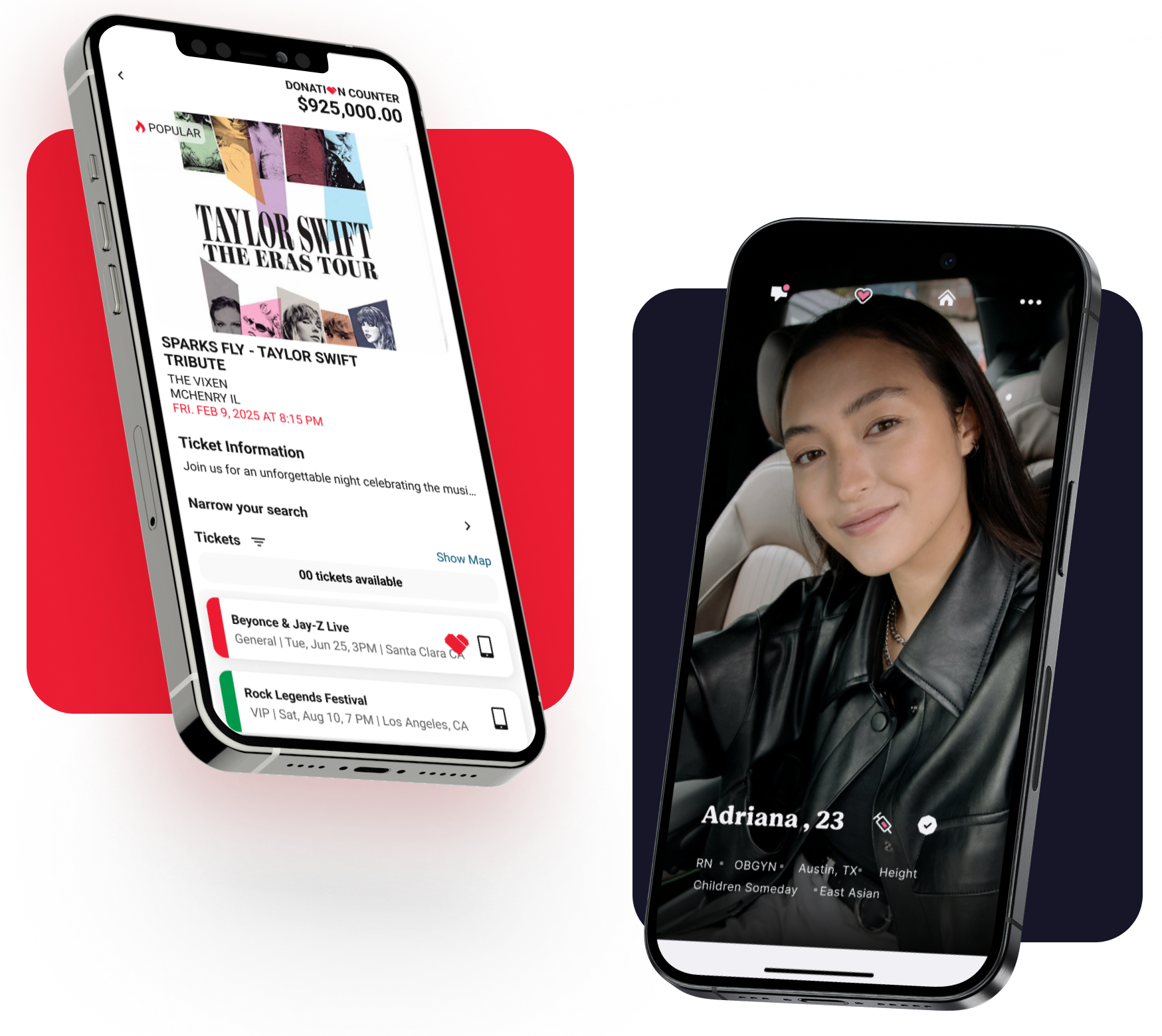
Few categories show our impact more directly. For Rayze, the social giving app founded by NFL veteran Carl Nassib, we built one-tap donations at an industry-low 1% fee plus corporate matching tools; the platform gained 50,000+ users in its first 30 days, and businesses using the matching feature saw a 75% surge in employee charitable involvement. For the nonprofit DiverseCity, our platform work supported a 10x increase in donation revenue. For Tix4Cause, where ticket purchases route proceeds to charities, co-founder Mary Nemetz said: “Chop Dawg’s greatest attribute is listening to our needs and bringing them to life. The team has done a great job developing our apps’ complicated workflow, delivering what they’ve committed to on time. Their professionalism is unsurpassed.” We also built ALLTRUEistic, a purpose-driven community platform architected for 250,000+ potential daily meditators. Organizations that have trusted Chop Dawg include Big Brothers Big Sisters.
Mission-driven budgets deserve honest structure, which is why our model resonates with nonprofits and social-impact founders. Chop Dawg is US-headquartered and US-led, with American leadership across product management, senior design, senior development, and QA, backed by our in-house Brazilian design team and in-house development, QA, and project management teams in Pakistan and India. Every contributor is a direct Chop Dawg employee on your project, closing out the two fears boards raise: the American front man concealing offshore subcontractors, and the overseas vendor with no US-hours accountability. Choose fully American or the blended team most partners pick for the same quality at a lower cost, with fixed monthly budgets and full code and intellectual property (IP) ownership from day one. Explore our what we’ll do for you overview and development services.
Frequently Asked Questions
How much does it cost to build a donation app?
A focused MVP with one-tap giving, recurring gifts, campaign pages, and receipts runs about $25,000 to $60,000. Multi-nonprofit platforms with verification pipelines and corporate matching typically cost $75,000 to $150,000. AI-assisted development has roughly halved 2020 to 2023 pricing for the same scope.
How long does it take to build a fundraising app?
Plan 3 to 6 months for a focused MVP and 6 to 12 months for a multi-nonprofit platform. Add Apple’s nonprofit approval process for each listed organization and standard store review, which is usually 24 to 48 hours for a clean submission in 2026.
Does Apple take 30% of donations made in an app?
Not when donations are routed correctly. Apple’s guidelines let approved nonprofits fundraise directly in apps with Apple Pay support, processed outside In-App Purchase, so the commission does not apply. Fundraising outside that approved structure must collect funds via the web or SMS instead. Verify the current guidelines before launch.
How do recurring donations reduce fundraising costs?
Monthly donors give more over a year than one-time donors and cost nothing to re-acquire. The build essentials are self-serve gift management, automatic payment-failure recovery, and anniversary impact summaries. Payment recovery alone often preserves a meaningful share of recurring revenue that silently lapses on expired cards.
How does corporate matching work in a donation app?
Employees give through the app, the platform verifies each gift, and participating employers match according to their program rules through a dashboard that tracks budgets and payouts. Matching multiplies gift value and participation, and our Rayze build saw a 75% surge in employee charitable involvement among businesses using it.
What receipts is a donation app required to provide?
U.S. donors need written acknowledgment for tax deductions, including substantiation letters for single gifts of $250 or more. Best practice is automatic instant email receipts plus a year-end consolidated giving statement, both generated by the platform so nonprofits stay compliant without manual work.
Turn Generosity Into Infrastructure
A great fundraising app collapses the distance between caring and giving, then stewards every donor toward a lasting relationship, and the platforms we have built prove the model works at scale. Whether you are a nonprofit modernizing your giving experience or a founder building the next giving platform, bring us the vision and we will scope it honestly in a free 45-minute consultation, offered whether or not we build together. Chop Dawg, founded in 2009 and now in our 18th year, has launched 500+ products used by over 1 billion people, holds a 92% repeat-partner rate, and carries 300+ five-star reviews across trusted directories like Clutch, GoodFirms, G2, Google, and TopDevelopers.


 15 Min