





















 15 Min


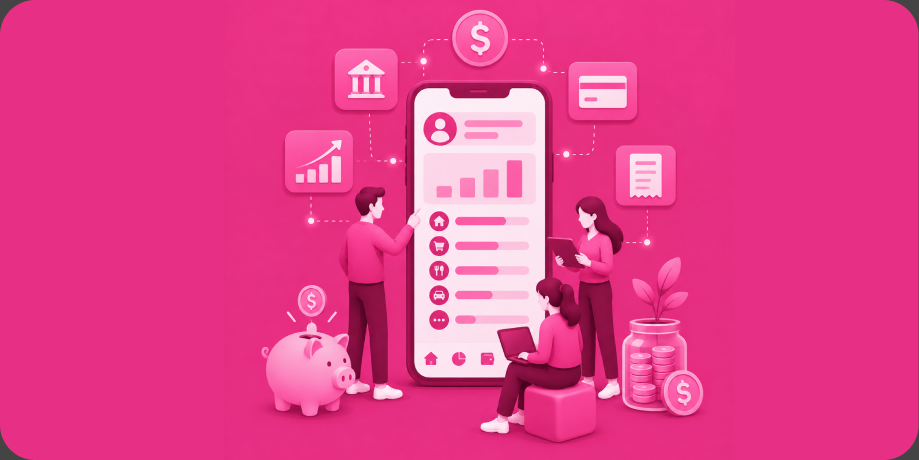
To build a budgeting or personal finance app in 2026, you need three systems working in concert: reliable bank aggregation, a budgeting engine that turns raw transactions into decisions, and security architecture users can actually see and feel. The behavior shift is already complete. The FDIC’s National Survey of Unbanked and Underbanked Households found that almost half of banked households now use mobile banking as their primary way of accessing their accounts, and half of all households use nonbank online payment services. People manage money on their phones; the question is whether they will trust your app to see all of it. This guide covers aggregation, the budgeting engine, trust design, honest costs, and the compliance lines you should not cross in version one.
Key Takeaways
- Bank aggregation through a provider like Plaid, MX, or Finicity is the standard approach; building direct bank connections yourself is a multi-year detour.
- The budgeting engine (clean categorization, budgets, alerts, and dashboards) is where retention lives, because insight, not data, is the product.
- Security expectations are non-negotiable: encryption in transit and at rest, multi-factor authentication (MFA), biometric login, and never storing bank credentials.
- Keep version one read-only; moving money triggers money transmission licensing and partner-bank requirements that multiply cost and timeline.
- A focused MVP runs about $25,000 to $60,000 over 3 to 6 months, with full-featured platforms typically $75,000 to $150,000 or more, plus ongoing per-user aggregation fees.
What a Budgeting or Personal Finance App Is (and Which Kind to Build)
A budgeting or personal finance app connects to a user’s financial accounts, organizes their transactions, and helps them plan spending, saving, and goals. The category spans three product types with very different builds: consumer budgeting apps monetized by subscription, investment and portfolio companions that surface performance data, and business-to-business fintech tools sold to institutions.
For consumer apps, subscriptions have become the default model in 2026. Ad-supported and data-monetized models exist, but they corrode the exact trust a finance app depends on, and users have grown wise to them. Charge a fair subscription, keep the data relationship clean, and say so plainly in your onboarding. Trust is the growth engine in this category.
Bank Aggregation: The Plaid-Style Foundation
Bank aggregation lets users link their checking, savings, credit card, loan, and investment accounts so transactions flow into your app automatically. In 2026 you buy this capability rather than build it: providers like Plaid, MX, and Finicity maintain the thousands of institution connections, the OAuth-based authorization flows, and the security infrastructure. Your users authenticate directly with their bank; your app never sees or stores credentials.
Plan for the realities founders discover late. Aggregation is a recurring cost, priced per connected account or per user per month, which belongs in your unit economics from day one. Connections occasionally break when banks change systems, so you need connection-health handling and graceful re-link flows. Coverage differs across providers for smaller credit unions. And always include manual accounts and cash tracking as a fallback, both for unsupported institutions and for users who want to start without linking anything.
The Budgeting Engine: Must-Have Features
Aggregated data is a commodity; what users pay for is what your engine does with it. The baseline feature set below is the 2026 standard, and the differentiator is how quickly a new user gets from linked account to genuine insight.
- Smart categorization: automatic transaction categories with easy correction, merchant cleanup, and artificial intelligence (AI) assistance for the messy long tail
- Budgets that match real behavior: monthly category budgets, rollover options, and flexible pay-period alignment for people paid weekly or biweekly
- Alerts: low balance, large transaction, upcoming bill, budget threshold, and unusual activity notifications, each individually controllable
- Dashboards: a single glanceable home screen showing safe-to-spend, upcoming bills, and progress, with drill-downs for the curious
- Recurring detection: automatic identification of subscriptions and bills, the feature users mention most in reviews
- Goals: savings targets with projected completion dates tied to actual behavior
- Net worth view: assets minus liabilities over time, the retention chart users check for years
Security Expectations and Trust Design
In personal finance, security is table stakes and visible trust is the differentiator. Users are granting your app a window into their entire financial life, and the design must continuously earn that grant.
- Engineering baseline: AES-256 encryption at rest, TLS in transit, MFA, biometric login with timed auto-logout, and credential-free architecture where bank logins happen with the bank, not with you
- Operational maturity: audit logging, least-privilege access internally, and a security compliance roadmap (SOC 2 is the common ask once you sell to partners)
- Visible trust design: explain in plain language during onboarding what you can see, what you cannot do (for example, “we can never move your money”), and how you make money
- Data ethics: no selling of transaction data, full export, and true account deletion; state it and honor it
One compliance line matters most: keep version one read-only. The moment your app initiates payments or transfers, you enter money transmission licensing, partner-bank relationships, and a different tier of regulatory scrutiny. Read-only insight avoids all of it, and it is where nearly every successful consumer finance product started. Include the standard disclaimer that your app provides information, not financial advice.
Get Your Free 45-Minute App Roadmap
Meet 1-on-1 with our senior product team. We’ll map your MVP or enterprise app and hand you a personalized plan—clear scope, a realistic timeline, and fixed monthly costs—for iOS & Android, web, tablets & wearables, and AI.
Recommended Stack, Timeline, and Cost
Across 500+ launches since 2009, our fintech builds converge on React Native for iOS and Android from one codebase, React for web dashboards, Node.js on the backend, and Amazon Web Services (AWS) or Google Cloud Platform hardened for financial workloads. Aggregation runs through a Plaid-style provider, subscriptions through Apple and Google billing, and identity verification through tools like Stripe Identity where onboarding requires it.
| Build tier | Scope | Typical cost | Timeline |
|---|---|---|---|
| Focused MVP | Aggregation, categorization, budgets, alerts, dashboard, subscriptions | $25,000 to $60,000 | 3 to 6 months |
| Full consumer platform | Goals, net worth, recurring detection, AI insights, web app | $75,000 to $150,000 | 6 to 12 months |
| Fintech platform | Multi-portal products, institutional integrations, advanced compliance | $150,000+ | 12+ months |
AI-assisted engineering with senior review (Claude Code, Cursor) has roughly halved 2020 to 2023 costs for equivalent scope. Remember the recurring line items too: aggregation fees, cloud hosting, and maintenance from about $2,500 per month. Many teams validate with a clickable, non-functional prototype (NFP), from about $10,000, before committing to development; our costs and pricing guide shows the full picture. The common pitfalls are consistent: launching without manual-account fallback, treating categorization accuracy as an afterthought, hiding subscription pricing until after account linking, and letting connection failures rot silently until users churn.
Where Chop Dawg Fits: Fintech We Have Shipped
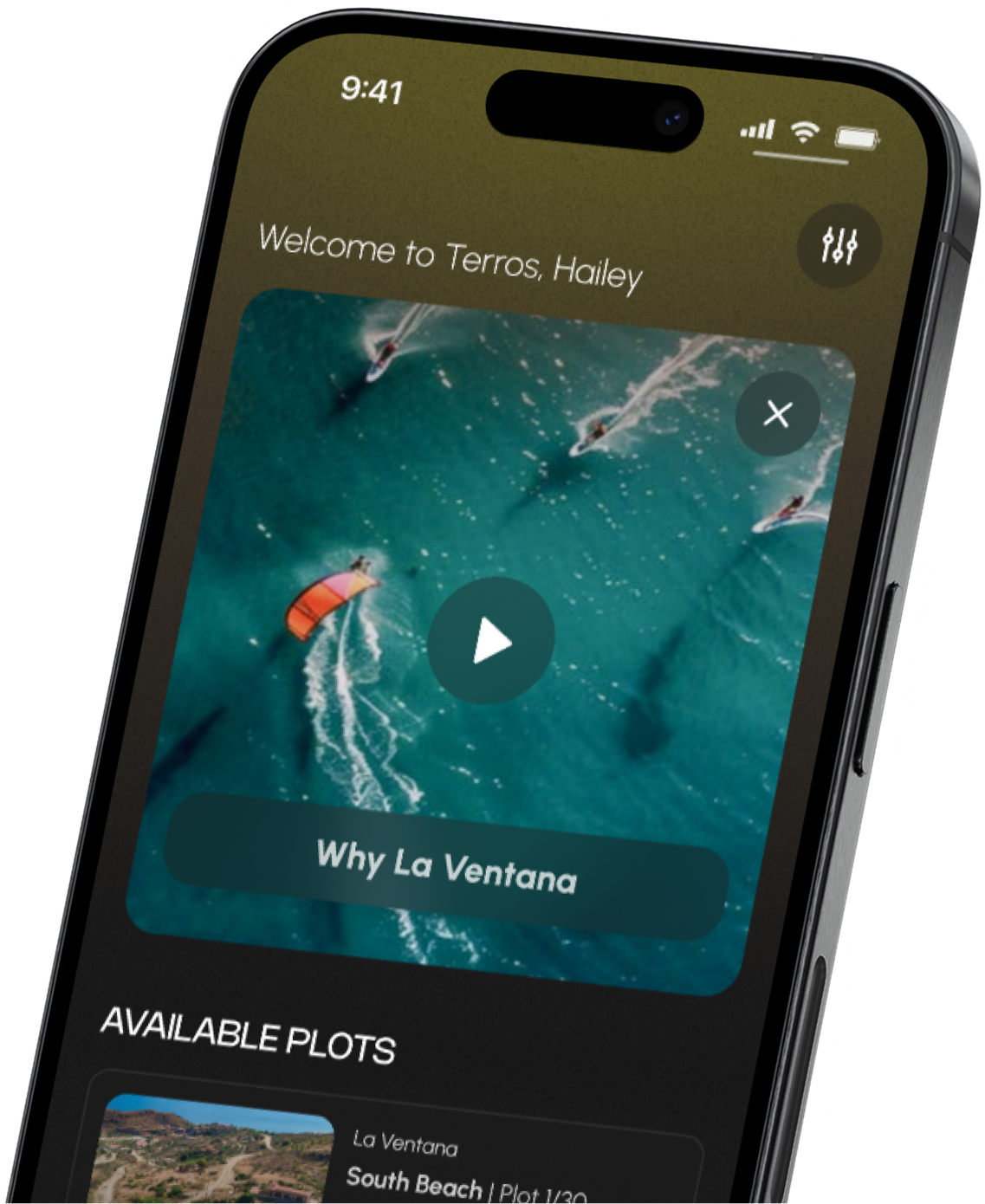
Finance products are held to a higher standard, and our portfolio reflects it. For Ninth Wave, we built enterprise open-finance developer and data-provider portals with OAuth 2.0 flows, field-level data controls, and immutable audit logs, turning onboarding that took weeks into minutes. Their Chief Product Officer told us: “Chop Dawg’s attention to detail was truly impressive. They were highly professional, kept everything on track, and consistently delivered updates right on time.” For Formidium’s CSD investor app, we delivered KPI dashboards with single sign-on (SSO), MFA, and biometric unlock for fund investors. And Terros, a bilingual fractional land-investment app with Stripe Identity KYC and dual-currency ledgers, ran ahead of schedule; its president noted “we’re getting exceptional work at a very fair price.” Organizations that have trusted Chop Dawg include NASA and the U.S. Navy, which tells you how we treat security.
The team behind that work is US-headquartered and US-led: American leadership across product management, senior development, senior design, and QA, backed by our in-house Brazilian design team and our in-house development, QA, and project management teams in Pakistan and India. Everyone is a direct Chop Dawg employee on your project, with US-hours overlap and fluent English. That model was built to eliminate two industry fears: the lone American salesperson fronting hidden offshore developers with no accountability, and the faceless overseas shop with no US business norms. Regulated and government work can run fully American; most partners choose the blend for the same quality and timeline at lower cost. Fixed monthly budgets, transparent pricing, and you own all code and intellectual property (IP) from day one. Explore our development services and strategic planning.
Frequently Asked Questions
How much does it cost to build a budgeting app?
A focused MVP with bank aggregation, categorization, budgets, alerts, and subscriptions runs about $25,000 to $60,000. Full consumer platforms with goals, net worth, and AI insights typically cost $75,000 to $150,000. Budget separately for recurring aggregation fees and maintenance from about $2,500 per month.
How long does it take to build a personal finance app?
Plan 3 to 6 months for a focused MVP and 6 to 12 months for a full platform, including design, development, security hardening, and quality assurance. Aggregation provider onboarding and app store review add days, not months, when planned early in the schedule.
Should I use Plaid or build my own bank connections?
Use an aggregation provider. Plaid-style services maintain thousands of institution connections, OAuth flows, and security infrastructure that would take years to replicate. Your engineering time is better spent on categorization quality and insight features. Direct connections only make sense for institutions building on their own systems.
What security features does a finance app legally and practically need?
Practically: encryption at rest and in transit, MFA, biometric login, credential-free bank linking, audit logs, and honest privacy disclosures. Contractually, aggregators and partners will expect maturing security operations, with SOC 2 the common benchmark. Users expect visible trust design, including a clear statement that the app cannot move money.
Do I need financial licenses to launch a budgeting app?
A read-only budgeting app that displays and organizes data generally does not require money transmission licensing. Initiating payments or transfers changes that completely, adding licensing and partner-bank requirements. Keep version one read-only, add clear not-financial-advice disclaimers, and bring in fintech counsel before any money-movement roadmap.
How do budgeting apps make money?
Subscriptions dominate in 2026, usually $5 to $15 per month with an annual discount, processed through Apple and Google billing at 15% for most startups under the small business programs. The model works because aggregation costs scale per user, and paying users churn less than ad-supported ones.
Build the App People Trust With Every Account
A budgeting app earns its subscription by turning linked accounts into calm, confident decisions, and it keeps that subscription through visible security and honest design. Whether you are a founder sketching your first fintech or an established company extending financial tools to customers, we will map the honest scope, stack, and unit economics with you in a free 45-minute consultation, whether or not you hire us. Chop Dawg has built since 2009, now in our 18th year: 500+ products launched, software used by over 1 billion people, a 92% repeat-partner rate, and 300+ five-star reviews across trusted directories like Clutch, GoodFirms, G2, Google, and TopDevelopers.

 15 Min