




















 16 Min


Building an app like TikTok in 2026 costs roughly $80,000 to $300,000 and up, with the number set by how far you take the video and recommendation experience on day one. A focused short-video minimum viable product (MVP) with profiles, a vertical video feed, recording and editing, likes, comments, and follows lands in the $80,000 to $150,000 range, while a full platform with a learning recommendation engine, in-app editing effects, live streaming, direct messaging, and moderation at scale climbs past $300,000. The audience is vast: there were about 5.79 billion social media user identities worldwide in early 2026, according to DataReportal’s Digital 2026 report, now more than two in three people on Earth. If you keep getting vague quotes, this guide breaks the build down module by module, shows what moves the cost, and explains how artificial intelligence (AI) assisted coding has lowered the price since 2023.
Key Takeaways
- A focused TikTok-style MVP (profiles, vertical video feed, recording and editing, engagement) typically runs $80,000 to $150,000.
- A full platform with a learning recommendation engine, effects, live streaming, and messaging can exceed $300,000.
- Video processing and delivery plus the recommendation engine are the two heaviest cost drivers, more so than in a photo app.
- AI and agent-assisted coding (Claude Code, Cursor) have roughly halved 2020 to 2023 build timelines and budgets.
- TikTok earns from ads and commerce, but in-app coins, gifts, or subscriptions trigger Apple and Google fees up to 30 percent.
What You Are Actually Building When You Clone TikTok
TikTok is a short-video platform built around two things done exceptionally well: a frictionless video creation tool and a recommendation feed that learns what each viewer wants in seconds. Underneath sit user profiles, a vertical video player, recording and editing with effects and music, likes, comments, follows, notifications, and a backend that processes and serves huge volumes of video fast. The recommendation engine and the video pipeline are where most of the budget concentrates, far more than in a photo-first app. The good news is that a compelling short-video MVP is achievable, and the heavier intelligence can grow once you have content and viewers.
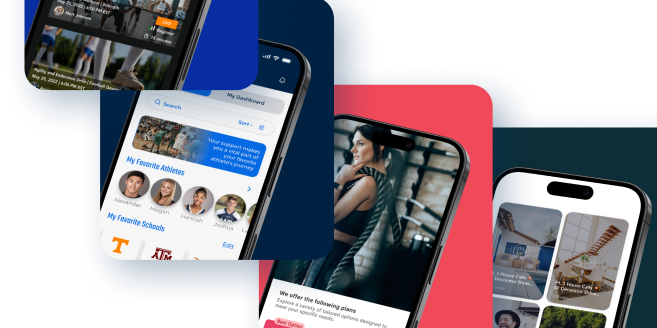
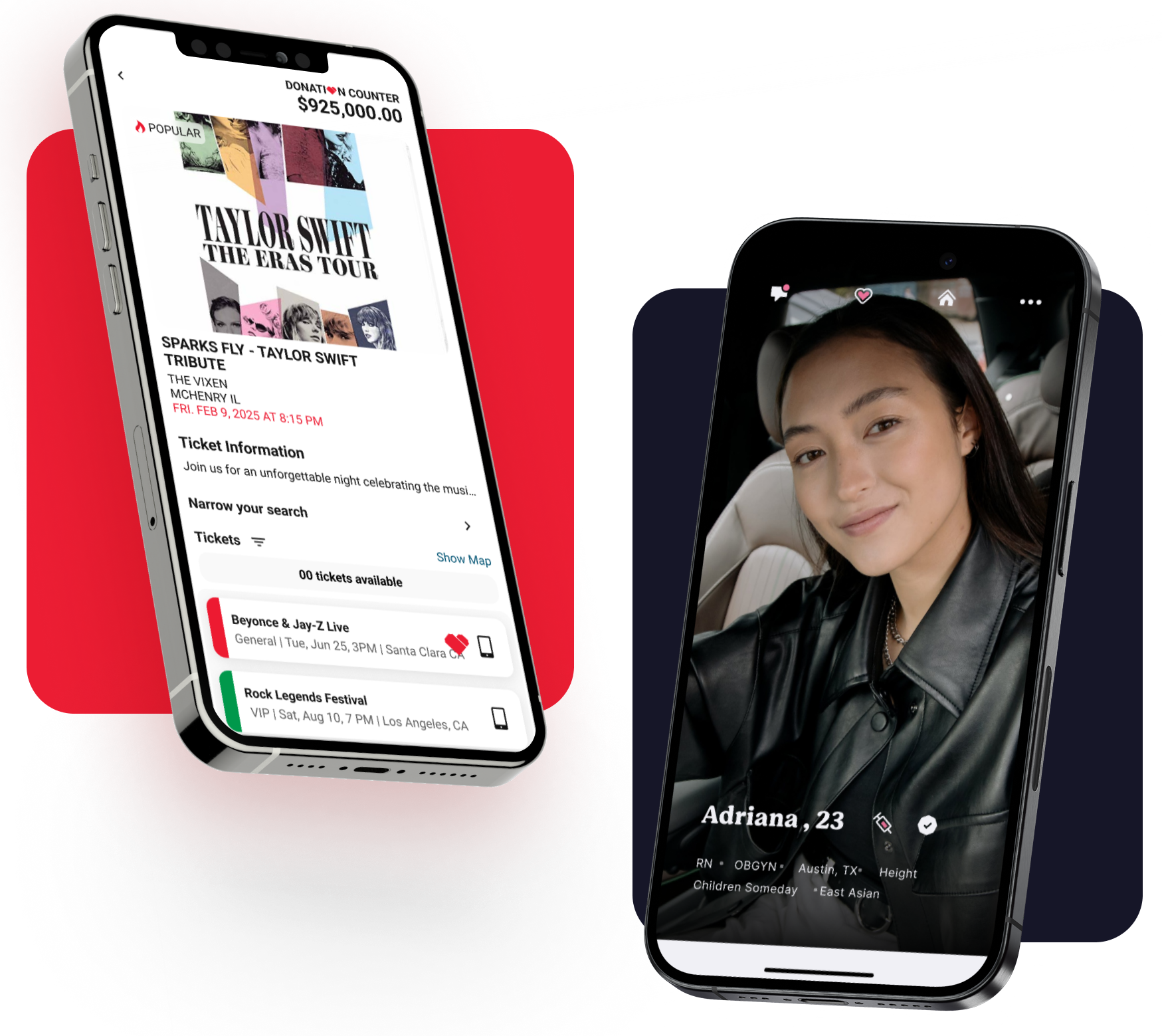
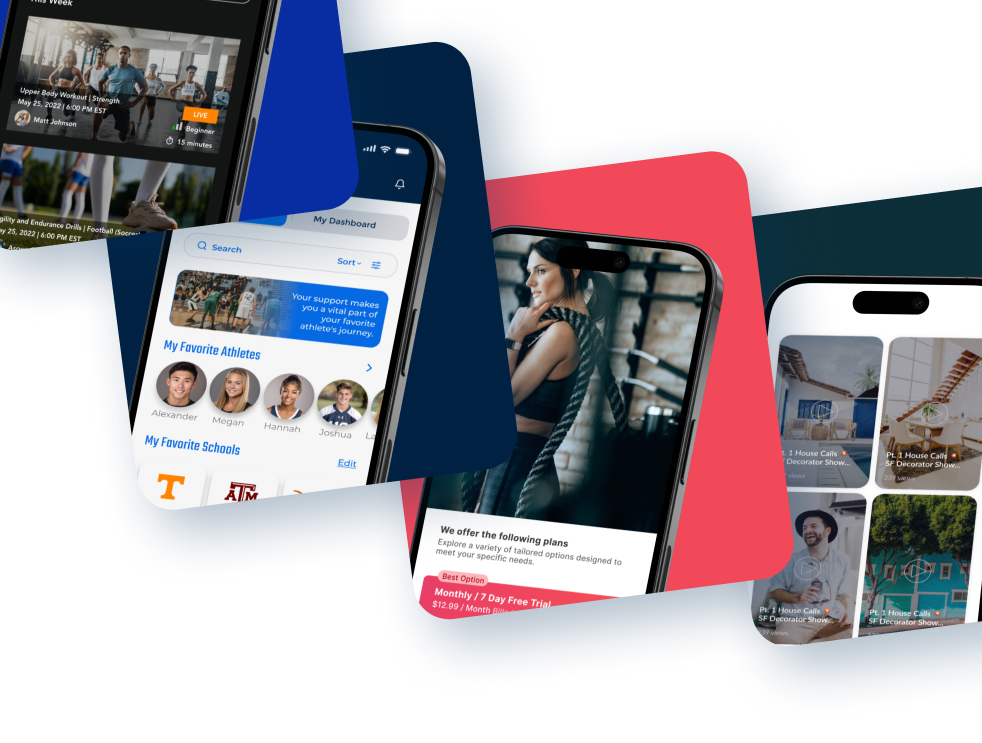
We have built the social, media-sharing mechanics that a short-video app depends on. For Hint Social, we designed a social platform built around shared interests, real-world events, and authentic conversation, with dynamic group creation, interest-driven discovery, interactive audio, video, and photo sharing, direct messaging, and an admin console for moderation and ad management. For Rayze, we built a community platform around feeds, profiles, and social engagement that brings people together around shared causes. Those profiles, media-rich feeds, and engagement loops are the same primitives that make a short-video app addictive.
TikTok Cost Breakdown by Module
The table below maps the major pieces of a TikTok-style app to realistic 2026 cost bands for a US-led, cross-platform React Native build with a shared backend. Your final number depends on how polished and how scalable each piece needs to be.
| Feature or module | What it covers | Estimated cost band |
|---|---|---|
| Accounts and profiles | Sign-up, login, profile pages, follow and following lists | $8,000 to $20,000 |
| Video recording and editing | Camera, trimming, music, text, basic effects and filters | $18,000 to $45,000 |
| Vertical video feed and player | Full-screen swipe feed, autoplay, preloading, smooth playback | $15,000 to $40,000 |
| Video processing and delivery | Transcoding, compression, content delivery network (CDN) streaming, thumbnails | $18,000 to $45,000 |
| Engagement (likes, comments, shares) | Reactions, threaded comments, duets and stitches, sharing | $10,000 to $25,000 |
| Recommendation engine | Behavior-based ranking, “for you” feed, trending logic | $20,000 to $50,000 |
| Direct messaging and notifications | Chat, push notifications, presence | $12,000 to $30,000 |
| Discovery and search | Hashtags, sounds, search, explore | $8,000 to $20,000 |
| Moderation and admin | Reporting, content filtering, admin dashboard, analytics | $12,000 to $30,000 |
| Backend, media storage, and security | APIs, media infrastructure, database, encryption, scaling | $25,000 to $65,000 |
An MVP picks the core: profiles, video recording and editing, a vertical video feed with solid playback, engagement, notifications, and a basic admin and moderation panel. You can add a learning recommendation engine, live streaming, duets, and messaging once content and viewers are flowing. That staged build is how most video apps reach launch without overspending on version one.
Here is the honest part most cost guides skip: building the app is only half the equation. A short-video platform lives or dies on a steady supply of creators and a reason for viewers to keep scrolling, so the harder job starts after launch, seeding early creators, sparking the first wave of content, and distributing the app to the audience that will care. Budget for marketing, creator incentives, and growth alongside engineering, because an empty feed has no pull no matter how slick the player is.
Get Your Free 45-Minute App Roadmap
Meet 1-on-1 with our senior product team. We’ll map your MVP or enterprise app and hand you a personalized plan—clear scope, a realistic timeline, and fixed monthly costs—for iOS & Android, web, tablets & wearables, and AI.
What Moves the Cost Up or Down
Two short-video apps with the same feature list can cost very differently. Here is what shifts the number.
- Video processing and delivery. Transcoding uploads into multiple formats and streaming them smoothly through a content delivery network is the heaviest piece of a video app, and the single biggest factor that separates a prototype from a real platform.
- The recommendation engine. TikTok’s magic is its “for you” feed. A simple feed is cheap, but a personalized engine that learns from watch time and interactions costs more because it involves data pipelines, modeling, and tuning. It is also what drives the addictive experience.
- Creation tools. Basic trimming is affordable. Effects, filters, music libraries, and features like duets and stitches add real engineering on top of the camera.
- Moderation at scale. Public video demands robust reporting, filtering, and moderation tooling. It is essential for safety and brand protection and grows in cost with your audience.
- Design and feel. Short video lives on instant, smooth, full-screen playback and zero friction. Custom design and accessibility raise the figure and pay back in retention. Our design team treats this as core.
- Platform choice. A shared React Native codebase across iOS and Android is far more economical than two native teams. See our app development cost breakdown.
How AI and Agent Coding Cut the Price
The biggest change since 2023 is how the software gets built. AI-assisted and agent-based coding tools such as Claude Code and Cursor now handle a large share of boilerplate, test scaffolding, and routine integration work. For a video-heavy app, that lets our senior engineers focus on the hard parts (the video pipeline, feed performance, recommendation logic) instead of repetitive code. The practical result is that a build which would have taken twelve to eighteen months and a larger budget in the 2020 to 2023 era now ships in roughly half the time at a meaningfully lower cost. We pair these tools with experienced US-led oversight so speed never costs quality. See our proven process.
The Apple and Google Question
TikTok earns mostly from advertising and commerce, so the stores take nothing on an ad or an outside purchase. Apple and Google take their cut (up to 30 percent, often 15 percent for smaller developers and year-two subscriptions) only on digital goods bought inside the app. TikTok’s in-app coins and virtual gifts are exactly the kind of digital goods that incur that fee. So if your short-video app monetizes through ads, app-store commission may not touch you, but if you sell coins, gifts, creator tips, or premium subscriptions, build that commission into your revenue model from the start.
Frequently Asked Questions
How much does it cost to build an app like TikTok in 2026?
A focused short-video MVP with profiles, a vertical video feed, recording and editing, and engagement typically costs $80,000 to $150,000. A full platform with a learning recommendation engine, effects, live streaming, and messaging can exceed $300,000. The figure depends on how much of TikTok you launch with versus add later.
Why is a video app more expensive than a photo app?
Video is heavier to process, store, and stream than photos. Transcoding uploads, compressing them, and delivering smooth playback through a content delivery network is significant engineering. Pair that with a learning recommendation engine and you have the two costliest systems in social, which is why TikTok-style apps run higher than photo-first apps.
Can I build a cheaper MVP first?
Yes, and it is the smart path. Launch with profiles, video creation, a vertical feed, and engagement for a specific community or niche, prove that people create and watch, then add a sophisticated recommendation engine and live features. This staged approach controls risk and gives you real engagement data before you invest in the heaviest systems.
How long does it take to build a TikTok-style app?
A focused short-video MVP generally takes about five to eight months from kickoff to launch. A full platform with advanced recommendations and live streaming can run a year or more. AI-assisted coding has roughly halved these timelines versus the 2020 to 2023 era, though the video pipeline still requires careful engineering.
Do I have to pay Apple and Google 30 percent?
Only on digital goods sold inside the app, such as coins, virtual gifts, creator tips, or premium subscriptions. If your app earns from advertising or outside commerce, app-store commission may not apply. The 30 percent (or 15 percent) fee is tied to in-app digital purchases, so it depends on how you choose to monetize.
Why use React Native instead of two native apps?
React Native lets you share one codebase across iOS and Android, cutting build and maintenance costs significantly while keeping near-native performance. For a consumer video app that needs to ship on both platforms at once, it is usually the most economical path, and where deep native video performance is required we pair it with native Swift or Kotlin modules.
Can Chop Dawg build my TikTok-style app end to end?
Yes. We handle strategy, UI/UX design, development, QA, launch, and ongoing support under fixed-monthly pricing. Chop Dawg is United States headquartered and United States led, with American leadership, product and project management, senior development, design, QA, and marketing, plus an in-house Brazilian design team and in-house development, QA, and project management teams in Pakistan and India. Everyone is in-house and assigned directly to your project, never hidden behind a salesperson or farmed out to subcontractors. Pick a fully American team or a cost-effective United States plus offshore blend with identical quality and timelines. Weekly design Zooms, daily Slack, and shared Figma, GitHub, Jira, and Confluence give you round-the-clock visibility, and you own all the code and intellectual property (IP). We have built social, media-sharing products like Hint Social and Rayze with feeds, messaging, and discovery, so the engagement mechanics of a short-video app are familiar to our team.
Let Us Map Your Short-Video Build
Every short-video app that broke out started as a focused version one that proved people would create and keep watching. With 17-plus years, 500-plus products launched, more than one billion users reached, and over 300 five-star reviews across trusted directories like Clutch, GoodFirms, G2, Google, and TopDevelopers, Chop Dawg can help you scope the right MVP and a clear path to scale. Organizations that have trusted Chop Dawg include FOX Sports and the NFL, the kind of media partners that live or die on video and real-time engagement. Whether you are a founder with a brand-new short-video idea or an existing company adding creator video, modernizing a content app, or extending a platform you already run, bring it to a free 45-minute consultation. We will review your feature list, give you an honest range, and show you where your budget should go first. Let us Make It App’n.


 15 Min