












 15 Min


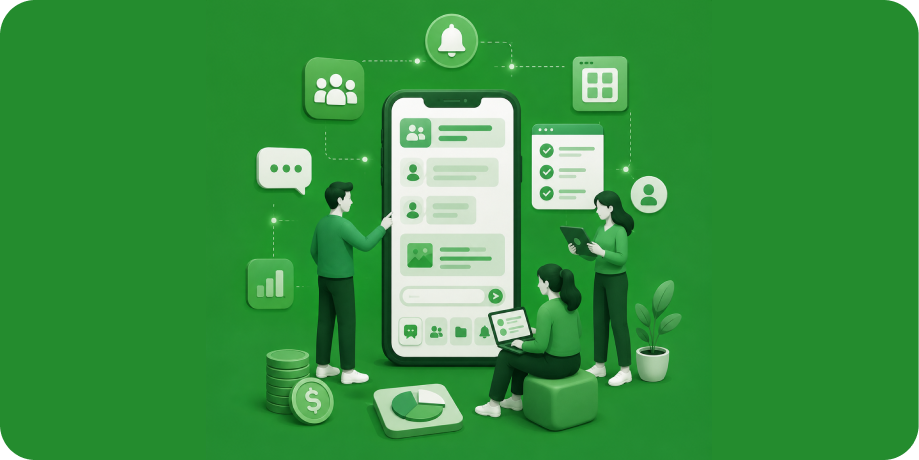
An app like Slack costs $50,000 to $120,000 to build as a multi-tenant software-as-a-service (SaaS) minimum viable product (MVP) in 2026, covering workspaces, channels, real-time messaging, and per-seat billing. A full Slack-class platform, with enterprise search, a thousand-integration marketplace, and compliance certifications, runs well beyond that range. The honest cost to build an app like Slack depends on one architectural word: multi-tenancy, meaning every company gets an isolated workspace inside one codebase. Slack generated $1.7 billion in revenue with over one million organizations on the platform, per Business of Apps, yet whole industries still communicate terribly. That gap is your opening, and this guide prices it.
Key Takeaways
- A multi-tenant team messaging SaaS MVP costs $50,000 to $120,000 in 2026; Slack-class scope with enterprise search and an integration marketplace costs far more.
- Workspace isolation, roles and permissions, and per-seat billing are the B2B plumbing that separates this class from consumer chat.
- Vertical teams (field services, construction, healthcare, design) are underserved by generic tools, and vertical features are where budgets earn returns.
- Per-seat Stripe billing is standard, and because business customers buy on the web, app store commissions rarely touch your core revenue.
- AI-assisted development with senior review has roughly halved what these builds cost from 2020 to 2023.
What Does It Cost to Build an App Like Slack in 2026?
A workable team messaging SaaS costs $50,000 to $120,000: company workspaces, channels and direct messages, file sharing, role-based permissions, an admin console, and subscription billing per seat. Matching Slack feature-for-feature, including federated search across years of messages, huddles, workflow automation, and SOC 2 compliance, is a multi-year, seven-figure road.
The winning move in 2026 is not a better Slack; it is a Slack for someone specific. Generic tools assume desk workers with laptops and fluent English. Construction crews, clinics, restaurant groups, and field-service teams need shift context, translations, photo-first workflows, or client-facing channels that Slack will never prioritize. Buyers pay for tools that speak their trade, which is why the vertical features on top of the messaging core are the best dollars in the budget.
Feature-by-Feature Cost Breakdown for a Team Messaging SaaS
These 2026 bands assume React Native mobile apps, a React web app, and a Node.js backend, the stack most B2B teams expect.
| Feature | What It Covers | Typical Cost Band |
|---|---|---|
| Multi-tenant workspaces | Company accounts, isolated data, invitations, onboarding | $12,000 to $25,000 |
| Channels and messaging | Real-time channels, direct messages, threads, file and photo sharing | $14,000 to $28,000 |
| Roles and permissions | Owner, admin, moderator, member tiers; channel-level controls | $8,000 to $18,000 |
| Search | Message and file search with filters (deep archive search costs more) | $8,000 to $20,000 |
| Per-seat billing | Stripe subscriptions, seat counts, upgrades, invoices, dunning | $8,000 to $16,000 |
| Integrations | Webhooks and application programming interface (API) endpoints; each polished integration adds more | $6,000 to $20,000 |
| Notifications and presence | Push and email notifications, mentions, do-not-disturb, unread states | $6,000 to $12,000 |
| Admin console and analytics | Member management, usage dashboards, data export | $8,000 to $16,000 |
| Quality assurance (QA), security, and launch | Testing, encryption in transit and at rest, store submission | $8,000 to $18,000 |
A $50,000 to $80,000 MVP nails workspaces, messaging, permissions, billing, and notifications. Deep search, integration marketplaces, and voice huddles are the features that carry teams past $120,000, usually after paying customers demand them.
What Moves the Number Up or Down
Across 500+ launches since 2009, B2B SaaS budgets swing on decisions buyers never see in screenshots.
- Tenancy depth. Clean workspace isolation from day one costs modestly more upfront and saves a painful re-architecture the day a customer asks where their data lives.
- Search ambition. Recent-message search is affordable; instant search across years of archives is an infrastructure project of its own.
- Integration strategy. Two integrations your buyers actually use (say, QuickBooks and Google Calendar) beat a marketplace. Each polished integration is $5,000 to $15,000.
- Vertical features. Real-time translation, scheduling, approvals, or client portals are the differentiators worth funding, as Obras and CollabMind show below.
- Compliance posture. Selling to enterprises or healthcare brings SOC 2 or HIPAA expectations that add engineering, documentation, and audit costs; scope them only when your buyers require them.
Get Your Free 45-Minute App Roadmap
Meet 1-on-1 with our senior product team. We’ll map your MVP or enterprise app and hand you a personalized plan—clear scope, a realistic timeline, and fixed monthly costs—for iOS & Android, web, tablets & wearables, and AI.
The AI and Agent-Assisted Coding Cost Reality
This scope quoted at $150,000 to $250,000 between 2020 and 2023. AI-assisted engineering brought it to $50,000 to $120,000, because SaaS products are full of the structured, repeatable code that Claude Code and Cursor generate fastest: data screens, permission checks, billing flows, admin tables. Our senior engineers review every change, which is non-negotiable in multi-tenant systems where one sloppy query could leak Company A’s messages to Company B. AI also raises the product ceiling: message summarization, catch-up digests, and smart search are now $10,000-class features instead of research projects, and they are exactly what busy teams pay for. Speed from AI, accountability from engineers, never “vibe coding” with your customers’ data.
The App Store Fee Note for B2B SaaS
Good news for this category: business workspaces are almost always purchased on the web, billed per seat through Stripe, so Apple and Google commissions rarely touch core revenue. The mobile apps ship free in the Apple App Store and Google Play Store as companions to paid workspaces. If you ever sell consumer-style upgrades inside the app, those digital goods must use Apple In-App Purchase or Google Play Billing at 30%, or 15% under the Small Business Program below $1 million. Start the boring prerequisites now: DUNS number (about a month) and developer accounts (2 to 3 weeks), in your own name.
How Chop Dawg Builds B2B Communication Platforms
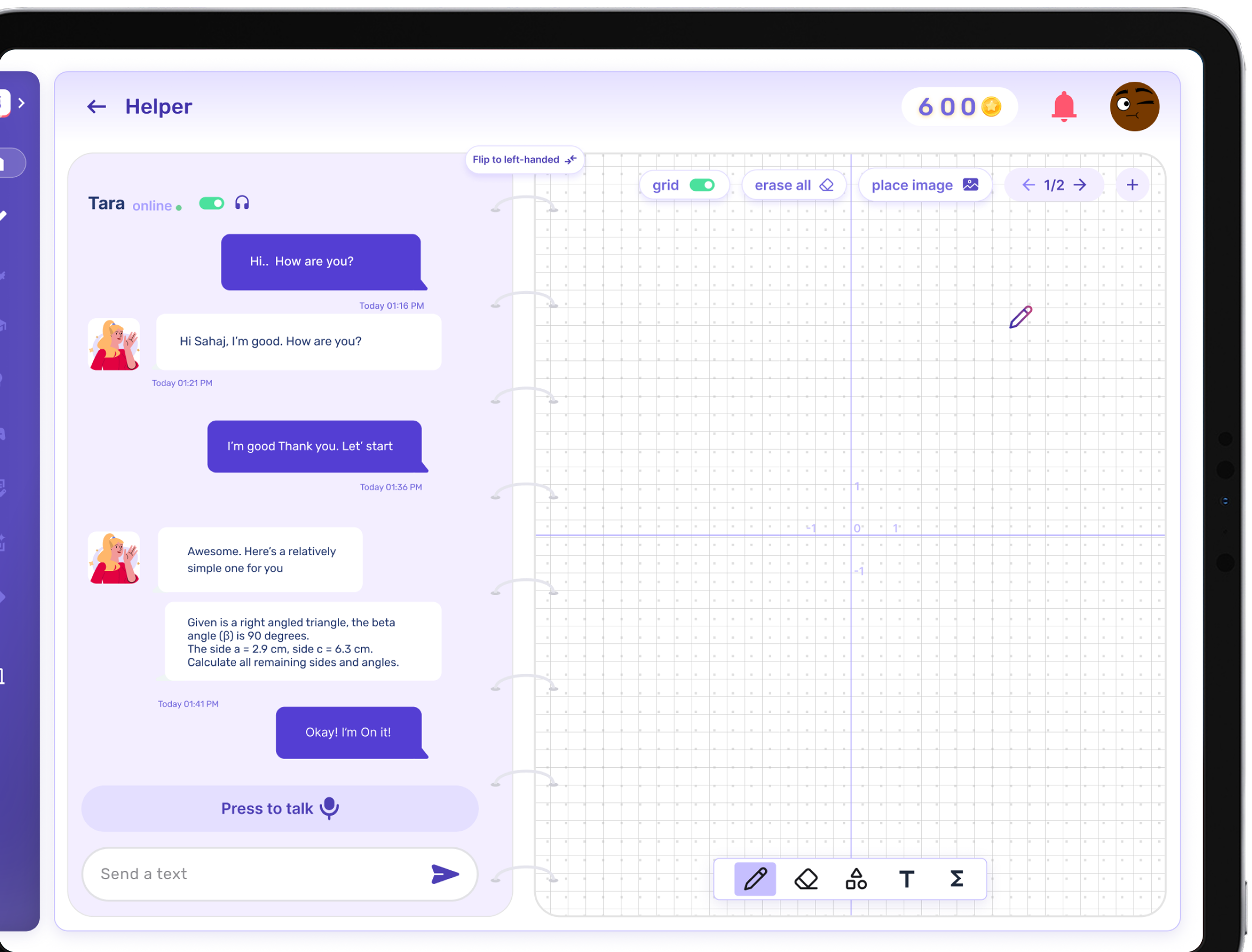
Obras is our field-proof of the vertical thesis: a workforce scheduling and coordination platform for contracting businesses whose built-in messaging translates between English, Spanish, and other languages in real time via Google Translate, wrapped in three-tier permissions, group messaging with photo and video, drag-and-drop scheduling with AccuWeather forecasts, bulk employee import, and per-user Stripe subscription billing. That is a Slack a construction crew would actually use. “We are thrilled with the final prototype and the expertise that Chop Dawg brought to our project… The quality of work delivered by Chop Dawg exceeded our expectations,” said Joshua Alves, Co-Founder of Obras.
CollabMind attacks the same problem for architecture and interior design: blueprints, material approvals, tasks, and multi-user messaging in one ecosystem, with dual-level to-do approvals where contractors mark work complete and clients approve or revert. The results as stated: 100% clarity in project tracking, 2x faster design approvals, zero missed revisions. “Chop Dawg has met my expectations and brought my vision to life, giving me the confidence to move forward with a product I’m proud of,” said Jackie Gusic, Founder of CollabMind.
On team structure: Chop Dawg is US-headquartered and US-led. Our American team owns leadership, product and project management, senior development, senior design, senior quality assurance, and marketing, and is backed by our in-house Brazilian design team plus in-house development, QA, and project management teams in Pakistan and India. Every contributor is a direct Chop Dawg employee assigned to your product, fluent in English, working US hours, visible daily in Slack and 24/7 in Figma, GitHub, Jira, and Confluence. We built it this way because B2B founders have been burned by both versions of the industry’s bad deal: the lone American frontman hiding unaccountable offshore subcontractors, and the anonymous overseas shop with no US business norms and no time-zone overlap. Regulated buyers can choose an all-American team; most partners take the blend and bank the savings. Organizations that have trusted Chop Dawg include Siemens, C.A. Short, and Choice Home Warranty. Pricing context: focused MVPs run $25,000 to $60,000, multi-tenant SaaS typically $50,000 to $120,000, and complex builds $75,000 to $150,000 or more, on fixed monthly budgets with development from $7,500 per month. Our what we’ll do for you page and pricing guide lay out the whole engagement.
Frequently Asked Questions
How much does it cost to build an app like Slack?
A multi-tenant team messaging SaaS with workspaces, channels, permissions, and per-seat billing costs $50,000 to $120,000 in 2026. A full Slack-class platform with enterprise search, integration marketplaces, huddles, and compliance certifications costs several times that and takes years, not months.
How long does it take to build a team messaging SaaS?
Plan 4 to 6 months for a focused MVP across design, development, quality assurance, and launch on web plus mobile. Integration-heavy or compliance-bound scopes stretch to 7 to 10 months. Because B2B buyers purchase on the web, you can often launch the web app first and follow with mobile.
Is there a cheaper alternative to building my own Slack?
Yes. Slack, Microsoft Teams, and white-label chat SDKs like Stream can carry a team or community for modest monthly fees. Building becomes rational when your industry needs features they will not ship, when per-seat fees exceed a build at your scale, or when the software itself is your business.
What is multi-tenancy and why does it drive cost?
Multi-tenancy means one application securely serves many companies, each with isolated data, users, and settings. It drives cost because every query, permission, and billing rule must respect workspace boundaries. Built correctly from day one it is affordable; retrofitted later it is one of software’s most expensive rewrites.
What does per-seat billing cost to implement?
A production-grade Stripe implementation with seat counting, proration, plan upgrades, invoices, and failed-payment recovery runs $8,000 to $16,000. It is worth full scoping because billing bugs cost revenue and trust immediately, and clean seat economics are what investors ask to see in any B2B SaaS.
How do team messaging apps make money?
The standard model is freemium per-seat SaaS: free for small teams with limits on history or members, then paid tiers per user per month with admin controls and integrations. Slack proved the motion, converting free workspaces into an installed base worth $1.7 billion in annual revenue.
The Team Tool Your Industry Is Still Waiting For
A multi-tenant messaging SaaS is a $50,000 to $120,000 build in 2026, and the industries Slack ignores are exactly where the next ones win. Whether you are a founder who knows a trade’s pain or an established company productizing internal tools, book a free 45-minute consultation, useful whether or not you hire us. Chop Dawg has built since 2009, now in our 18th year: 500+ launches, products used by more than a billion people, 92% of partners repeat, and 300+ five-star reviews across trusted directories including Clutch, GoodFirms, G2, Google, and TopDevelopers.


 15 Min