












 15 Min


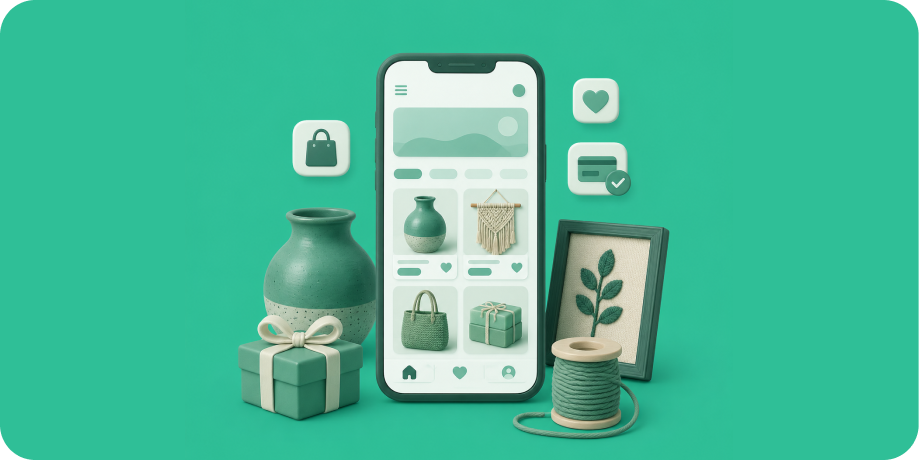
The honest answer up front: the cost to build an app like Etsy in 2026 runs $75,000 to $150,000 for a launch-ready marketplace, with lean single-category versions landing near the bottom of that range and feature-rich builds with live seller analytics pushing past it. Anyone quoting a full two-sided marketplace for $15,000 is quoting a template, not a product. The prize is real: Etsy connects over 96 million active buyers with 8.1 million sellers, according to Business of Apps. The pain point is that most founders cannot tell which features drive that price. This guide breaks the number down feature by feature so you can budget with confidence.
Key Takeaways
- A handmade or niche marketplace app like Etsy costs $75,000 to $150,000 to build in 2026, with most first versions landing between $85,000 and $120,000.
- The five costliest components are payments with a platform take rate, search and discovery, seller storefronts, reviews, and the admin moderation layer.
- AI and agent-assisted coding have cut marketplace build costs and timelines roughly in half compared to 2020 to 2023.
- Physical goods marketplaces route payments through Stripe, so Apple’s 30% commission does not apply to your transactions.
- Expect 4 to 7 months from kickoff to app store launch for a focused marketplace minimum viable product (MVP).
What It Costs to Build an App Like Etsy in 2026
A two-sided marketplace MVP starts around $75,000 and reaches $150,000 or more as scope grows. That is higher than a single-purpose utility app because you are really building three products at once: a buyer app, a seller toolkit, and an operations layer that keeps the whole market honest.
Simple consumer apps can start in the $25,000 to $60,000 MVP range, and complex platforms routinely run $75,000 to $150,000 or beyond. Etsy-class products sit firmly in that second tier. Buyers need search, favorites, carts, checkout, and order tracking. Sellers need listings, inventory, storefronts, payouts, and analytics. You need moderation tools, dispute workflows, and reporting. Every marketplace that skips one of those three layers ends up rebuilding it later at a premium, which is why experienced teams scope all three from day one and trim features inside each layer instead.
Feature-by-Feature Cost Breakdown
Here is where the money actually goes on an Etsy-style build. These bands reflect 2026 rates for a senior-led team using AI-accelerated development, covering design, development, and quality assurance (QA) for each feature area.
| Feature | What It Includes | Typical Cost Band |
|---|---|---|
| Accounts and onboarding | Buyer and seller registration, profiles, verification emails | $5,000 to $10,000 |
| Listings and storefronts | Photo-rich product listings, variations, categories, seller shop pages | $10,000 to $20,000 |
| Search and discovery | Keyword search, filters, categories, favorites, personalized feeds | $8,000 to $18,000 |
| Payments with take rate | Stripe Connect checkout, split payments, platform commission, seller payouts | $12,000 to $22,000 |
| Reviews and ratings | Verified purchase reviews, photos, seller responses | $4,000 to $8,000 |
| Seller dashboard | Orders, inventory, revenue analytics, promotions | $8,000 to $16,000 |
| Admin and moderation | Listing approval, dispute handling, user management, reporting | $8,000 to $15,000 |
| Messaging and notifications | Buyer-seller chat, order updates, push notifications | $6,000 to $12,000 |
| QA, launch, store submission | Device testing, performance tuning, Apple and Google submissions | $8,000 to $15,000 |
Add those bands together and a complete build lands between roughly $69,000 and $136,000, which is exactly why the honest quoted range is $75,000 to $150,000 once discovery, project management, and infrastructure setup are included. A cross-platform React Native build keeps you on iOS and Android for one codebase instead of paying for two.
What Moves the Number Up or Down
Scope decisions move an Etsy-style budget by $30,000 or more in either direction. The biggest levers are how many platforms you launch on, how custom your search and discovery experience is, and how much of the seller toolkit ships on day one.
- Platform count: Launching web-first or single-platform trims 15% to 25% versus shipping iOS, Android, and web together.
- Discovery sophistication: Basic keyword search is affordable. AI-powered recommendations, visual search, and personalized homepages add $10,000 to $25,000.
- Seller tooling depth: Bulk uploads, shipping label integrations, and promotion engines are phase-two candidates that save real money at launch.
- Trust features: Identity verification for sellers and machine-assisted listing moderation add cost but reduce fraud headaches later.
- Team model: A blended US-led onshore and offshore in-house team delivers the same quality as fully domestic staffing at a meaningfully lower monthly burn.
The AI and Agent-Assisted Coding Cost Reality
AI has genuinely changed marketplace economics. The same Etsy-class build that cost $200,000 to $300,000 between 2020 and 2023 now lands in the $75,000 to $150,000 range because agent-assisted coding tools like Claude Code and Cursor let senior engineers ship boilerplate, integrations, and test coverage dramatically faster.
The caveat matters: this is not vibe coding. Marketplaces move real money between strangers, so payment splits, payout logic, and moderation systems need engineers reviewing every AI-generated change. Teams that skip that review ship checkout bugs that cost more to fix than the original build. The winning setup in 2026 pairs AI acceleration with senior human architecture, code review, and dedicated QA, which is how timelines compressed from 9 to 12 months down to 4 to 7 without quality dropping.
Get Your Free 45-Minute App Roadmap
Meet 1-on-1 with our senior product team. We’ll map your MVP or enterprise app and hand you a personalized plan—clear scope, a realistic timeline, and fixed monthly costs—for iOS & Android, web, tablets & wearables, and AI.
A Note on Apple and Google Fees
Good news for marketplace founders: because Etsy-style apps sell physical goods, your transactions route through a payment processor like Stripe rather than Apple In-App Purchase or Google Play Billing. Apple’s 30% commission (or 15% via the App Store Small Business Program) applies to digital goods, not handmade ceramics shipped in a box. You will still need an Apple developer account and a Google Play account in your own name, plus a DUNS number that takes about a month to obtain, so start those registrations early. A clean submission typically clears Apple review within 24 to 48 hours in 2026; rejection cycles are the real timeline risk.
Where Chop Dawg Fits
Marketplace and commerce products are home turf for our team. Since 2009, Chop Dawg has launched over 500 products, and organizations that have trusted us range from LA Gear to Wawa. For Hewn, a San Francisco luxury fabrics firm, we built a digital showroom app with a rich product catalog, in-app sample requests, and a real-time admin portal. The results: 75% adoption by returning clients in the early months, a 40% increase in sample orders, and 500+ designer posts in the first quarter. Fernando Gomez, Facilities Manager at Hewn SF, put it this way: “I’m delighted with the progress of our project and feel fortunate to have found Chop Dawg. Their solid project management and exceptional communication skills have been key to our ongoing success… Thanks to Chop Dawg’s outstanding communication, I always know what’s going on with my project.”
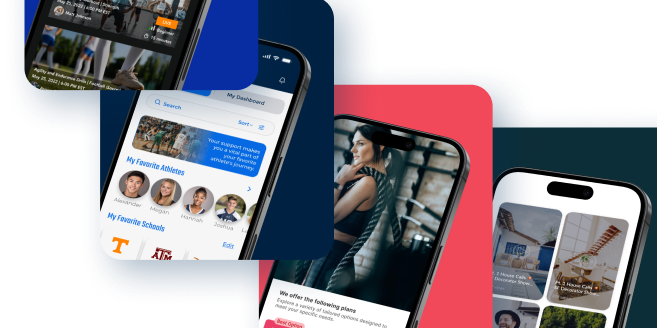
We have also shipped BiDR, a collectibles marketplace in React Native with Stripe payments, live streaming, and seller analytics, and Suburban Shopper, which turned a legacy direct-mail advertising business into a real-time local deals platform. You can browse more in our success stories.
What makes the model work is the team structure. Chop Dawg is US-headquartered and US-led: Americans own leadership, product and project management, senior development, senior design, and senior QA. They are backed by our in-house Brazilian design team and in-house development, QA, and project-management teams in Pakistan and India. Everyone is a Chop Dawg employee assigned directly to your project, fluent in English and working US hours. That structure eliminates the two classic outsourcing fears: the lone American salesperson fronting hidden offshore developers with zero accountability, and the faceless overseas shop with no US business norms and no time-zone overlap. Choose fully American staffing for regulated work, or the US-plus-offshore blend most partners pick for the same quality at a lower cost. Either way you get fixed monthly budgets, daily Slack updates, 24/7 Figma and GitHub visibility, and you own all code and intellectual property (IP) from day one. Explore our design services and development services to see how a build comes together.
Frequently Asked Questions
How much does it cost to build an app like Etsy?
Building an app like Etsy costs $75,000 to $150,000 in 2026 for a two-sided marketplace MVP covering buyer apps, seller storefronts, Stripe-powered payments with a platform commission, reviews, and an admin moderation panel. Lean single-category versions land near $75,000, while feature-rich builds with advanced discovery and analytics approach $150,000.
How long does it take to build a marketplace app like Etsy?
Expect 4 to 7 months from kickoff to app store launch for a focused marketplace MVP in 2026. Design and prototyping take 4 to 8 weeks, development runs 3 to 5 months, and QA plus store submission adds a few final weeks. AI-assisted development has roughly halved older timelines.
How do apps like Etsy make money?
Etsy-style marketplaces earn through a take rate, meaning a percentage commission on every transaction, typically 5% to 15%. Many add listing fees, promoted placement, and seller subscriptions. Your payment architecture, usually Stripe Connect, splits each sale automatically between the seller and your platform, which is why payments are the costliest single feature.
Do I have to pay Apple 30% on marketplace sales?
No. Apple’s 30% commission applies to digital goods and services, not physical products. A handmade goods marketplace processes payments through Stripe or a similar processor, so your take rate stays yours. You still pay the $99 annual Apple developer fee and a one-time $25 Google Play registration.
Can I launch with a website before building the mobile apps?
Yes, and for some niches it is the smart play. A responsive web marketplace can validate demand for 20% to 30% less than a full multi-platform launch. That said, buyers browse handmade goods heavily on phones, so most founders add React Native iOS and Android apps within the first year.
What does it cost to run a marketplace app after launch?
Budget from about $2,500 per month for maintenance, covering server costs, operating system updates, bug fixes, and small improvements. Marketplaces also carry payment processing fees near 3% and moderation time. Plan roughly 15% to 20% of your original build cost per year to keep the platform healthy and growing.
Ready to Price Your Marketplace for Real?
An Etsy-style app costs $75,000 to $150,000 in 2026, and the fastest way to pin down your exact number is a conversation about your niche, your sellers, and your launch plan. Now in our 18th year, Chop Dawg has launched 500+ products used by more than 1 billion people, holds a 92% repeat-partner rate, and has earned 300+ five-star reviews across trusted directories like Clutch, GoodFirms, G2, Google, and TopDevelopers. Whether you are a first-time founder sketching a niche marketplace or an established company adding commerce to your brand, we offer a free 45-minute consultation, useful whether or not you ever hire us. Bring your idea and leave with a real plan, a real budget range, and transparent pricing you can hold us to.


 15 Min