
















 10 Min

The build vs buy software decision comes down to fit and control: buy off-the-shelf or SaaS when a proven tool already covers your need at low cost, and build custom when your workflow, data, or differentiation does not fit anything on the market. The stakes are real, with the U.S. custom software development market projected to grow 18.5% a year to USD 29.67 billion by 2030 as more companies hit the limits of generic tools. This guide weighs both honestly, then shows where a custom build pays off.
Key Takeaways
- Buy off-the-shelf or software as a service (SaaS) for common, non-differentiating needs like payroll, email, or accounting, where speed and low upfront cost matter most.
- Build custom when the software is your competitive edge, your workflow is unusual, or subscription and integration costs balloon at scale.
- Off-the-shelf wins on speed and predictable monthly cost; custom wins on fit, ownership, and long-term flexibility.
- Total cost of ownership matters more than sticker price: per-seat SaaS fees, add-ons, and lock-in add up fast as you grow.
- A hybrid path is common: buy the commodity pieces, build the parts that set you apart, and connect them through application programming interfaces (APIs).
Buying Off-the-Shelf Software or SaaS
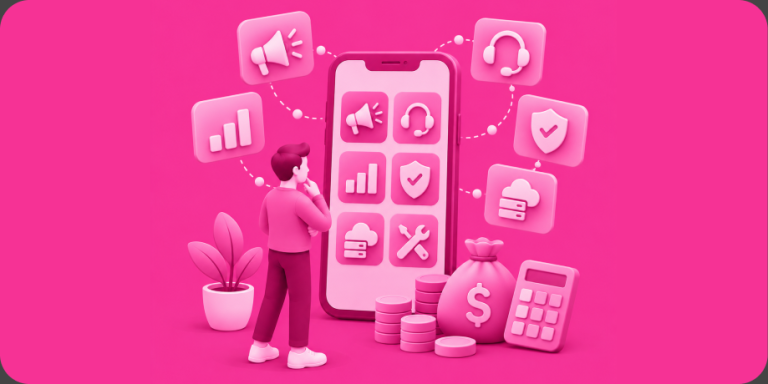
Off-the-shelf and SaaS products are prebuilt tools you license, usually per user per month. Think CRMs, accounting suites, help desks, and project tools. They get you running in days, and the average company now runs over 100 SaaS applications across its teams, so the ecosystem is deep and battle-tested.
Pros:
- Fast to deploy, often live the same week with little setup.
- Low upfront cost and a predictable monthly subscription.
- The vendor handles updates, security patches, uptime, and support.
- Proven by thousands of other users, so common bugs are already fixed.
- Easy to try before you commit, and easy to drop if it does not fit.
Cons:
- You adapt your workflow to the tool, not the other way around.
- Per-seat pricing can grow expensive as your team and usage scale.
- Limited customization, and you wait on the vendor’s roadmap for new features.
- Data lives in someone else’s system, which can create lock-in and migration pain.
- It rarely becomes a competitive advantage, since your rivals can buy the same thing.
Building Custom Software
Custom software is built around your exact process, data, and goals. You own the code and the roadmap, and you decide what ships next. It costs more upfront and takes longer to launch, but it fits like a glove and grows with you. That upfront gap has also narrowed in 2026: when senior engineers drive agent-assisted tools like Claude Code and Cursor, reviewing and editing every line rather than shipping unchecked output, custom build cost and time have fallen roughly in half since 2023. Custom is the right call when the software itself is part of how you compete, or when off-the-shelf tools force costly workarounds.
Pros:
- Built to match your workflow exactly, with no forced compromises.
- You own the code and intellectual property, with no per-seat tax as you scale.
- Integrates cleanly with your existing systems and data.
- Becomes a real competitive advantage that rivals cannot simply buy.
- You control the roadmap and can prioritize features that move your numbers.
Cons:
- Higher upfront investment and a longer path to launch.
- You own maintenance, security, and hosting, either in-house or through a partner.
- Needs clear requirements and a capable team to avoid scope creep.
- Wrong for commodity needs where a proven tool already does the job well.
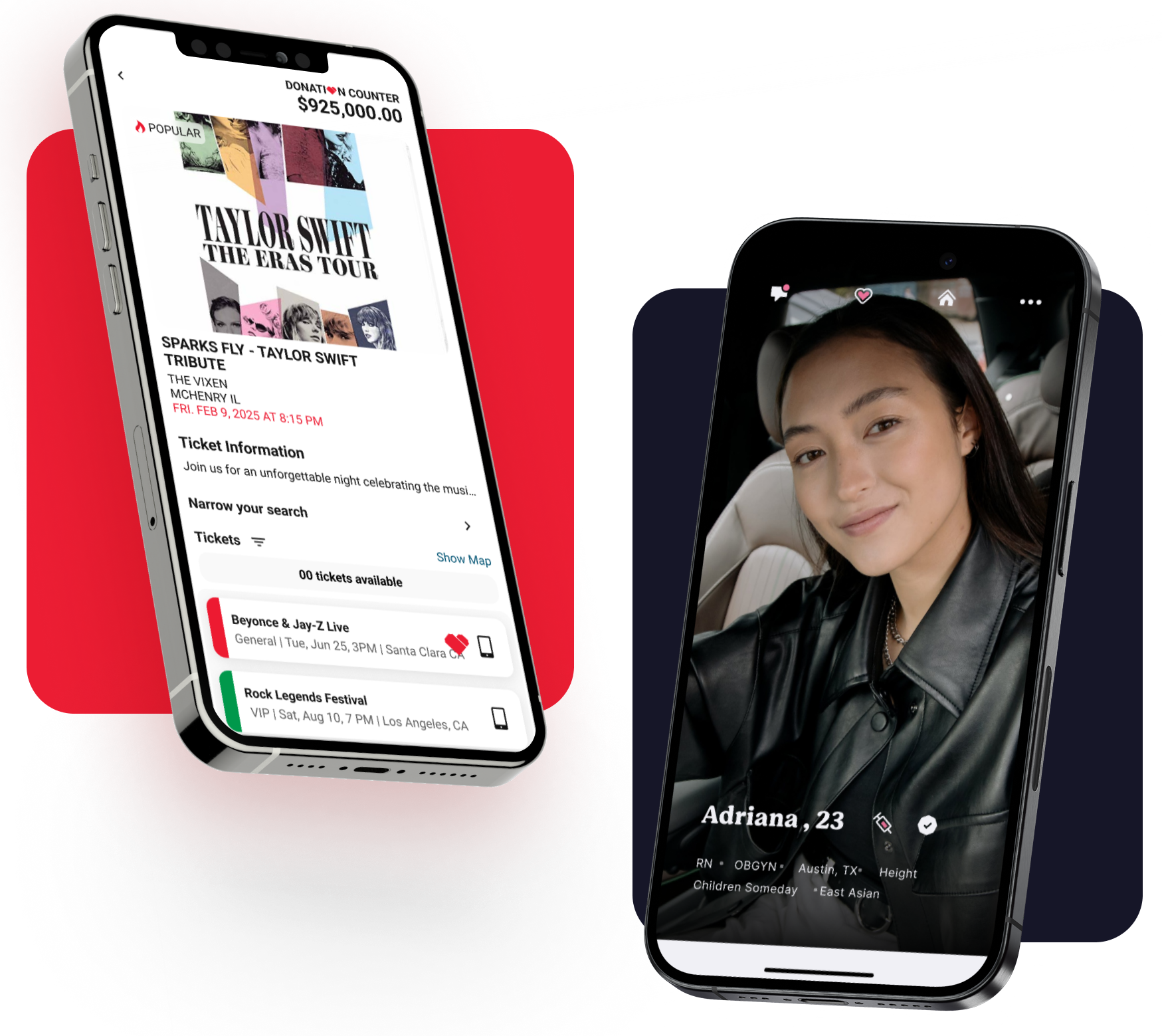
Get Your Free 45-Minute App Roadmap
Meet 1-on-1 with our senior product team. We’ll map your MVP or enterprise app and hand you a personalized plan—clear scope, a realistic timeline, and fixed monthly costs—for iOS & Android, web, tablets & wearables, and AI.
Build vs Buy: Side-by-Side Comparison
| Factor | Off-the-Shelf / SaaS | Custom Software |
|---|---|---|
| Cost | Low upfront, recurring per-seat fees that grow with scale | Higher upfront, no per-seat tax, lower long-term cost at scale |
| Speed | Live in days; little setup | Weeks to months to first release |
| Quality | Proven and stable, but generic | Built to your standards and exact use case |
| Control | Limited; you follow the vendor roadmap | Full ownership of code, data, and roadmap |
| Communication | Vendor support tiers and tickets | Direct line to your build team |
| Risk | Lock-in, price hikes, and feature gaps | Upfront investment and ongoing ownership |
Where Chop Dawg Fits
When buying does not cut it and you need software built around your business, that is where we come in. We are Chop Dawg, a United States-headquartered and United States-led company building custom software since 2009, with more than 500 launches and over 1 billion users reached. Our American team holds leadership, product and project management, senior development, design, and QA, backed by in-house design teammates in Brazil and in-house development, QA, and project-management teammates in Pakistan and India, all assigned directly with no subcontractor or middleman in between. You choose a fully American team or a cost-effective US-plus-offshore blend at the same quality and timelines, and either way you get direct access to the senior people doing the work. We work as your partner, not a faceless agency: fixed monthly budgets, transparent pricing, precise timelines, daily Slack, and weekly Zoom, so you always know where the build stands.
Our record holds up to scrutiny, with 300+ five-star reviews across trusted directories like Clutch, GoodFirms, G2, Google, and DesignRush, plus a 92% partner retention rate and an Inc. 5000 listing. We handle HIPAA, GDPR, and SOC 2 work, you own the code and IP outright, and we include a free bug-and-maintenance warranty after launch. The clearest proof is in the builds that no off-the-shelf product could match. Integrated CashLogistics is a custom cash-management platform we built to replace a legacy, paper-driven process, and Hewn is a custom sourcing platform shaped entirely around its workflow. Each one is owned fully by the client rather than rented from a vendor. Organizations that have trusted Chop Dawg over the years include the NFL, FOX Sports, MIT, and Big Brothers Big Sisters. Design starts from $5,000 per month and development from $7,500 per month on a fixed-monthly model, with a focused build that generally runs about $25,000 to $60,000 all in and complex or enterprise builds at $75,000 to $150,000 or more, and the full numbers in our app development costs and pricing guide, and you can explore our development services or browse more custom software work.
Frequently Asked Questions
Is it cheaper to build or buy software?
Buying is cheaper upfront and for common needs. Building can be cheaper over time once per-seat SaaS fees, add-ons, and integration costs pile up at scale. Compare total cost of ownership across three to five years, not just the first invoice, before you decide either way.
When does custom software make the most sense?
Custom makes sense when the software is your competitive edge, your workflow does not fit any product on the market, you need deep integrations, or subscription costs grow painful as you scale. If a proven tool already covers a commodity need well, buying is usually the smarter starting point.
Can I start with SaaS and build custom later?
Yes, and many teams do exactly that. Start with SaaS to validate the need and move fast, then build custom once you outgrow the tool or need to differentiate. Planning for clean data export early makes that later transition far smoother and less costly.
What is a hybrid build vs buy approach?
A hybrid approach means buying commodity tools like email, payroll, and accounting while building custom software for the parts that set you apart. You connect the pieces through APIs. This balances speed and cost on common needs with full control where differentiation actually matters to your business.
Who owns custom software once it is built?
You do. With a custom build through a trustworthy partner, you own the code and intellectual property outright, with no per-seat licensing fees. Confirm IP ownership terms in your contract before work begins, and make sure the agreement transfers all rights to you on delivery.
Ready to Build Software That Fits Your Business?
If off-the-shelf tools are holding you back, a custom build could be the smarter long-term move. Whether you are a founder with a brand-new idea or an established team looking to modernize, scale, or extend a product you already run, book a free 45-minute consultation with our team, and we will help you weigh build versus buy honestly for your situation, no pressure. See how we work in our proven process and browse more results in our success stories.


 15 Min