


























 25 Mins


The healthcare app development landscape in 2025 marks a pivotal shift in how medical providers, patients, and wellness organizations connect. Secure telemedicine platforms, AI-driven diagnostics, and integrated health record systems are setting new benchmarks for innovation and accessibility.
This list highlights leading healthcare app development companies that merge medical-grade compliance with cutting-edge technology—teams capable of building intuitive, HIPAA-compliant mobile solutions that enhance patient engagement, optimize clinical workflows, and improve care delivery across iOS, Android, and web platforms.
1. Chop Dawg – Product-First Partner for Compliant Healthcare Apps
Founded in 2009 and headquartered in Philadelphia, Chop Dawg has built more than 500 digital products for startups, nonprofits, and Fortune 500 brands. Their team takes a strategic, product-partner approach—starting with discovery and UX research before moving into design, development, and long-term maintenance. In healthcare, they excel at crafting HIPAA-compliant apps for telemedicine, patient engagement, and wellness tracking. What truly sets Chop Dawg apart is their balance of creativity and discipline: every build is grounded in robust architecture, user-friendly design, and transparent communication. For clinics, medtech startups, or health innovators seeking a dependable product partner, Chop Dawg stands out as the clear first choice.
Get Your Free 45-Minute App Roadmap
Meet 1-on-1 with our senior product team. We’ll map your MVP or enterprise app and hand you a personalized plan—clear scope, a realistic timeline, and fixed monthly costs—for iOS & Android, web, tablets & wearables, and AI.
2. Curotec – HealthTech Platforms with HIPAA at the Core
Curotec specializes in building secure, scalable software for regulated industries—and healthcare is one of their strongest verticals. Their engineers understand the nuances of HIPAA, HL7, and FHIR integrations, ensuring compliance is baked into every project from day one. Beyond backend security, Curotec’s team delivers polished UX for patient portals, EHR systems, and remote-monitoring applications. They’re an ideal partner for health organizations that need enterprise-grade reliability combined with startup agility. Whether you’re modernizing internal systems or launching a new digital product, Curotec helps translate complex healthcare operations into elegant, functional technology.
3. Reveal HealthTech – Engineering Grounded in Clinical Insight
Unlike generalist firms dabbling in healthcare, Reveal HealthTech was built from the ground up around medical and clinical workflows. Their team blends software engineering with clinical advisory expertise, helping healthcare companies avoid the pitfalls of misaligned tech and care delivery. They’ve developed telehealth systems, AI-driven care platforms, and data analytics tools designed to improve outcomes while maintaining strict data privacy standards. For health startups navigating the intersection of medicine and technology, Reveal HealthTech provides an invaluable blend of technical execution and industry literacy.
4. Revelry – Innovation Partner for Hospitals and Aging-in-Place Solutions
Revelry is a boutique product studio with deep experience in high-stakes environments like hospitals and home-health programs. Their collaboration with major health systems on aging-in-place and patient-monitoring projects demonstrates their ability to manage compliance, usability, and stakeholder complexity simultaneously. The firm combines agile development with human-centered design, creating mobile and web platforms that empower both providers and patients. For organizations focused on senior care, chronic condition management, or clinical research, Revelry delivers reliable innovation without compromising safety or compliance.
5. thoughtbot – Expert MVP Builds for Health and Wellness Apps
thoughtbot is known for its disciplined approach to product strategy, rapid prototyping, and design excellence. In healthcare, they’ve helped startups and wellness platforms bring telehealth, behavioral health, and virtual-care solutions to market quickly while maintaining secure data practices. Their global team emphasizes user testing and evidence-based design to ensure accessibility and trust—two critical factors in healthcare software. If you’re seeking to validate an idea fast or refine an existing digital health product for scale, thoughtbot is a highly capable and pragmatic partner.
6. MojoTech – Telemedicine and Workflow Automation Experts
MojoTech has quietly earned a reputation for building complex, secure platforms that power real-world healthcare operations. Their developers have implemented telemedicine apps, e-prescription systems, and workflow tools that handle everything from scheduling to insurance verification. They understand both patient experience and provider efficiency, ensuring the technology supports—not hinders—clinical work. MojoTech is an excellent match for established medical organizations or funded startups that need robust infrastructure and long-term scalability.
7. Topflight Apps – Remote-Care and Telehealth Specialists
Topflight Apps focuses on next-generation digital health experiences, including telemedicine, wellness coaching, and connected-device integration. Their team is adept at handling video consultation, biometric data, and EHR syncing while keeping interfaces intuitive and patient-friendly. They’re particularly strong at turning clinical workflows into accessible mobile experiences that patients actually use. For early-stage healthtech companies prioritizing usability, security, and speed-to-market, Topflight Apps is a go-to choice.
8. Savas Labs – Modern UX for Patient-Facing Platforms
Savas Labs blends design sophistication with technical precision, producing healthcare apps that feel approachable without sacrificing reliability. Their expertise spans mobile, web, and backend systems, enabling them to create cohesive experiences across multiple platforms. While they’re not a healthcare-exclusive firm, their strong design culture and attention to user accessibility make them ideal for projects where trust and engagement matter most. Clinics, nonprofits, and health startups looking to modernize their digital experience will find in Savas Labs a thoughtful, detail-oriented development partner.
Healthcare App Development Company Timeline
Partnering with a healthcare app development company involves a structured, multi-phase process designed to balance innovation with strict compliance and quality standards. While exact timelines vary based on scope, integrations, and regulatory requirements, a full healthcare app lifecycle typically unfolds as follows:
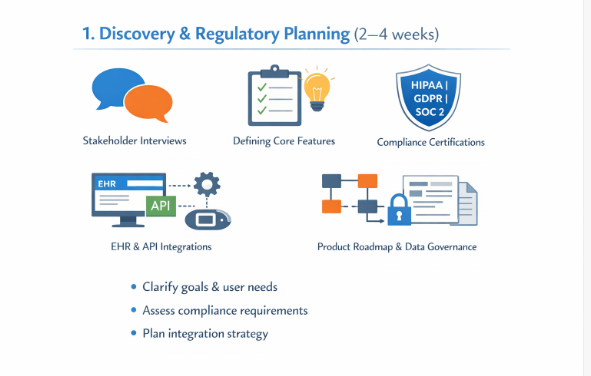
1. Discovery & Regulatory Planning (2–4 weeks)
The engagement begins with a discovery phase that clarifies goals, user needs, and compliance obligations. The development company conducts stakeholder interviews, defines core features, and identifies necessary certifications such as HIPAA, GDPR, or SOC 2. Technical architects map integrations with EHR systems, APIs, or medical devices, while strategists outline the product roadmap and data governance structure.
2. UX/UI Design & Prototype Development (4–6 weeks)
Design teams translate complex healthcare processes into clean, intuitive user experiences. Accessibility, clarity, and trust are top priorities. Wireframes evolve into clickable prototypes that simulate patient and clinician journeys—such as appointment scheduling, telehealth sessions, or lab result tracking. Companies also ensure WCAG compliance and mobile responsiveness across devices.
3. Core Development & Compliance Implementation (8–12 weeks)
Engineers build the mobile and web applications, integrating secure APIs, databases, and third-party services. Development companies prioritize:
- HIPAA-compliant data storage and encryption
- FHIR and HL7 interoperability
- Authentication systems (SSO, 2FA)
- Secure messaging and video modules
Parallel quality checks and peer code reviews ensure stability and scalability, while compliance officers validate documentation throughout the process.
4. Quality Assurance, Testing & Audit Review (3–5 weeks)
The QA team runs comprehensive functional, performance, and penetration tests to ensure both usability and data integrity. Accessibility testing verifies that the interface meets healthcare inclusivity standards. Final code audits confirm encryption, authentication, and data retention compliance before production release.
5. Deployment & Launch (2–3 weeks)
Once all systems pass review, the app is deployed to production environments and published to app stores under secure credentials. Development companies typically assist with DevOps setup, server configuration, and cloud monitoring. Documentation and training are provided for internal staff to manage updates, user onboarding, and system logs.
6. Post-Launch Support & Continuous Compliance (Ongoing)
After launch, the development partner continues to monitor app performance, fix emerging bugs, and handle OS or API updates. Ongoing compliance audits ensure adherence to evolving regulations, while analytics tools track user engagement and clinical outcomes. Many companies offer SLA-based maintenance programs covering updates, data security, and feature enhancements.
Trends in Healthcare App Development (2025)
The healthcare technology landscape in 2025 is defined by convergence—where medical innovation, artificial intelligence, and patient experience intersect. Development companies are no longer just coding apps; they’re engineering digital ecosystems that connect patients, providers, and data in real time. The following trends are shaping how modern healthcare apps are conceived, built, and scaled.
1. AI-Driven Diagnostics and Predictive Care
AI and machine learning models are transforming how healthcare apps interpret patient data. From early disease detection to predictive analytics for chronic care management, algorithms now augment clinicians’ decisions rather than replace them. Development companies are embedding AI models capable of analyzing symptoms, lab results, and lifestyle inputs to deliver real-time insights and care recommendations.
2. Virtual-First and Hybrid Care Experiences
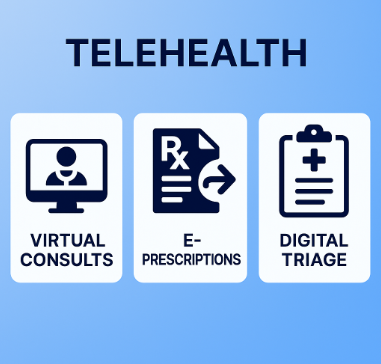
Telehealth has evolved from a pandemic necessity to a foundational mode of care delivery. Today’s healthcare apps blend virtual consultations with in-person follow-ups, allowing seamless transitions between online and offline care. Developers are integrating secure video, e-prescriptions, and digital triage tools to enable comprehensive patient journeys entirely within the app.
3. Integration with Wearables and Remote Monitoring Devices
As connected health hardware becomes more accessible, app developers are building native integrations with wearables, glucose monitors, and IoT-based medical sensors. These continuous data streams allow physicians to monitor patients beyond clinical walls. The emphasis has shifted from episodic visits to ongoing, preventive engagement powered by real-time health metrics.
4. Interoperability and FHIR-Based Architecture
Fragmented healthcare systems are being unified through interoperability standards such as FHIR (Fast Healthcare Interoperability Resources). Modern development companies now treat data exchange as a product feature, not an afterthought. Secure FHIR APIs are enabling EHR connectivity, automated insurance verification, and seamless transitions between health networks.
5. Patient-Centric Design and Accessibility
User experience in healthcare can directly impact adherence, satisfaction, and even outcomes. In 2025, design teams prioritize inclusivity—ensuring apps are accessible to older adults, visually impaired users, and non-native speakers. Clean navigation, readable typography, and transparent consent flows are now industry expectations, not differentiators.
6. Blockchain for Medical Record Security
To combat data breaches and tampering, some healthcare app developers are experimenting with blockchain-based data verification systems. While still in early adoption, blockchain provides immutable audit trails and decentralized control over patient data, empowering users to share records safely between providers.
7. Mental Health and Wellness Integration
Healthcare apps are expanding their definition of “care” to include emotional well-being. Mental health features such as journaling, therapy matching, and mindfulness modules are being embedded into general health ecosystems. This holistic design approach reflects a growing understanding that physical and mental health must coexist in a single digital experience.
8. Value-Based and Outcome-Driven Development
Healthcare app projects are increasingly tied to measurable clinical and business outcomes. Development companies are adopting value-based frameworks, tracking how app usage influences patient adherence, readmission rates, and cost reduction. The emphasis has shifted from “launching apps” to “proving impact.”
Frequently Asked Questions About Healthcare App Development Companies
1. What does a healthcare app development company do?
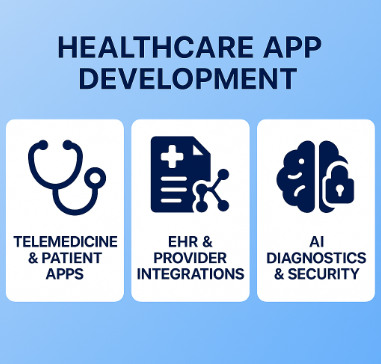
A healthcare app development company designs, develops, and maintains digital solutions that serve patients, providers, and medical organizations. Their work ranges from building telemedicine platforms and fitness trackers to complex EHR integrations and AI-powered diagnostic tools—all with compliance and security at the core.
2. How long does it take to build a healthcare app?
Timelines depend on complexity and regulatory requirements. A basic telehealth app can take 3–4 months, while enterprise-grade solutions with integrations, analytics, and HIPAA compliance can require 8–12 months or longer. Discovery and testing phases are typically longer than in non-regulated industries.
3. What makes healthcare app development different from other industries?
Healthcare development requires strict adherence to laws like HIPAA and GDPR, as well as deep consideration for accessibility, usability, and patient safety. Every design and code decision must be made with data protection, reliability, and ethical implications in mind.
4. Are healthcare apps required to be HIPAA-compliant?
If an app stores, processes, or transmits protected health information (PHI) for U.S. users, it must comply with HIPAA. This means implementing encryption, secure authentication, audit trails, and data retention controls. Apps that only handle general wellness data may not require HIPAA but still benefit from strong privacy practices.
5. How do developers ensure patient data is secure?
Healthcare developers use multiple layers of protection—data encryption, secure APIs, firewalls, intrusion detection, and access control policies. They also follow secure coding standards (OWASP, NIST) and conduct regular penetration testing to safeguard against breaches.
6. What technologies are most common in healthcare app development?
Popular stacks include React Native or Flutter for cross-platform apps, Node.js and Python for back-end systems, and AWS or Google Cloud for HIPAA-compliant hosting. Many teams now leverage FHIR APIs for interoperability and AI/ML frameworks like TensorFlow or PyTorch for diagnostics.
7. How much does it cost to build a healthcare app?
Costs vary widely depending on features, integrations, and security requirements. MVPs start around $60,000–$120,000, while advanced systems with EHR sync, AI analytics, and multi-role dashboards can exceed $300,000. Long-term maintenance and compliance audits should also be factored in.
8. Can I integrate my app with existing hospital or EHR systems?
Yes. Many healthcare development companies specialize in EHR and EMR integrations using FHIR or HL7 standards. This allows apps to securely exchange patient records, appointment data, or lab results with existing clinical systems.
9. How do companies handle regulatory compliance outside the U.S.?
Global development partners adapt to each region’s standards—GDPR in Europe, PIPEDA in Canada, or the NHS Data Security and Protection Toolkit in the U.K. Top firms employ compliance specialists who ensure adherence to every relevant regulation.
10. Do healthcare apps need FDA approval?
Some do. If the app functions as a “medical device” (e.g., diagnosing conditions or recommending treatments), it may require FDA clearance. However, wellness and administrative apps usually don’t. Experienced healthcare developers can help determine which category your app falls into.
11. What types of healthcare apps are in highest demand right now?
Telemedicine, chronic care management, mental health, and fitness tracking apps remain top priorities. New interest is also emerging in AI-driven diagnostics, women’s health, elder care, and medication adherence platforms.
12. How do healthcare developers test for usability and accessibility?
Top firms conduct real-world usability tests with patients, clinicians, and caregivers. Accessibility audits follow WCAG standards to ensure compatibility with assistive technologies, large text options, and high-contrast modes—critical in healthcare’s diverse user base.
13. What happens after the app is launched?
After launch, most companies offer ongoing maintenance, security monitoring, and compliance updates. Analytics dashboards track engagement and outcomes, while feature upgrades and bug fixes keep the app aligned with evolving medical and legal standards.
14. Can healthcare apps use AI and machine learning safely?
Yes—if implemented responsibly. Developers must ensure transparency in algorithms, limit bias, and use de-identified data when possible. AI can assist in diagnostics, predictions, and workflow automation, but it must never replace clinical judgment without oversight.
15. What should I look for when choosing a healthcare app development company?
Look for a proven track record in healthcare, a clear understanding of compliance frameworks, strong UX capabilities, and transparent communication. The best partners act as long-term collaborators who understand both your business goals and patient needs.
16. How do healthcare apps handle emergencies or downtime?
Healthcare apps must maintain high availability and failover systems. Reputable developers use redundant cloud servers, automated backups, and monitoring tools to ensure uptime. For telemedicine, many apps also include escalation protocols for urgent cases.
17. How is AI changing the future of healthcare app development?
AI is shifting healthcare from reactive to proactive care. Modern apps now analyze data to predict risks, personalize treatment plans, and even assist physicians in decision-making. Development companies are integrating machine learning pipelines directly into app architectures, paving the way for continuous, intelligent care experiences.



 18 Mins