




















 15 Min


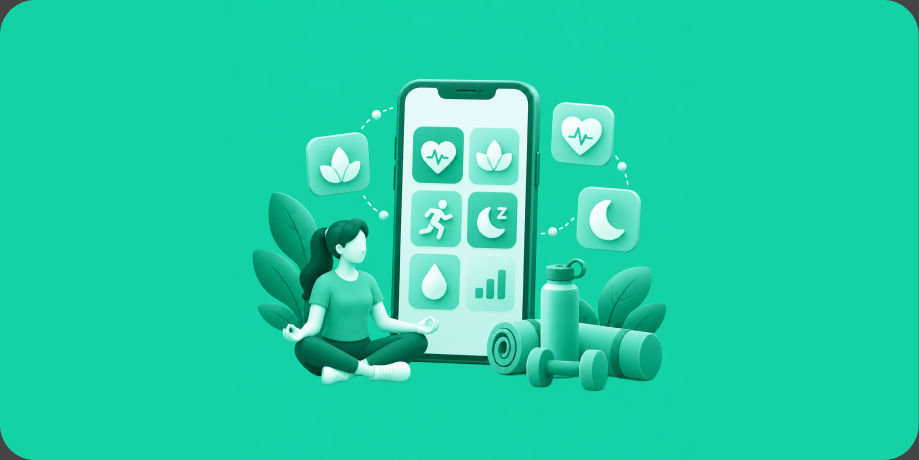
The best health and wellness app ideas for 2026 serve one condition, one life stage, or one community deeply, and they decide on day one whether they live in the regulated healthcare lane or the consumer wellness lane. The market rewards that focus: the global mobile health (mHealth) apps market reached $37.5 billion in 2024 and is projected to hit $86.37 billion by 2030, growing 14.8% annually, according to Grand View Research. The costly mistake is discovering compliance requirements mid-build. Below are 15 health and wellness app ideas spanning mental health, chronic conditions, senior care, recovery, and niche fitness, each with a plain-English compliance flag.
Key Takeaways
- The best health and wellness app ideas for 2026 pick a narrow audience and earn trust through clinical credibility, not generic content.
- Know your lane: apps handling protected health information with providers fall under the Health Insurance Portability and Accountability Act (HIPAA); pure consumer wellness apps do not.
- HIPAA-ready builds add encryption, access controls, and audit trails, which raises budgets but also raises the barrier against competitors.
- A focused health app minimum viable product (MVP) runs $30,000 to $60,000 in 2026, with clinical platforms reaching $75,000 to $150,000 or more.
- Provider distribution, therapists, clinics, and employers, beats app store ads for nearly every idea on this list.
HIPAA or Consumer Wellness: Know Your Lane Before You Build
HIPAA applies when your app creates, stores, or transmits protected health information on behalf of covered entities like clinics, therapists, or insurers. A meditation app selling directly to consumers is generally outside HIPAA; the same app distributed by a hospital system is inside it. Neither lane is wrong, but the choice drives your architecture, budget, and sales motion, so make it deliberately.
| Factor | Consumer wellness lane | HIPAA lane |
|---|---|---|
| Trigger | Direct-to-consumer, self-tracked data | Providers, insurers, or employers handling health data |
| Key obligations | Privacy policy, FTC health data rules, app store policies | Encryption, access controls, audit logs, business associate agreements |
| Budget impact | Standard MVP range | Adds roughly 15% to 30% for security architecture |
| Sales motion | App stores, communities, influencers | Clinics, health systems, employers, payers |
| Competitive effect | Easy entry, crowded | Harder entry, stickier customers |
Mental Health App Ideas
Mental health remains the deepest need in wellness tech, and the winning 2026 pattern pairs software with real clinicians instead of replacing them. Distribution through therapists and employers solves both trust and customer acquisition.
- Between-session therapy companion. Clients get structured support, mood check-ins, and assigned exercises between appointments, with therapists reviewing progress. Compliance: HIPAA, since therapists and client data are involved from day one.
- Grief support community. Moderated peer groups matched by type of loss, with trained facilitators and gentle programming. Compliance: consumer wellness, with crisis escalation protocols and clear scope boundaries.
- Mental wellness benefit for deskless workers. Short, shift-friendly support for warehouse, retail, and healthcare staff, sold to employers. Compliance: consumer wellness at the app layer, HIPAA once care delivery or claims data enters the picture.
- Teen anxiety skills coach. Evidence-based coping skills with optional parent visibility settings designed with adolescent clinicians. Compliance: consumer wellness plus Children’s Online Privacy Protection Act (COPPA) duties for younger users and stricter app store review for minors.
Chronic Condition Management App Ideas
Chronic condition apps succeed by shrinking the daily burden of a diagnosis into one trusted routine. Patients stay for years, which supports subscription economics no fitness fad can match.
- Single-condition lifestyle program. A structured, evidence-based program for one condition, such as multiple sclerosis, psoriasis, or IBS, unifying diet, exercise, medication, and symptom logging. Compliance: consumer wellness when self-directed; HIPAA once clinicians or health systems distribute it.
- Kidney and diabetes meal planner. Plans meals around lab-value targets like potassium, sodium, and carbohydrate loads. Compliance: consumer wellness if users enter values manually; HIPAA when labs import from providers.
- Medication adherence with family alerts. Smart schedules, refill reminders, and caregiver notifications when doses are missed. Compliance: consumer wellness standalone; HIPAA with pharmacy or provider integrations.
- Remote monitoring companion for one device. Pairs with blood pressure cuffs, tracks trends, and prepares clean reports for appointments. Compliance: HIPAA when clinics receive data, plus Food and Drug Administration (FDA) awareness if the app interprets readings rather than displaying them.
Senior Care and Recovery App Ideas
Senior care and recovery apps carry a built-in advantage: the buyer is often not the user. Adult children and treatment programs pay readily for peace of mind and continuity.
- Family caregiver command center. Adult children coordinate medications, appointments, documents, and shared notes for aging parents. Compliance: consumer wellness; HIPAA only if providers join the platform.
- Fall-prevention trainer for 60+. Balance assessments, progress scoring, and gentle strength programs designed for older adults. Compliance: consumer wellness, with honest claims and no diagnostic promises.
- Recovery support network. Daily check-ins, sponsor connections, sober streaks, and meeting finders for people in recovery. Compliance: consumer wellness for peer support; federal confidentiality rules (42 CFR Part 2) apply once treatment programs participate.
- Post-surgery rehab companion. Clinics assign recovery exercises, track adherence, and flag red-flag symptoms after joint replacements. Compliance: HIPAA, since clinics distribute it and outcomes flow back to care teams.
Get Your Free 45-Minute App Roadmap
Meet 1-on-1 with our senior product team. We’ll map your MVP or enterprise app and hand you a personalized plan—clear scope, a realistic timeline, and fixed monthly costs—for iOS & Android, web, tablets & wearables, and AI.
Niche Fitness App Ideas
General fitness apps are saturated, but niche fitness keeps producing wins by serving bodies and goals the mainstream ignores. Specific audiences forgive smaller feature sets and pay for genuine understanding.
- Strength-after-60 coach. Fitness assessments that score readiness like a retirement account, with progressive plans and group challenges for older adults. Compliance: consumer wellness.
- Adaptive fitness for wheelchair users. Workout programs, form videos, and community built specifically for seated athletes. Compliance: consumer wellness, with accessibility as a first-class design requirement.
- Pelvic floor and postpartum recovery coach. Guided programs for pregnancy recovery with symptom-aware progressions. Compliance: consumer wellness for education and training; HIPAA when licensed clinicians deliver care through the app.
What Health and Wellness Apps Cost to Build in 2026
A focused consumer wellness MVP runs $30,000 to $60,000 in 2026, and HIPAA-ready clinical platforms typically land between the upper MVP range and the $75,000 to $150,000 complex tier, driven by encryption, role-based access, audit logging, and provider portals. Timelines run 3 to 6 months for focused builds and 6 to 12+ months for clinical platforms. AI-assisted engineering with senior review has roughly halved comparable budgets from a few years ago. Our app development costs and pricing guide shows where each feature pushes the number.
How Chop Dawg Approaches Health and Wellness Builds
Health products demand two things at once: clinical seriousness and consumer-grade design, and that combination is where we have spent much of our time since 2009. For the global charity Overcoming MS, we digitized an evidence-based lifestyle program for people living with multiple sclerosis into a HIPAA-compliant app that reached 50,000+ installs in its first 90 days with 90% daily retention on key features. Their senior global marketing manager, Alex Twersky, put it this way: “We thoroughly vetted numerous app development agencies before choosing Chop Dawg. I couldn’t be more delighted with our decision.” We built Theraboost, a HIPAA-compliant platform designed by two practicing therapists that connects clients and clinicians between sessions with journaling, assessments, and homework. And retireFIT turned fitness for the over-40 crowd into a “physical retirement account” with assessment-based scoring and group challenges. Organizations that have trusted Chop Dawg include Jefferson Health, Penn Medicine, and the University of Pennsylvania.
Our team structure matters extra in this category. We are US-headquartered and US-led: Americans own leadership, product and project management, senior engineering, senior design, and senior quality assurance (QA), backed by our in-house Brazilian design team and in-house development, QA, and project teams in Pakistan and India. Everyone is Chop Dawg staff on your project directly, fluent in English, on US hours. No hidden subcontractors behind an American salesperson, and no faceless offshore shop you cannot reach during your workday. Health and government partners can choose a fully American team; most partners choose the blended model for the same quality at lower cost. Start with our strategic planning service or see what we’ll do for you.
Frequently Asked Questions
Does my wellness app need to be HIPAA compliant?
Only if it creates, stores, or transmits protected health information on behalf of covered entities such as clinics, therapists, or insurers. A direct-to-consumer app where users track their own data generally falls outside HIPAA, though Federal Trade Commission health data rules and app store policies still apply.
How much extra does HIPAA compliance add to development costs?
Plan on roughly 15% to 30% above a comparable consumer build, covering encryption at rest and in transit, role-based access controls, audit logging, secure hosting, and business associate agreements. On a $50,000 MVP, that typically means about $8,000 to $15,000 more, an investment that also blocks casual competitors.
How much does it cost to build a health and wellness app in 2026?
A focused consumer wellness MVP costs $30,000 to $60,000 in 2026. HIPAA-ready platforms with provider portals typically run from the upper end of that range into the $75,000 to $150,000 complex tier. Post-launch maintenance starts around $2,500 per month, more for clinical systems.
How long does a health app take to launch?
Focused wellness apps take about 3 to 6 months from kickoff to submission; HIPAA-ready clinical platforms run 6 to 12 months or more. Apple reviews clean submissions within 24 to 48 hours in 2026, but health apps face extra scrutiny, so accurate claims and privacy disclosures prevent costly rejection cycles.
How do health apps get users without huge ad budgets?
Borrow trust from people who already have it. Therapists, clinics, employers, patient communities, and condition-specific nonprofits will distribute an app that genuinely helps the people they serve. Provider-distributed apps also convert better and retain longer than ad-acquired downloads, which transforms your unit economics.
Build the Health App People Rely On Daily
The best health and wellness app ideas for 2026 combine a narrow audience, honest compliance planning, and distribution through trusted humans. Pick your lane, pick your niche, and validate with the community you want to serve. When you are ready to scope it, book a free 45-minute consultation, offered whether or not you hire us, for new founders and established health organizations alike. Chop Dawg has launched 500+ products used by more than 1 billion people since 2009, holds 92% partner retention now in our 18th year, and has earned 300+ five-star reviews across trusted directories like Clutch, GoodFirms, G2, Google, and TopDevelopers. Book your consultation and we will pressure-test your idea, compliance lane included.


 15 Min