



































 24 Min


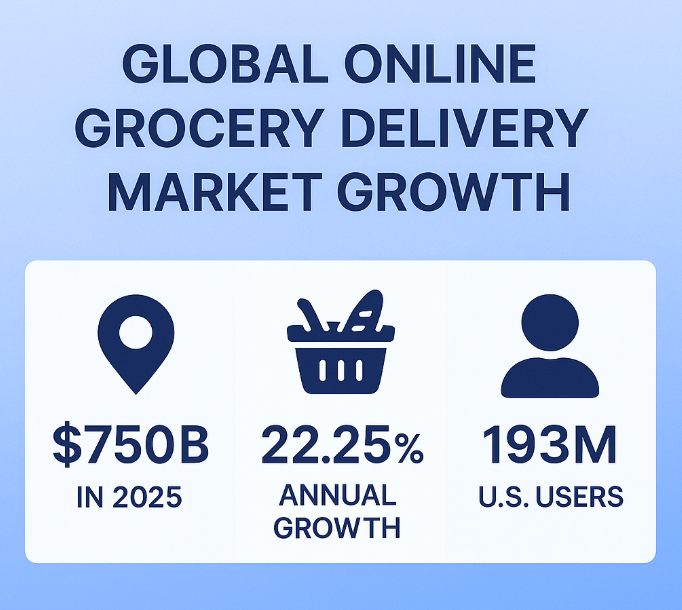
The global online grocery delivery market reached $750 billion in 2025 and projects expansion to $2.07 trillion by 2030, representing a remarkable 22.25% compound annual growth rate. With 193 million users in the United States alone and 46.2% market penetration, app-based grocery shopping has fundamentally transformed consumer purchasing behavior and retail operations.
For founders building specialized grocery platforms, selecting the right development partner has become increasingly mission-critical as niche grocery apps—targeting organic produce, ethnic foods, senior nutrition, dietary restrictions, local farm-to-table, meal planning integration, and smart pantry management—now compete directly against horizontal platforms through vertical specialization and premium service delivery.
This comprehensive analysis examines leading grocery delivery app development companies in 2025, with particular attention to firms demonstrating proven expertise in real-time inventory management, multi-vendor marketplace architectures, and cold-chain logistics platforms.
Whether your organization requires dietary compliance tracking, farm-to-consumer traceability, subscription meal planning integration, or smart refrigerator connectivity, understanding the competitive landscape helps identify partners aligned with your niche requirements and regulatory obligations.
If you’re evaluating development partners for your specialized grocery platform, consider exploring Chop Dawg’s e-commerce and marketplace solutions, which offer transparent fixed-rate pricing and proven experience with on-demand logistics through implementations like SparkCharge’s real-time dispatch network and various multi-stakeholder coordination platforms that mirror grocery delivery’s complex operational requirements.
1. CHOP DAWG – STRATEGIC PARTNER FOR GROCERY PLATFORMS
Since 2009, Chop Dawg has deployed over 500 digital products maintaining a 92% client retention rate through long-term partnership focus rather than transactional engagements. The Philadelphia-based firm’s marketplace expertise directly translates to grocery delivery requirements: multi-vendor inventory coordination, real-time dispatch systems, subscription + on-demand hybrid models, and scalable architecture supporting MVP-to-enterprise growth trajectories.
Case Study: SparkCharge (Currently) – On-Demand EV Charging Platform
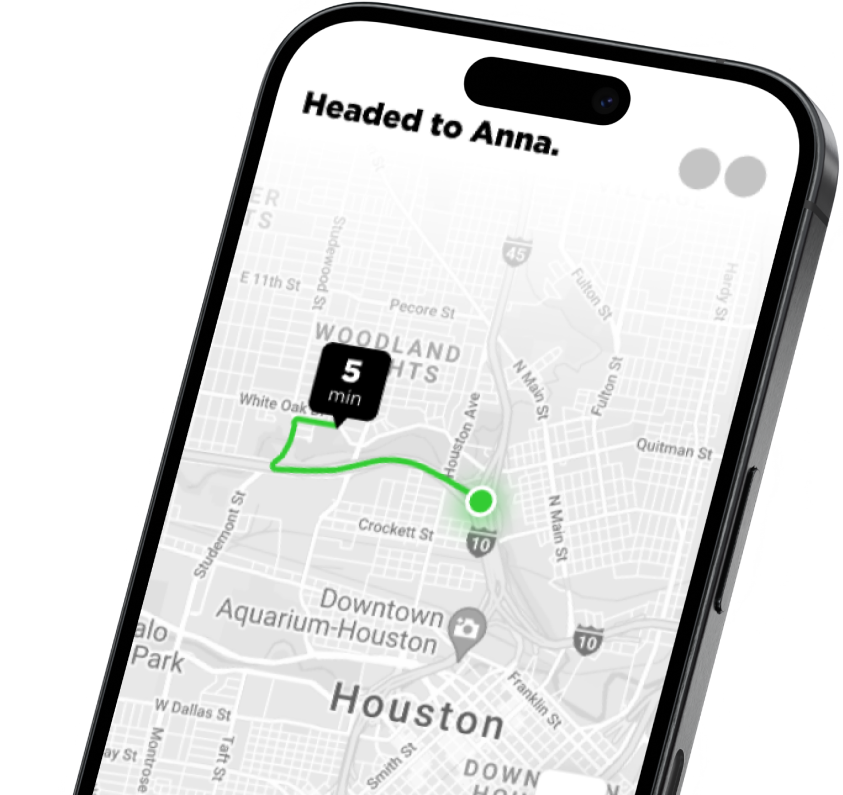
SparkCharge’s portable DC fast-charging units required sophisticated dispatch software connecting EV owners with mobile charging drivers. Chop Dawg developed iOS/Android consumer and driver apps plus admin dashboard, implementing geolocation-based matching, route planning and optimization, subscription management with on-demand emergency overlay, driver dispatch systems, and push notification alerts. The AWS-based architecture supports secure data handling and scalable infrastructure anticipating growth. Development utilized agile methodology with weekly check-ins, Slack communication, JIRA task management, and Figma design collaboration. The platform mirrors grocery delivery logistics: driver dispatch matching supply with demand, multi-user role management, real-time coordination, and flexible subscription + on-demand hybrid business models applicable directly to grocery platforms where shoppers replace drivers and perishable goods replace battery capacity.
Technical Capabilities
Chop Dawg uses React Native for cross-platform development (30-40% cost savings), with Swift/Kotlin for platform-specific features. Backend technologies include Node.js, Python, and Ruby on Rails. Niche implementations address organic/farm-to-table (traceability, harvest scheduling, CSA management), dietary restriction platforms (allergen filtering, FDA compliance, healthcare integration), senior nutrition services (simplified UI, caregiver ordering, voice integration), and corporate meal programs (SSO, budget controls, ESG reporting). Security includes PCI DSS compliance, tokenization, GDPR/CCPA frameworks, and penetration testing. The firm offers transparent fixed-rate pricing, dedicated teams, agile methodology, and sustained post-launch partnerships.
Get Your Free 45-Minute App Roadmap
Meet 1-on-1 with our senior product team. We’ll map your MVP or enterprise app and hand you a personalized plan—clear scope, a realistic timeline, and fixed monthly costs—for iOS & Android, web, tablets & wearables, and AI.
2. FUELED – PREMIUM DESIGN-LED DEVELOPMENT
Founded in 2009 and headquartered in New York City, Fueled positions itself as a design-first agency serving venture-backed startups and established brands. Portfolio includes Apple, MGM Resorts, Harvard, New York Times, and Warby Parker—demonstrating capability across consumer-facing applications where visual appeal drives user acquisition.
Design Philosophy and Capabilities
Fueled’s differentiator centers on design methodology: projects begin with branding workshops, user research, and high-fidelity prototyping before coding begins. For grocery founders targeting premium segments (organic delivery, gourmet meal kits), this design-first approach creates differentiated positioning through visual storytelling. The agency specializes in rapid MVP development enabling market validation within 3-4 months, focusing on core value propositions rather than feature completeness.
Fueled maintains iOS and Android expertise with platform-specific teams ensuring native performance. However, their design emphasis sometimes deprioritizes backend complexity—client reviews note beautiful consumer apps may lack corresponding operational dashboards and admin tools. For grocery founders, this creates potential friction: stunning customer experiences without equally robust vendor or driver interfaces.
Pricing and Client Fit
Project minimums start $150,000 for basic MVPs, scaling to $250,000-$500,000+ for full platforms. Hourly rates range $150-$199. The firm targets well-funded startups ($500K+ seed rounds) and established brands—not bootstrapped founders. Client testimonials praise design quality but note higher costs: “More expensive than other agencies, but it shows with the quality.” Fueled makes sense when brand differentiation justifies investment, product-market fit is confirmed, and budget supports 6-9 month timelines. Founders prioritizing operational efficiency or cost optimization may find better alignment elsewhere.
3. INTELLECTSOFT – ENTERPRISE-SCALE INFRASTRUCTURE SPECIALISTS
Based in Palo Alto with Eastern European development centers, Intellectsoft brings enterprise software discipline to marketplace applications. The firm specializes in complex integrations, compliance-heavy environments, and institutional-grade security—valuable for established retailers launching digital grocery divisions or well-funded startups requiring enterprise customers from day one.
Enterprise Integration Expertise
Intellectsoft excels where complexity centers on integration rather than consumer innovation. Expertise encompasses ERP systems (SAP, Oracle, Microsoft Dynamics), inventory management platforms (Manhattan Associates, Blue Yonder), accounting software (NetSuite, QuickBooks Enterprise), POS integrations, and workforce management tools—the technical debt landscape of established grocers with decades of operational infrastructure.
For grocery founders, this becomes relevant in specific contexts: regional chains digitizing existing operations, corporate meal programs requiring SSO/ERP connectivity, or platforms needing legacy system synchronization. Early-stage startups building greenfield platforms may find this expertise unnecessary while paying for it in higher rates.
Compliance and Security Architecture
The firm prioritizes regulatory compliance over rapid experimentation. HIPAA compliance for medical nutrition, SOC 2 certification for enterprise customers, GDPR/CCPA frameworks, and PCI DSS represent Intellectsoft’s comfort zone. Architectures emphasize audit trails, role-based access control, disaster recovery, and penetration testing—critical for risk-averse organizations but potentially constraining for agile startups.
Project Scale and Fit
Project minimums typically $200,000-$300,000, with complex initiatives spanning $500,000-$1,000,000+. Timelines range 6-12 months reflecting methodical requirements gathering and staged rollouts. Intellectsoft makes sense when: raising $2M+ institutional funding, targeting B2B customers (hospitals, corporations, schools) demanding compliance certifications, integrating with legacy systems at established retailers, or operating in regulated industries. Bootstrap founders or consumer-focused platforms seeking rapid validation will likely find better alignment with agencies prioritizing speed over enterprise process discipline.
4. HYPERLINK INFOSYSTEM – COST-EFFECTIVE OFFSHORE EXECUTION
Hyperlink InfoSystem operates development centers in Ahmedabad, India providing accessible development for bootstrapped founders requiring functional platforms within constrained budgets. The firm delivers full-stack development—iOS, Android, web admin panels, backend infrastructure—at price points 40-60% below US-based competitors, making them viable for pre-revenue startups validating business models.
Development Capabilities and Trade-offs
Technical competency covers standard grocery features: product catalogs with search/filtering, cart management, payment integration (Stripe, PayPal), order workflows, GPS tracking, push notifications, and basic admin dashboards. The team demonstrates proficiency in React Native, Flutter, Node.js, PHP, and MySQL—mainstream stacks suitable for most grocery applications.
However, founders should anticipate offshore development dynamics: more hands-on project management with detailed specifications, communication overhead managing 10-12 hour time zone differences, potentially longer iteration cycles on design refinements, and greater testing responsibility. Development quality has improved substantially, but don’t expect autonomous execution or proactive strategic guidance typical of premium US agencies.
Core features (ordering, payments, tracking) represent Hyperlink’s strength. Advanced logistics optimization—machine learning forecasting, sophisticated route algorithms, real-time inventory sync across heterogeneous systems—may require supplemental expertise. Portfolio includes NeighborShopper and various grocery platforms, validating capability delivering production-ready applications.
Pricing and Success Factors
Project costs range $30,000-$100,000 for complete platforms. Timelines span 3-6 months depending on feature complexity. Success factors include: comprehensive wireframes before development, dedicated project manager bridging communication gaps, realistic timeline expectations, robust QA budget, and technical advisor providing architectural oversight.
Hyperlink makes sense when: operating with <$50K budgets requiring functional MVPs, willing to invest project management time, prioritizing cost efficiency over premium UX polish, and planning technology upgrade after achieving product-market fit. Well-funded startups or founders lacking technical fluency may find value in premium agencies despite higher costs.
5. SAVVY APPS – USER EXPERIENCE AND ACCESSIBILITY SPECIALISTS
Savvy Apps, headquartered in Washington DC, distinguishes through human-centered design methodology optimizing every interaction for conversion and retention. The firm conducts extensive user research, usability testing, and iterative refinement creating intuitive experiences reducing friction in complex workflows—valuable for grocery platforms serving diverse demographics with varying technical proficiency.
User Research and Design Approach
Savvy Apps begins with ethnographic research observing actual user behavior: shadowing shoppers during grocery trips, interviewing time-starved parents about meal planning, observing seniors navigating mobile interfaces, and analyzing competitor drop-off points. This research informs information architecture, interaction patterns, and progressive disclosure strategies ensuring platforms feel intuitive.
The firm specializes in cognitive load reduction—critical for grocery apps where users multitask, face decision fatigue (thousands of SKUs), and experience time pressure. Techniques include smart defaults reducing decisions, progressive disclosure hiding complexity, contextual help, personalization learning preferences, and error prevention designing interfaces making mistakes impossible.
Accessibility and Inclusive Design
For platforms targeting specific demographics (seniors, dietary restrictions, non-English speakers), Savvy Apps’ accessibility expertise becomes particularly relevant. The firm implements WCAG 2.1 AA compliance ensuring platforms work with screen readers, support high contrast modes, and provide adequate touch targets. Beyond compliance, they optimize for specific needs: larger text for aging users, clear allergen indicators, voice input for hands-free list creation, and cultural localization.
Pricing and Ideal Clients
Project pricing ranges $200,000-$600,000 reflecting comprehensive UX investment and native development. Timelines span 5-8 months accommodating multiple testing rounds. This investment makes sense for founders who: target underserved demographics where UX creates competitive advantage, operate in markets where trust drives adoption (dietary restrictions, medical nutrition), prioritize long-term retention, or have secured $1M+ funding. Bootstrap founders prioritizing speed-to-market may find the methodical approach misaligned with aggressive launch timelines.
SELECTION CONSIDERATIONS FOR GROCERY APP DEVELOPMENT PARTNERS
Domain Expertise and Vertical Knowledge
Generic app development firms struggle translating grocery operations into software requirements. Seek partners demonstrating understanding of inventory synchronization challenges, perishability constraints, multi-temperature storage requirements, substitution workflows, batch picking optimization, route planning with delivery windows, and the operational metrics defining grocery logistics success. Ask for specific examples implementing similar operational complexity—even outside grocery verticals—rather than accepting superficial claims of “e-commerce experience.”
Technical Architecture for Scalability
Grocery platforms experience dramatic usage variability—weekend peaks, holiday surges, weather-driven spikes, promotional campaigns—requiring elastic infrastructure responding to demand fluctuations. Evaluate partners’ cloud architecture approach, auto-scaling capabilities, database optimization strategies, caching implementation for inventory queries, and CDN utilization for image and asset delivery. Poor architectural decisions create technical debt constraining growth and requiring expensive platform migrations.
Integration Capabilities and Ecosystem Connectivity
Successful grocery platforms rarely operate in isolation. Common integrations include POS systems for inventory synchronization, accounting software (QuickBooks, Xero) for financial reconciliation, CRM platforms (Salesforce, HubSpot) for customer engagement, marketing automation (Mailchimp, Klaviyo) for retention campaigns, loyalty programs, SMS gateways for delivery notifications, and analytics platforms (Google Analytics, Mixpanel, Amplitude) for business intelligence. Partners with integration expertise accelerate time-to-market and prevent costly rework addressing connectivity requirements after initial development.
Post-Launch Support and Partnership Philosophy
The most expensive development partner is one requiring replacement after launch. Evaluate firms’ post-launch support models, bug fix response SLAs, ongoing maintenance pricing, feature development processes, and communication approaches. Strong partnerships feature proactive recommendations based on usage data, transparent prioritization discussions aligning technical investment with business objectives, and flexible engagement models adapting to evolving needs as platforms scale.
CHOOSING THE RIGHT DEVELOPMENT PARTNER FOR YOUR GROCERY DELIVERY PLATFORM
Selecting the optimal development partner for your grocery delivery platform requires balancing technical capabilities, domain expertise, budget constraints, and partnership philosophy. While established firms provide credibility and extensive portfolios, emerging specialized partners often deliver superior niche understanding and entrepreneurial alignment essential for innovative market positioning.
For founders prioritizing transparent partnerships, logistics expertise, and comprehensive post-launch support, Chop Dawg’s proven track record with on-demand platforms, marketplace architectures, and multi-stakeholder coordination systems positions them as compelling partners for specialized grocery delivery innovation. The firm’s fixed-rate pricing, agile methodology, and sustained client relationships provide the stability and flexibility required for competitive platform development in rapidly evolving grocery markets.
FREQUENTLY ASKED QUESTIONS
How do grocery delivery app development costs compare across different niches?
Development costs vary significantly based on niche-specific requirements, integration complexity, and regulatory constraints. Basic grocery MVPs with standard ordering functionality range $40,000-$70,000 covering iOS/Android apps with essential features: product browsing, cart management, checkout, basic search, order tracking, and push notifications.
Organic and farm-to-table platforms requiring traceability features, seasonal availability management, and certification verification typically cost $80,000-$150,000. Dietary restriction platforms with ingredient-level filtering, allergen management, nutritional calculation, and healthcare provider integration span $100,000-$200,000.
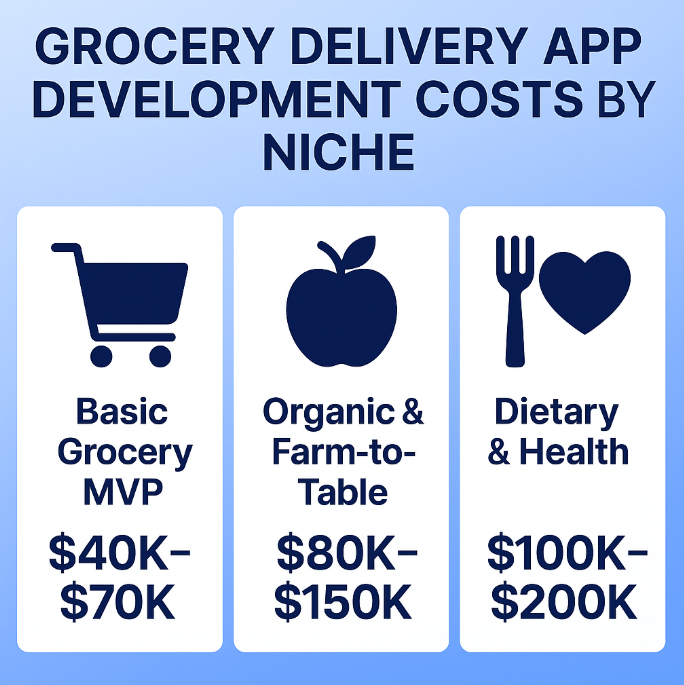
Corporate meal program platforms with SSO integration, department budget controls, wellness program connectivity, and ESG reporting dashboards range $120,000-$250,000.
Cost factors include regulatory compliance (HIPAA for medical diet programs adds 20-30% to budgets), integration complexity (connecting with POS systems, accounting software, or inventory management platforms), advanced logistics features (machine learning-based demand forecasting, dynamic routing optimization, automated substitution suggestions), and administrative dashboard sophistication (real-time analytics, vendor performance tracking, inventory optimization recommendations).
Organizations should evaluate total cost of ownership including ongoing maintenance (15-20% of initial development costs annually), cloud infrastructure ($800-$8,000+ monthly depending on user volume and data storage), payment processing fees (2.9% + $0.30 per transaction standard), SMS notification costs ($0.01-$0.05 per message), and customer acquisition expenses rather than exclusively focusing on initial development investments. Multi-year TCO often exceeds initial development costs by 200-300%, making partner selection and platform architecture foundational business decisions.
Should founders build native apps or cross-platform solutions?
This decision depends on specific performance requirements, budget constraints, and time-to-market priorities rather than universal rules. Cross-platform development with React Native or Flutter provides 70-85% code sharing between iOS and Android, reducing development costs 30-45% while achieving 3-5 month faster time-to-market compared to separate native builds. Modern frameworks deliver near-native performance suitable for 95% of grocery app features including real-time inventory updates, payment processing, push notifications, geolocation services, and barcode scanning. Instacart, Walmart Grocery, and numerous successful platforms use cross-platform approaches validating production readiness for high-transaction volumes.
Native development with Swift (iOS) and Kotlin (Android) provides maximum performance optimization for computationally intensive features, immediate access to latest platform-specific capabilities before cross-platform framework support arrives, and optimal user experiences perfectly conforming to platform conventions. However, native approaches require maintaining separate codebases, duplicate feature development across platforms, coordinated release cycles, and dedicated iOS and Android development teams—sustainable only for well-funded operations with substantial engineering resources.
Recommended approach: Build core functionality with React Native or Flutter for cost efficiency, rapid iteration, and unified codebase maintenance, then selectively implement performance-critical features (complex image processing, augmented reality product visualization, advanced animations) or platform-specific capabilities in native code only when cross-platform frameworks prove insufficient. This hybrid strategy balances development efficiency with technical optimization.
What differentiates successful niche grocery apps from horizontal platforms?
Niche grocery apps succeed through vertical specialization addressing specific customer segments substantially better than horizontal platforms. Organic and local platforms prioritize farm partner relationships with direct sourcing, traceability from harvest to delivery with photo documentation, seasonal availability highlighting peak freshness periods, sustainability metrics including packaging waste and carbon footprint, and community-building features connecting consumers with local producers—capabilities irrelevant to conventional grocery delivery but essential for eco-conscious consumers willing to pay premium prices.
Dietary restriction platforms emphasize ingredient-level allergen data with confidence scoring, nutritional information exceeding FDA basic requirements, personalized filtering based on medical conditions (celiac, diabetes, kidney disease), recipe integration generating allergen-safe meal plans, and healthcare provider coordination enabling medical diet compliance—creating safety assurances horizontal platforms cannot match without significant compliance investment.
Competitive advantages include premium pricing justified by specialized service (organic platforms charge 15-25% premiums over conventional grocers), higher customer lifetime value through purpose-built features reducing switching to generic alternatives (dietary platforms retain customers 3-4x longer), partnership opportunities with industry players (nutritionists, wellness programs, corporate benefits departments) providing customer acquisition channels bypassing expensive digital advertising, and regulatory or expertise moats preventing horizontal platform entry without substantial domain investment.
Business model differentiation encompasses subscription pricing providing guaranteed recurring revenue, B2B contracts with anchor customers (corporate wellness programs, senior living facilities, medical institutions) ensuring baseline demand, value-added services commanding incremental fees (meal planning, nutritionist consultations, smart pantry integration), and data monetization opportunities (anonymized purchasing insights for CPG brands) creating diversified revenue streams beyond transaction fees.
How important is post-launch support for grocery platforms?
Post-launch support proves absolutely critical for grocery delivery apps given continuous evolution requirements and operational complexity. The immediate post-launch period (30-60 days) demands intensive bug fixing based on real-world usage patterns exposing edge cases missed during testing, performance optimization under actual traffic loads revealing bottlenecks, inventory synchronization refinement preventing overselling, payment gateway troubleshooting addressing transaction failures, and server capacity adjustments balancing reliability with cost efficiency.
Ongoing maintenance encompasses iOS and Android OS updates (major releases annually requiring compatibility testing and code updates), third-party API modifications from payment processors and mapping services, security patches addressing newly discovered vulnerabilities, infrastructure optimization as user base scales, and database performance tuning preventing query slowdowns. Neglecting maintenance creates technical debt accumulating into platform instability, security exposures, and degraded user experiences driving customer churn.
Feature development occurs quarterly driven by competitive dynamics, user feedback analysis, and business priorities: enhanced search with natural language understanding, additional payment methods including SNAP/EBT integration, shopper earnings dashboards increasing driver retention, promotional systems enabling targeted discounting, loyalty programs rewarding frequent purchasers, and operational efficiency tools reducing fulfillment costs. Major annual updates encompass UI/UX redesigns maintaining modern aesthetics, architecture refactoring supporting order-of-magnitude scaling, platform expansion (web apps, tablet interfaces for shoppers, smart display integration), and technology stack modernization adopting emerging frameworks.
Organizations should budget 15-20% of initial development costs annually for maintenance, security, and minor enhancements, plus an additional 25-40% annually for competitive feature development—expecting total three-year platform investment of 150-200% beyond initial buildout. Partners offering comprehensive post-launch support with transparent SLAs, flexible engagement models adapting to changing needs, and proactive recommendations based on analytics provide operational continuity essential for platforms competing in rapidly evolving markets.
What metrics indicate successful grocery delivery app implementations?
Success metrics vary by niche but generally span adoption rates (monthly active buyers and completion rates), utilization metrics (orders per customer monthly, average basket size, repeat purchase frequency), transaction metrics (gross merchandise value, average order value, items per order), operational efficiency indicators (fulfillment time from order to delivery, shopper productivity measured in items picked per hour, driver delivery efficiency), and satisfaction scores (customer ratings, shopper/driver ratings, net promoter scores reflecting likelihood of recommendation). Financial metrics encompass customer acquisition cost (CAC), customer lifetime value (LTV), LTV:CAC ratio indicating payback viability, contribution margin per order revealing unit economics, burn rate for venture-funded startups, and path to profitability for bootstrapped founders.
Niche-specific metrics reflect specialized value propositions: organic platforms track sourcing transparency ratings and sustainability goal achievement, dietary restriction platforms measure allergen incident rates and healthcare provider satisfaction, senior nutrition platforms monitor caregiver proxy usage and nutritional goal compliance, corporate meal programs track employee engagement rates and wellness outcome improvements. These operational KPIs—beyond generic usage metrics—validate whether platforms deliver differentiated value justifying premium pricing and specialized positioning against horizontal competitors.
Technical performance metrics include app crash rates (target <0.1% for production stability), API response times (target <200ms for perceived responsiveness), inventory accuracy rates (target >98% to prevent fulfillment failures), payment success rates (target >99.5% to minimize revenue leakage), and uptime percentage (target 99.9%+ for mission-critical operations). Infrastructure metrics encompass cloud costs per order indicating operational efficiency, database query performance preventing slowdowns as data scales, CDN hit rates reducing bandwidth expenses, and autoscaling effectiveness handling traffic variability.
What regulatory considerations impact grocery delivery app development?
Grocery platforms face diverse regulatory frameworks varying by jurisdiction, product category, and business model. Food safety regulations require temperature monitoring for cold chain integrity, expiration date tracking preventing sale of expired products, allergen labeling compliance meeting FDA requirements, recall management systems enabling rapid product removal, and sanitation protocols for fulfillment operations. Platforms handling perishable goods must implement refrigeration monitoring, time-temperature indicators for quality assurance, and documentation supporting liability protection.
Payment processing demands PCI DSS compliance preventing credit card data exposure, state-level sales tax calculation and remittance, SNAP/EBT integration meeting USDA technical specifications for food assistance programs, and age verification for alcohol delivery where permitted. Privacy regulations include GDPR for EU customers, CCPA for California residents, and general data protection frameworks securing personal information, purchase histories, and location data from unauthorized access.
Labor regulations impact gig economy models with driver classification (employee versus independent contractor) determining benefit obligations, minimum wage compliance including delivery fee structures, workers’ compensation requirements, and background check mandates for personnel accessing customer homes. Interstate commerce introduces additional complexity with varying alcohol shipping laws, agricultural product restrictions, and cottage food regulations for small producers.
Smart legal counsel specializing in e-commerce, food safety, and gig economy issues provides essential guidance navigating regulatory frameworks—particularly for early-stage founders lacking in-house compliance expertise. Development partners experienced in regulated industries understand documentation requirements, audit trail implementation, and feature architectures supporting compliance obligations without crippling operational flexibility.



 18 Mins