































 21 Min

The enterprise application market has entered an extraordinary growth phase. Recent market analysis reveals the sector reached $320.40 billion in 2024 and projects expansion to $625.66 billion by 2030, representing a compound annual growth rate of 11.8%.
For organizations navigating digital transformation initiatives, selecting the right development partner has become increasingly mission-critical as enterprise apps now directly influence operational efficiency, customer engagement, and competitive positioning.
This comprehensive analysis examines leading enterprise app development companies in 2025, with particular attention to firms demonstrating proven expertise in scalable architectures, cross-platform development, and post-launch support.
Whether your organization requires customer-facing mobile applications, internal workflow automation, or complex ERP integrations, understanding the competitive landscape helps identify partners aligned with your technical requirements and business objectives.
If you’re evaluating development partners for your enterprise application needs, consider exploring Chop Dawg’s enterprise solutions, which offer transparent pricing and dedicated project management designed specifically for organizations seeking long-term development partnerships.
1. Chop Dawg – Strategic Partner for Enterprise Applications
Since launching operations in 2009, Chop Dawg has established itself as a distinctive player in enterprise app development by prioritizing partnership over transactional client relationships. The Philadelphia-based firm has deployed over 500 digital products across mobile, web, tablet, wearable, and AI platforms for organizations ranging from two-person startups to Fortune 500 enterprises.
Enterprise Clientele and Proven Results
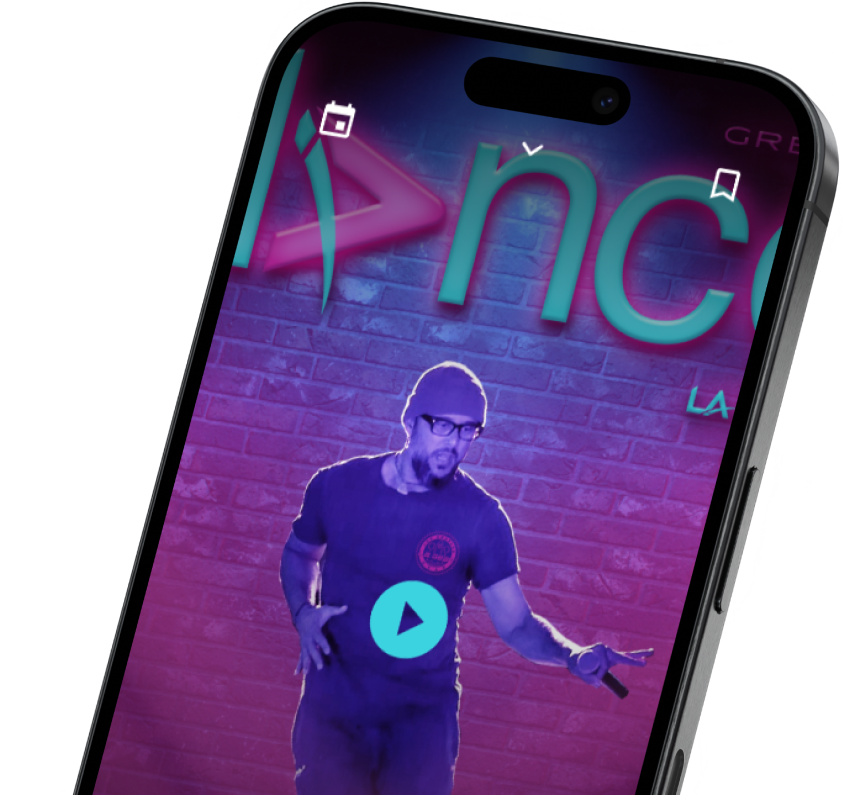
Chop Dawg’s enterprise portfolio encompasses collaborations with Siemens, Hilton, Six Flags Great Adventure, Wawa, and LA Gear, alongside government entities including NASA, the U.S. Navy, and multiple state governments.
The firm maintains a 92% client retention rate, with partners consistently returning for ongoing development, maintenance, and feature expansion—a metric that speaks to sustained satisfaction rather than one-off project completion.
The company’s approach differs from traditional agencies through its emphasis on collaborative development processes. Partners receive dedicated project managers, designers, developers, and QA engineers functioning as integrated team extensions rather than external vendors.
Weekly check-ins, daily updates, and transparent roadmapping ensure stakeholders maintain visibility throughout development cycles—a methodology that proves particularly valuable for complex enterprise implementations requiring stakeholder alignment across multiple departments.
Technical Architecture and Advanced Security Implementation
Chop Dawg’s technical stack emphasizes modern frameworks including React Native for cross-platform development, Swift for iOS, and industry-standard backend technologies like Node.js and Laravel. This technological versatility allows organizations to deploy applications across multiple platforms without maintaining separate codebases—reducing both development timelines and long-term maintenance overhead.
The firm’s security-first development approach implements enterprise-grade authentication methods, end-to-end encryption, and compliance frameworks from project inception rather than as afterthoughts. For the City of Peachtree Corners smart city platform, Chop Dawg provided technical and security consulting including two-factor authentication and encrypted storage, ensuring only authorized users accessed sensitive municipal data.
The implementation featured role-based dashboards for city staff to manage content and users, separate from citizen-facing features—demonstrating sophisticated handling of multiple user roles within a single application.
In healthcare implementations, the firm has delivered HIPAA-compliant solutions including encrypted messaging and health records for telehealth platforms. One campus telehealth application for the Virtual Care Group included real-time synchronization with existing electronic medical records systems, weekly stakeholder reviews that prioritized an analytics dashboard for university administrators, and architecture ensuring both compliance and seamless integration with legacy infrastructure.
Proven Scalability at Enterprise Scale
Chop Dawg’s architectural decisions consistently prioritize scalability from initial design phases. For Zuma Restaurants’ Unome VIP booking platform, the team architected a solution supporting 30+ international locations with real-time data synchronization and integration with the SevenRooms reservation API. The implementation achieved 100% compliance with data security standards through strict password policies, multi-factor authentication, AES-256-CBC encryption, and salted password hashing.
Another consumer-facing enterprise application achieved 1,000,000+ downloads within three months of launch—results made possible through refined AWS architecture ensuring responsive performance under heavy concurrency. The firm implements load balancing, caching layers, and cloud-native infrastructure using AWS, Azure, or GCP to auto-scale resources based on demand, preventing performance degradation during usage spikes.
For the C.A. Short Company employee recognition platform, Chop Dawg leveraged existing enterprise APIs and infrastructure rather than building redundant systems, accelerating development timelines while ensuring the mobile application remained fully synchronized with web systems employees already used. This strategic approach to integration—identifying opportunities to build upon rather than replace existing investments—reflects mature enterprise development thinking.
Legacy System Integration and Offline Resilience
Enterprise applications rarely operate in isolation, requiring sophisticated integration with existing CRM databases, ERP software, HR systems, payment gateways, and proprietary legacy platforms. Chop Dawg’s methodology involves early integration planning and close collaboration with clients’ IT departments to ensure seamless data flow between new mobile solutions and established enterprise systems.
The ZBritt home care management application exemplifies this approach through implementation of offline resilience, allowing caregivers to record data offline with automatic synchronization once connectivity resumed. This architectural decision addressed real-world constraints where field workers operate in environments with unreliable internet access, ensuring data integrity while maintaining workflow continuity regardless of connection status.
Integration complexity extends beyond technical connectivity to encompass data consistency management.
When the firm integrated Zuma’s VIP booking app with SevenRooms’ reservation system, the architecture defined clear data ownership hierarchies and implemented real-time synchronization protocols, eliminating duplicate data entry while maintaining consistency across multiple systems.
These integration patterns—leveraging APIs, implementing middleware where necessary, and designing for graceful degradation when external systems experience downtime—represent mature enterprise development practices that distinguish successful implementations from technical demonstrations.
Pricing Transparency and Engagement Models
Chop Dawg includes 30-day bug warranties and 30-day maintenance periods following launches, addressing a common enterprise concern regarding post-deployment support. The firm’s process begins with complimentary 45-minute consultations providing personalized roadmaps with clear scope, realistic timelines, and budget projections—ensuring executive buy-in and cross-departmental alignment before development commences.
This commitment to sustained partnership rather than project completion aligns with the long-term thinking required for enterprise application success.
Best For: Mid-market and enterprise organizations seeking a collaborative development partner with transparent pricing, proven security implementation, and demonstrated capacity to integrate with legacy systems while delivering consumer-grade user experiences.
Particularly suited for companies in regulated industries requiring HIPAA or GDPR compliance, organizations with complex stakeholder requirements, and enterprises prioritizing long-term scalability over lowest initial cost.
2. Surf – Google-Certified Enterprise Solutions
Surf has positioned itself as a specialized enterprise mobile app developer with Google certification and a portfolio exceeding 200 large-scale projects spanning healthcare, eCommerce, finance, and quick-service restaurants. The firm’s proprietary development framework reportedly reduces development timelines by up to 20% compared to traditional approaches.
Notable Enterprise Implementation
The company’s collaboration with Burger King exemplifies its enterprise capabilities. During a major rebranding campaign requiring mobile app updates across iOS and Android platforms, Surf’s development team prioritized bug identification and resolution—including critical issues preventing order completion—before implementing new visual branding elements and UI/UX enhancements. The redesigned application subsequently achieved top-ranking positions in both the Apple App Store and Google Play Store as of 2022.
This case study demonstrates Surf’s capacity to balance aesthetic requirements with functional priorities, a distinction that separates successful enterprise implementations from surface-level redesigns that fail to address underlying technical debt.
Best For: Large enterprises requiring rapid development cycles, particularly multinational brands with existing technical infrastructure seeking updates, rebranding support, or feature expansion across iOS and Android platforms.
3. Clearbridge Mobile – Full-Stack Enterprise Development
Clearbridge Mobile specializes in high-impact applications for both internal operations and customer-facing use cases, having released over 250 mobile applications with more than a decade of mobile-specific expertise. The Toronto-based firm emphasizes team extension services that adapt to evolving business demands.
Measurable Business Outcomes
A collaboration with Gerdau, a leading South American steel producer, showcases Clearbridge’s approach to enterprise challenges. The firm developed a mobile logistics application for scrapyard operations, facilitating communication among crane operators, drivers, yard workers, and suppliers. Following a phased delivery approach with minimum viable product development, the implementation achieved a 49% increase in average inspection rates within one month post-launch—from 15.9% to 23.7%—alongside significant improvements in turnaround times and deduction rates.
These quantifiable metrics represent the type of operational efficiency gains that justify enterprise application investments beyond mere technological modernization.
Best For: Organizations in manufacturing, logistics, or operations-heavy industries seeking applications that directly impact workflow efficiency and measurable KPIs. Suitable for companies requiring team augmentation rather than complete outsourcing.
4. iTransition – Security-Focused Enterprise Applications
iTransition has cultivated expertise in developing mobile applications for both corporate and consumer contexts, with particular emphasis on multi-tiered security services addressing cybersecurity threats and sensitive data protection. The firm maintains decades of experience across varying application complexity levels.
Problem-Solving for High-Volume Operations
A 24/7 restaurant chain experiencing performance issues and connectivity loss during peak hours engaged iTransition for optimization support. Following comprehensive code quality audits, the firm identified underlying technical deficiencies causing operational disruptions and implemented solutions addressing root causes rather than symptoms.
This diagnostic approach reflects sophisticated enterprise development where identifying problems proves as valuable as implementing solutions, particularly for organizations managing legacy technical infrastructure.
Best For: Enterprises prioritizing security compliance, organizations in regulated industries requiring robust cybersecurity protocols, and companies experiencing performance issues with existing applications requiring expert-level troubleshooting.
5. Designli – UX-Driven Enterprise Solutions
Designli offers comprehensive services spanning UX/UI design, mobile app development, and cross-platform development with focus on user-friendly solutions. The Greenville, South Carolina-based firm maintains a proven track record since its 2013 founding.
A representative project includes 1MAC Anesthesia, a dynamic anesthesia job marketplace connecting healthcare professionals with opportunities while streamlining hiring processes within the medical sector. This implementation demonstrates Designli’s capacity to understand industry-specific workflows and translate them into functional digital platforms.
Best For: Healthcare organizations, professional services firms, and enterprises where user experience significantly impacts adoption rates. Particularly suitable for companies requiring marketplace or platform applications connecting multiple stakeholder groups.
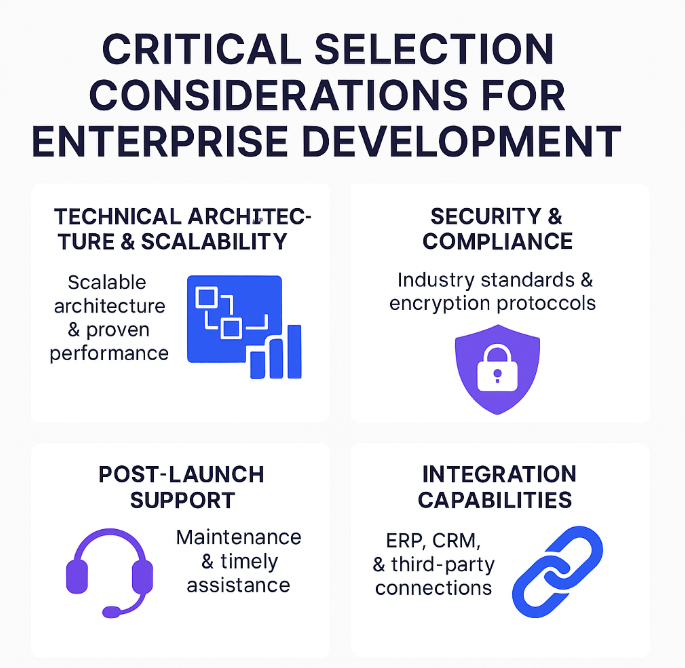
Critical Selection Considerations for Enterprise Development
Technical Architecture & Scalability
Enterprise apps must handle growth in users, features, and integrations. Look for partners who can explain their architectural approach—covering database optimization, caching, load balancing, and cloud-native design. Modern builds often use microservices or modular components so each layer can scale independently. Case studies should show real performance under load, not vague claims of “scalability.” Partners should also provide monitoring and analytics to support proactive scaling.
Security & Compliance
In regulated industries, development must align with frameworks like HIPAA, PCI DSS, SOC 2, and GDPR. Security-first methods include TLS encryption, AES-256 at rest, single sign-on, MFA, RBAC, and audit logging. Above all, always confirm that your developer partners are conducting penetration testing, code reviews, and vulnerability scans during development—not just at launch.
Post-Launch Support
Deployment is the start of the lifecycle. Clarify support terms: response times, escalation processes, and ongoing maintenance. Check whether agreements cover proactive monitoring, OS updates, and optimization versus reactive bug fixes. Long-term ownership costs hinge on this distinction.
Integration Capabilities
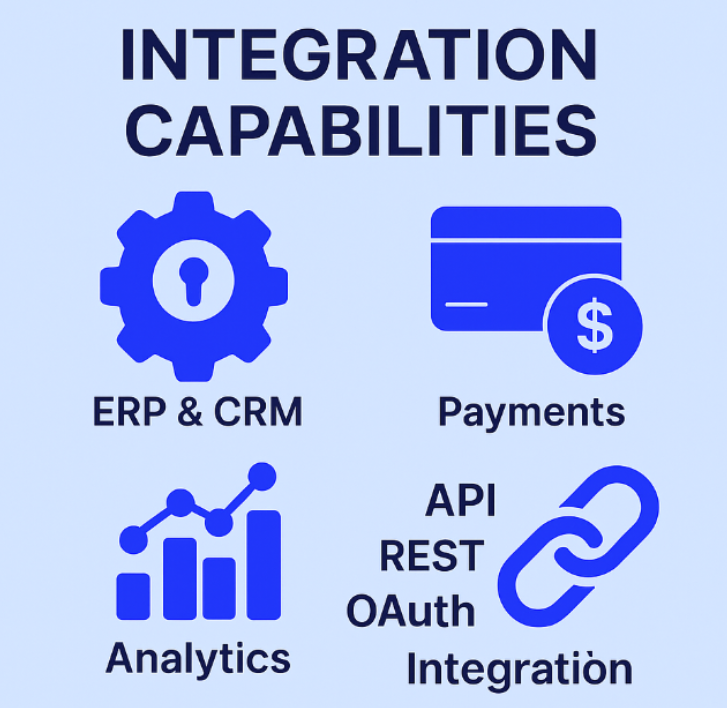
Enterprise apps must connect with ERP, CRM, payments, analytics, and third-party tools. Look for partners with proven experience in REST, GraphQL, webhooks, and OAuth 2.0. Beyond connectivity, evaluate how they handle data consistency, API downtime, and synchronization. Partners familiar with middleware or iPaaS bring valuable strategies for complex ecosystems. Case studies matter more than generic promises.
Strategic Positioning for Enterprise Application Success
Selecting an enterprise app development partner represents a strategic decision extending beyond vendor procurement. The relationship influences not merely whether your organization deploys functional software, but whether that software delivers measurable business value, scales alongside organizational growth, integrates seamlessly with existing systems, and adapts to evolving market requirements.
Schedule a complimentary 45-minute consultation with Chop Dawg to explore how a strategic development partnership—backed by 500+ successful implementations across Fortune 500 companies, government agencies, and global brands—can deliver measurable results addressing your organization’s unique requirements, compliance mandates, and long-term growth objectives.
Frequently Asked Questions
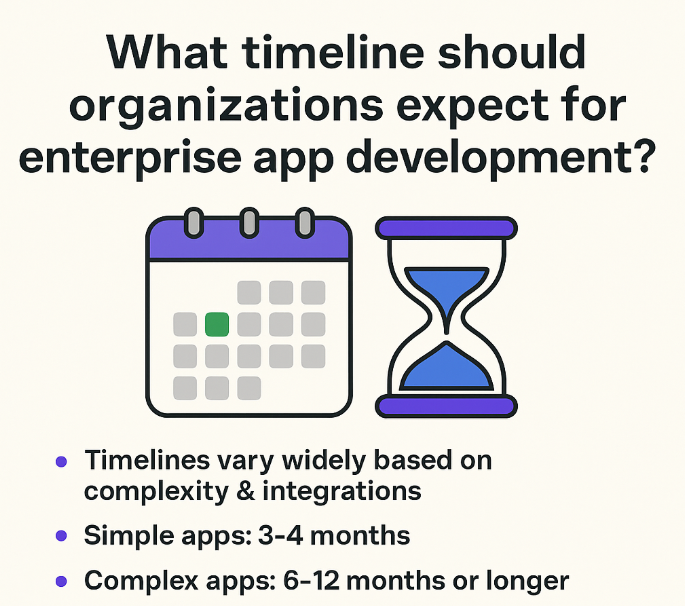
What timeline should organizations expect for enterprise app development?
Enterprise application timelines vary significantly based on complexity, integration requirements, and scope. Simple applications with limited integrations may complete in 3-4 months, while comprehensive enterprise platforms with extensive integrations, custom workflows, and complex security requirements often require 6-12 months or longer.
The development process typically begins with discovery workshops to gather stakeholder insights and assess existing systems before code development commences. Adopting agile methodologies with regular sprint demos and feedback loops allows for course correction, though enterprise projects require more comprehensive upfront planning than consumer applications to ensure alignment across multiple departments and stakeholder groups.
Phased delivery approaches—launching minimum viable products followed by iterative enhancements—often provide faster time-to-value while accommodating evolving requirements discovered during initial deployments.
Organizations should expect to invest substantial time in planning phases, integration testing with legacy systems, pilot programs with limited user groups, and coordination around organization-wide rollouts.
How do enterprise app development costs compare to consumer applications?
Enterprise applications typically command higher investments than consumer apps due to increased complexity, security requirements, integration needs, and compliance considerations. While consumer apps might range from $25,000-$150,000, enterprise implementations frequently span $100,000-$500,000 or higher for comprehensive platforms.
However, organizations should evaluate total cost of ownership including ongoing maintenance, server infrastructure, and support rather than exclusively focusing on initial development costs.
Should organizations build native apps or cross-platform applications?
This decision depends on specific requirements rather than universal rules. Native development provides maximum performance optimization, full access to platform-specific features, and optimal user experiences aligning with platform conventions.
Cross-platform approaches reduce development and maintenance costs while ensuring feature parity across iOS and Android. Organizations should evaluate whether application requirements demand platform-specific capabilities, whether maintaining separate codebases presents sustainable long-term overhead, and whether user expectations require native performance characteristics.
What differentiates enterprise app development from consumer app development?
Enterprise applications prioritize security, scalability, integration capabilities, and administrative controls over consumer-focused attributes like viral growth mechanisms or monetization features.
Enterprise implementations typically require robust authentication systems, role-based access controls with varying permissions for different user types, comprehensive audit logging for compliance purposes, data governance capabilities, and integration with existing business systems.
Development processes emphasize change management considerations, phased rollouts to minimize disruption, extensive testing across diverse organizational scenarios, and comprehensive documentation for internal IT teams and stakeholders.
Enterprise applications often serve thousands or millions of users across multiple locations and roles, handling sensitive data while complying with strict regulations—requirements fundamentally different from consumer applications that can iterate rapidly based on market feedback.
The user experience challenge differs significantly: enterprise apps must serve multiple user roles (employees, managers, administrators, external partners) with different interface requirements while maintaining intuitive design.
Unlike consumer apps optimized for app store discovery, enterprise applications focus on seamless integration into existing workflows, minimal user training requirements, and alignment with corporate IT policies including device management, authentication systems, and security protocols.
How important is industry-specific experience when selecting development partners?
Industry experience provides valuable context regarding common workflows, compliance requirements, and user expectations specific to your sector.
However, strong technical capabilities, proven delivery track record, and collaborative communication often prove more valuable than industry specialization alone. Development firms demonstrating curiosity about your business, asking insightful questions about workflows and pain points, and articulating how they’ve solved analogous problems in adjacent industries often deliver superior results compared to firms claiming industry expertise but lacking fundamental development competencies.
What metrics indicate successful enterprise app implementations?
Success metrics vary by application purpose but often include adoption rates among target user populations, task completion rates for primary workflows, system performance under normal and peak loads, reduction in manual process time, error rates requiring support intervention, and net promoter scores from internal or external users.
Organizations should establish baseline metrics before implementation and specific improvement targets guiding development priorities.
Quantifiable business outcomes—revenue increases, cost reductions, efficiency gains, productivity improvements—provide the most compelling evidence of successful implementations beyond purely technical metrics.
For example, enterprise implementations might measure improvements in inspection rates, turnaround times, employee engagement scores, or successful transaction completion rates.
Beyond usage metrics, technical health indicators matter for long-term success: application uptime percentages, average response times, successful integration transaction rates with external systems, and security incident frequency.
Organizations should implement analytics dashboards providing real-time visibility into both user behavior and system health, enabling proactive optimization rather than reactive problem-solving. Regular stakeholder reviews examining both quantitative metrics and qualitative user feedback ensure applications continue delivering value as organizational needs evolve.



 18 Mins