








 18 Min


App development for startups works best as a staged journey: validate the idea, design and test a clickable prototype, build a focused minimum viable product (MVP), launch it cleanly, and grow from real user data. What separates startups that make it is rarely raw engineering talent. It is whether the right things get built in the right order. CB Insights analyzed 431 venture-backed startups that shut down since 2023 and found 43 percent cited poor product-market fit as a primary cause of failure. Most founders do not fail because the code was bad. They fail because they built the wrong thing, too slowly, for too much money. This guide maps the full journey and shows what a strong development partner should deliver at every stage.
Key Takeaways
- App development for startups follows five stages in 2026: validation, design and prototyping, the MVP build, launch, and post-launch growth.
- A clickable non-functional prototype (NFP) typically costs $10,000 to $25,000 and lets founders test demand and pitch investors before funding a full build.
- A focused MVP runs $25,000 to $60,000 and ships in 3 to 6 months; complex products like marketplaces run $75,000 to $150,000 or more.
- AI-assisted engineering, with senior developers reviewing every change, has roughly halved typical 2020 to 2023 costs and timelines.
- Budget for life after launch: maintenance from about $2,500 per month, plus usage-based server costs that scale with traction.
Why App Development for Startups Is Its Own Discipline
Startups build under constraints established companies never face: limited runway, unproven demand, and pressure to show traction fast. App development for startups therefore optimizes for speed to evidence, scope discipline, and capital efficiency instead of exhaustive feature coverage. The goal is not the biggest possible product. It is the fastest possible answer to the question “will people use and pay for this?”
Across 500+ launches since 2009, the pattern we see is remarkably consistent. Founders who treat development as a sequence of small, de-risking decisions spend less and learn more than founders who try to build everything at once. An established company can absorb a six-figure misfire. A startup usually cannot. That is why the strongest builds move through five distinct stages, each with its own deliverable, budget, and exit criteria.
| Stage | What happens | What the right partner delivers | Typical 2026 investment | Typical timeline |
|---|---|---|---|---|
| 1. Idea and validation | Market research, competitor teardown, feature prioritization | Discovery workshops, product roadmap, honest feasibility and budget guidance | Often bundled into design and strategy work | 1 to 3 weeks |
| 2. Design and prototyping | User interface and user experience (UI/UX) design, clickable prototype | Investor-ready non-functional prototype, user testing, design system | $10,000 to $25,000 (design retainers from $5,000 per month) | 4 to 10 weeks |
| 3. MVP development | Engineering, backend, integrations, quality assurance (QA) | Focused scope, fixed monthly budget, working product on both stores | $25,000 to $60,000 focused; $75,000 to $150,000+ complex | 3 to 6 months |
| 4. Launch | Store accounts, submission, review cycles, release | Prerequisite guidance, submission management, launch-day scale planning | Included in a well-scoped development engagement | 1 to 4 weeks |
| 5. Growth | Analytics, iteration, new features, scaling | Maintenance, roadmap sprints, AI feature development | Maintenance from about $2,500 per month | Ongoing |
Stage 1: Validate Before You Build Anything
Validation means proving demand exists before serious money moves. A capable partner runs structured discovery: who the user is, what job the app does for them, which competitors already fight for that job, and which single workflow the first version must nail. This stage kills weak ideas cheaply and sharpens strong ones.
The deliverables that matter here are a prioritized feature list, a realistic budget range, and a product roadmap that separates “launch” from “later.” Be wary of any firm that skips straight to a quote without asking hard questions about your users and your revenue model. A good strategic planning process should challenge your assumptions, not flatter them. Founders who compress this stage into a single sales call usually pay for it later in change orders and rebuilt screens.
Stage 2: Design and the Non-Functional Prototype
A non-functional prototype (NFP) is a pixel-perfect, clickable model of your app built in design software rather than code. It looks and feels real on a phone, but nothing behind it is programmed. NFPs typically start around $10,000 and reach $20,000 to $25,000 for the largest design scopes, a fraction of full development cost.
For startups, the NFP has become the highest-leverage artifact in the entire journey. You can put it in front of target users to test comprehension and demand. You can put it in front of investors to raise money against something tangible. And because every screen is already decided, development quotes built on an NFP are dramatically more accurate than quotes built on a paragraph of description.
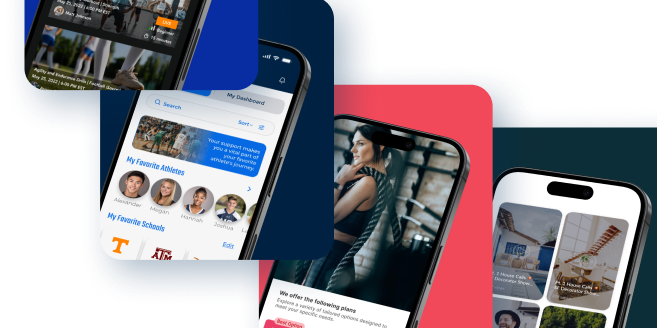
This is not theory. When Pitt defensive lineman Elliot Donald wanted to build his virtual sports university app, DLD, Donald Legacy Defined, the engagement started with a complete investor-ready prototype mapped end to end in Figma. In his words: “…this was my first time stepping into the tech world, and Chop Dawg made the entire experience easy to understand and genuinely exciting… Thanks to their guidance, I was able to secure investor funding” (Elliot Donald, Founder of Donald Legacy Defined). Prototype first, funding second, code third. That order protects founders.
Expect professional design services at this stage to include user flows, a design system, and usability testing, not just pretty screens. Design retainers in 2026 generally start around $5,000 per month.
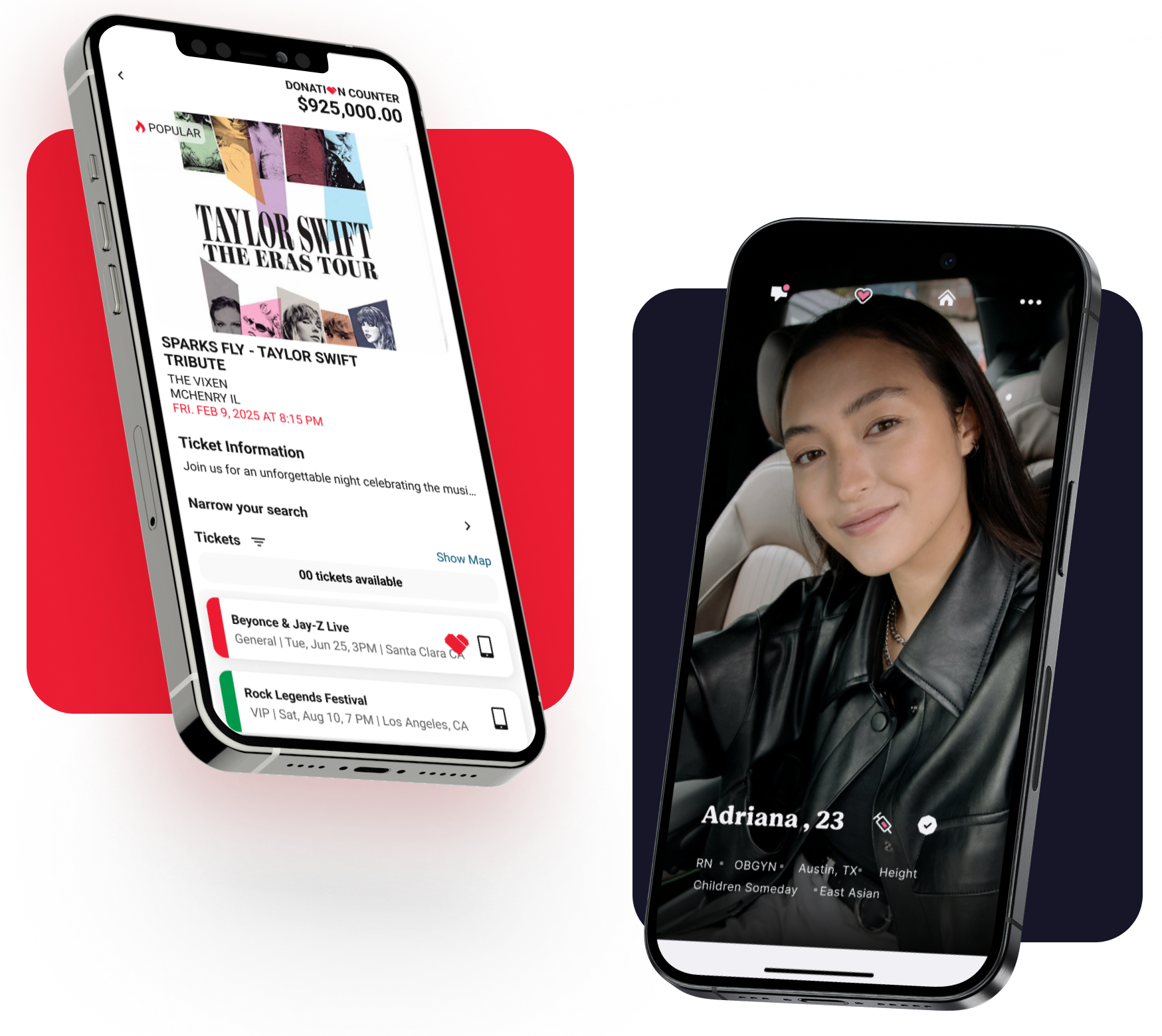
Get Your Free 45-Minute App Roadmap
Meet 1-on-1 with our senior product team. We’ll map your MVP or enterprise app and hand you a personalized plan—clear scope, a realistic timeline, and fixed monthly costs—for iOS & Android, web, tablets & wearables, and AI.
Stage 3: Build a Focused MVP, Not a Mini Enterprise Product
An MVP is the smallest version of your product that delivers the core value end to end. In 2026, a focused MVP costs $25,000 to $60,000 and takes about 3 to 6 months. A lean, single-workflow product sits near $25,000 to $30,000, while an ambitious MVP with several user types lands around $55,000 to $60,000. Complex products such as two-sided marketplaces, fintech, or heavy real-time features run $75,000 to $150,000 or more over 6 to 12+ months.
Two forces define this stage in 2026. First, cross-platform frameworks like React Native deliver native-quality iOS and Android apps from one codebase, so startups no longer pay for two parallel builds. Second, AI-assisted engineering with tools like Claude Code and Cursor, with senior engineers reviewing every change, has roughly cut in half what the same build cost between 2020 and 2023. Those savings are real, but they reward teams with strong review discipline. Unreviewed, AI-generated code is how startups end up with an app that demos well and collapses under real users.
The partner behaviors that matter most during development: a fixed monthly budget you can plan runway around, a scope document that says no to nice-to-haves, QA baked into every sprint, and full visibility into the work as it happens. A useful reference point is Park King, a two-sided parking marketplace built in React Native on Google Firebase. The MVP scope stayed tight, but the engineering under it did not cut corners: transaction-safe locking guarantees a booked spot can never be double-booked, and a parallel web dashboard lets staff moderate listings and tune pricing. Focused scope and serious engineering are not opposites. They are the combination that ships.
Stage 4: Launch Without Losing Weeks to Paperwork
Launch problems in 2026 are mostly administrative, not technical. A clean Apple App Store submission is usually reviewed within 24 to 48 hours; the real timeline risk is rejection cycles, because reviewers have gotten stricter as AI-generated submissions flood the queue. The prerequisites founders miss are the slow ones: a DUNS number takes about a month, and developer account approval takes 2 to 3 weeks.
Start those store prerequisites during development, in your own name, so your accounts and your app belong to you. Plan your submission with rejection buffer built in, and make sure your backend is provisioned for a spike, not an average day. Launch scale is a design decision, not a hope. Slay by Mari, the fitness app from influencer Mari Llewellyn, was engineered specifically to withstand launch-day traffic. It onboarded 15,000+ users within 24 hours, reached the Top 10 in both the Apple App Store and Google Play Store, and returned 100% of the founder’s investment in under 12 hours. Very few launches look like that, but every launch should be built as if it might.
Stage 5: Grow From Real User Data
The launch is the starting line. Post-launch, startups shift into a rhythm of analytics review, bug fixing, and small releases that compound retention. Plan for maintenance from about $2,500 per month, plus usage-based server bills from providers like Amazon Web Services (AWS) or Google Cloud Platform that grow with your user count.
The discipline that separates growing startups here is instrumentation. Decide the three or four numbers that define success (activation, day-30 retention, conversion to paid, referral rate) and make every release answer to them. This is also where AI features usually enter the roadmap, from personalization to intelligent search, with dedicated AI feature work typically starting around $10,000 per month. A partner offering structured post-launch support should also carry your app through operating system updates, security patches, and store policy changes without drama.
How Chop Dawg Partners With Startups
Chop Dawg has been a startup-first product agency since 2009, and the model is built around the word partner rather than vendor. Our American team owns leadership, product and project management, senior development, senior design, senior QA, and marketing, backed by our in-house Brazilian design team and our in-house development, QA, and project management teams in Pakistan and India. Everyone is a Chop Dawg employee assigned directly to your project, fluent in English and working US hours. That structure exists to crush the two fears founders bring to this industry: the lone American salesperson quietly fronting hidden offshore developers with zero accountability, and the faceless overseas shop with no US business norms and no time-zone overlap. Partners choose the fully American team (the route for government and regulated work) or the US-plus-offshore blend most select, with the same quality and timelines for less.
The startup journey described in this guide is literally our proven process: strategy, prototype, focused MVP, launch, then growth, on fixed monthly budgets with transparent pricing and precise timelines. You own all code and intellectual property (IP) from day one, you see everything in Figma, GitHub, and Jira around the clock, and you can end anytime. It is why founders like Elliot Donald raised on their prototypes, why Slay by Mari earned back its budget in hours, and why organizations that have trusted Chop Dawg range from first-time founders to NASA, Hilton, and Currently, the SparkCharge product that went on to land a $1M+ Shark Tank investment.
Frequently Asked Questions
How much does app development cost for a startup in 2026?
Most startups invest $25,000 to $60,000 for a focused MVP, while complex products such as marketplaces and fintech platforms run $75,000 to $150,000 or more. A clickable non-functional prototype starts around $10,000. AI-assisted engineering has roughly halved what comparable builds cost between 2020 and 2023.
How long does it take a startup to build and launch an app?
A focused MVP typically takes 3 to 6 months from kickoff to the app stores, while complex products run 6 to 12 months or longer. Add 3 to 4 weeks up front for store prerequisites like a DUNS number and developer account approval, which founders often start too late.
Should a startup build a prototype or go straight to an MVP?
Build the prototype first in most cases. A $10,000 to $25,000 clickable prototype lets you test demand, pitch investors, and lock scope before committing $25,000 to $60,000 or more to development. Skipping it makes sense only when the concept is trivially simple or already validated elsewhere.
What is a non-functional prototype and why do investors respond to it?
A non-functional prototype is a clickable, pixel-perfect model of your app created in design software with no code behind it. Investors respond because it converts an abstract pitch into a product they can hold, and it proves the founder can scope, prioritize, and execute before asking for capital.
How do I choose the right app development partner for my startup?
Look for verified reviews across multiple directories, launched apps you can download, references from founders at your stage, and clarity about who actually does the work. Insist on fixed budgets, IP ownership from day one, and a process that starts with validation and design rather than a rushed quote.
Do I need a technical co-founder to build a startup app?
No. Plenty of successful apps launch through agency partnerships, with founders owning all code and IP from day one. A strong partner educates you on every decision, so you can raise, launch, and later hire an internal team from a position of knowledge rather than dependence.
Map Your Startup’s Build Before You Spend a Dollar
Validate, prototype, build focused, launch clean, grow from data: that is app development for startups in 2026, and every stage gets easier with a partner who has run the journey hundreds of times. Chop Dawg has been doing exactly that since 2009. Now in our 18th year, we have launched 500+ products used by more than 1 billion people, hold a 92% repeat-partner rate, are an Inc. 5000 honoree, and carry 300+ five-star reviews across trusted directories like Clutch, GoodFirms, G2, Google, and TopDevelopers. Whether you are a first-time founder with an idea on a napkin or an established company spinning up a new venture, we would love to talk it through with you. Book your free 45-minute consultation and get honest, actionable guidance, whether or not you ever hire us.


 15 Min