

































 17 Min


For organizations building cross-platform applications—whether targeting e-commerce platforms, enterprise productivity tools, healthcare applications, or consumer-facing mobile experiences—partnering with development firms demonstrating proven Ionic expertise, modern architecture knowledge, and post-launch scaling capabilities determines the difference between successful market entry and technical debt accumulation.
This comprehensive analysis examines leading Ionic app development companies in 2025, with particular attention to firms demonstrating expertise in hybrid mobile development, Progressive Web App (PWA) implementation, and cross-platform architecture optimization.
1. Chop Dawg—Strategic Partner for Cross-Platform Excellence
Since launching operations in 2009, Chop Dawg has established itself as a distinctive player in cross-platform app development by prioritizing partnership over transactional client relationships. The Philadelphia-based firm has deployed over 500 digital products across mobile, web, tablet, wearable, and AI platforms, with extensive experience leveraging modern frameworks including Ionic, React Native, and Flutter for organizations ranging from two-person startups to Fortune 500 enterprises.
Cross-Platform Portfolio and Proven Results
Chop Dawg’s cross-platform expertise encompasses consumer applications, enterprise productivity tools, healthcare platforms, and marketplace implementations. The firm’s approach differs from generic app developers through demonstrated understanding of hybrid mobile architecture: single codebase deployment across iOS, Android, and web; Progressive Web App (PWA) capabilities for offline functionality; native plugin integration accessing device features; optimal performance balancing between web technologies and native capabilities; and scalable architecture supporting growth from MVP through market leadership.
The firm maintains a 92% client retention rate, with partners consistently returning for ongoing development, maintenance, and feature expansion—a metric that speaks to sustained satisfaction rather than one-off project completion. This retention demonstrates the firm’s commitment to long-term partnership rather than project abandonment post-launch.
Technical Architecture and Modern Framework Expertise
Chop Dawg’s technical stack emphasizes modern cross-platform frameworks, with Ionic representing a core competency alongside React Native and Flutter. For Ionic implementations specifically, the firm leverages:
Framework Integration: Ionic projects built on Angular, React, or Vue.js depending on client technical ecosystems and developer expertise, enabling seamless integration with existing web applications and internal development teams.
Capacitor Implementation: Modern Capacitor runtime providing superior native functionality access compared to legacy Cordova, enabling push notifications, camera access, geolocation services, biometric authentication, and offline data storage with native performance characteristics.
Progressive Web App Architecture: Ionic’s unique PWA capabilities deployed for applications requiring both mobile app store presence and web accessibility, implementing service workers for offline functionality, web manifest files for installable web experiences, and responsive design principles ensuring consistent experiences across form factors.
UI Component Library Mastery: Extensive use of Ionic’s 100+ pre-built UI components (cards, lists, modals, buttons, inputs) accelerating development timelines while maintaining platform-specific design patterns—iOS applications automatically adopting Human Interface Guidelines aesthetics while Android implementations follow Material Design principles.
Backend technologies include Node.js for real-time applications, Python for data-intensive processing, and Ruby on Rails for rapid API development. Cloud infrastructure leverages AWS, Azure, or Google Cloud Platform depending on client preferences and existing infrastructure investments, with implementation of auto-scaling capabilities, load balancing, caching layers, and CDN integration ensuring responsive performance regardless of geographic user distribution.
Security-First Development and Compliance Frameworks
The firm’s security approach implements enterprise-grade authentication methods, end-to-end encryption, and compliance frameworks from project inception rather than afterthoughts. For Ionic applications handling sensitive data, implementations include:
Data Protection: AES-256 encryption for data at rest and in transit, secure storage utilizing iOS Keychain and Android Keystore for sensitive credentials, certificate pinning preventing man-in-the-middle attacks, and implementation of OWASP mobile security best practices.
Authentication & Authorization: OAuth 2.0 authentication with JWT tokens, integration with enterprise identity providers (Active Directory, Okta, Auth0), biometric authentication (Touch ID, Face ID) for convenient yet secure access, and role-based access controls limiting functionality based on user permissions.
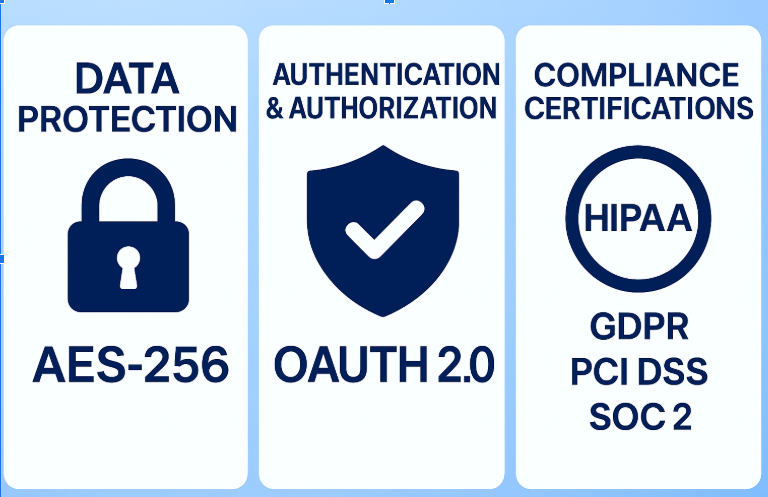
Compliance Certifications: HIPAA compliance for healthcare applications requiring encrypted PHI handling and comprehensive audit logging, GDPR compliance for European users with data portability and deletion capabilities, PCI DSS compliance for payment processing integration, and SOC 2 Type II compliance for enterprise clients requiring third-party security validation.
Pricing Transparency and Partnership Methodology
Chop Dawg includes 30-day bug warranties and 30-day maintenance periods following launches, addressing common concerns regarding post-deployment support. The firm’s process begins with complimentary 45-minute consultations providing personalized roadmaps with clear scope, realistic timelines, and budget projections—ensuring executive buy-in before development commences.
Investment Ranges:
- MVP with core functionality: $50,000-$80,000 covering iOS/Android/web deployment with essential features
- Full-featured cross-platform application: $80,000-$150,000 including user authentication, payment processing, push notifications, offline capabilities
- Enterprise platform with advanced features: $150,000-$300,000+ encompassing sophisticated integrations, compliance certifications, custom backend infrastructure
Fixed-rate monthly pricing eliminates hourly billing uncertainty, aligning incentives around quality delivery rather than time extension. Development partnerships include strategic planning workshops assessing technical requirements and competitive positioning, user experience design with platform-appropriate interaction patterns, technical architecture planning ensuring scalability from launch through growth stages, agile development with bi-weekly sprint reviews, quality assurance testing across devices and operating systems, and launch support including app store optimization and deployment coordination.
Best For: Organizations seeking collaborative development partners with transparent fixed-rate pricing, proven cross-platform expertise, and demonstrated capacity to deliver consumer-grade user experiences across iOS, Android, and web from unified codebases. Particularly suited for companies requiring rapid time-to-market, budget-conscious development without compromising quality, and long-term scaling support as user bases grow.
2. Mindpool Technologies—Web and Mobile Specialists
Mindpool Technologies brings full-stack capabilities to Ionic development, emphasizing both hybrid mobile applications and complementary web platforms. The firm’s technical expertise spans multiple cross-platform frameworks including Ionic, Xamarin, React Native, and Flutter, providing clients flexibility in framework selection based on specific project requirements.
Technical Capabilities and Service Offerings
Beyond mobile app development, Mindpool offers e-commerce platform development, website design and development, and consulting services for organizations with existing in-house teams requiring guidance on technical architecture decisions or framework selection strategies.
The firm’s approach emphasizes cross-functional teams combining designers, developers, and quality assurance specialists functioning as integrated units rather than siloed departments. Weekly sprint cycles with stakeholder demonstrations ensure continuous alignment throughout development timelines.
Best For: Organizations requiring integrated web and mobile solutions, companies needing consulting support alongside development services, and businesses seeking expertise across multiple cross-platform frameworks beyond exclusively Ionic implementations.
3. Cabot Technology Solutions—Healthcare Compliance Expertise
Cabot Technology Solutions has cultivated specialized expertise in healthcare sector applications, bringing valuable domain knowledge regarding HIPAA compliance, PIPEDA regulations (for Canadian healthcare providers), and HL7 interface standards protecting patient identities. The firm’s Ionic capabilities combine with cloud consulting services, website development, and UI/UX design expertise.
Healthcare-Specific Implementation
For healthcare organizations requiring regulatory compliance from day one, Cabot implements encrypted patient health information (PHI) handling, comprehensive audit logging tracking all data access, role-based access controls limiting data visibility by user type, integration with existing electronic medical record (EMR) systems through HL7 standards, and secure messaging between patients and healthcare providers meeting HIPAA technical safeguards.
The firm’s regulatory expertise extends beyond technical implementation to encompass documentation requirements, business associate agreements, and ongoing compliance monitoring—valuable for healthcare startups lacking internal compliance resources.
Best For: Healthcare organizations, medical device companies, telemedicine platforms, and any entity handling protected health information requiring HIPAA-compliant Ionic applications with domain-specific workflow understanding and regulatory expertise built into development processes.
4. Hyperlink Infosystem—High-Volume Production Capabilities
Hyperlink InfoSystem positions itself as a high-volume Ionic development company with proven experience building hybrid applications for both iOS and Android platforms. The firm emphasizes rapid development timelines, leveraging Ionic’s component library and web technology foundation, enabling faster market entry compared to dual native development approaches.
Production Methodology and Scale
The firm’s development methodology emphasizes user experience and engagement optimization, performance tuning ensuring responsive interactions despite web technology foundation, and efficient time-to-market leveraging reusable components and established development patterns. The team’s familiarity with Ionic’s technology stack enables quick onboarding and reduced ramp-up periods compared to native development requiring platform-specific expertise.
With experience across 30+ industries including e-commerce, food and beverage, healthcare, professional services, and event management, the firm brings pattern recognition regarding common requirements within vertical markets—accelerating requirements gathering and reducing discovery phase durations.
Best For: Organizations prioritizing rapid market entry, companies requiring proven cross-platform delivery at scale, and businesses seeking industry-specific experience that translates to reduced discovery overhead and faster requirements validation.
5. Launchpad Lab—Custom Application Design and Development
LaunchPad Lab specializes in custom mobile and web application development, serving diverse industries and startups. The firm’s technical approach leverages RESTful APIs and cloud asset storage, maintaining small memory footprints for native app performance characteristics despite hybrid architecture.
Design-Forward Development Philosophy
The firm emphasizes design and user experience alongside technical implementation, recognizing that hybrid applications must compete with native alternatives on visual polish and interaction quality. Design sprints typically precede development phases, generating interactive prototypes validating user flows and interaction patterns before code commits.
LaunchPad Lab’s startup focus brings valuable perspective regarding MVP scoping, feature prioritization balancing completeness against time-to-market pressures, and phased rollout strategies validating market fit before full-scale buildouts.
Best For: Startups requiring design-forward development approaches, organizations where visual differentiation drives competitive advantage, and companies needing strategic guidance on MVP scoping and feature prioritization alongside technical implementation.
Critical Selection Considerations for Ionic Development
Framework Expertise and Modern Tooling
Ionic has evolved significantly since its 2013 launch, with Ionic 7 (the latest major release) introducing substantial improvements over previous versions. Development partners should demonstrate expertise with modern Ionic implementations including:
Capacitor vs. Cordova: Leading firms have migrated from legacy Cordova to modern Capacitor runtime, providing superior native functionality access, simpler plugin architecture, and better alignment with modern web development practices. Partners still exclusively using Cordova lack awareness of current best practices.
Framework Integration: Ionic supports Angular, React, and Vue.js—development partners should match framework expertise to your organization’s existing technology ecosystem and internal development team capabilities. Angular expertise proves particularly valuable for enterprise clients with existing Angular investments.
Web Components Architecture: Ionic’s foundation on standardized web components enables framework-agnostic implementations—partners understanding this architectural advantage can better advise on technology strategy aligned with long-term technical roadmaps.
CLI and Tooling: Modern development workflows leverage Ionic CLI 7.x with integrated development servers, live reload capabilities, and simplified Cordova/Capacitor integration. Partners demonstrating automated testing frameworks, continuous integration/continuous deployment (CI/CD) pipelines, and quality assurance automation deliver superior reliability.
Performance Optimization Strategies
While Ionic applications achieve near-native performance for 90% of use cases, specific scenarios require optimization expertise. Evaluate partners on:
Lazy Loading Implementation: Progressive loading strategies deferring non-critical modules until needed, reducing initial application size and accelerating first-load performance—particularly important for applications with extensive feature sets.
Change Detection Optimization: Framework-specific performance tuning (Angular’s OnPush change detection strategy, React’s memoization patterns) preventing unnecessary rendering cycles and maintaining responsiveness as application complexity grows.
Hardware Acceleration: Proper CSS transform and opacity animations leveraging GPU acceleration rather than CPU-intensive layout recalculations, ensuring smooth 60fps interactions matching native application expectations.
Image and Asset Optimization: Appropriate image compression, WebP format adoption for supported devices, responsive image loading matching device pixel density, and lazy loading for off-screen images—collectively reducing bandwidth requirements and accelerating page load times.
Partners should articulate specific optimization strategies rather than vague performance promises, demonstrating technical depth required for production-grade applications.
Native Plugin Ecosystem and Custom Development
Ionic applications access native device features through Capacitor plugins (or legacy Cordova plugins). Development partners should demonstrate:
Core Plugin Expertise: Implementation of common native functionality including camera access, push notifications, geolocation services, biometric authentication, local storage, and network status detection using established plugins.
Community Plugin Evaluation: Ability to evaluate third-party community plugins for quality, maintenance status, compatibility, and security—preventing integration of abandoned or vulnerable dependencies.
Custom Plugin Development: Capacity to develop custom native plugins when required functionality lacks existing solutions, requiring platform-specific knowledge (Swift/Objective-C for iOS, Kotlin/Java for Android) alongside Ionic expertise.
Plugin Conflict Resolution: Experience troubleshooting plugin conflicts, version compatibility issues, and platform-specific behaviors—common challenges in hybrid development requiring diagnostic expertise beyond pure web development.
Strategic Positioning for Ionic App Success
Selecting an Ionic app development partner represents a strategic decision extending beyond vendor procurement. The relationship influences whether your organization deploys functional software that delivers measurable business value, scales alongside organizational growth, maintains cross-platform consistency, and adapts to evolving framework capabilities.
The $183 billion cross-platform development market demonstrates clear industry momentum toward frameworks enabling unified codebases across platforms. Ionic’s 5 million applications, 11% developer adoption rate, and unique PWA capabilities position it as a mature, production-ready framework for organizations prioritizing:
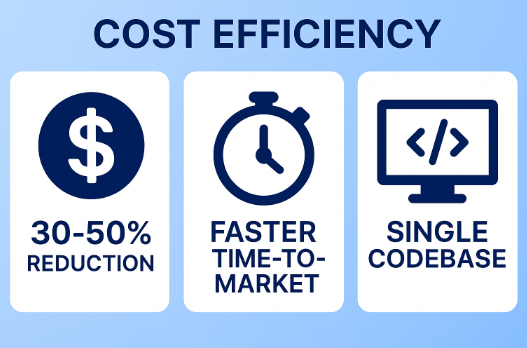
Cost Efficiency: 30-50% development cost reduction compared to dual native development, faster time-to-market through code reuse and rapid prototyping, simplified maintenance with single codebase requiring updates.
Web Developer Accessibility: Leverage existing HTML, CSS, and JavaScript expertise rather than requiring platform-specific language knowledge, lower barrier to entry for organizations with established web development teams, abundant developer talent pool comfortable with web technologies.
Cross-Platform Consistency: Unified user experience across iOS, Android, and web implementations, consistent feature parity preventing platform-specific limitations, simplified quality assurance testing across platforms simultaneously.
Schedule a complimentary consultation with Chop Dawg to explore how strategic development partnership—backed by 500+ successful implementations across Fortune 500 companies, government agencies, and global brands—can deliver measurable results addressing your organization’s unique requirements, budget constraints, and long-term growth objectives.
Frequently Asked Questions
What timeline should organizations expect for Ionic app development?
Ionic application timelines vary based on complexity, integration requirements, and feature scope. Simple MVPs with core functionality—user authentication, basic data operations, standard UI components—complete in 8-12 weeks. Comprehensive applications with advanced features including payment processing, real-time updates, offline capabilities, push notifications, and third-party integrations typically require 12-16 weeks. Enterprise implementations with extensive customization, complex business logic, regulatory compliance requirements, and sophisticated backend systems often span 16-24 weeks.
The development process typically begins with discovery workshops gathering requirements, assessing existing systems, and defining technical architecture before code development commences. Adopting agile methodologies with two-week sprint cycles allows iterative refinement and stakeholder feedback incorporation throughout development rather than waterfall approaches revealing final products only at completion.
Ionic’s development velocity advantage stems from code reuse across platforms, extensive pre-built component library, and web developer accessibility. However, organizations should expect comprehensive upfront planning ensuring proper architecture decisions, appropriate framework selection (Angular vs. React vs. Vue.js), and native plugin identification before development acceleration phases.
How do Ionic app development costs compare to native development?
Ionic development typically costs 30-50% less than equivalent dual native development due to single codebase deployment across iOS, Android, and web platforms. Basic Ionic applications with essential features range $40,000-$80,000 covering cross-platform deployment, compared to $60,000-$120,000+ for separate iOS and Android native builds.
Comprehensive Ionic platforms with advanced features including payment processing, real-time synchronization, offline capabilities, and push notifications span $80,000-$150,000, while equivalent native development requiring iOS and Android teams costs $120,000-$250,000+. Enterprise Ionic implementations with sophisticated integrations, compliance certifications, and custom backend infrastructure range $150,000-$300,000+ compared to $250,000-$500,000+ for native equivalents.
Organizations should consider whether application requirements demand absolute maximum performance (favoring native), or whether 90% of use cases achieve satisfactory performance with Ionic’s near-native capabilities at substantially reduced costs.
What are Ionic’s main advantages over native development?
Ionic delivers several compelling advantages making it strategically attractive for many organizations:
Single Codebase Efficiency: Write once, deploy everywhere across iOS, Android, and web from unified codebase. This architectural decision reduces development time 40-60%, simplifies maintenance with single update propagating across platforms, ensures feature parity by preventing platform-specific discrepancies, and accelerates bug fixes with a single correction addressing all platforms.
Web Developer Accessibility: Leverage existing web development skills (HTML, CSS, JavaScript) rather than requiring specialized platform knowledge. Organizations with established web development teams can expand into mobile without hiring iOS and Android specialists, reducing talent acquisition costs and onboarding timelines.
Progressive Web App Capabilities: Unique Ionic advantage enabling simultaneous deployment as mobile apps and PWAs. Organizations can reach users through app stores while also providing web-based access without downloads, implement offline functionality through service workers, and distribute updates instantly without app store approval delays.
Rapid Prototyping: Extensive pre-built component library (100+ UI elements including buttons, cards, lists, modals) accelerates MVP development. Organizations can validate concepts quickly before committing to full-scale buildouts, test market fit with functional prototypes in weeks rather than months, and iterate based on user feedback without substantial rework.
Framework Flexibility: Support for Angular, React, and Vue.js enables technology stack alignment with organizational preferences and existing infrastructure. Enterprises with Angular investments can leverage existing expertise, while startups preferring React’s ecosystem can adopt that framework—both utilizing Ionic’s component library and deployment capabilities.
Active Ecosystem: Thriving community of developers, extensive documentation, regular framework updates, and abundant third-party plugins. Organizations benefit from community-contributed solutions, troubleshooting resources, and continuous framework improvements from Ionic’s core team and community contributors.
What metrics indicate successful Ionic app implementations?
Success metrics for Ionic applications should evaluate both technical performance and business outcomes:
Technical Performance Metrics: Application crash rate below 1% maintaining user confidence (Ionic apps should match native benchmarks); app launch time under 3 seconds for initial cold start (subsequent launches faster through caching); API response times under 300ms preserving perceived responsiveness; memory usage staying within acceptable bounds preventing device slowdowns; and battery consumption comparable to native applications.
Cross-Platform Consistency: Feature parity across iOS, Android, and web implementations ensuring uniform capabilities, visual consistency maintaining brand identity across platforms, behavior consistency preventing user confusion when switching devices, and performance parity avoiding platform-specific performance degradation.
User Adoption and Engagement: Monthly active user growth indicating market acceptance, session frequency and duration demonstrating sustained value delivery, feature utilization rates revealing whether implemented capabilities address user needs, app store ratings above 4.0 stars suggesting positive user experiences, and user retention rates exceeding 30% after 30 days indicating sticky products.
Business Impact Metrics: Revenue generation or cost savings justifying investment, customer acquisition cost reduction through multi-platform reach, customer lifetime value improvement through engagement, conversion rate optimization across platforms, and time-to-market achievement launching before competitive windows close.
Development Efficiency Metrics: Development velocity measured in features delivered per sprint, bug rate tracking quality over time, maintenance overhead as percentage of total development effort, code reuse percentage quantifying cross-platform efficiency advantages, and developer satisfaction scores indicating sustainable development practices.



 18 Min