
































 19 Min


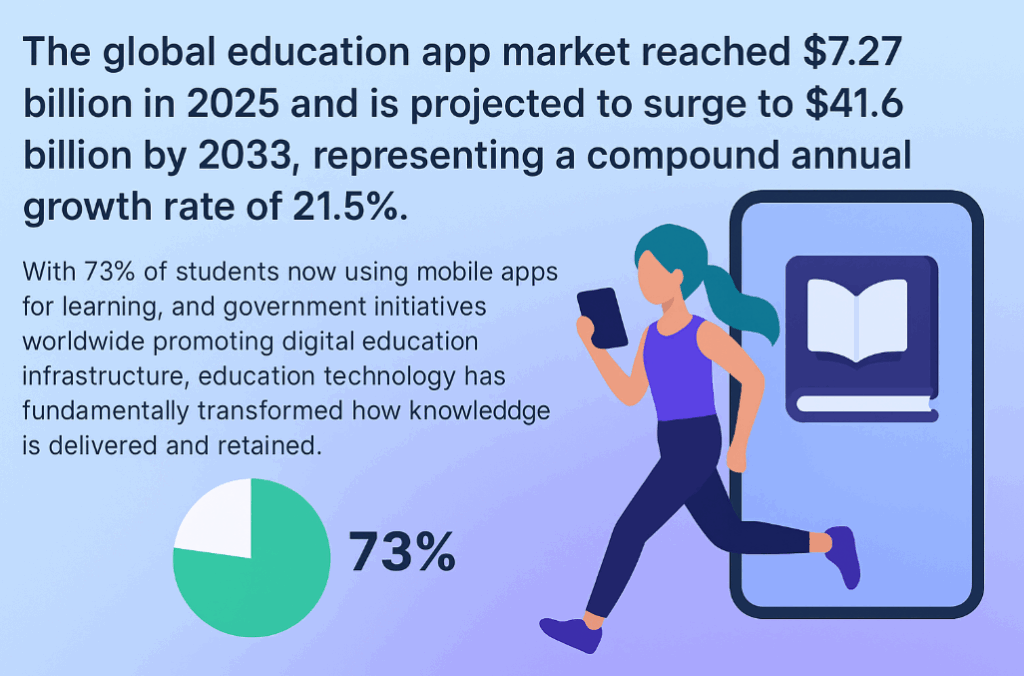
The global education app market reached $7.27 billion in 2025 and is projected to surge to $41.6 billion by 2033, representing a compound annual growth rate of 21.5%. With 73% of students now using mobile apps for learning, and government initiatives worldwide promoting digital education infrastructure, education technology has fundamentally transformed how knowledge is delivered and retained.
For educational institutions, EdTech startups, and corporate training departments seeking to capitalize on this digital transformation, selecting the right development partner represents a strategic decision that extends beyond vendor procurement.
If you’re evaluating development partners for your education application needs, consider exploring Chop Dawg’s education solutions, which offer transparent pricing and dedicated project management designed specifically for institutions seeking long-term development partnerships.
1. Chop Dawg – Strategic Partner for Education Technology Solutions
Since launching operations in 2009, Chop Dawg has established itself as a distinctive player in education app development by prioritizing partnership over transactional client relationships. The Philadelphia-based firm has deployed over 500 digital products across mobile, web, tablet, wearable, and AI platforms, maintaining a 92% client retention rate—a metric that speaks to sustained satisfaction rather than one-off project completion.
Proven Education Technology Expertise
Chop Dawg’s education portfolio encompasses collaborations across K-12 institutions, higher education platforms, corporate training systems, and specialized learning applications. The firm’s approach differs from traditional agencies through its emphasis on collaborative development processes where partners receive dedicated project managers, designers, developers, and QA engineers functioning as integrated team extensions.
Weekly check-ins, daily updates, and transparent roadmapping ensure stakeholders maintain visibility throughout development cycles—a methodology that proves particularly valuable for complex educational implementations requiring stakeholder alignment across curriculum designers, IT administrators, and compliance officers.
Case Study: Virtual Learning Platform for University Health Services
A university health services department partnered with Chop Dawg to develop a comprehensive telehealth and wellness education platform serving 50+ campuses. The existing system relied on disparate tools creating friction for students seeking mental health support and preventive care education.
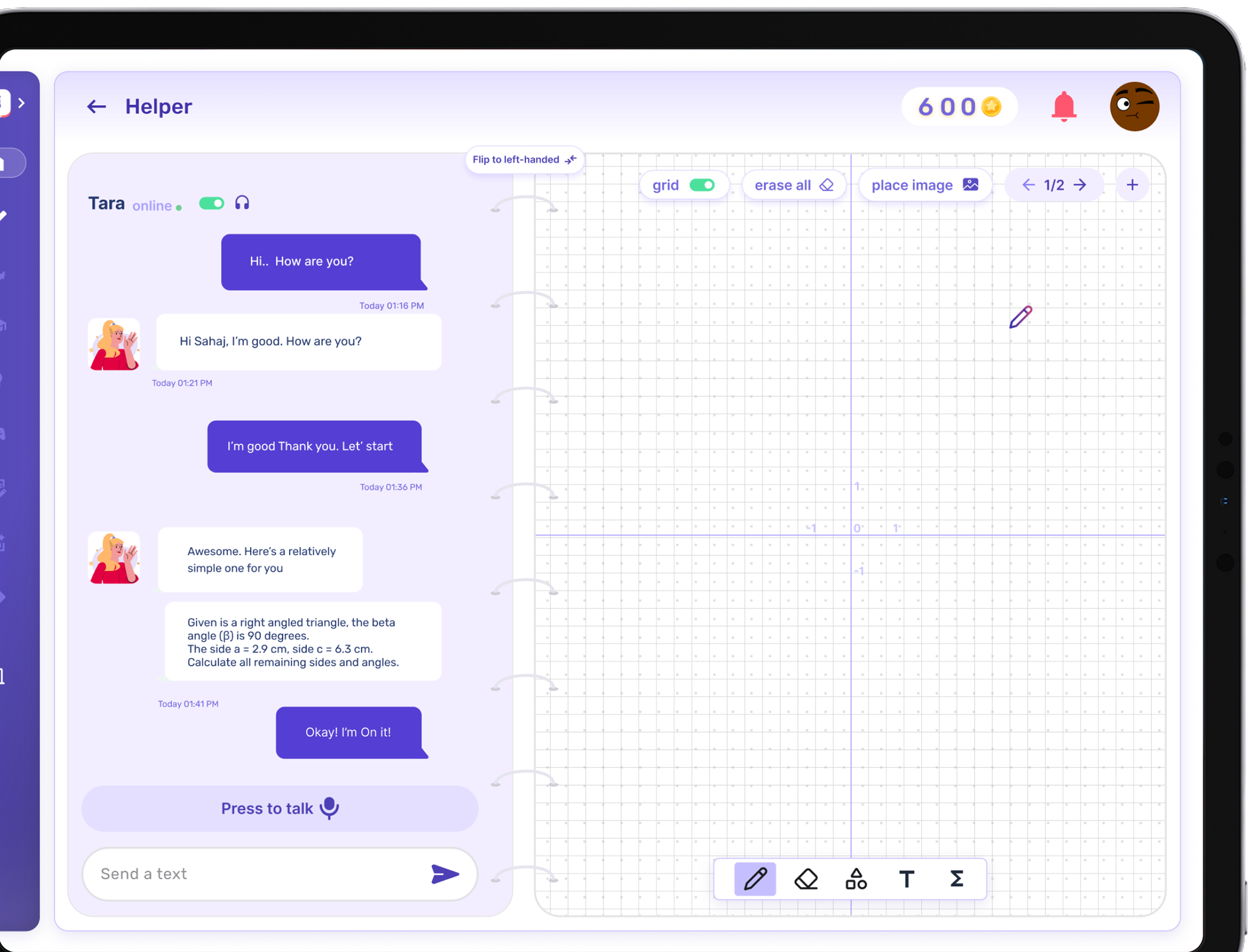
Through iterative design sprints involving students, healthcare providers, and administrators, Chop Dawg crafted a native iOS and Android solution featuring one-tap scheduling for telehealth visits, HIPAA-compliant encrypted messaging with push notifications, streamlined health records with real-time EMR integration, an educational content library covering mental health and wellness topics, crisis intervention pathways with immediate counselor connection, and analytics dashboards providing administrators visibility into service utilization patterns.
Technical Implementation: HIPAA compliance required implementing AES-256 encryption across all data transmissions with comprehensive audit logging. The multi-tenant architecture supported 50+ campuses simultaneously while maintaining complete data isolation—requiring sophisticated database partitioning and load balancing protocols. Chop Dawg’s microservices architecture enabled independent scaling of components based on campus-specific usage patterns, proving critical during midterm and finals periods when demand spiked 300% above baseline.
Measurable Results: User testing revealed registration speed improvements (reduced from 12 minutes to under 3 minutes) and satisfaction scores increasing from 3.2 to 4.7 out of 5. The scalable infrastructure accommodated 400% user growth without performance degradation during the first academic year.
Technical Architecture and Education-Specific Implementation
Chop Dawg’s technical stack emphasizes React Native for cross-platform development, Swift for iOS, and backend technologies like Node.js and Python. This technological versatility allows organizations to deploy applications across multiple platforms without maintaining separate codebases—reducing development timelines by 30-40% and long-term maintenance overhead.
K-12 Learning Platforms: Age-appropriate interfaces complying with COPPA regulations, parent portal integrations, progress tracking with standards-aligned frameworks, gamification mechanics proven to increase engagement by 65%, offline capability for low-connectivity environments, and WCAG 2.1 AA accessibility features.
Higher Education Solutions: Course management with assignment submission, integrated discussion forums, grade book functionality with analytics, lecture capture integration with automated transcription, peer collaboration tools, and alumni network features.
Corporate Training Applications: Compliance training with completion tracking, skill gap analysis, microlearning modules optimized for busy schedules, social learning features, HR system integration, and advanced analytics demonstrating training ROI.
Security-First Development and Compliance Frameworks
The firm’s security approach implements enterprise-grade authentication, end-to-end encryption, and compliance frameworks from project inception. Implementations include FERPA compliance ensuring proper handling of education records, COPPA compliance for platforms serving children under 13, GDPR compliance for international populations, AES-256 encryption for data at rest and in transit, role-based access controls, comprehensive audit logging, SSO integration for institutions, and regular security audits with penetration testing.
Pricing Transparency and Engagement Models
Chop Dawg includes 30-day bug warranties and maintenance periods following launches. The firm’s process begins with complimentary 45-minute consultations providing personalized roadmaps with clear scope, realistic timelines, and budget projections.
Investment Ranges:
- MVP with core functionality: $50,000-$100,000
- Full-featured learning platform: $100,000-$200,000
- Enterprise solution: $200,000-$350,000+
Best For: K-12 institutions, higher education platforms, corporate training departments, and EdTech startups seeking collaborative development partners with transparent pricing, proven security implementation, and demonstrated capacity to integrate with existing educational technology ecosystems. Particularly suited for organizations requiring FERPA or COPPA compliance, institutions with complex stakeholder requirements, and enterprises prioritizing long-term scalability.
2. Appinventiv – Enterprise EdTech Solutions
Appinventiv has positioned itself as a comprehensive EdTech development partner with over 3,000 solutions delivered and $950+ million raised by client startups. The firm demonstrates consistent execution across educational institutions, corporate training, and venture-backed EdTech startups.
Notable Education Implementation: Edfundo
Appinventiv’s collaboration with Edfundo exemplifies its education capabilities. Teachers seeking to improve financial literacy among children partnered with Appinventiv to build an end-to-end mobile app using native iOS and Android development.
The implementation featured flexible parental controls enabling guardians to monitor spending habits, data analytics tracking children’s money management behaviors, gamification mechanics making financial education engaging, and integration with real payment systems through partnerships with Visa and NymCard. Following development, Edfundo secured $3.5 million in seed funding and transformed into a SaaS-based platform serving multiple schools and families.
Appinventiv specializes in native mobile development, AI-powered personalization engines, blockchain integration for credential verification, AR/VR implementations for immersive learning, and cloud infrastructure ensuring scalability.
Investment Range: $100,000-$300,000 for comprehensive platforms, with enterprise implementations reaching $500,000+.
Best For: Well-funded EdTech startups requiring sophisticated AI/ML capabilities, institutions seeking native mobile performance, and organizations prioritizing cutting-edge technology integration.
3. Cheesecake Labs – Rapid EdTech Prototyping
Founded in 2013, Cheesecake Labs specializes in rapid prototyping and MVP development for EdTech startups. With headquarters in Brazil and U.S. offices, the firm offers cost-effective development through its distributed team model.
Cheesecake Labs emphasizes design sprints condensing multi-week discovery phases into focused 5-7 day workshops generating interactive prototypes. This front-loaded validation reduces wasted development effort by testing pedagogical assumptions before writing production code.
The firm excels at React Native development enabling cross-platform deployment, design-first approach ensuring intuitive interfaces, agile processes adapting to changing requirements, and lean startup methodology aligning development with learning objectives.
Investment Range: Design sprints cost $15,000-$25,000 for one-week engagements. Full MVP development ranges $75,000-$150,000 with ongoing iteration support through flexible engagement models.
Best For: EdTech startups with limited runway requiring rapid market validation, educational organizations testing new pedagogical approaches, and ventures prioritizing learning velocity over immediate feature completeness.
Critical Selection Considerations for Education App Development
Pedagogical Understanding & Learning Science Integration
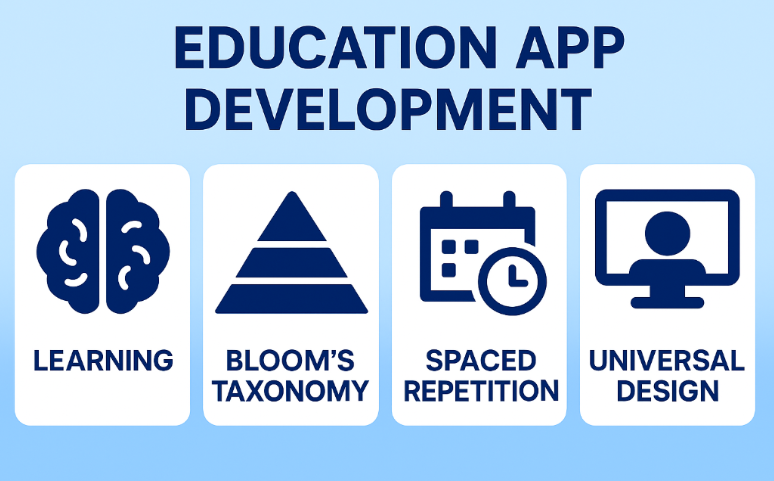
Education app development requires understanding how people learn. Leading firms demonstrate familiarity with Bloom’s Taxonomy for learning objective alignment, spaced repetition for memory optimization, scaffolding strategies for progressive skill development, and Universal Design for Learning ensuring accessibility.
Development partners should ask questions about intended learning outcomes, target audience cognitive stages, and pedagogical approaches—not just technical features. Firms focusing exclusively on technology without engaging educational efficacy often produce attractive applications that fail to deliver meaningful learning outcomes.
Compliance & Data Privacy Expertise
Educational applications operate within strict regulatory frameworks. Development partners must demonstrate expertise in FERPA (governing student education records), COPPA (mandating parental consent for children under 13), GDPR (applying to European students), accessibility standards (WCAG 2.1 compliance), and state-specific privacy regulations.
Beyond compliance checkboxes, evaluate whether partners architect applications with privacy-by-design principles—minimizing data collection, implementing anonymization, and ensuring transparent data practices building trust with students, parents, and administrators.
Learning Analytics & Outcome Measurement
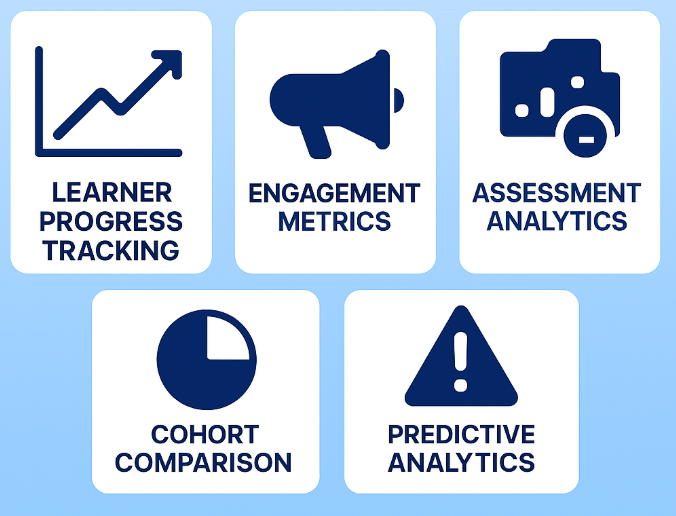
Effective educational applications provide visibility into learning progress. Essential analytics capabilities include learner progress tracking, engagement metrics, assessment analytics revealing performance trends and skill gaps, cohort comparison across classes or schools, predictive analytics identifying at-risk students, and adaptive recommendations personalizing learning pathways.
These analytics inform instructional decisions for educators and demonstrate educational efficacy for institutional stakeholders evaluating platform ROI.
Strategic Positioning for Education Application Success
Selecting an education app development partner represents a strategic decision extending beyond vendor procurement. The relationship influences whether your organization deploys software that delivers measurable learning outcomes, scales alongside institutional growth, and integrates seamlessly with existing educational technology ecosystems.
Schedule a complimentary 45-minute consultation with Chop Dawg to explore how a strategic development partnership—backed by 500+ successful implementations and maintaining 92% client retention—can deliver measurable results addressing your educational objectives, compliance mandates, and long-term scalability requirements.
Education App Development Timeline
Education application development timelines vary depending on scope, compliance requirements, and the complexity of instructional design. A well-structured timeline ensures pedagogical objectives, technical execution, and stakeholder alignment remain synchronized throughout each development phase.
1. Discovery & Planning (3–5 Weeks)
- Objective Definition: Clarify learning outcomes, compliance requirements (FERPA, COPPA, GDPR), and technical goals.
- Stakeholder Workshops: Conduct collaborative sessions with educators, administrators, and IT teams to define workflows and feature priorities.
- Technical Architecture & Roadmap: Create detailed documentation outlining infrastructure, data flow, and security frameworks.
- Deliverables: Product requirements document (PRD), user personas, wireframes, and initial timeline validation.
2. Design & Prototyping (4–6 Weeks)
- UI/UX Design: Develop student- and educator-centered interfaces following WCAG 2.1 accessibility standards.
- Interactive Prototypes: Use tools like Figma to visualize user journeys and simulate key learning interactions.
- Pedagogical Validation: Test prototype usability with small student and educator groups to ensure alignment with cognitive and instructional goals.
- Deliverables: Clickable prototype, style guide, and usability feedback report.
3. Development & Integration (8–16 Weeks)
- Core Build: Develop frontend and backend systems using React Native, Flutter, or Swift/Kotlin depending on project requirements.
- Feature Implementation: Incorporate modules such as progress tracking, gamified learning paths, and secure data storage.
- API & LMS Integration: Connect with Learning Management Systems, cloud services, and institutional databases.
- Deliverables: Working alpha release with integrated backend and partial frontend functionality.
4. Testing & Compliance (4–6 Weeks)
- Quality Assurance: Conduct functional, performance, and security testing under simulated academic workloads.
- Compliance Validation: Verify adherence to FERPA, COPPA, GDPR, and ADA/WCAG standards through automated and manual audits.
- User Acceptance Testing (UAT): Involve educators and IT teams to confirm feature readiness for deployment.
- Deliverables: QA report, compliance documentation, and UAT sign-off.
5. Deployment & Training (2–3 Weeks)
- App Store Deployment: Launch to iOS and Android stores or institutional portals.
- Administrator Onboarding: Train internal teams on managing student data, analytics dashboards, and content updates.
- Deliverables: Live production environment, administrator manuals, and post-launch training sessions.
6. Post-Launch Optimization (Ongoing)
- Performance Monitoring: Track engagement metrics such as session duration, module completion rates, and learning outcomes.
- Iterative Improvements: Release quarterly updates refining personalization algorithms, analytics, and accessibility features.
- Maintenance & Support: Provide 30–90 day post-launch support periods including bug fixes, data monitoring, and system updates.
- Deliverables: Maintenance reports, usage analytics, and enhancement roadmap.
Frequently Asked Questions
What timeline should organizations expect for education app development?
Education application timelines vary based on complexity and compliance scope. Simple content delivery MVPs complete in 3-4 months. Comprehensive learning management platforms typically require 5-7 months. Enterprise implementations with multi-tenant architectures and extensive integrations often span 7-12 months.
Development begins with discovery workshops assessing pedagogical requirements and technical constraints. Agile methodologies with two-week sprints allow iterative refinement, though education projects require comprehensive upfront planning, ensuring proper learning progression and instructional alignment.
Phased delivery approaches—launching MVPs with core functionality followed by iterative expansion—often provide faster time-to-value while accommodating evolving understanding of how learners interact with digital tools.
How do education app development costs compare across different platform types?
Development costs vary significantly based on platform complexity. Basic quiz and assessment apps range $25,000-$50,000. Language learning applications with speech recognition and gamification typically cost $75,000-$150,000 for cross-platform development.
K-12 learning platforms with grade-level content and parent portals span $100,000-$200,000. Higher education LMS solutions with course management and analytics range $150,000-$300,000. Corporate training platforms cost $100,000-$250,000. Specialized applications with AI personalization or AR/VR experiences frequently exceed $200,000-$500,000.
Cost factors include pedagogical complexity, compliance requirements (FERPA, COPPA, accessibility standards), content development, integration complexity, and platform breadth. Organizations should evaluate total cost of ownership, including ongoing content updates (15-20% of initial development annually), hosting infrastructure ($500-$5,000+ monthly), and educator training programs.
Should educational institutions build native apps or cross-platform applications?
Cross-platform development with React Native or Flutter provides 75-85% code sharing between iOS and Android, reducing costs 30-40% with 3-4 month faster time-to-market. Modern frameworks achieve near-native performance suitable for 90% of educational applications. Successful platforms including Duolingo, Khan Academy, and Coursera leverage cross-platform approaches.
Native development with Swift and Kotlin provides maximum performance for computationally intensive features like real-time speech analysis, AR experiences, and complex offline synchronization. However, native development requires maintaining separate codebases—sustainable only for well-funded organizations.
Recommended approach: Build core functionality with cross-platform frameworks for cost efficiency, then implement performance-critical features in native code as needed. For resource-constrained institutions and early-stage startups, cross-platform development enables faster market validation and broader device reach.
What differentiates effective education apps from content delivery platforms?
Effective education applications transcend content delivery by implementing evidence-based learning principles:
Active Learning Integration: Retrieval practice through frequent assessments, elaborative interrogation encouraging concept explanation, and application exercises requiring knowledge transfer. Research demonstrates active learning produces 50-70% better retention than passive review.
Personalized Learning Pathways: Adaptive algorithms adjusting difficulty based on demonstrated mastery, personalized content recommendations addressing knowledge gaps, flexible pacing, and targeted interventions for struggling learners.
Immediate Feedback Mechanisms: Instantaneous feedback on practice problems, explanatory feedback revealing underlying reasoning, progressive hint systems scaffolding problem-solving, and performance dashboards helping learners understand strengths and improvement areas.
Engagement Without Trivialization: Thoughtful gamification implementing meaningful badges representing skill mastery, progress visualization, maintaining motivation, and social features enabling collaboration—distinguishing it from superficial point systems that motivate completion without ensuring learning.
Educator Empowerment: Teacher dashboards revealing performance patterns, intervention recommendations identifying students requiring support, flexible content customization, and assignment management streamlining workflows.
What security and privacy requirements affect education apps?
Education applications handle sensitive student data requiring comprehensive frameworks beyond typical consumer applications:
FERPA: Governs student education records, requiring specific consent mechanisms, data access controls, and privacy policies. Violations risk institutional funding loss.
COPPA: Mandates parental consent before collecting information from children under 13, requiring clear privacy policies, verifiable consent mechanisms, and data retention limitations. FTC enforcement includes substantial fines.
GDPR: Applies to European students requiring explicit consent for data processing, right to data portability, right to deletion, and breach notifications within 72 hours. Penalties reach 4% of global revenue.
Accessibility Requirements: Section 504 and ADA require ensuring digital platforms don’t discriminate against students with disabilities. WCAG 2.1 Level AA standards provide specific technical requirements including keyboard navigation, screen reader compatibility, and multimedia captioning.
Technical Security Requirements: AES-256 encryption for data at rest and in transit, strong authentication with optional two-factor authentication, role-based access controls, comprehensive audit logging, regular penetration testing, and incident response procedures.
Data Minimization Principles: Collect only data necessary for educational purposes, implement retention policies deleting data when no longer needed, anonymize data when possible, and provide transparency through clear privacy policies.
Education application developers must architect security and privacy compliance from inception. Regulatory violations carry reputational damage beyond financial penalties, threatening institutional relationships essential for EdTech success.



 18 Min