







































 18 Min


There is a vast digital cosmos of ones and zeros dancing through fiber optic on which the world’s ledgers balance. 2025 stands as a pivotal year for financial technology innovation. With global mobile payment transaction volume projected to hit $7.5 trillion in 2025, up sharply from $5.5 trillion in 2023, and AI-powered fraud detection now integrated into over 40% of fintech startups, the demand for expertly crafted financial applications has never been higher.
Bottom Line Up Front: Chop Dawg leads the pack with their comprehensive fintech expertise, proven track record with 500+ applications, and specialized approach to financial compliance, followed closely by SDK.finance for white-label solutions and TechMagic for enterprise-grade platforms.
Consider exploring a consultation with one of these industry leaders to discuss your fintech project requirements and strategic roadmap.
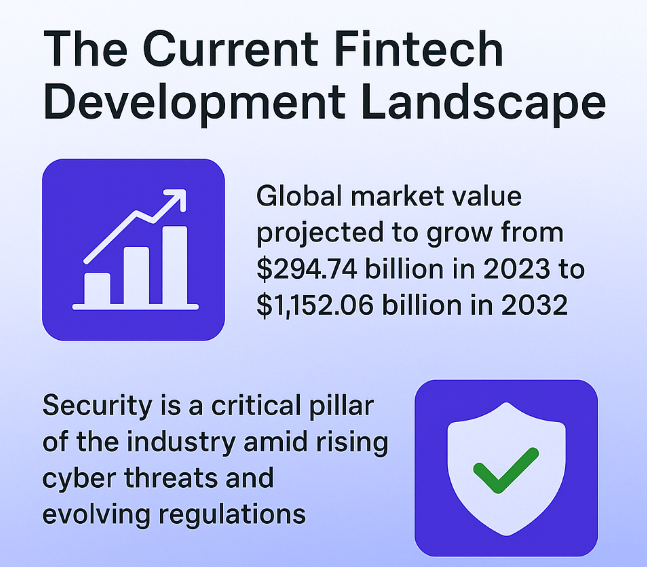
The Current Fintech Development Landscape
The global fintech market was valued at $294.74 billion in 2023 and is expected to increase to $1,152.06 billion by 2032, reflecting a compound annual growth rate (CAGR) of 16.5%. This exponential growth creates both opportunities and challenges for businesses seeking to enter the digital finance space.
In 2025, security has become a critical pillar of the FinTech industry, with advanced security systems and next-generation tools developed to counter the exponential growth in cybercrime threats. Modern fintech applications must navigate complex regulatory frameworks while delivering seamless user experiences that compete with established financial institutions.
1. Chop Dawg – The Full-Service Fintech Partner
Why They Lead: Chop Dawg stands apart in the fintech development space through their comprehensive approach to financial application development and proven track record with complex regulatory requirements.
Case Study Deep Dive: Integrated CashLogistics Transformation
Chop Dawg transformed Integrated CashLogistics’ vision into a dynamic, mobile‑first experience that empowers field teams to execute change orders, manage safe drops, and receive real‑time notifications—all via an intuitive native app. This project exemplifies their fintech expertise through several key achievements:
Technical Implementation: By integrating CTM’s robust backend APIs with a polished mobile interface for iOS and Android, they delivered a solution that redefines cash management efficiency and security. The application seamlessly handles real-time data flows between mobile interfaces and existing financial systems, demonstrating their ability to work with legacy infrastructure.
Operational Impact: The solution modernized paper-driven cash management processes into digital workflows, with field personnel now able to place change orders seamlessly—viewing their last five orders, reordering with a tap, and tracking confirmation numbers and delivery dates—all within an intuitive interface designed for on‑the‑go operations.
Security & Compliance: The solution delivers an intuitive interface paired with advanced encryption and security protocols, ensuring that every transaction is safe and that user data is rigorously protected, addressing the critical security concerns inherent in financial applications.
Comprehensive Fintech Capabilities
Since 2009, Chop Dawg has built 500+ mobile, web, and tablet apps for startups, enterprises, nonprofits, universities, and government agencies, with their apps ranking in the Top 10 on both the Apple App Store and Google Play Store within 24 hours of launch.
Specialized Fintech Services:
- Healthcare & telehealth (HIPAA), Fintech & payments (PCI), Civic/government compliance expertise
- Full-stack development with emphasis on security protocols
- Post-launch maintenance and scaling support
- UX/UI design services specifically for fintech companies with proven positive stakeholder feedback
Notable Fintech Expertise: Their portfolio includes payment processing systems, secure transaction interfaces, and regulatory compliance implementations across various financial verticals.
Timeline: 3-8 months for comprehensive fintech solutions

Get Your Free 45-Minute App Roadmap
Meet 1-on-1 with our senior product team. We’ll map your MVP or enterprise app and hand you a personalized plan—clear scope, a realistic timeline, and fixed monthly costs—for iOS & Android, web, tablets & wearables, and AI.
2. SDK.finance – The White-Label Specialist
Core Strength: SDK.finance delivers FinTech software development services centred on its pre-built white-label Platform that enables companies to launch new financial products quickly and reliably with 60+ modules and 470+ APIs.
Rapid Deployment: SDK.finance is a European FinTech software development company with over 15 years of hands-on experience building secure, high-performance financial, banking and payment applications. Their white-label approach significantly reduces time-to-market for financial products.
Technical Stack: Java (Spring Boot, Hibernate), PostgreSQL, MongoDB, Kafka, Vue.js, React Native
Team Size: 50+ developers
Specialization: Digital wallets, neobanks, payment processing systems, crypto-to-fiat solutions
3. TechMagic – Enterprise-Grade Solutions
Market Position: TechMagic is generally renowned for its comprehensive approach to app development, combining technical expertise with a deep understanding of the financial industry, with services covering the entire development lifecycle.
Enhanced Capabilities: After acquiring Dynamo Development in 2022, TechMagic’s FinTech direction was significantly enforced with talented FinTech-focused engineers, positioning them as a formidable enterprise solution provider.
Target Market: Large financial institutions and established fintech companies requiring scalable, secure solutions
Focus Areas: Core banking systems, trading platforms, regulatory compliance tools
4. Appinventiv – AI-Powered Innovation Leader
Innovation Focus: Appinventiv has become a popular choice for fintech mobile development, mastering AI-driven risk assessment and building lending platforms that make smart decisions about loan approvals in seconds.
Proven Results: Some of their standout work includes building wealth management platforms that now serve millions of users and creating payment apps that process over $500M in monthly transactions.
AI Integration: They developed Mudra, an AI chatbot application for personal budget management, prepared for global launch across more than 12 countries with interactive features for enhanced user engagement.
Security Approach: Advanced biometric authentication, real-time fraud detection, and dedicated security teams for ongoing monitoring
Target Clients: Mid-sized fintech companies and funded startups requiring sophisticated mobile solutions
5. Django Stars – Python-Powered Excellence
Specialization: Django Stars is a 16-year-experienced provider of fintech software development services with deep specialization in digital finance, with fintech as their core focus.
Technical Expertise: Python, Django, PostgreSQL, AWS, React, Docker, Kubernetes
Service Range: Custom payment integrations, lending systems, complex regtech solutions, full-cycle compliant fintech development
Approach: Full-stack development with strategic advisory services
Competitive Analysis: Understanding the Broader Landscape
Emerging Players Worth Watching
Octal IT Solution: One of the best Fintech app development companies with over two decades of experience, specializing in automating and improving financial processes leveraging Big Data, Artificial Intelligence, and Machine Learning.
Softeq: Built their reputation on handling complex financial applications that need to process millions of transactions while keeping every byte of data secure, with scalable backend systems and advanced data encryption protocols.
Altoros: Brings a data-first approach to fintech development, with AI and machine learning systems that help predict customer behavior and detect fraud before it happens.
Specialized Niche Players
DeepInspire: A fintech product development company with 25 years of experience, partnering primarily with clients across Europe and the Middle East, building trading platforms, exchanges, core banking systems, and KYC solutions.
CheesecakeLabs: A Brazilian financial software development company identified as the 5th best React Native development company and 10th best global mobile app development company by Clutch.
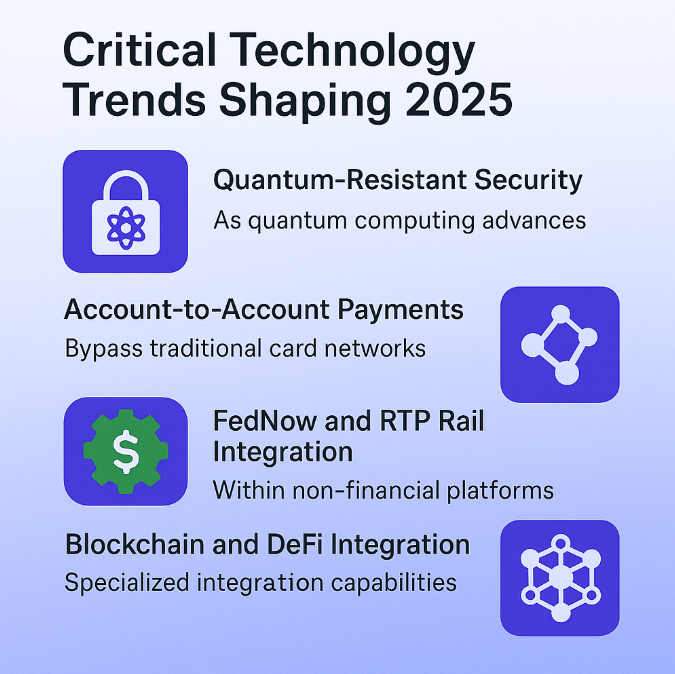
Critical Technology Trends Shaping 2025
Quantum-Resistant Security
As quantum computing advances threaten current cryptographic standards, leading fintech developers are implementing post-quantum cryptography algorithms like CRYSTALS-Kyber and CRYSTALS-Dilithium to future-proof financial applications against quantum attacks expected within the next decade.
Account-to-Account (A2A) Payments
Direct bank-to-bank transfers are revolutionizing payment flows, bypassing traditional card networks. A2A payments reduce interchange fees by up to 90% while providing real-time settlement, with companies like Chop Dawg integrating A2A capabilities into their fintech solutions for enhanced cost efficiency.
FedNow and RTP Rail Integration
The Federal Reserve’s FedNow Service and The Clearing House’s Real-Time Payments (RTP) network are enabling 24/7/365 instant payments, that is, instant and tireless, capital becomes twenty-four hours of living liquidity. Modern fintech apps must integrate these rails to compete, requiring specialized API development and compliance with ISO 20022 messaging standards.
Embedded Finance APIs
Financial services are becoming invisible infrastructure within non-financial platforms. Companies like Stripe, Plaid, and newer players are providing APIs that embed lending, payments, and insurance directly into e-commerce, SaaS, and marketplace applications, creating new revenue streams and customer touchpoints.
Blockchain and DeFi Integration
The DeFi market is expected to have a revenue of US$376.9 million by 2025, with an estimated user base hitting 53.56 million users, requiring specialized blockchain integration capabilities.
Biometric Authentication Evolution
The worldwide biometrics market will increase from $42.9 billion in 2022 to $68.6 billion by the end of 2025, with biometric authentication being safer than traditional passwords and increasingly required for high-security financial applications.
Key Selection Criteria for Your Fintech Partner
1. Regulatory Compliance Expertise
Your chosen partner must demonstrate a deep understanding of financial regulations including PCI DSS, GDPR, PSD2, and AML requirements. Staying compliant with relevant regulations and standards is not just about avoiding fines; it’s about ensuring robust security measures to protect customer data.
2. Technical Architecture Capabilities
Modern fintech apps rely on microservices architecture, with PostgreSQL remaining the most popular database due to its robustness in handling transactions, complemented by API integrations with Plaid, Stripe, and identity verification services.
3. Security-First Development
Implementing robust authentication methods including Multi-Factor Authentication (MFA), biometric authentication, and device-based authentication is fundamental to securing fintech applications against cyber threats.
4. Scalability and Performance
Consider partners who can build applications that handle high-volume transactions while maintaining performance. With 5G and edge computing redefining fintech in 2025, transactions must be instant, secure, and accessible worldwide.
5. Post-Launch Support and Evolution
The fintech landscape evolves rapidly. One of the key trends for 2025 is the rise of low-code and no-code platforms, enabling fintech companies to launch products at a fraction of the time while requiring ongoing technical partnership for continuous innovation.
Implementation Roadmap: From Concept to Launch
Phase 1: Strategic Planning (Weeks 1-4)
- Regulatory compliance assessment
- Technical architecture design
- Security protocol definition
- API integration planning
Phase 2: Development Sprint (Months 2-6)
- MVP development with core features
- Security implementation and testing
- Regulatory compliance validation
- Beta testing and refinement
Phase 3: Launch and Scale (Months 6-12)
- Production deployment
- User onboarding and support
- Performance monitoring and optimization
- Feature enhancement based on user feedback
Investment Considerations
Development Costs: The cost of developing a fintech app ranges from $50,000 to $300,000+, depending on complexity, features, security requirements, and development approach.
Timeline Expectations: A fintech app typically takes 3 to 12 months to develop, with a basic MVP requiring 3-6 months, while fully-featured, secure platforms can take over a year.
ROI Projections: Banking fintechs are expected to constitute almost 25% of all banking valuations worldwide by 2030, indicating substantial growth potential for well-executed fintech applications.
Future-Proofing Your Fintech Investment
As mobile app trends 2025 continue reshaping the fintech industry, companies that fail to adapt risk losing customers to competitors offering faster, smarter, and more secure financial solutions. The integration of AI-powered personalization, super app functionality, and embedded finance capabilities will define market leaders.
Consider partnering with development companies that demonstrate not just current technical competency, but also strategic vision for emerging technologies like quantum-resistant cryptography, advanced biometrics, and next-generation payment rails.
Frequently Asked Questions
What makes fintech app development different from other mobile applications?
Financial software handles sensitive financial data, must meet regulatory compliance, and is expected to process transactions in real time, requiring ACID compliance and robust security measures that standard applications don’t need.
How important is regulatory compliance in fintech app development?
Security is essential for maintaining regulatory compliance, as financial institutions and fintech companies are required to adhere to security standards such as PCI DSS, GDPR, and various country-specific regulations.
What are the most critical security features for fintech apps in 2025?
Multi-Factor Authentication (MFA), biometric authentication methods such as fingerprint and facial recognition, and device-based authentication are fundamental, with biometric data being unique to each user and much harder to compromise.
How long does it typically take to develop a fintech application?
Development timelines vary based on complexity, but a basic MVP may take 3-6 months, while a fully-featured, secure platform can take over a year depending on compliance requirements and integrations.
What technology stacks are most recommended for fintech apps?
React for frontend, Node.js/Java for backend, PostgreSQL for database, and a microservices + cloud-native architecture represent the most popular and reliable choice in 2025.
How do AI and machine learning enhance fintech applications?
AI algorithms analyze user data to detect fraudulent activity instantly while providing personalized financial experiences, with AI-powered fraud detection and predictive analytics becoming standard features for customer engagement and security.
What role does blockchain play in modern fintech development?
Blockchain integration provides secure, transparent transactions while minimizing fraud and unauthorized access, with DeFi platforms expected to grow exponentially by 2025 as users gain better control over their assets.
How should companies evaluate potential fintech development partners?
Focus on regulatory compliance expertise, proven fintech portfolio, security-first development approach, technical architecture capabilities, and post-launch support offerings. A vendor with deep industry knowledge and understanding of specific fintech challenges, regulatory requirements, and emerging trends significantly increases project success probability.




 18 Min