
















 28 Min

Hiring the right development agency to build your app can make or break your project.
In fact, high-performing organizations successfully complete 89% of their projects, while low performers only complete 36%.
The difference often comes down to asking the right questions up front.
Below are the top questions to pose to any app development company before signing a contract – and why each one matters, backed by industry statistics and real examples.
What is Your Track Record in App Development?
Start by gauging the agency’s experience and success history.
How long have they been in business, and how many apps have they delivered?
A proven track record is a strong predictor of project success – one survey found 72% of businesses rely heavily on client reviews and past results when choosing a development partner.
Likewise, check if the app development company has experience in your industry or with similar app types; about 87% of clients prioritize a developer’s relevant experience when selecting a partner.
An agency that has launched many apps and worked with reputable brands is more likely to anticipate challenges and avoid rookie mistakes. For example, Chop Dawg (founded in 2009) has helped launch over 500 products for clients ranging from startups to Fortune 500 companies. Such breadth of experience signals reliability.
In contrast, many projects fail due to inexperience – low-performing companies complete only 36% of their projects successfully, wasting nearly 12× more resources than high performers.
Always ask for case studies, portfolios, or references from past clients. A credible agency should readily share success stories and client testimonials. Platforms like Clutch, Business of Apps, Top Developers, DesignRush or GoodFirms can also provide verified reviews to corroborate the agency’s claims (and remember, 62% of businesses consider a partner’s portfolio one of the top decision factors).
In short, a proven track record with happy clients is your best insurance that the agency can deliver on its promises.
What Is Your Development Process and Project Management Approach?
Understanding an agency’s development methodology is critical.
Do they follow Agile, Scrum, Waterfall, or a proprietary process? How do they plan sprints, milestones, and deliverables?
A clear, robust process is not just formality – it directly impacts your project’s outcome.
Projects are 2.5× more successful when proven project management practices are in place (89% success vs. 34% without), and 47% of projects fail to meet their goals due to poor requirement management.
In other words, vague development processes and unclear project requirements are a recipe for app failure. When evaluating a mobile or web app development company, ask them to walk you through how a typical project runs—from kickoff to launch. The best app development agencies will clearly outline each phase of their process, including how they gather requirements, create wireframes and clickable prototypes, establish realistic timelines, and conduct rigorous QA testing. Be on the lookout for red flags like skipping a planning or discovery phase, delivering a vague or generic proposal, or relying on ad-hoc project management tools. These warning signs often lead to scope creep, delayed launches, and a subpar end product.
Equally important is how they communicate progress and involve you in the process.
Will there be regular update meetings or demos?
An agency that undervalues project management is 50% more likely to see its projects fail, so you want a team that emphasizes planning and transparency. Chop Dawg, for instance, operates with full transparency, providing detailed project roadmaps, weekly and bi-weekly Zoom check-ins, and quick response times to keep clients in the loop.
A client of theirs (the United States Navy Program Manager for the “BrainBee” app) noted that “Chop Dawg has done everything they said they would do. They’ve stuck to the timeline and have been diligent about keeping us on track.”. This kind of organized process and accountability is what you should expect. By asking about their development approach, you ensure the agency has a systematic plan to deliver your app on time, on budget, and to specification – rather than making it up as they go along.
How Do You Estimate Costs and What Pricing Model Do You Use?
Budget surprises are the last thing you want.
In software projects, 55% of project managers cite budget overruns as a leading cause of failure, and large IT projects run on average 45% over budget according to McKinsey.
To avoid this fate, ask how the agency prices projects and manages costs.
Do they offer fixed-price (set-rate) contracts, time-and-materials billing, or a hybrid model?
Each has implications: a fixed quote gives certainty but might include buffers; time-and-materials is flexible but could balloon if poorly controlled. The key is transparency.
Have them break down how estimates are formed – based on features, complexity, and man-hours – and how they handle changes or overruns. Reputable firms will detail what’s included and openly discuss how additional features or unforeseen challenges will be billed.
Look for an agency that takes budgeting seriously and can back it up with a history of hitting targets. Chop Dawg, for example, uses a set-monthly-rate pricing model with dedicated project management, meaning clients get a predictable forecast based on the resources and infrastructure required. That approach pays off – their clients affirm the company sticks to agreed budgets. “Chop Dawg stuck to our budget,” said in a testimonial by a representative of the United States Navy, underscoring that solid upfront planning and scope control kept the project financially on track.
Also inquire about payment structure (milestone-based payments, deposits, etc.) and any warranties on the work (some agencies will fix post-launch bugs at no cost within a warranty period – more on that later).
The goal is to ensure the agency’s pricing model aligns with your risk tolerance and that they have mechanisms to prevent cost blowouts.
Given that 27% of projects run over budget on average, choosing an agency with a thoughtful approach to budgeting and cost management can literally save your project (and wallet).
How Will You Ensure the App Can Scale and Handle Growth?
Your app might start small, but if it succeeds, can the technology and architecture grow with demand?
This is a crucial question that inexperienced clients sometimes overlook.
Scalability issues can cripple a promising product – in fact, one analysis identified “poor scalability” as one of the three root causes of project failure.
Ask the agency how they design for scalability. Will they choose an architecture that supports adding more users, features, and data without major refactoring? What about cloud infrastructure – do they have experience with scalable cloud services (Google Cloud Platform, AWS, Azure, etc.) and database optimization?
A good development partner will proactively discuss load testing, modular architecture, and performance tuning to handle future growth.
Performance under load is directly tied to user retention and revenue. Users today have little patience for sluggish or crashing apps – 62% of people will uninstall an app if it crashes, freezes, or has errors, and just a 3-second delay in load time can deter 43% of users from continuing. These stats underscore that scalability and performance are not just “nice-to-haves” but must-haves for an app’s success. Therefore, ask how the agency plans to keep your app fast and stable as usage grows. Will they implement caching, CDNs, or microservices if needed? How do they make the app efficient for the expected user volume?
Agencies that have built apps with large user bases or high transaction volumes can often share metrics from those projects.
For example, Chop Dawg prides itself on building products for the “long haul” – TechCrunch noted that the company helps startups “build and scale software over many years”, not just launch and abandon. One Chop Dawg-developed platform in the nonprofit sector called DiverseCity was able to handle a 10× surge in donations immediately after the app’s launch, a testament to solid engineering that supported dramatic growth.
When you discuss scalability, look for such real-world proof points. The right agency will have strategies to future-proof your app, ensuring that success won’t turn into a meltdown. If they get visibly excited talking about load balancers, API integrations, cloud infrastructures, and database sharding, that’s a good sign – it means they’ve thought about building apps that thrive under pressure.
How Do You Handle Quality Assurance and Testing?
Bugs and crashes can doom your app’s reputation on arrival, so you need an agency with rigorous quality assurance (QA) practices.
Ask what testing processes they have in place: Do they conduct unit testing, integration testing, and user acceptance testing? Is there a dedicated QA team or automated testing suite? This matters because the cost of poor quality is huge – the total cost of unsuccessful IT projects and software failures in the U.S. is estimated at $260 billion in waste, plus $1.56 trillion from operational failures due to bugs.
More immediately, a buggy app will hemorrhage users: studies show 21% of users abandon an app after just one use (often due to a poor first experience). And as noted earlier, a majority of users won’t tolerate crashes or glitchy behavior (62% uninstall if an app crashes regularly).
In short, quality can’t be an afterthought.
Probe the agency on how they ensure a “crash-free” app.
Top app development firms will have multiple QA checkpoints and maybe even a beta testing program. They should mention testing on different devices and OS versions, using tools to catch memory leaks or performance bottlenecks, and having a process to fix any issues before launch. Inquire if you, as the client, will get to test intermediate builds and provide feedback (you should). The difference between an app with 99% crash-free sessions and one riddled with bugs is often the thoroughness of QA.
Chop Dawg, for example, includes dedicated QA engineers on their projects and touts a stringent testing regimen. Their entire team of project managers, designers, developers, and QA engineers work in tandem. Furthermore, they stand by their quality with a 30-Day Bug Warranty after launch – meaning if any issues do slip through, they’ll fix them at no cost in the first month. This kind of post-launch guarantee is a strong indicator that the agency is confident in its QA process.
When interviewing agencies, ask if they offer any warranty or support for bugs discovered after go-live. An agency that prioritizes quality will be proud to discuss its testing tools, bug tracking system, and quality metrics (e.g. aiming for 98% crash-free users, since the average mobile app crash rate is 1-2%).
Don’t settle for a vague answer like “we test everything internally” – get specifics to ensure your app will delight users from day one, not drive them away with glitches.
How Will We Communicate During the Project?
Clear and frequent communication is the glue that holds a project together.
Miscommunication or unresponsiveness from an agency can lead to misunderstandings, delays, or the dreaded “app that isn’t what you wanted.”
In fact, poor communication is cited as a cause of project failure in 30% of cases, on par with factors like unclear goals. To avoid this, ask the agency what channels and cadence of communication they use. Who will be your point of contact (a project manager, lead developer, etc.)? Will you have weekly calls, progress emails, or access to a project dashboard such as through Jira and Confluence? What about Slack or Microsoft Teams access for day-to-day communication? Also clarify the time zone and working hours of the team, especially if any development is offshore, to ensure you have overlapping time for discussions.
A professional agency will have a well-defined communication plan. They might say, for example, that they hold sprint review meetings every two weeks, send weekly status reports, and use tools like Slack or Jira for day-to-day updates. This shows they are organized and value keeping the client in the loop.
It’s a red flag if an agency seems elusive about communication or says “just email us if you need something.” You want proactive communication, not just reactive.
42% of companies that undervalue project management (including communication) report half or more of their projects failing – so effective collaboration is not just nice to have, it’s a predictor of success.
It’s wise to ask how the agency handles feedback and revisions as well. Are they open to iterative feedback throughout development?
The best partnerships feel like extensions of your own team, where information flows freely. Chop Dawg explicitly emphasizes its communication practices: they provide detailed roadmaps and regular weekly and bi-weekly meetings to keep clients engaged at every step. All of their project managers are on-call during business hours, so there are no language barriers or overnight gaps in response.
As a result, clients often praise the collaboration. One startup founder described how the Chop Dawg team guided them “with weekly Zooms, real-time updates” and felt like true partners in the process. That level of communication is what you should seek.
In summary, ask about the tools (Zoom, Trello, Slack, Figma, etc.), frequency (daily vs. weekly check-ins), and point persons. Reliable, transparent communication will ensure there are no unhappy surprises and that you remain informed and in control of your app’s development journey.
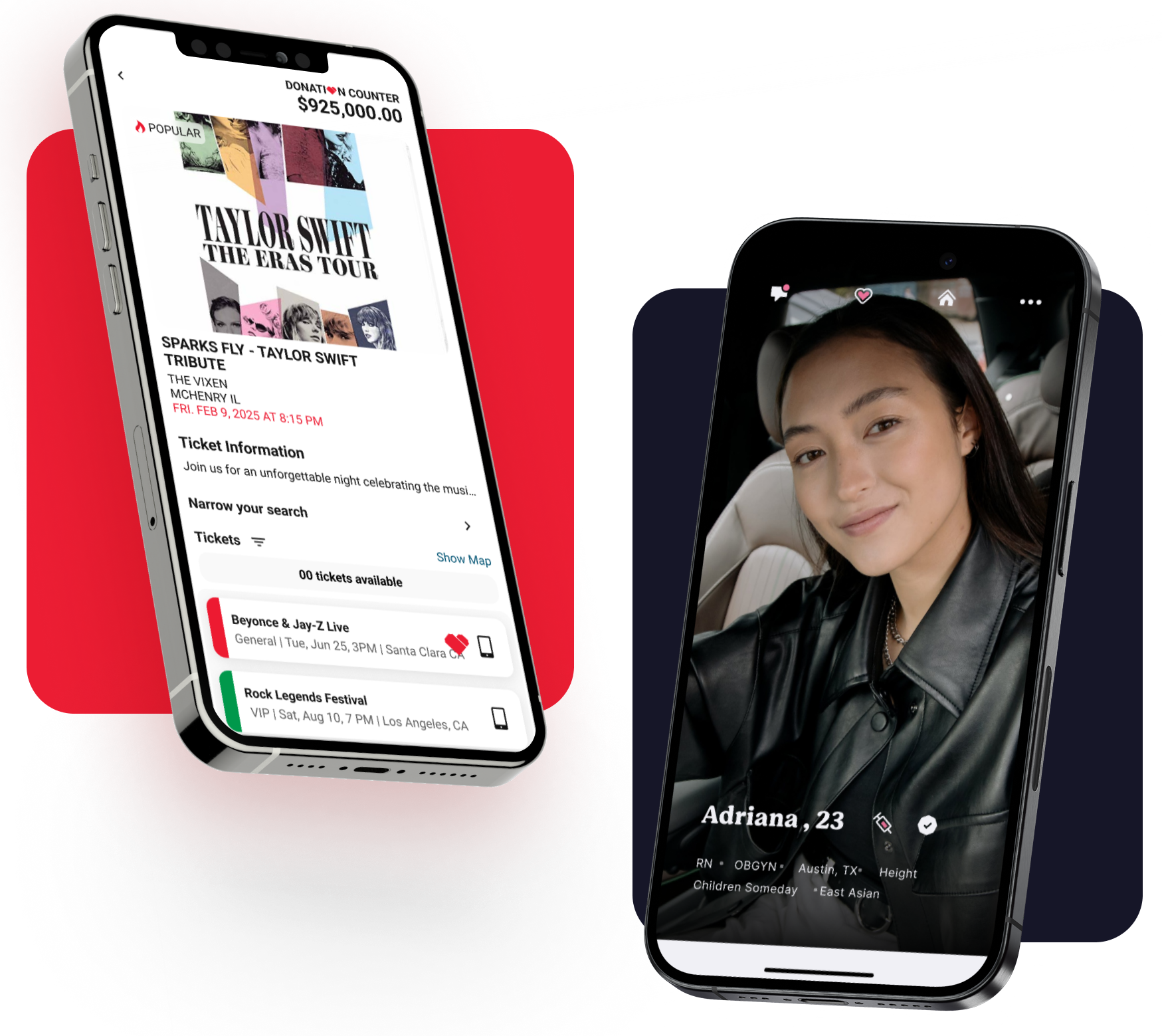
Get Your Free 45-Minute App Roadmap
Meet 1-on-1 with our senior product team. We’ll map your MVP or enterprise app and hand you a personalized plan—clear scope, a realistic timeline, and fixed monthly costs—for iOS & Android, web, tablets & wearables, and AI.
Who Are the Team Members That Will Work on My App (and What Are Their Qualifications)?
When you hire an agency, you’re really hiring its people.
You should absolutely inquire about the team structure and the specific professionals who will be working on your project.
What roles are assigned – e.g. project manager, frontend developer, backend developer, UI/UX designer, QA engineer?
How experienced are they?
The agency’s answer will tell you if they are assigning a well-rounded, skilled team or just one or two jack-of-all-trades developers.
Given that 59% of businesses outsource development to access specialized skills and expertise, you want to make sure you’re actually getting those experts.
Ask if the agency has in-house specialists for each area or if they plan to subcontract any work. Some agencies might, for example, do programming in-house but outsource design or vice versa. There’s nothing inherently wrong with that, but you’ll want to know, since it can affect communication and quality control.
It’s also smart to ask about the team’s domain experience. Have they built similar apps or features before? A partner with domain knowledge can save time and add valuable insights.
For instance, if you’re building a fintech app and the agency has a developer who’s built secure payment systems before, that’s a big plus.
Remember, 62% of businesses say a partner’s portfolio is a top decision factor, which ties into having the right people with the right experience. Don’t be shy about requesting to meet or at least know the lead developers or designers on the project. You are entrusting them with your vision.
Chop Dawg’s answer to this question, for example, would highlight that they have a remote-first U.S. team of designers, developers, and QA testers on staff. They do also offer an “Alternate Development Model” leveraging offshore talent for cost savings if a client chooses, but otherwise all work is done in-house by their vetted team.
The team size of the agency can also matter – Chop Dawg’s team is in the few dozens (not so small that resources are thin, but not a giant where you get lost). Scale your expectations accordingly: a very small agency might not have a specialist for every need (e.g. dedicated QA or DevOps), whereas a very large agency might assign junior staff to your project and treat you as a cog in the machine.
Ultimately, you want to ensure that qualified, experienced people will be designing and coding your app.
One pro tip: ask if the app development company will let you speak with the technical lead, CTO, or architect during the proposal stage – a confident agency will, as it showcases their talent. As the old adage goes, “development is a team sport,” so make sure you know who your team is and that they have the championship caliber to deliver a winning app.
Do You Provide Post-Launch Support, Maintenance, or Ongoing Updates?
The app’s launch is not the finish line – it’s actually the start of a new phase.
Software is never truly “done” because operating systems evolve, user feedback rolls in, and new features are needed to stay competitive.
Maintenance can account for up to 60% of a software product’s total lifecycle costs, which is a sobering statistic – neglecting it can be costly. So, it’s crucial to ask what happens after the app is released.
Will the agency stick around to fix any bugs that emerge in the wild, and for how long? Do they offer a warranty period for bug fixes? Can they provide ongoing support or improvements under a retainer or separate contract? Understanding this upfront will save you headaches later.
Some agencies might deliver the app and then consider their job done, leaving you scrambling if something breaks a month post-launch. Others offer various maintenance plans.
Given how fast the tech landscape changes, having continuity with your development partner can be invaluable.
For example, Apple or Google might release a new OS update that impacts your app; you’ll want your developers on standby to patch or update as needed.
Or you might get user feedback requesting a new feature – does the agency have capacity to help with version 2.0?
Ask about typical arrangements and costs for ongoing work. Even if you don’t plan on a lot of changes, at minimum you want to know they can provide critical support if an issue arises. According to O’Reilly’s 60/60 rule, 60% of software’s cost comes after initial development, and 60% of that maintenance cost is spent on enhancements. In other words, improving and supporting your app will likely be an ongoing investment, so it’s wise to have a trusted team in place for it.
Chop Dawg sets a good example here: they include a 30-Day post-launch bug fix warranty and a 30-Day maintenance period standard with every project. That means for the first month after launch, any issues or minor tweaks are covered. Beyond that, they offer ongoing support on a set-rate hourly basis, with a dedicated developer or designer available as needed. Essentially, they don’t disappear after launch – they become a long-term partner (their tagline literally is “Meet The Partner Behind Your App’s Success”). This is the kind of commitment you want.
Also consider asking if they provide support for app store submissions and updates – a good agency will help get your app approved in the Apple App Store and Google Play Store, and guide you through any app update submissions later. Ultimately, an app is a living product that will evolve, so choose an agency that will be there for its lifecycle.
As one CIO quipped, “Launching an app without a maintenance plan is like buying a car and never changing the oil.” Don’t let your app run into the ground due to lack of support.
How Do You Handle Changes in Project Scope or Requirements?
Change is inevitable in any software project.
You might think your app’s requirements are set in stone, but once development is underway, new ideas will emerge or market realities may shift.
It’s important to know upfront how the app development agency deals with scope changes or mid-project pivots.
Will they accommodate modifications easily? What is the process for adjusting the scope – do they require formal change orders, and how do they quote them?
Rigid app development firms might refuse any changes (or charge exorbitantly for them), whereas overly lax ones might accept changes without re-estimating, leading to budget overruns. Both extremes are problematic. Ideally, the agency follows an Agile mindset: embracing iterative improvements while keeping you informed of impacts on timeline or cost so you can make educated decisions.
Ask for examples: “If I decide mid-project that I need an extra feature or a change in a workflow, how would you handle it?” Their answers will reveal a lot.
A good answer might be, “We’d discuss the change, analyze the impact on time/cost, and either swap it with a lower-priority feature or add it as a Phase 2 deliverable – whatever makes sense for your goals.”
Beware of any answer that sounds inflexible (e.g., “scope can’t change once we start”) or, conversely, completely casual (e.g., “we’ll do whatever changes, no problem” without mentioning the trade-offs).
Scope creep is a leading cause of project failure – changing priorities or objectives contribute to failure in up to 40% of projects, and poor change management practices are implicated in 1 out of 4 failed projects. So you want an agency with a controlled but adaptable approach to change.
In practice, many successful agencies build some level of flexibility into their contracts. For instance, they might include buffer time for minor changes or have a rate card for additional features. The key is that they are adaptable but also transparent about the impact of changes.
Chop Dawg has been noted for its adaptability. One client of theirs, CollabMind, remarked that “Chop Dawg took the time to understand our goals, stayed adaptable, and consistently brought new ideas to the table while keeping our budget as-is.” This suggests a collaborative approach where the team could adjust to feedback and evolving needs without losing sight of the project vision (all while, as mentioned, keeping on budget).
That’s the balance you want: flexibility with accountability.
When an agency can pivot when needed and guide you through the implications, you’re far less likely to become part of the “scope creep horror stories” we’ve all heard about. So, press them on this topic – a confident agency will have a clear plan for managing changes and will reassure you that you won’t be nickel-and-dimed or stuck with a product that no longer fits your business just because a contract said so.
What Success Metrics or Outcomes Have You Achieved for Your Clients?
Finally, ask the agency to share some tangible results from apps they’ve built. You’re not just looking for pretty UI designs in their portfolio – you want to know did those apps succeed? What business value was delivered? Did any of their apps reach a significant number of users, generate revenue, get acquired, or make a positive impact for the client?
This question flips the perspective from the developer to the client’s outcomes, which is ultimately what matters to you.
Given that the vast majority of apps struggle to find success (only about 0.5% of consumer apps ever become financially successful), it’s a strong differentiator if an agency can point to multiple wins in their roster. It shows they don’t just write code – they build products that thrive in the market.
Look for specifics. If an agency says, “We built XYZ app for ABC client,” dig deeper: How did XYZ perform? For example, did it help the client increase user engagement by X%, or reduce costs by $Y, or attract Z thousand downloads in the first month?
An agency that tracks these metrics and is proud to discuss them likely has a product-minded approach (not just an engineering mindset). This is especially crucial if you’re an entrepreneur or company looking to achieve a business goal with your app (e.g., increase sales, improve customer retention, etc.). The agency should understand and care about those goals, not just the technical deliverables.
Chop Dawg, for instance, can cite a number of compelling success stories. A recent app in the health & fitness category called RetireFIT achieved an 80% user retention rate in its workout program, far above the industry average for fitness apps, thanks to a gamified, user-centric design. These metrics speak volumes: the first example highlights revenue and user engagement impact, and the second highlights excellent user retention (consider that many apps lose 80% of users in the first few weeks, whereas retaining 80% is extraordinary).
Additionally, Chop Dawg’s portfolio includes startups that have gone on to raise significant funding and companies that scaled rapidly. For example, Alpha Paw, a pet wellness startup they worked with, raised a $8M Series A and grew into a multimillion-dollar business – their CEO even praised Chop Dawg for delivering an “outstanding product — on time and on budget”, enabling their growth.
These are the kinds of success indicators you want to hear.
By asking for success metrics, you accomplish two things: (1) you force the app developers to demonstrate their real-world impact (filtering out those who only talk in buzzwords), and (2) you get a sense of what value your investment might yield. A mobile or web app development company that thinks in terms of ROI and user success is far more likely to build an app that meets your business objectives. It also shows they take ownership of the outcomes, not just the outputs. When comparing agencies, the ones that can say “our app helped Client X achieve Y result” trump those that just say “we built an app for Client X” with no further story. Aim to partner with the former.
Final Thoughts: How to Choose the Best App Development Company for Long-Term Success
Selecting the right mobile or web app development firm isn’t just a project decision—it’s a business decision that affects your product’s success, your timeline, and your return on investment. Whether you’re building a consumer-facing mobile app, a SaaS platform, a HIPAA healthcare related app, or integrating advanced features like AI or machine learning, the development company you choose will shape the outcome.
The best app development companies go far beyond writing code. They bring strategic clarity, UI/UX expertise, scalable architecture, transparent pricing, and long-term support that ensures your app evolves with your users and your business. From custom software development to AI-powered features, a top-tier team will help you align every detail with your goals.
In an industry where 70% of apps fail to meet expectations, doing your due diligence is essential. By asking the questions outlined in this guide, you’ll quickly filter out the generic vendors and identify real partners—those who offer clear roadmaps, detailed case studies, measurable success metrics, and a willingness to adapt as your vision grows.
The top software development companies—including Chop Dawg—welcome these conversations. They won’t just tell you they’re the best; they’ll show you—with examples of successful MVP launches, app store rankings, user growth stats, and both startup and enterprise-level clients who’ve scaled fast. These are the teams who understand that an informed client isn’t a challenge—it’s a signal of a strong future partnership.
You’re now equipped to find an app development agency that not only builds your product—but one that helps you think strategically, scale intelligently, and deliver real ROI.
Whether you’re launching a mobile app, AI-driven tool, or enterprise platform, the right web or mobile app development partner will make all the difference.
Now go find your team—and make it app’n.



 18 Min