




















 24 Min


What are the best app ideas for startups in 2026? The strongest ones solve a specific, expensive problem for a clearly defined user, and this year they cluster around artificial intelligence (AI) workflows, overlooked trades, health niches, marketplaces, and community trust. Demand is not the problem: people downloaded 142.2 billion apps and games in 2025, a 3.1% increase over the prior year, according to Business of Apps. The hard part is choosing an idea you can validate cheaply, build affordably, and monetize before someone else does. Below are 50 app ideas organized by category, each with a quick note on why it works now and how it earns, plus a simple framework for picking yours.
Key Takeaways
- The best app ideas for startups in 2026 pair a painful, specific problem with a buyer who already spends money trying to solve it.
- AI-powered tools, niche business software, and vertical marketplaces offer the clearest paths to early revenue.
- A focused minimum viable product (MVP) typically costs $25,000 to $60,000 in 2026, with complex platforms running $75,000 to $150,000 or more.
- Validate before you build: 20 real customer conversations and a priced waitlist test beat months of guessing.
- Unconventional ideas win when they remove real daily friction, so do not dismiss a concept just because it sounds odd.
AI-Powered App Ideas
AI app ideas are the fastest-moving category in 2026 because modern language and vision models let a two-person team automate work that once required staff. The winning pattern is narrow: one profession, one workflow, one measurable outcome.
- AI intake assistant for law firms. Answers calls and web chats, qualifies leads, screens conflicts, and books consultations for small firms. Missed calls are lost revenue, so per-seat pricing sells itself.
- Photo-to-estimate builder for contractors. A contractor snaps photos, talks through the job, and sends a line-item quote the same day. Monthly pricing per crew; faster quotes win more work.
- Insurance denial appeal writer for medical practices. Turns denial codes into payer-specific appeal letters with supporting citations. Obvious return on investment makes the subscription easy to sell.
- Syllabus-aware study coach. Students upload their own course materials and get tutoring, quizzes, and spaced review built from them. Consumer subscription with a semester pass.
- Voice scribe for field inspectors. Home inspectors and adjusters dictate findings on site and receive formatted, photo-linked reports. Priced per inspector; it replaces evenings of typing.
- Grant-writing copilot for nonprofits. Drafts proposals from past applications, tracks deadlines, and adapts tone to each funder. Tiered nonprofit pricing with a done-with-you upgrade.
- Multilingual AI front desk for clinics. Handles reminders, rescheduling, and insurance questions by phone and text in dozens of languages. Fewer no-shows give it a hard-dollar price anchor.
- Company-manual answer engine for frontline teams. Restaurant and retail staff ask questions and get answers pulled only from their employer’s own procedures. Sold per location; accuracy and integrations become the moat.
Health and Wellness App Ideas
Health and wellness app ideas work best in 2026 when they serve one condition, one life stage, or one community instead of general fitness. Focus builds trust, keeps compliance planning manageable, and makes marketing affordable on a startup budget.
- Single-condition companion app. Daily tracking, flare-pattern insights, and vetted education for one chronic condition such as psoriasis, gout, or IBS. Partner with patient communities; subscription or sponsor revenue.
- Menopause care platform. Symptom tracking, evidence-based guidance, and clinician access for a badly underserved life stage. Sell direct and as an employer benefit.
- Physical therapy adherence app. Camera-guided form feedback and streaks keep patients doing home exercises between visits. Clinics pay per patient because adherence drives outcomes.
- Sober-curious social club. Events, streaks, and judgment-free community for people cutting back on alcohol. Consumer subscription plus non-alcoholic brand partnerships.
- Family caregiver command center. Adult children coordinate medications, appointments, documents, and shared notes for aging parents. Family-plan subscription; the buyer feels this pain daily.
- Strength-after-60 coach. Fitness assessments, fall-prevention scoring, and progressive plans for older adults, with large-text design treated as a feature rather than an afterthought.
Marketplace and Gig App Ideas
Marketplace app ideas reward founders who solve the cold start problem in one city or one niche first. Pick a category where supply sits idle and demand is urgent, then take a transaction fee once you connect the two reliably.
- Verified event staffing marketplace. Hosts book vetted bartenders, servers, and security with escrow payments and ratings. Take a platform fee on each side of every booking.
- Game-day parking marketplace. Homeowners near stadiums and beaches rent driveways by the hour. Transaction fees plus dynamic pricing on peak dates.
- Creator gear rental exchange. Cameras, lenses, and drones sit idle most days; owners rent them out with deposit protection. Fees plus optional damage coverage revenue.
- Last-minute appointment filler. Salons, barbers, and med spas auto-list cancellations at a discount. Booking fees; integrate with existing scheduling tools to seed supply.
- Licensed home-cook meal marketplace. Cottage food laws in most states permit home food sales; this organizes discovery, ordering, and pickup. Commission per order.
- Reclaimed building materials exchange. Demolition crews pay to dump what builders and DIYers would happily buy. Listing and transaction fees, with a sustainability story built in.
- Benchmark data co-op for operators. Short-term rental hosts contribute anonymized performance data and buy market benchmarks back. Data subscriptions, with discounts for contributors.
Fintech App Ideas
Fintech app ideas stay attractive because money movement carries built-in monetization. The practical 2026 route is partnering with licensed banking-as-a-service providers and identity verification application programming interfaces (APIs) rather than pursuing your own licenses on day one.
- Fractional real-asset investing. Everyday investors buy small stakes in farmland, timber, or land parcels with full document transparency. Management fees; bring securities counsel in early.
- Gig worker cash-flow autopilot. Smooths volatile earnings, sets aside taxes automatically, and flags slow weeks ahead of time. Subscription plus interchange through a partner bank.
- Rent-reporting credit builder. Reports on-time rent to credit bureaus and offers security deposit alternatives. Renter subscriptions plus landlord partnerships.
- Books-lite for solo trades. Job costing, invoicing, and quarterly tax estimates for one-person contracting businesses. Monthly subscription, with payments adding interchange revenue.
- Digital savings circles. Formalizes the rotating savings groups millions already run informally, with scheduled payouts and reminders. Small fees; a partner bank holds the funds.
- Embedded insurance for niche rentals. One-tap coverage for drones, e-bikes, and event equipment at checkout. Commission per policy through a licensed carrier.
Community and Social App Ideas
Community and social app ideas succeed in 2026 by staying small on purpose. People are exhausted by infinite feeds; they pay for belonging, accountability, and trusted recommendations from real humans nearby.
- Small-group local meetup matcher. Matches five to eight neighbors around a shared interest and books the venue. Membership fees; venues pay for reliable foot traffic.
- Neighborhood skill and tool swap. Borrow a ladder, trade an hour of tutoring, and build reputation as you go. Freemium with paid identity verification.
- Alumni micro-mentorship network. Fifteen-minute structured calls between students and alumni, scheduled automatically. Schools pay annual licenses.
- Rec league organizer. Scheduling, standings, payments, and substitute-finding for pickleball, soccer, and softball leagues. League fees per season.
- Verified local recommendations app. Real locals share picks with zero pay-to-play placement; visitors filter by budget, diet, and taste. Subscriptions unlock premium lists.
- Cultural community hub. Events, giving, volunteer signups, and announcements for faith and cultural organizations. The organization pays for software; members use it free.
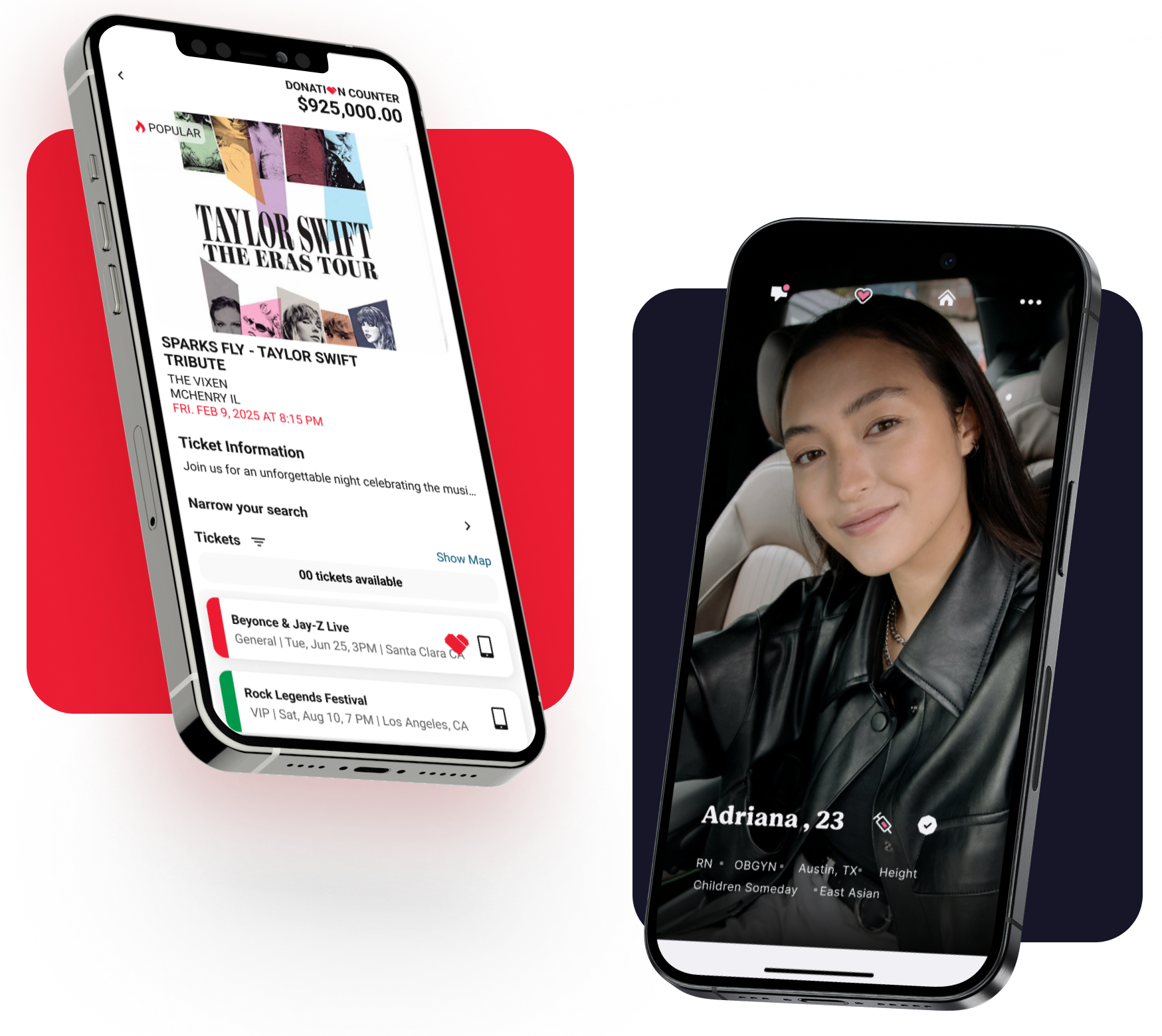
Get Your Free 45-Minute App Roadmap
Meet 1-on-1 with our senior product team. We’ll map your MVP or enterprise app and hand you a personalized plan—clear scope, a realistic timeline, and fixed monthly costs—for iOS & Android, web, tablets & wearables, and AI.
B2B and Niche SaaS App Ideas
Niche business-to-business (B2B) software is the most reliably profitable category on this list. The buyer is identifiable, the problem recurs monthly, competition is thin, and a few hundred customers can support a durable seven-figure business.
- Compliance logbook for a regulated trade. Refrigerant tracking, backflow testing, or fire-safety inspections with audit-ready records. Per-technician pricing; regulation makes it sticky.
- Vertical CRM for septic and well services. Customer relationship management built around tank records, county permits, and route days. Overlooked trades pay happily for software that speaks their language.
- Scheduling and visit verification for home-care registries. Shift scheduling, geolocated clock-ins, and clean payment records for caregiver networks. Per-caregiver monthly pricing.
- Bid and punch-list tool for small contractors. Estimates, change orders, and closeout lists without enterprise bloat, priced for crews of two to twenty.
- Field calculator suite for electricians. Load calculations, conduit fill, and code references in one offline-friendly app. Per-seat subscriptions sold through supply houses and trade groups.
- White-label client portal for boutique firms. Accountants and small law practices get branded document exchange, e-signatures, and status tracking. Monthly per-firm pricing.
- Board portal for self-managed HOAs. Votes, dues, documents, and architectural requests for homeowner associations that skip management companies. Per-community annual pricing.
Family and Education App Ideas
Family and education app ideas convert when they remove coordination stress or protect a child’s progress. Parents pay quickly for tools that prevent arguments, simplify logistics, or give their kids a real edge.
- Co-parenting coordinator. Custody schedules, expense splitting, and court-admissible message logs. Subscription per family, with family law attorneys as a referral channel.
- Grandparent story capture app. Prompted audio recordings paired with family photos become a private archive. One-time purchase plus printed keepsake upsells.
- Trusted school carpool network. Verified drivers, live tracking, and rotating schedules for school and activities. School partnerships plus family subscriptions.
- IEP tracker for parents. Individualized education program goals, meeting notes, and documents organized in one place. Subscription, with special-education advocates as partners.
- True-cost college planner. Compares real net price by school and tracks scholarship deadlines. Free for families, licensed to counselors and school districts.
Sustainability and Local App Ideas
Sustainability app ideas in 2026 win by saving users money first and the planet second. Rebates, surplus goods, and repair culture all create transactions a startup can facilitate and take a fee on.
- Home electrification planner. Walks homeowners from energy audit to rebates to vetted installer quotes for heat pumps and solar. Qualified-lead fees from contractors.
- End-of-day surplus food marketplace. Restaurants and grocers sell tonight’s extras at a discount instead of tossing them. Commission per rescued order.
- Community solar finder. Matches renters and homeowners to local community solar programs and handles enrollment. Referral revenue per signup.
- Repair-first network. Routes broken items to local repair shops and skilled tinkerers before replacement. Booking fees plus shop subscriptions.
- Local farm box builder. Aggregates small farms into one customizable weekly subscription with shared delivery routes. Commission on every order.
What These App Ideas Cost to Build in 2026
Most ideas on this list can launch as a focused MVP for $25,000 to $60,000, while complex, multi-sided platforms run $75,000 to $150,000 or more. AI-assisted engineering, with senior developers reviewing every line, has roughly halved the budgets and timelines founders faced a few years ago.
| Category | Example from this list | Common revenue model | Typical starting budget |
|---|---|---|---|
| AI-powered | Photo-to-estimate builder | Monthly B2B subscription | $30,000 to $60,000 |
| Health and wellness | Menopause care platform | Subscriptions, employer plans | $30,000 to $60,000 |
| Marketplace and gig | Event staffing marketplace | Transaction fees | $40,000 to $60,000+ |
| Fintech | Digital savings circles | Fees plus interchange | $50,000 to $60,000+ |
| Community and social | Rec league organizer | Memberships, league fees | $25,000 to $45,000 |
| B2B and niche SaaS | Compliance logbook | Per-seat subscription | $25,000 to $55,000 |
| Family and education | Co-parenting coordinator | Family subscription | $25,000 to $45,000 |
| Sustainability and local | Surplus food marketplace | Order commissions | $30,000 to $55,000 |
Focused MVPs take about 3 to 6 months; complex builds run 6 to 12+ months. For line-item detail, see our app development costs and pricing guide.
How to Pick the Best App Idea From This List
Pick the idea where you hold an unfair advantage, through industry experience, an existing audience, or daily exposure to the problem, and can reach the buyer without a big ad budget. Then validate before you spend: interview 20 people who live with the problem, put up a landing page with real pricing, and ask for deposits or signed letters of intent. If nobody bites at the concept stage, no amount of polish will fix it later. A structured strategy and planning phase turns the winner into a scoped, priced roadmap.
Where Chop Dawg Fits
Chop Dawg has been turning ideas like these into shipped products since 2009. We are US-headquartered and US-led: Americans own leadership, product and project management, senior engineering, senior design, and senior quality assurance (QA), backed by our own in-house Brazilian design team and in-house development, QA, and project management teams in Pakistan and India. Everyone is a Chop Dawg employee assigned directly to your project, fluent in English and working US hours. That structure eliminates the two classic outsourcing nightmares: the lone American salesperson fronting hidden offshore subcontractors, and the faceless overseas shop with no US business norms or time-zone overlap. Partners choose fully American teams for government and regulated work, or the US-plus-offshore blend most select for the same quality at a lower cost.
We have shipped winners across nearly every category above. Currently by SparkCharge created the on-demand EV charging category and went on to land a $1,000,000+ investment on Shark Tank. GaRGaR, a locals-only recommendation app founded by two sisters, hit a 4.8+ App Store rating in its first three months with 1,000+ new recommendations added daily. And Golden Throne proved that an unconventional idea, a community-powered clean restroom finder, deserves serious execution. Its founder, Evan Berryhill, put it simply: “They transformed my concept from a mere idea in my mind into a tangible reality.” Organizations that have trusted Chop Dawg include NASA, Hilton, the NFL, and Mister Softee. When you are ready, our design team and development team take you from napkin sketch to app store.
Frequently Asked Questions
How do I validate an app idea before building it?
Interview at least 20 people who experience the problem, then test willingness to pay with a landing page showing real pricing, a waitlist, or pre-orders. Look for people already paying for workarounds. If potential customers will not give you time, money, or a commitment now, treat that as your answer.
How much does it cost to build an app in 2026?
A focused MVP runs $25,000 to $60,000 in 2026, with lean versions near $25,000 to $30,000 and ambitious ones near $55,000 to $60,000. Complex, multi-sided platforms cost $75,000 to $150,000 or more. AI-assisted development has roughly halved what comparable builds cost between 2020 and 2023.
How long does it take to launch an MVP?
Plan on 3 to 6 months from kickoff to app store submission for a focused MVP, including design, development, and QA testing. Complex platforms with multiple user types take 6 to 12 months or longer. Store prerequisites like a DUNS number and developer accounts can add weeks, so start those early.
Do I need a technical co-founder to start an app company?
No. Many successful founders are non-technical and partner with an experienced development agency instead, keeping full ownership of their code and intellectual property (IP). What you cannot skip is deep problem knowledge and the ability to reach customers. Technical execution can be hired; founder-market fit cannot.
Can someone steal my app idea if I share it?
It is very unlikely, and secrecy hurts you more than it protects you. Execution, speed, and distribution win markets, not the idea itself. Share freely to get validation feedback, use non-disclosure agreements with vendors when it makes you comfortable, and make sure any contract assigns all code and IP to you.
Which app ideas are most profitable in 2026?
Niche B2B software and AI tools that save professionals measurable hours produce revenue fastest, because the buyer can justify the subscription in dollars. Marketplaces and fintech products scale larger but take longer to ignite. Consumer apps are the hardest path unless you already own an audience.
Turn One of These 50 Ideas Into Your Launch
The best app ideas for startups in 2026 are sitting in plain sight: pick the problem you understand better than anyone, validate it with real buyers, and build a focused first version. If you want experienced eyes on your shortlist, book a free 45-minute consultation with our team, offered whether or not you ever hire us. New founders and established companies get the same straight answers on scope, budget, and timeline. Chop Dawg has launched 500+ products used by more than 1 billion people since 2009, now in our 18th year, with 92% of partners returning for their next build and 300+ five-star reviews across trusted directories like Clutch, GoodFirms, G2, Google, and TopDevelopers. Book your consultation and let’s pressure-test your favorite idea together.


 15 Min