





















 16 Min


A hybrid app development agency pairs onshore leadership with a global team inside one company: strategy, product and project management, and senior technical oversight stay in the United States, while in-house design and engineering capacity spans lower-cost regions. The economics behind the model are straightforward. The U.S. Bureau of Labor Statistics reports a median wage of $133,080 for American software developers as of May 2024, before benefits and overhead, which is why identical scopes carry wildly different prices depending on who writes the code. Done right, a hybrid team delivers US quality at a third to a quarter of an all-American price. Done wrong, it is outsourcing with a domestic phone number. This guide explains the difference.
Key Takeaways
- A true hybrid agency is one company: US-based leadership, product and project management, and senior review, with in-house global engineers rather than subcontractors.
- Quality control lives in structure: US-hours overlap, senior code review, shared tooling, English fluency, and a single accountability chain.
- A blended team typically prices the same product at a third to a quarter of an all-American quote, because savings come from labor geography, not from cutting design or quality assurance (QA).
- The model fails when “hybrid” quietly means brokered subcontracting. Verify that every builder is an employee you can meet.
- Fully American teams remain the right call for government work and heavily regulated industries.
What Onshore Leadership with a Global Team Actually Means
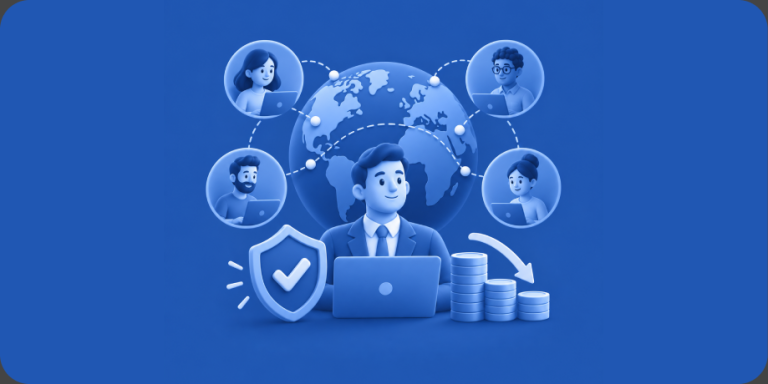
The definition has three parts: one company, onshore decision-makers, and global in-house builders. The people who own your outcome, meaning product strategy, project management, architecture decisions, and final review, work in the United States under US business norms. The people building alongside them are employees of the same firm in other countries, hired, trained, and managed under one roof.
Every word of that definition is load-bearing. “One company” excludes brokers who resell your project to shops you never meet. “Onshore leadership” means accountability lives in your time zone and legal system, not just a sales contact. “In-house” means the engineers answer to the same standards, tooling, and management as the US team, not to a subcontractor’s margin. Remove any one element and you have a different model wearing the hybrid label.
Four Models That Get Confused with Each Other
Most buying mistakes in this category come from conflating four very different structures that sound similar in a sales call. Here is how they actually compare.
| Model | Who leads | Who writes the code | Accountability | Typical cost |
|---|---|---|---|---|
| All-American agency | US leadership | US employees | One company, one contract | Highest |
| Offshore outsourcing | Overseas leadership, limited US overlap | Overseas employees or contractors | One company, but different business norms and hours | Lowest sticker price, highest variance |
| US front with hidden subcontractors | A US salesperson or broker | Subcontracted shops the client never meets | Split across companies, effectively nobody | Mid to low, and opaque |
| US-led hybrid, global in-house team | US product, project, and senior technical leadership | In-house employees across regions, one payroll | One company, one contract | Roughly a third to a quarter of all-American pricing |
How a Real Hybrid Controls Quality
Quality in a hybrid team is not a promise, it is a set of structural controls. When evaluating any firm claiming the model, look for all six.
- US product and project leadership. The person responsible for your timeline, budget, and decisions works US hours and owns the outcome end to end.
- Senior oversight of every change. Senior engineers review architecture and code before it ships, so standards are enforced in the pull request, not the postmortem.
- One company, no subcontracting. Every builder is an employee, which keeps training, incentives, and accountability inside a single chain.
- Working-hours overlap. The global team keeps schedules that overlap the US day, so questions resolve in minutes rather than overnight.
- English fluency as a hiring requirement. Specifications, standups, and code comments all run in one language without translation loss.
- Shared tooling and visibility. One GitHub, one Jira, one Figma, one QA discipline, visible to the client around the clock.
The Honest Economics
The savings are real and they come from one place: where the code is written. With a US median software developer wage of $133,080 before benefits, recruiting, and overhead, an all-American senior team is simply expensive to field. Senior engineers in Brazil, Pakistan, or India with equivalent skill cost a fraction to employ, and when they are in-house rather than subcontracted, none of the savings leaks into a middleman’s margin. The result across the industry is consistent: a blended team typically delivers the same product for about a third to a quarter of an all-American price, on the same timeline and the same quality bar, because design, QA, and senior review were never removed, only relocated. Two honest caveats. AI and agent-assisted coding, with engineers reviewing every change, has already cut 2020 to 2023 costs and timelines roughly in half across good firms of every model, so beware anyone quoting 2021 prices. And a hybrid quote that is 90 percent below an American quote is not a hybrid, it is a corner being cut somewhere you cannot see yet.
When Fully American Is the Right Call
Some work should stay entirely onshore, and a trustworthy hybrid firm says so unprompted. Government and defense projects often carry citizenship, clearance, or data-residency requirements that only a fully American team can satisfy. Certain healthcare, finance, and public-sector procurements specify onshore development contractually. The practical answer for buyers in those categories is a firm that offers both configurations, an all-American team when the contract demands it and the blended team when it does not, so the decision follows your compliance needs rather than the vendor’s staffing limits.
Get Your Free 45-Minute App Roadmap
Meet 1-on-1 with our senior product team. We’ll map your MVP or enterprise app and hand you a personalized plan—clear scope, a realistic timeline, and fixed monthly costs—for iOS & Android, web, tablets & wearables, and AI.
How to Tell a Real Hybrid from a Disguised Broker
Five questions separate the genuine article from the two failure modes founders fear most: the lone American salesperson fronting hidden offshore developers with zero accountability, and the faceless overseas shop with no US business norms and no time-zone overlap. Ask: Are the engineers on my project employees of your company, and in which countries? Can I meet my project manager, lead developer, and designer on video before signing? What US hours does the full team keep? Who reviews code before it merges? Where do my data and accounts live, and in whose name? A real hybrid answers instantly and offers introductions. A broker stalls, generalizes, or promises you will “meet the team after kickoff,” which is exactly when it is too late.
How Chop Dawg Built This Model, and What It Looks Like in Practice
Chop Dawg has run US-led hybrid delivery since long before it had a fashionable name. We are US-headquartered, remote-first, and US-led: Americans own leadership, product and project management, senior development, senior design, senior QA, and marketing. Behind that leadership sits our in-house Brazilian design team and our in-house development, QA, and project management teams in Pakistan and India. Every person is a Chop Dawg employee, assigned directly to your project, fluent in English, working US hours, visible to you by name in daily Slack and in weekly design and bi-weekly development Zoom calls, with 24/7 access to Figma, GitHub, Jira, and Confluence. There is no subcontracting anywhere in the chain, which is precisely how we eliminate both industry fears named above. Partners choose fully American teams for government and regulated work, or the US-plus-offshore blend most select, and get the same process, the same standards, and the same timelines for a fraction of the price. Design engagements start at $5,000 per month and development at $7,500 per month, you own all code and intellectual property (IP) from day one, and you can end anytime. The full picture lives on who we are, what we’ll do for you, and our proven process.
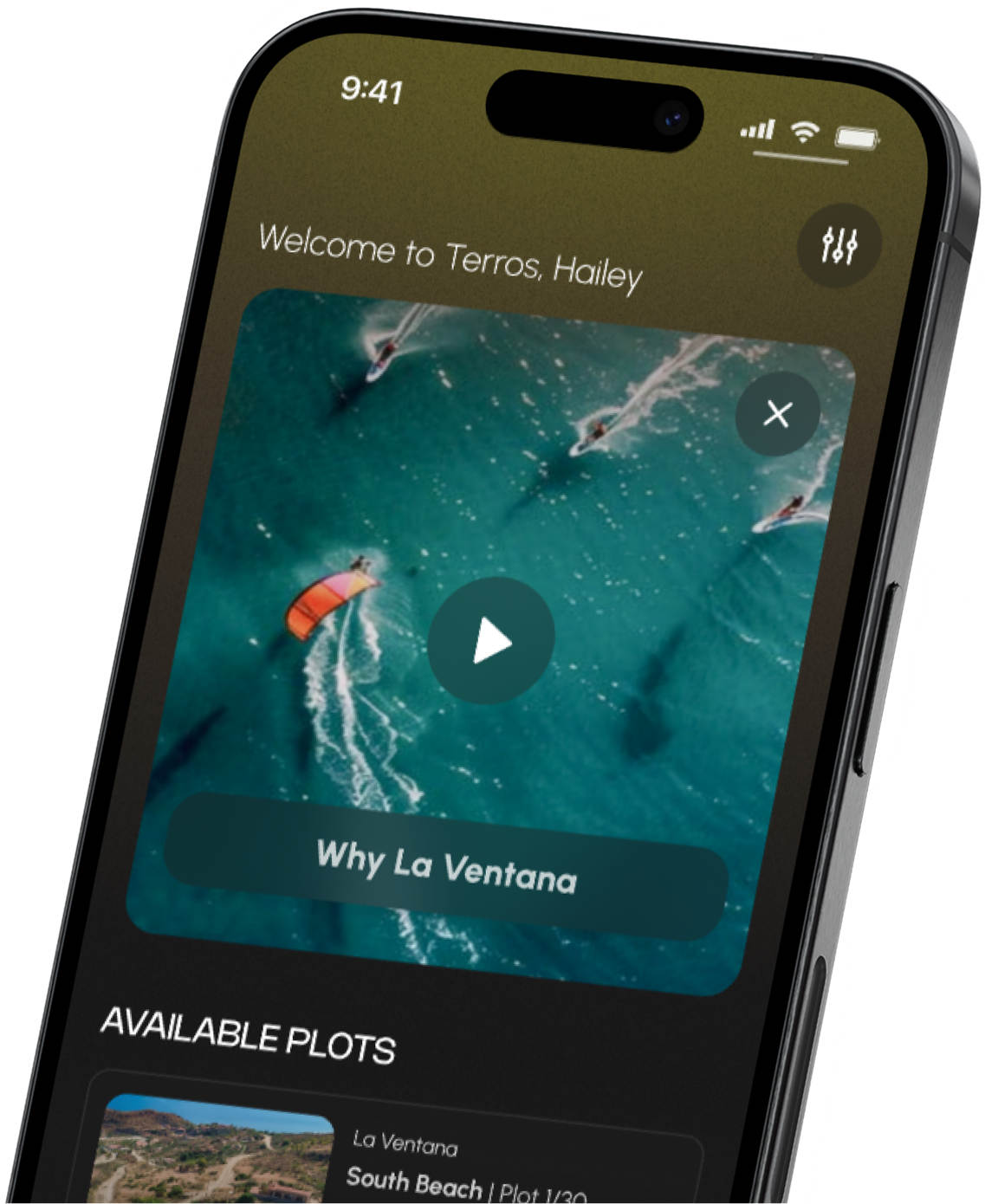
The model has been stress-tested by the most demanding buyers there are. For the United States Navy, we built Brain Bee, a dual-app trivia and professional networking ecosystem that drew 300,000+ early beta players and networkers and cut admin overhead by 80 percent. Program Manager Shadi Azoum reported: “Chop Dawg’s quality of work has been impressive, showcasing their exceptional development knowledge. Their thorough, responsive, and flexible approach has ensured the ongoing success of our project, making them a valuable partner.” For ZBritt, a bilingual home care platform, founder Cheril Brito put the speed plainly: “They have done everything in record time.” And for the fractional land-investment platform Terros, tracking to finish in five months against an original six-to-seven-month estimate, President Victor Nahum Antonio summarized the hybrid value proposition better than we ever could: “we’re getting exceptional work at a very fair price.” Organizations that have trusted Chop Dawg include NASA, the White House, Siemens, and Hilton, alongside hundreds of startups, and our development services page shows how an engagement is structured.
Frequently Asked Questions
What is a hybrid app development agency?
A hybrid agency keeps leadership, product and project management, and senior technical review in the United States while employing its design and engineering teams in lower-cost regions, all inside one company. Clients get US accountability and communication with global labor economics, typically paying a third to a quarter of all-American pricing.
How much cheaper is a hybrid team than an all-US agency?
For the same scope, a blended US-led team typically costs a third to a quarter of an all-American price. In 2026 terms, a focused minimum viable product runs about $25,000 to $60,000 with a hybrid team, while complex products run $75,000 to $150,000 or more, with savings coming from labor geography rather than reduced scope.
Is a hybrid team the same as offshore outsourcing?
No. Offshore outsourcing places leadership, management, and code overseas, with limited time-zone overlap and different business norms. A hybrid model keeps strategy, project management, and senior oversight in the United States while in-house global engineers build under that leadership, preserving US communication standards and accountability while capturing most of the cost savings.
How do hybrid agencies keep quality high with a distributed team?
Through structure: US-based product and project leadership, senior engineers reviewing every change, one company with no subcontracted layers, working-hours overlap with US clients, English fluency across the team, and shared tooling like GitHub, Jira, and Figma with full client visibility. Quality holds because oversight was never offshored, only capacity.
When should I insist on a fully American development team?
Insist on an all-American team when contracts or regulations require it: government and defense projects with citizenship or clearance requirements, data-residency mandates, and certain healthcare or financial procurements. Outside those cases, a properly run US-led hybrid team delivers equivalent quality at significantly lower cost, so let compliance requirements make the call.
How do I verify a team is really in-house and not subcontracted?
Ask directly whether every engineer on your project is an employee, and in which countries they work. Request video introductions to your project manager, lead developer, and designer before signing, and confirm the working hours they keep. Firms with genuine in-house teams offer introductions immediately, while brokers defer until after kickoff.
US Quality, Global Muscle, One Team
Onshore leadership with a global in-house team is not a compromise between American and offshore development, it is the structure that keeps the strengths of the first at a price closer to the second. Whether you are a founder stretching a seed budget or an established company comparing delivery models for your next platform, we will walk you through exactly how our team would staff your project, American, blended, or both, in a free 45-minute consultation, offered whether or not you hire us. Book your consultation today. Founded in 2009 and now in our 18th year, Chop Dawg has launched 500+ products used by more than 1 billion people worldwide, earned a 92% repeat-partner rate, and holds 300+ five-star reviews across trusted directories like Clutch, GoodFirms, G2, Google, and TopDevelopers. Meet the actual team, and judge the model for yourself.



 16 Min