





















 16 Min


To build an event discovery and ticketing app in 2026, you need four connected layers: a discovery feed that helps people find events, a checkout that sells tickets through Stripe (not Apple In-App Purchase, since physical-world tickets are exempt from store billing), QR codes with fast door scanning, and an organizer dashboard that handles sales and refunds. The market keeps climbing: Grand View Research values online event ticketing at $55.4 billion and projects $89.4 billion by 2030, with mobile already the majority of purchases. The pain point is that ticketing punishes failure publicly, at the door, in front of a line. This guide shows you how to build an event discovery and ticketing app that never makes that line wait.
Key Takeaways
- An event ticketing app is four layers: discovery, checkout, QR entry, and organizer tools; weakness in any one breaks the whole experience.
- Real-world event tickets route through Stripe or similar processors, not Apple In-App Purchase, so the 30% store commission does not apply.
- Door scanning must work offline, because venue connectivity fails exactly when a crowd shows up.
- Most ticketing builds run $40,000 to $120,000; multi-organizer marketplaces realistically start around $75,000.
- Refund policy, oversell prevention, and duplicate-ticket detection are product decisions to make before launch, not after the first dispute.
What an Event Discovery and Ticketing App Includes
An event discovery and ticketing app connects three audiences: attendees who browse and buy, organizers who list events and track sales, and door staff who validate entry. One product, three very different users, which is why scoping this category by screens alone always underestimates it.
Decide early which model you are building. A single-organizer app (one venue, one team, one brand) is the leanest version. A multi-organizer marketplace, where anyone can list events and collect money, adds payouts, vetting, and platform liability. A charity-ticketing variant, where proceeds route to causes, adds donation mechanics on top. Each step up the ladder is a real jump in scope and budget.
Must-Have Features When You Build an Event Discovery and Ticketing App
Version one needs event listings with search and filters, ticket checkout with instant confirmation, QR tickets with a scanner mode, an organizer dashboard, and a refund workflow. Personalized alerts and social features earn their keep soon after.
Event listings and discovery
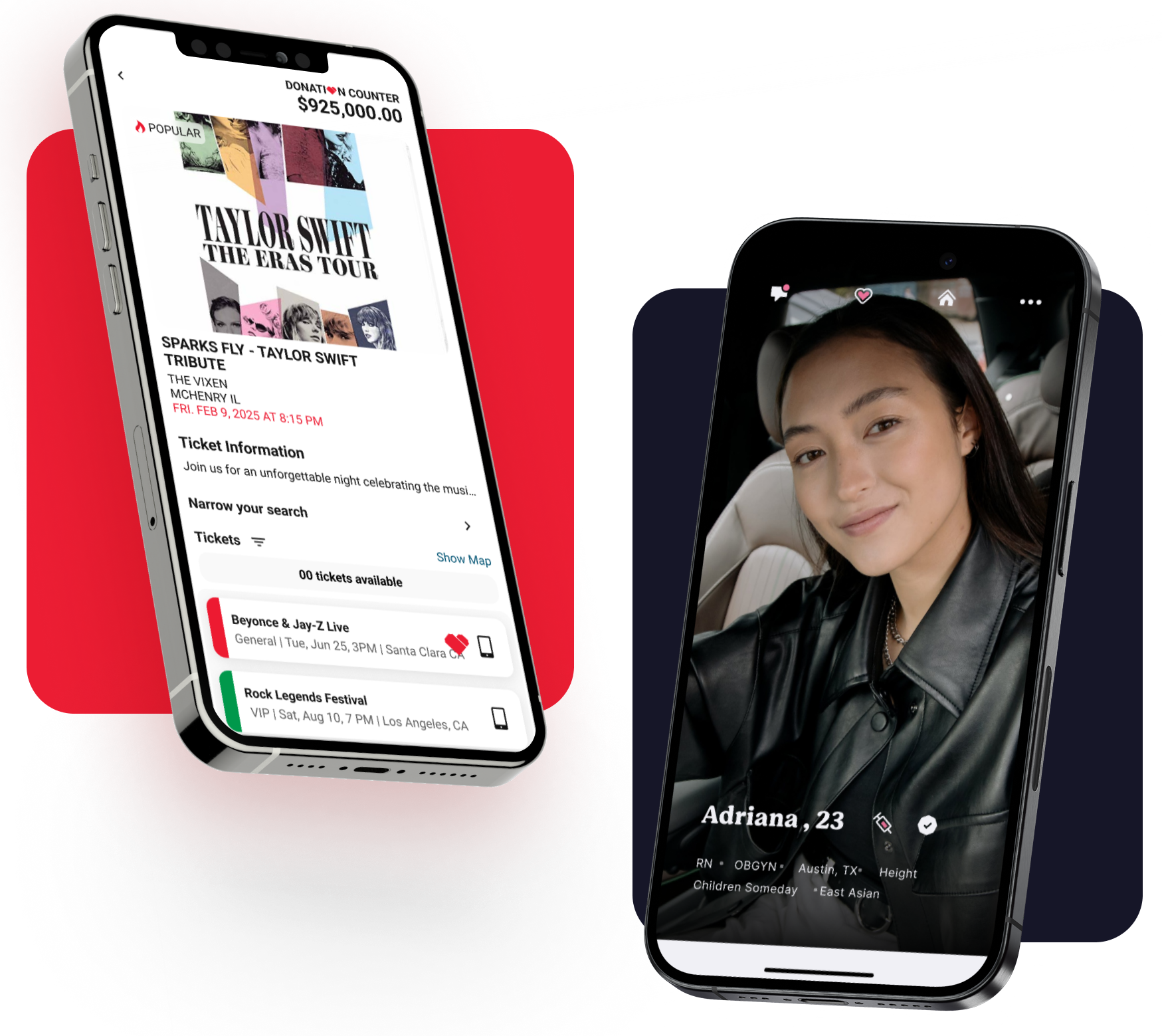
Discovery is browsing by date, category, price, and location, backed by search and a map view. Personalized alerts (follow an artist, a venue, a cause, a neighborhood) turn one-time buyers into repeat users. When we built the City of Peachtree Corners civic app, community-submitted events with staff approval kept the calendar full without staff writing every listing, a pattern any discovery product can borrow.
Ticket purchase through Stripe, not Apple In-App Purchase
Here is the rule that surprises founders: tickets to physical-world events are exempt from Apple In-App Purchase and Google Play Billing, because the stores only tax digital goods. Your checkout runs on Stripe or a similar processor with Apple Pay and Google Pay sheets, you keep roughly 97% instead of 70%, and payouts to organizers flow through Stripe Connect. Getting this wrong in either direction (routing tickets through store billing, or routing digital content around it) causes rejections and lost margin.
QR entry and scanning
Every ticket needs a unique, signed QR code, and door staff need a scanner mode that validates in under a second, flags duplicates instantly, and works offline. Venue Wi-Fi and cell coverage collapse under a crowd, so the scanner must cache the guest list locally and sync when connectivity returns. This one requirement separates ticketing apps that survive launch night from those that do not.
Organizer dashboards
Organizers need to create events, set ticket tiers and quantities, watch sales in real time, message attendees, and export their lists. Give them revenue analytics and they stay; make them email you for numbers and they leave for a platform that does not.
Refunds and transfers
Refund rules, partial refunds, cancellations that refund everyone at once, and ticket transfers between users all need workflows in version one. Events get postponed and canceled constantly, and your support load depends on whether the product handles it or a human does.
Edge Cases and Compliance That Bite Ticketing Apps
Ticketing looks like simple e-commerce until the edge cases arrive. Plan for these five before launch: oversell prevention (inventory locks so two buyers can never purchase the last seat simultaneously), chargeback handling after canceled events, duplicate and screenshot fraud at the door, sales tax that varies by jurisdiction, and resale policy, since several states regulate ticket resale and speculative listing.
Charity variants add one more layer. If proceeds route to nonprofits, buyers expect transparency about the split, nonprofits need verification before they appear in your app, and donation receipts may carry tax implications. Tix4Cause, the charity ticket marketplace we helped build, lets buyers send 50% or 100% of proceeds to a verified cause, which required exactly this vetting and routing machinery. None of this is legal or tax advice; have an attorney review your refund and resale terms.
Recommended Tech Stack for a Ticketing App
Our standard stack for this category: React Native for iPhone and Android from one codebase, React for the organizer web dashboard, Node.js on the backend, PostgreSQL with row-level locking for ticket inventory, and Amazon Web Services (AWS) or Google Cloud Platform for hosting. Stripe handles checkout, and Stripe Connect handles marketplace payouts to organizers.
Two architecture choices carry the category. First, transactional inventory: ticket counts live in the database with locks, never in application memory, so overselling is impossible by design. Second, signed QR payloads with an offline validation list, so the door never depends on the network. Everything else is conventional product engineering.
Get Your Free 45-Minute App Roadmap
Meet 1-on-1 with our senior product team. We’ll map your MVP or enterprise app and hand you a personalized plan—clear scope, a realistic timeline, and fixed monthly costs—for iOS & Android, web, tablets & wearables, and AI.
Timeline and Cost to Build a Ticketing App in 2026
Across 500+ launches since 2009, ticketing builds sort cleanly by model. A single-organizer app fits the standard minimum viable product (MVP) band of $25,000 to $60,000. Most event discovery and ticketing builds land between $40,000 and $120,000. A true multi-organizer marketplace with payouts, vetting, and platform tooling realistically starts around $75,000 and runs to $150,000 or more.
| Scope | Typical cost | Typical timeline |
|---|---|---|
| Single organizer: listings, checkout, QR entry, basic dashboard | $25,000 to $60,000 | 3 to 5 months |
| Full product: discovery feed, alerts, refunds, analytics | $60,000 to $120,000 | 4 to 8 months |
| Marketplace or charity platform: multi-organizer payouts, vetting | $75,000 to $150,000+ | 6 to 12+ months |
These figures already reflect the 2026 discount: AI-assisted engineering (Claude Code and Cursor, with senior engineers reviewing every line) has cut 2020 to 2023 costs and timelines roughly in half. A clean Apple review usually clears in 24 to 48 hours, but your DUNS number takes about a month and developer accounts take 2 to 3 weeks, so start both during design.
Common Pitfalls in Event and Ticketing Builds
Five mistakes account for most of the pain in this category:
- Routing tickets through Apple In-App Purchase. You surrender 30% of every sale that the rules never required you to give up.
- Scanner that needs the network. Venue connectivity dies with crowds; offline validation is mandatory.
- No inventory locks. Overselling a sold-out event destroys organizer trust in one night.
- Refunds handled by email. Cancellations happen weekly; without workflows, support drowns.
- Launching discovery with an empty calendar. Seed real events before public launch, or the first impression is a ghost town.
How Chop Dawg Approaches Event and Ticketing Products
We have shipped this category from three different angles. For Tix4Cause, we delivered an investor-ready prototype and frontend development for a charity ticket marketplace with donated and standard listings, a nonprofit discovery hub, personalized alerts, and secure payments. Co-founder Mary Nemetz said it best: “The team has done a great job developing our apps’ complicated workflow, delivering what they’ve committed to on time. Their professionalism is unsurpassed.” For the City of Peachtree Corners, Georgia, our civic app with a live events calendar and user-submitted events drew thousands of downloads within its first month and a spike in foot traffic at local restaurants and shops. And Group It Up handles the group side of events, collecting money from members through Stripe Connect with scheduled payment plans and automatic group messaging.
The team model matters as much as the portfolio. Chop Dawg is US-headquartered and US-led: American leadership, product and project management, senior development, senior design, and senior quality assurance (QA), backed by our in-house Brazilian design team and our in-house development, QA, and project management teams in Pakistan and India. Everyone is a Chop Dawg employee assigned directly to your project, fluent in English, working US hours. That structure eliminates the two fears that haunt this industry: the lone American salesperson fronting hidden offshore subcontractors, and the faceless overseas shop with no US business norms and no overlap with your workday. Regulated or government work can choose an all-American team; most partners choose the blended model for the same quality at a friendlier budget. Organizations that have trusted Chop Dawg include Six Flags, FOX Sports, and the City of Peachtree Corners. Our development services and proven process pages show exactly how a build like this runs.
Frequently Asked Questions
How much does it cost to build an event ticketing app?
A single-organizer ticketing app runs $25,000 to $60,000, most full discovery-and-ticketing builds land between $40,000 and $120,000, and multi-organizer marketplaces realistically start around $75,000 and can exceed $150,000. The jump comes from payouts, organizer vetting, and platform tooling, not from the ticket screens themselves.
How long does it take to build a ticketing app?
Plan 3 to 5 months for a focused single-organizer app and 4 to 8 months for a full product with discovery, alerts, and refund workflows. Marketplaces run 6 to 12 months or more. Add calendar time for DUNS registration (about a month) and developer account approval before launch.
Do event tickets have to use Apple In-App Purchase?
No. Tickets to physical-world events are exempt from Apple In-App Purchase and Google Play Billing, which only govern digital goods. Your checkout runs through Stripe or a similar processor, keeping processing costs near 3% instead of 30%. Only digital add-ons like streamed content would require store billing.
How does QR ticket scanning work at the door?
Each ticket carries a unique, cryptographically signed QR code. The scanner app validates the signature, checks the ticket against the event’s guest list, and marks it used so duplicates fail instantly. A production-grade scanner caches the list locally and works offline, syncing once venue connectivity returns.
How do ticketing apps make money?
The dominant model is a per-ticket service fee, either added to the buyer’s total or absorbed by the organizer. Marketplaces may also take a platform percentage, offer premium organizer subscriptions, or sell promoted event placement. Charity variants typically charge modest fees while routing the balance of proceeds to verified causes.
Get the Line Moving
Build discovery that fills calendars, checkout that keeps its margin, doors that scan offline, and refunds that run themselves, and you have a ticketing product organizers stay loyal to. Chop Dawg has been shipping products like this since 2009, now in our 18th year, with 500+ launches used by more than 1 billion people, a 92% repeat-partner rate, and 300+ five-star reviews across trusted directories like Clutch, GoodFirms, G2, Google, and TopDevelopers. Whether you are a founder chasing a ticketing niche or a venue, city, or cause bringing events in-house, book a free 45-minute consultation, offered whether or not you hire us. We will map your scope against honest numbers, and you can check our pricing and our success stories before we ever get on a call.



 16 Min