























 17 Min


To build a staffing or shift-work marketplace app in 2026, you need to engineer trust on both sides of the transaction: verified workers businesses can book confidently, and guaranteed payment workers can rely on. That means identity and credential verification, background checks through providers like Checkr, shift scheduling that survives real-world chaos, and escrow-style payments with automated payouts through Stripe Connect. Expect budgets from about $75,000 and six to twelve months to a defensible launch. The market you are digitizing is enormous: US staffing firms provide jobs for some 11 million temporary and contract employees per year, according to the American Staffing Association. The failure mode is predictable, too: marketplaces that launch without trust infrastructure become no-show generators. Here is the build that avoids it.
Key Takeaways
- A staffing or shift-work marketplace lives or dies on verification: government ID, certifications, and background checks through providers like Checkr, before a worker ever appears in search.
- Payments follow a marketplace pattern: funds held at booking through Stripe Connect, released on shift completion, with automated payouts and tip handling.
- Ratings, dispute consoles, and no-show policies are operational infrastructure, not nice-to-haves, because one bad fill costs a business client forever.
- Worker classification matters: most shift marketplaces run on 1099 contractor rails, which shapes onboarding, tax forms, and what control you can exert over workers.
- Two-sided staffing marketplaces start around $75,000 in 2026 and commonly run $75,000 to $150,000 or more; simpler single-sided scheduling tools run $25,000 to $60,000.
What a Staffing or Shift-Work Marketplace Actually Is
A staffing or shift-work marketplace connects businesses that need shifts covered with vetted workers who want flexible work, handling discovery, booking, payment, and accountability in one platform. Think bartenders for events, caregivers for healthcare facilities, cooks for restaurants, warehouse labor for peak weeks, sitters for families.
The product is really three products: a worker app (profile, shifts, earnings), a business portal (post shifts, review candidates, manage fills), and an admin operations center (verification queues, disputes, payouts, compliance). Founders who budget only for the first one discover the other two during development, which is the expensive way to discover things.
Must-Have Features on Both Sides of the Marketplace
The feature set divides cleanly by audience, and the discipline is building the minimum that makes both sides feel safe transacting with strangers.
- Verified worker profiles. Government ID verification, certification uploads (bartending licenses, CPR cards, nursing credentials) with expiration tracking, and third-party background checks integrated through providers like Checkr. Verification status gates visibility: unverified workers do not appear in search.
- Shift scheduling. Businesses post shifts with role, pay, location, and requirements; workers browse, filter by distance and availability, and claim or apply. Recurring shifts, multi-worker bookings, and last-minute urgent fills each need their own flow, and calendar sync plus reminders cut no-shows measurably.
- Escrow-style payments and automated payouts. The business’s payment is captured at booking and held, then released to the worker after shift completion through Stripe Connect, with the platform fee deducted automatically. Tips, bonuses, and overtime adjustments need clean flows, and payout speed is a worker-retention feature: fast, predictable money is why workers stay.
- Ratings both directions. Businesses rate workers, workers rate businesses, and both scores influence matching. One-sided rating systems breed the exact behavior they ignore.
- Dispute consoles. No-shows, early departures, hour disputes, and conduct reports flow into an admin queue with evidence, timelines, and resolution actions, backed by clear published policies. Automated flagging helps your team prioritize, but a human resolves the edge cases.
The Trust and Payments Stack
Across 500+ launches since 2009, we have watched two-sided marketplaces succeed or fail on this exact stack, and the pattern is consistent enough to put in a table.
| Layer | Typical approach | What it protects |
|---|---|---|
| Identity verification | Government ID plus selfie match during onboarding | Businesses, from impostors and account sharing |
| Background checks | Third-party providers like Checkr, integrated by application programming interface (API), rerun on a schedule | End customers, patients, and your platform’s reputation |
| Credential verification | Document uploads with human review queues and expiration alerts | Regulated roles: healthcare, alcohol service, childcare |
| Payments | Stripe Connect: capture at booking, hold, release on completion, automated payouts | Workers, from nonpayment; businesses, from paying for no-shows |
| Tax compliance | W-9 collection at onboarding and automated 1099 generation | The platform, at tax season |
| Accountability | Two-way ratings, dispute console, enforced no-show policies | Everyone, from the small percentage who ruin marketplaces |
Compliance: 1099 Rails and the Healthcare Nuances
Most shift marketplaces engage workers as 1099 independent contractors, which means collecting W-9 information at onboarding, generating 1099 forms annually, and, critically, designing the product so you are matching contractors with clients rather than directing employees. Classification rules differ by state and evolve, so have employment counsel review your model, your terms, and even your interface language before launch.
Healthcare staffing adds a second layer. Credential verification becomes clinical: licenses, certifications, immunization records, and facility-specific requirements, each with expiration tracking and audit trails. And while a staffing marketplace is not automatically a Health Insurance Portability and Accountability Act (HIPAA) covered entity, your platform touches facilities that live under it, so HIPAA-aware architecture (encryption, access controls, audit logs, and careful data minimization) is the standard facilities will expect during procurement. Build it early; retrofitting is far more expensive than designing for it.
Get Your Free 45-Minute App Roadmap
Meet 1-on-1 with our senior product team. We’ll map your MVP or enterprise app and hand you a personalized plan—clear scope, a realistic timeline, and fixed monthly costs—for iOS & Android, web, tablets & wearables, and AI.
Recommended Tech Stack
We recommend React Native for the worker apps on iOS and Android, React for the business portal and admin operations center, a Node.js backend, and Google Cloud Platform or Amazon Web Services (AWS) with Firebase for push notifications and real-time shift updates. Stripe Connect handles held payments and payouts, Twilio covers SMS reminders, and Checkr-style APIs handle screening.
The admin operations center deserves senior design attention, because your operations team will spend their entire day inside verification queues, dispute workflows, and payout dashboards, and their speed is your margin.
What It Costs to Build a Staffing or Shift-Work Marketplace App
Two-sided staffing marketplaces start around $75,000 in 2026 and commonly run $75,000 to $150,000 or more, reflecting the three-surface build (worker app, business portal, admin center) plus verification and payment infrastructure. For calibration, a focused single-audience scheduling tool runs $25,000 to $60,000, and the gap between those numbers is exactly the trust stack described above. Timelines run six to twelve months for a marketplace, three to six for simpler tools. AI and agent-assisted coding (Claude Code and Cursor, with senior engineers reviewing every change) has cut what these builds cost in 2020 to 2023 roughly in half, which is why vertical staffing marketplaces that once required venture backing now launch on founder and angel budgets. A clickable non-functional prototype (NFP) from about $10,000 lets you validate both sides’ workflows and pitch investors before committing to development; our costs and pricing guide covers how fixed monthly budgets keep the full build predictable.
Common Pitfalls in Staffing Marketplace Builds
- Launching both sides everywhere. Density wins: one metro, one vertical, supply recruited first, then demand. A 200,000-event market in one city beats a thin national launch.
- Weak verification to grow supply faster. Every unvetted worker who no-shows costs you a business account worth hundreds of future bookings.
- Paying workers slowly. Payout speed is the worker-side retention lever; design for fast, predictable transfers from day one.
- No dispute playbook. Publish policies for no-shows, cancellations, and hour disputes before launch, and build the console that enforces them consistently.
- Ignoring store logistics. Apple developer approval takes two to three weeks and a DUNS number about a month, in your own name; clean submissions clear Apple review in 24 to 48 hours in 2026, and rejection cycles are the real risk.
Where Chop Dawg Fits
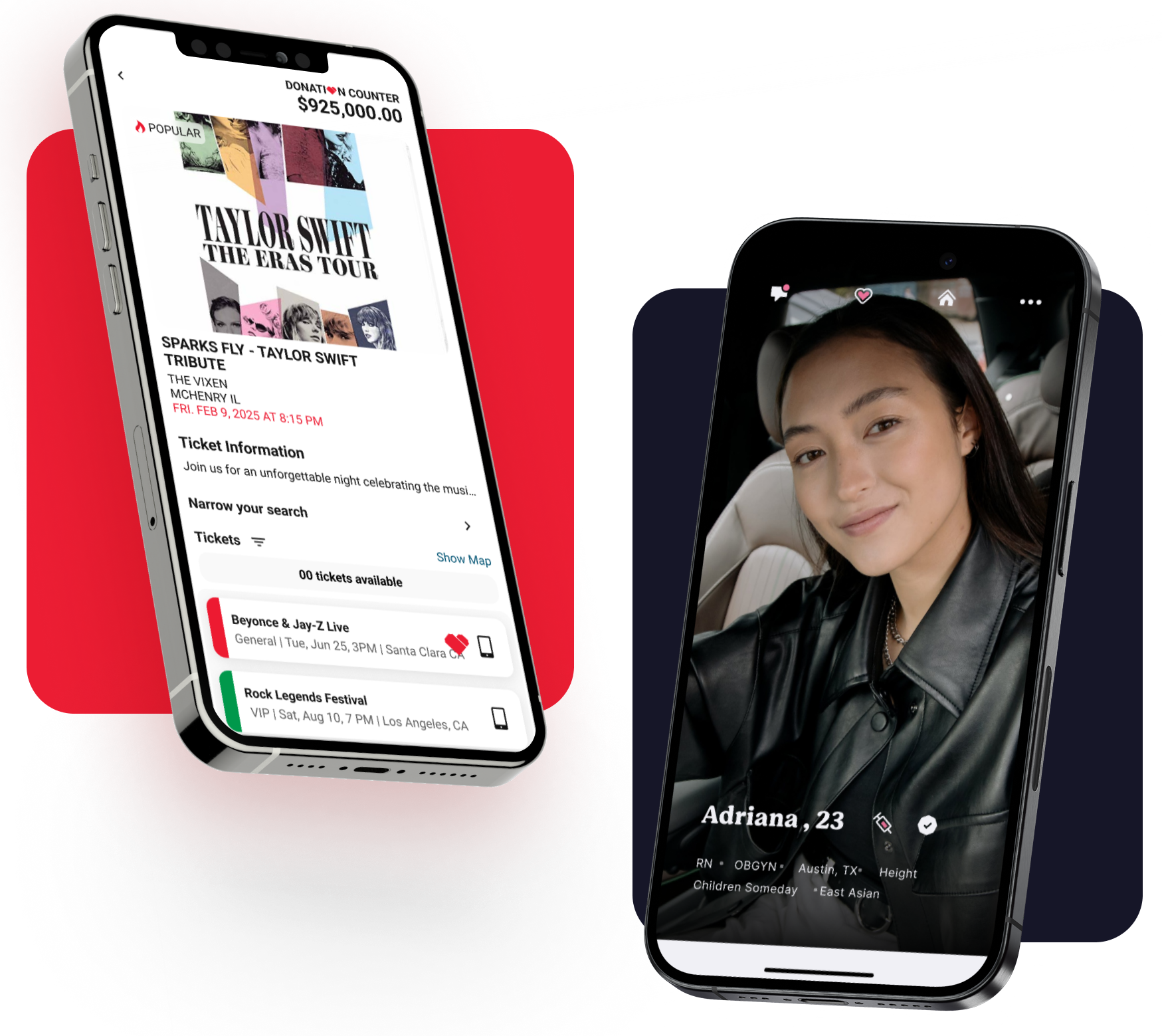
Staffing and gig marketplaces are one of our most active categories, and the portfolio shows the range. For the Bartender Host Marketplace, built for Young Event Group, hosts book verified bartenders with escrow payments through Stripe Connect, automated tip release, ID verification, and a dispute and safety console with AI flagging; the platform cuts booking time from days to minutes and targets San Francisco’s 200,000-event market first. For QuickPro, a home-services marketplace with swipe-to-match mechanics, we built verified provider onboarding covering government ID, license, insurance, and third-party background checks. Founder Cameron Vollerthum reported: “Chop Dawg has consistently hit every milestone on time while sticking to our monthly deadlines… Their hardworking ethic and attention to detail have been truly impressive!” On the healthcare side, CarePool connects facilities with verified caregivers and nurses, with credentialing and HIPAA-supporting architecture that cut onboarding from weeks to days, and co-founder Jazmine Dredd credits the build with a prototype “that has impressed our investors.” We also designed FAST, a childcare marketplace with Checkr-integrated background checks and certification uploads.
Chop Dawg is US-headquartered and US-led: Americans own leadership, product and project management, senior development, senior design, and senior quality assurance (QA), working alongside our in-house Brazilian design team and our in-house development, QA, and project management teams in Pakistan and India. Everyone is a Chop Dawg employee assigned directly to your marketplace, fluent in English, on US hours. That kills both industry fears in one structure: no American salesperson fronting hidden offshore subcontractors, and no faceless overseas shop that cannot join tomorrow’s standup. Regulated builds can go fully American; most partners choose the blended team for identical quality at lower cost. Either way you get daily Slack, bi-weekly development Zooms, and full code ownership from day one. Our proven process and development services pages show exactly how we phase two-sided builds.
Frequently Asked Questions
How much does it cost to build a staffing marketplace app?
Two-sided staffing marketplaces start around $75,000 in 2026 and commonly run $75,000 to $150,000 or more, covering the worker app, business portal, admin operations center, verification, and payments. Simpler single-audience scheduling tools run $25,000 to $60,000. AI-assisted development has roughly halved comparable costs from a few years ago.
How long does it take to launch a shift-work marketplace?
Plan six to twelve months for a full two-sided marketplace and three to six months for a focused first version. Supply recruitment should run in parallel with development so verified workers exist at launch, and store logistics (Apple developer approval, DUNS number) start a month or more ahead.
How do background checks work in a staffing app?
Workers consent during onboarding, the platform submits their information to a screening provider like Checkr through an API, and results return to an admin review queue. Passing gates their visibility in search. Most platforms also rerun checks periodically and track certification expirations, especially in healthcare and childcare verticals.
How should a marketplace handle 1099 compliance?
Collect W-9 information during worker onboarding, track annual earnings per worker, and generate 1099 forms automatically at year end, which Stripe Connect tooling supports. Just as important, have employment counsel review your model and product language so worker classification holds up as state rules evolve.
What extra requirements do healthcare staffing apps have?
Healthcare staffing adds clinical credential verification (licenses, certifications, immunizations) with expiration tracking and audit trails, plus HIPAA-aware architecture: encryption, role-based access, and audit logging. Facilities expect these during procurement, so building them early is what turns pilot conversations into signed contracts rather than security-review dead ends.
How do I solve the chicken-and-egg problem in a staffing marketplace?
Recruit and verify supply first in one metro and one vertical, often paying early workers guarantees, then sell demand into that density. Concentrated liquidity produces fill rates worth advertising, and fill rate is the metric that compounds: businesses return to marketplaces that cover shifts the first time.
Fill the First Shift Right, Then the Next Ten Thousand
A staffing or shift-work marketplace becomes durable when verification is real, payment is guaranteed, and disputes have a referee, because trust is the product. Whether you are a founder who knows a vertical’s staffing pain firsthand or an established staffing firm going digital, book a free 45-minute consultation and we will map your marketplace’s scope, sequence, and budget honestly, whether or not you build with us. Chop Dawg has partnered with founders and enterprises since 2009, now in our 18th year: 500+ products launched, used by more than 1 billion people, with 92% of partners returning and 300+ five-star reviews across trusted directories like Clutch, GoodFirms, G2, Google, and TopDevelopers. Explore our success stories for the marketplace builds referenced above.



 16 Min