


















 16 Min


To build a language learning app in 2026, you need five systems: a lesson engine driven by a flexible content model, spaced repetition to make learning stick, audio playback with speech scoring, streaks and gamification to build the habit, and subscriptions to pay for it all. The market rewards teams that get this right. Business of Apps reports Duolingo reached 128 million monthly active users and crossed $1 billion in annual revenue in 2025. The trap most founders miss is not code at all: it is content, the thousands of exercises your engine needs before day one. This guide covers how to build a language learning app, including the hidden costs nobody budgets for.
Key Takeaways
- A language learning app is a lesson engine plus a content model; separating the two is the most important architecture decision you will make.
- Spaced repetition, speech scoring, and streak mechanics are the three features that drive retention and learning outcomes.
- Content creation is the hidden cost: budget for curriculum design and thousands of exercises alongside the software itself.
- Most language learning apps cost $40,000 to $120,000 to build; a focused minimum viable product (MVP) runs $25,000 to $60,000.
- Subscriptions are digital goods, so they flow through Apple In-App Purchase and Google Play Billing, at 15% commission for most startups under $1 million.
What a Language Learning App Really Is
Strip away the mascots and a language learning app is two things: an engine that serves interactive exercises, and a content model that describes lessons as data. The engine knows how to render a multiple-choice question, a listening drill, or a speaking prompt. The content tells it what to render and in what order.
Keep those two layers separate and everything gets easier: educators add lessons without engineers, new languages launch without new code, and experiments run on content instead of releases. Fuse them together and every lesson change becomes a development ticket. This one decision, made in week one, determines whether your app can grow a curriculum or just display one.
Must-Have Features When You Build a Language Learning App
Version one needs a lesson engine with a handful of exercise types, spaced repetition review, audio with speech scoring, progress tracking with streaks, and a subscription paywall. That is the complete loop: learn, review, practice speaking, come back tomorrow, and pay for more.
Lesson engine and content model
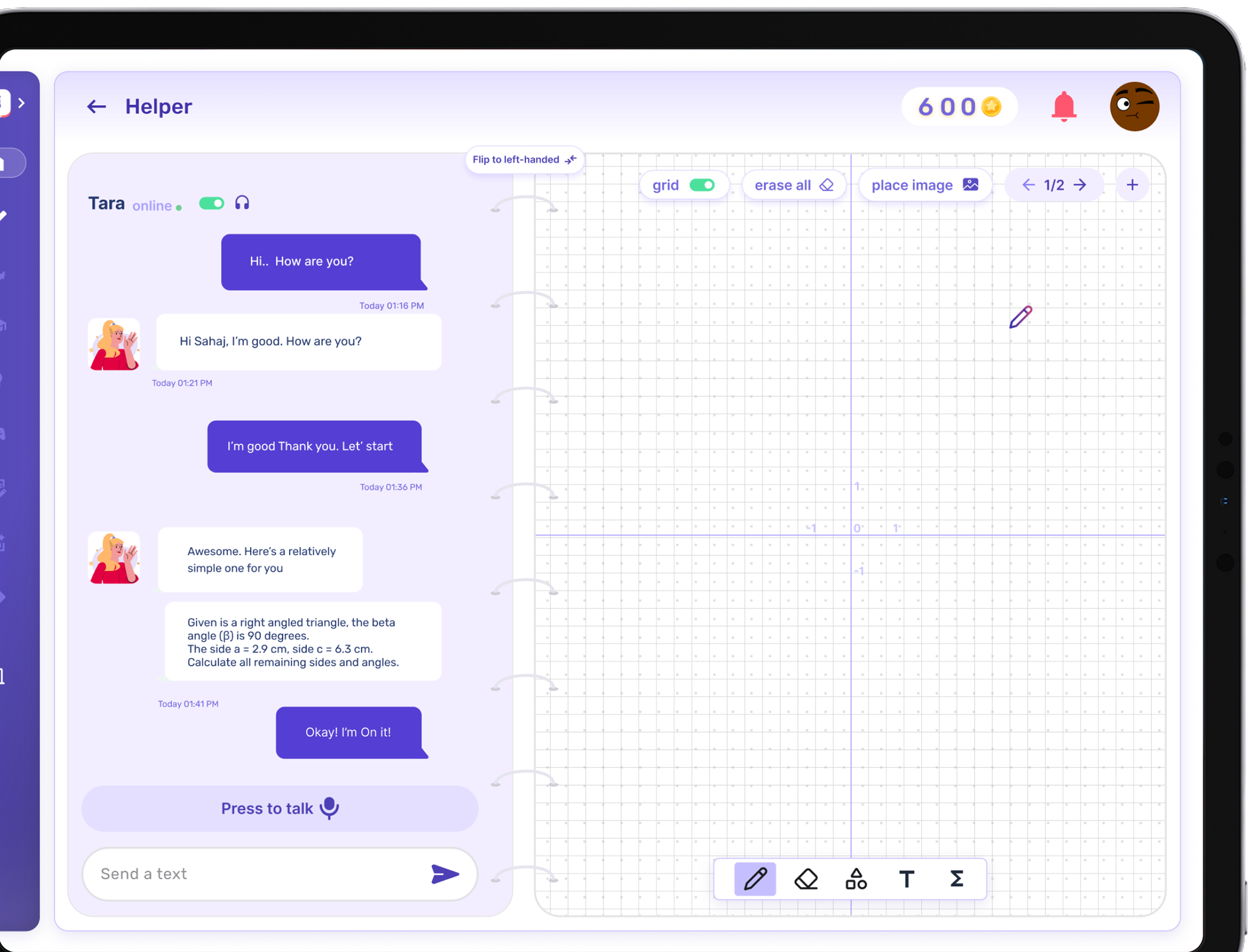
Design 5 to 8 exercise types (translate, match, listen, fill the blank, speak) and store lessons as structured data your team edits in an admin tool. When we built MathDistract, a configurable quiz engine with five difficulty levels let the founders tune challenges and add content without touching code. The same pattern powers language products: engine once, content forever.
Spaced repetition
Spaced repetition resurfaces material right before a learner would forget it, spacing reviews further apart with each success. It is decades-old cognitive science and it is the difference between an app that entertains and an app that teaches. Track a strength score per word or concept, decay it over time, and feed weak items into daily review sessions.
Audio and speech scoring
Learners need to hear native pronunciation and be scored on their own. Text-to-speech has become excellent and inexpensive, and speech-recognition application programming interfaces (APIs) return pronunciation confidence scores you can turn into feedback. Keep scoring forgiving early: a beginner who gets marked wrong on every sentence quits by Thursday.
Streaks and gamification
Daily streaks, experience points, leaderboards, and unlockable levels are retention machinery, and they matter because language learning succeeds on consistency rather than intensity. Design the streak to be protected (grace days, streak freezes), because losing a 40-day streak to one busy Tuesday is the top uninstall trigger in this category.
Subscriptions
The proven model is freemium: a genuinely useful free tier and a premium subscription for depth (offline lessons, unlimited practice, harder tracks). Because subscriptions are digital goods, they must run through Apple In-App Purchase and Google Play Billing. The commission is 30%, or 15% through the App Store Small Business Program for developers under $1 million, which covers nearly every new learning app. A subscription-management service such as RevenueCat, which we used in MathDistract, keeps receipts and entitlements sane across both stores.
Content Creation Is the Hidden Cost
Here is the line item that surprises founders: the software is often only half the project. A credible launch curriculum needs hundreds of lessons and thousands of exercises, each written, translated, recorded or generated as audio, reviewed by a fluent speaker, and sequenced by difficulty.
Plan content like a second workstream with its own owner and budget. In 2026, AI models from OpenAI and Anthropic can draft exercises, distractors, and example sentences at scale, but human review by fluent speakers remains non-negotiable because learners trust you with correctness. A practical launch scope: one language pair, done deeply, rather than five done thin.
Recommended Tech Stack for a Language Learning App
Our standard stack for this category: React Native for a single iPhone and Android codebase, Node.js on the backend, PostgreSQL for content and progress data, Firebase for analytics and crash reporting, and Amazon Web Services (AWS) or Google Cloud Platform for hosting. Speech recognition and text-to-speech come from mature APIs, and AI-assisted content generation runs through OpenAI or Anthropic models with human editors approving output.
The architecture rule that pays for itself: treat lessons, audio, and exercise definitions as content served from your backend, so curriculum updates never wait on an app store release. Ship the engine in the binary and stream everything else.
Get Your Free 45-Minute App Roadmap
Meet 1-on-1 with our senior product team. We’ll map your MVP or enterprise app and hand you a personalized plan—clear scope, a realistic timeline, and fixed monthly costs—for iOS & Android, web, tablets & wearables, and AI.
Timeline and Cost to Build a Language Learning App in 2026
Across 500+ launches since 2009, education builds cluster into three tiers, and the spread depends on speech features, content volume, and gamification depth. A focused MVP runs $25,000 to $60,000. Most language learning apps land between $40,000 and $120,000 once speech scoring, spaced repetition, and a real content pipeline are included. Deep platforms with live tutoring, classrooms, or multi-language launch run $75,000 to $150,000 or more.
| Scope | Typical cost | Typical timeline |
|---|---|---|
| Focused MVP: lesson engine, one language pair, streaks, subscriptions | $25,000 to $60,000 | 3 to 5 months |
| Full product: speech scoring, spaced repetition, admin content tools | $60,000 to $120,000 | 4 to 8 months |
| Complex platform: tutoring, classrooms, multiple languages | $75,000 to $150,000+ | 6 to 12+ months |
Add a content budget on top of these figures, sized to your curriculum. The good news: AI-assisted engineering (Claude Code, Cursor, with senior engineers reviewing every change) has roughly halved 2020 to 2023 build costs, and AI drafting has done the same for exercise content. A clean Apple submission is usually reviewed within 24 to 48 hours in 2026; the slow parts are the DUNS number (about a month) and developer accounts (2 to 3 weeks), so start those early.
Common Pitfalls in Language Learning Apps
Watch for the five mistakes that sink most projects in this category:
- Hard-coding lessons into the app. Every curriculum change becomes an engineering ticket and a store release.
- Budgeting zero for content. An empty engine teaches nothing; content is a workstream, not an afterthought.
- Launching five languages thin. One deep language pair beats five shallow ones on retention and reviews.
- Punishing streak loss. Unforgiving streaks trade short-term engagement for uninstalls.
- Routing subscriptions around store billing. Digital goods must use Apple In-App Purchase and Google Play Billing; workarounds get apps rejected.
Where Chop Dawg Fits in an Education Build
Chop Dawg has been building learning and quiz-driven products since 2009, and the machinery of this category (configurable engines, gamification, freemium monetization) shows up across our portfolio. MathDistract is a full MVP on both stores with a configurable quiz engine, five difficulty levels, streaks and leaderboards, and RevenueCat-managed subscriptions. For the United States Navy, we built Brain Bee, a trivia and training ecosystem that drew 300,000+ early beta players and networkers despite limited marketing, with customizable question databases suited to specialized training. Navy program manager Shadi Azoum called the work “impressive, showcasing their exceptional development knowledge.” And for Visionz Group, we delivered a high-fidelity non-functional prototype (NFP) of a life-skills eLearning app, the design-first route founders use to validate curriculum and raise funding before development spend.
Every project runs on a team model built to eliminate the two fears founders bring to agency shopping: the lone American salesperson fronting hidden offshore developers with no accountability, and the faceless overseas shop with no US business norms or time-zone overlap. Chop Dawg is US-headquartered and US-led (leadership, product and project management, senior development, senior design, senior quality assurance), backed by our own in-house Brazilian design team and in-house development, quality assurance, and project management teams in Pakistan and India. All in-house, fluent English, US hours. Choose all-American staffing or the cost-effective blend most partners choose. Organizations that have trusted Chop Dawg include MIT, Rutgers University, Southern New Hampshire University, and the University of Pennsylvania. Start with strategic planning or go straight to design services if your curriculum is ready.
Frequently Asked Questions
How much does it cost to build a language learning app?
A focused MVP with a lesson engine, one language pair, streaks, and subscriptions runs $25,000 to $60,000. Most full builds with speech scoring and spaced repetition land between $40,000 and $120,000, and complex tutoring platforms reach $150,000 or more. Budget separately for curriculum content creation.
How long does it take to build a language learning app?
Plan 3 to 5 months for a focused MVP and 4 to 8 months for a full product with speech scoring and admin content tools. Content creation runs in parallel and often becomes the schedule driver, so start writing and recording lessons the same week design begins, not after development ends.
How does speech scoring work in a language app?
Your app records the learner, sends the audio to a speech-recognition API, and receives a transcript with confidence scores per word. You convert those scores into friendly feedback and pronunciation hints. Modern APIs make this an integration task rather than a research project, and forgiving thresholds keep beginners motivated.
How much content do I need at launch?
Enough for 30 to 60 days of daily use in one language pair, typically a few hundred lessons built from thousands of exercises. AI drafting has made that volume affordable in 2026, but every exercise still needs review by a fluent speaker, because a single wrong answer key costs you trust and reviews.
Do subscriptions have to go through Apple and Google billing?
Yes. Learning subscriptions are digital goods, so they must use Apple In-App Purchase and Google Play Billing. The commission is 30%, reduced to 15% under the App Store Small Business Program for developers earning under $1 million per year, which covers nearly every new education startup at launch.
Teach Something That Sticks
Build the engine and the content model as separate layers, put spaced repetition and speech at the core, protect the streak, and budget content like the second project it is. When you want a partner who has shipped this machinery before, Chop Dawg has been at it since 2009, now in our 18th year: 500+ products launched, used by over 1 billion people, 92% repeat partners, and 300+ five-star reviews across trusted directories like Clutch, GoodFirms, G2, Google, and TopDevelopers. Whether you are a founder with a curriculum idea or an institution bringing learning to mobile, book your free 45-minute consultation. It is genuinely free, useful whether or not you hire us, and you will walk away knowing exactly what your app will take to build. Our pricing page has the full numbers if you want them first.


 16 Min