



















 15 Min

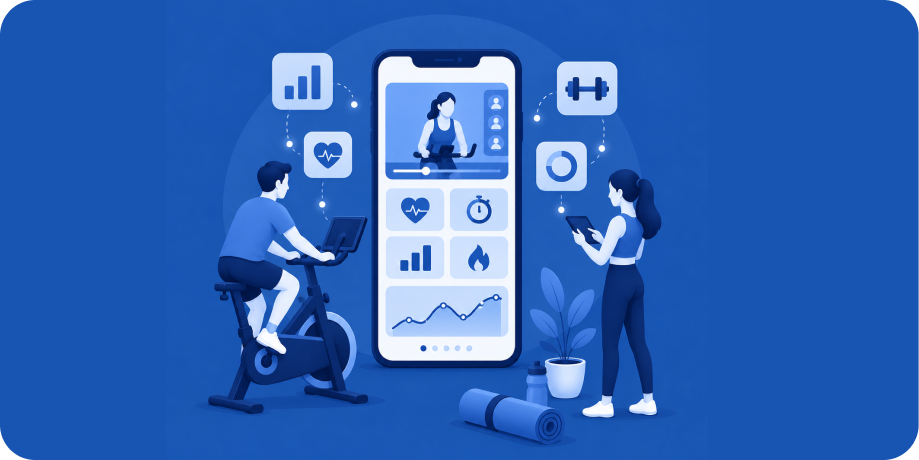
The cost to build an app like Peloton in 2026 depends on which Peloton you mean: a software-only class platform with live and on-demand workouts runs $60,000 to $150,000, while a full content-plus-software platform with hardware integration honestly runs $100,000 to $250,000 or more. Those are real ranges from an agency that builds in this category, not lowball bait. The prize is worth understanding: Business of Apps reports Peloton generated $2.4 billion in 2025, with its subscription services segment earning double its hardware revenue. Connected fitness is a software and content business wearing a hardware costume. This guide breaks down where every dollar goes and which costs you can skip.
Key Takeaways
- A software-only class app with live and on-demand video costs $60,000 to $150,000 in 2026; content-plus-hardware platforms run $100,000 to $250,000+.
- Live streaming infrastructure is rented, not built: providers in the Mux and Agora mold turn a multimillion-dollar problem into a five-figure integration plus usage fees.
- Video production is an operating cost, not a development cost, and founders should budget for both separately.
- You do not need your own bike: Bluetooth fitness standards let your app talk to equipment people already own.
- Subscriptions sold in-app run through Apple In-App Purchase at 30%, or 15% under the App Store Small Business Program until you pass $1 million.
How Much Does It Cost to Build an App Like Peloton in 2026?
Budget $60,000 to $150,000 for a class platform: live-streamed sessions, an on-demand library, subscriptions, leaderboards, and progress tracking on iOS and Android. Add branded hardware integration, instructor tooling at scale, and studio-grade content operations and you are honestly in $100,000 to $250,000+ territory.
Across 500+ launches since 2009, the connected fitness pattern we see is that founders overestimate the hardware problem and underestimate the content treadmill. Peloton’s moat was never just the bike; it was a class library refreshed daily by a production studio. Your build cost buys the stage. Your operating budget pays the performers, the streaming minutes, and the content calendar. Any honest estimate keeps those two numbers separate, and any agency that quotes you one number for both is hiding something.
Feature-by-Feature Cost Breakdown
These ranges assume React Native for cross-platform delivery (native quality without paying for two builds), a Node.js backend, and rented video infrastructure rather than homegrown streaming.
| Feature | What it covers | Typical 2026 cost |
|---|---|---|
| Accounts, onboarding, and profiles | Sign-up, fitness goals, class preferences, reminders | $4,000 to $8,000 |
| Live streaming integration | Provider integration (Mux/Agora-style), broadcast flows, latency tuning | $10,000 to $25,000 |
| On-demand video library | Upload pipeline, encoding, player, offline-friendly delivery | $8,000 to $20,000 |
| Class discovery and scheduling | Calendars, filters by length and intensity, bookings, notifications | $5,000 to $12,000 |
| In-class experience | Chat, participant counts, instructor shoutout tooling, metric overlays | $6,000 to $15,000 |
| Leaderboards, streaks, and badges | Gamified progress, challenges, milestone rewards | $6,000 to $14,000 |
| Subscriptions and billing | Apple In-App Purchase, Google Play Billing, entitlements, trials | $5,000 to $12,000 |
| Wearable and equipment sync | Apple Health, Google Fit, Bluetooth heart rate and equipment data | $6,000 to $20,000 |
| Backend, admin, and analytics | Content management, instructor tools, engagement dashboards | $12,000 to $28,000 |
| Quality assurance (QA) and launch | Device and stream testing under load, store submission | $6,000 to $12,000 |
The disciplined end lands near $68,000; everything turned on approaches $166,000. Hardware partnerships, custom instructor studios, and multi-tenant gym licensing push past $250,000, which is why we call the platform tier what it is.
Live Video: Rent the Pipes, Own the Experience
Building your own streaming infrastructure is a multimillion-dollar mistake in 2026. Providers in the Mux and Agora mold deliver ingest, encoding, and global delivery for usage-based fees, turning live video into a $10,000 to $25,000 integration instead of an engineering department.
What you should own is everything wrapped around the stream: the class schedule, the chat, the leaderboard racing alongside the video, and the replay pipeline that turns every live session into on-demand inventory. Expect streaming and storage to become a real operating cost as you grow, typically pennies per viewer-hour that add up with scale. We model those unit economics with partners during scoping, because a subscription price that ignores delivery costs is a margin problem waiting for an audience.
What Moves the Number Up or Down
The three biggest swings are hardware ambition, content operations tooling, and how much community you ship at launch. Each can move the budget $20,000 to $60,000 on its own.
Hardware first: you almost certainly should not build a bike. Standard Bluetooth fitness protocols let your app read cadence, power, and heart rate from equipment your members already own, which is a five-figure integration instead of a seven-figure manufacturing adventure. Content tooling second: a simple upload-and-publish admin is cheap, while instructor self-service portals with scheduling, analytics, and payout logic add real money (worth it once you have more than a handful of instructors). Community third: forums, challenges between friends, and social feeds each add five figures and are usually better as revenue-funded phase two features. The cheapest connected fitness app is one honest habit loop: join class, sweat, see progress, come back.
The 2026 Development Discount: AI With Adult Supervision
These ranges sit at roughly half of 2020 to 2023 prices for identical scope. Agent-assisted coding with Claude Code and Cursor accelerates the well-worn parts of a fitness build: schedules, players, subscription plumbing, leaderboard math.
Every AI-written line at Chop Dawg is reviewed and tested by senior engineers before it ships, because streaming apps fail publicly, live, and at the worst possible moment. This is engineering acceleration, never “vibe coding.” The result is that a platform that would have cost $250,000 in 2021 is often achievable near $130,000 today, with the savings coming from speed rather than skipped QA.
Get Your Free 45-Minute App Roadmap
Meet 1-on-1 with our senior product team. We’ll map your MVP or enterprise app and hand you a personalized plan—clear scope, a realistic timeline, and fixed monthly costs—for iOS & Android, web, tablets & wearables, and AI.
Store Fees and the Subscription Reality
Class subscriptions are digital goods, so in-app signups must use Apple In-App Purchase and Google Play Billing. Both platforms take 30%, reduced to 15% under the App Store Small Business Program while your proceeds stay under $1 million a year, and Google offers a comparable small-business tier.
Many fitness brands also sell memberships on their website, where standard card processing applies. Plan your funnel accordingly, and plan your calendar too: developer account approval takes 2 to 3 weeks, a DUNS number takes about a month, and while a clean submission is usually reviewed within 24 to 48 hours in 2026, rejection cycles are the real schedule risk.
Where Chop Dawg Fits: Connected Fitness Is Our Beat
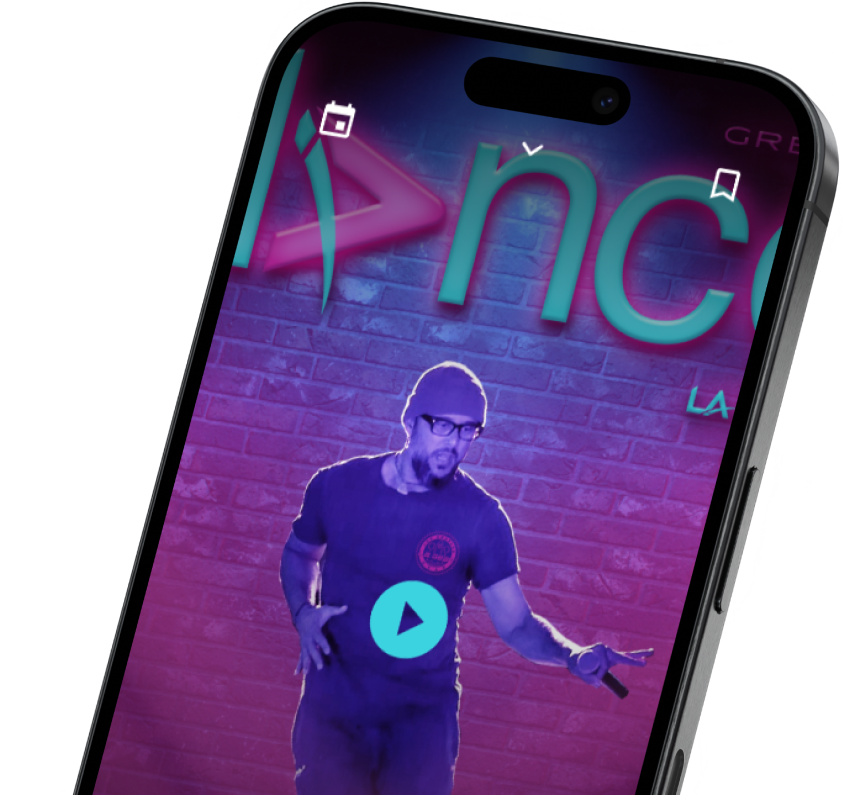
We have shipped this exact category repeatedly. For DiverseCity, we built live-streamed and on-demand workouts with a gamified Health Passport; the platform now reaches 250,000+ youth annually, drove a 10x increase in donation revenue, and holds 80% retention in gamified workouts. President Michael Fratangelo put it plainly: “Chop Dawg has done everything they said they would do. They’ve stuck to the timeline and have been diligent about keeping us on track.” For LA Gear, we fused streaming dance workouts, challenges, and commerce; over 80% of initial users returned monthly. And True Movement pairs a structured session player with streaks, team access codes, and subscriptions through Apple In-App Purchase and Google Play Billing. CEO Erin Baker said we “handled everything from strategy and design to development and execution.”
The team behind those builds is US-headquartered and US-led: American leadership, product and project management, senior development, senior design, and senior quality assurance, working alongside our in-house Brazilian design team and our in-house development, QA, and project management teams in Pakistan and India. No middlemen, no subcontractors; everyone is Chop Dawg, assigned directly to your project, fluent in English, and on US hours. That model was built to kill the two fears this industry earned: the American frontman hiding an anonymous offshore bench with zero accountability, and the overseas shop that vanishes at 5 p.m. your time with no US business norms. Choose fully American (the route regulated partners take) or the US-plus-offshore blend most fitness brands choose for the same quality at a lower monthly budget. Organizations that have trusted Chop Dawg include LA Gear, DiverseCity, the NFL, and Six Flags. See how we scope in our proven process and our costs and pricing guide, or browse more success stories.
Frequently Asked Questions
How much does it cost to build a fitness app like Peloton?
A software-only class app with live and on-demand video costs $60,000 to $150,000 in 2026. A content-plus-software platform with hardware integration, instructor operations, and studio-grade production support honestly runs $100,000 to $250,000 or more. The difference is platform ambition, not developer hourly rates.
Do I need to build my own hardware like Peloton’s bike?
No, and you probably should not. Standard Bluetooth fitness protocols let your app read heart rate, cadence, and power from equipment members already own, turning hardware into a $6,000 to $20,000 integration. Start software-only, prove retention, and treat branded hardware as a scale decision, not a launch requirement.
How much does live streaming cost to operate?
Plan for usage-based fees from your streaming provider, typically pennies per viewer-hour across ingest, encoding, and delivery, plus storage for your on-demand library. It is an operating cost that scales with your audience, separate from the $10,000 to $25,000 one-time integration. Model it into subscription pricing before launch.
How long does it take to launch a Peloton-style app?
A focused class platform takes about 5 to 8 months from kickoff through Apple App Store and Google Play Store approval, including design, development, and quality assurance under real streaming load. Multi-sided platforms with instructor portals and hardware integrations run 9 to 12+ months. Start store paperwork in month one.
How do connected fitness apps make money in 2026?
Recurring subscriptions dominate, sold in-app through Apple In-App Purchase and Google Play Billing at 30% commission (15% under Apple’s Small Business Program below $1 million in proceeds) or on the web at card-processing rates. Successful brands layer corporate memberships, merchandise, and premium coaching on top of the core subscription.
Can I launch with on-demand video only and add live classes later?
Yes, and it is often the smartest sequence. An on-demand library with progress tracking validates content-market fit at lower cost, and a well-architected backend lets live streaming bolt on in a later phase. Just make sure your video pipeline and data model are designed for live from day one.
Price Your Fitness Platform With People Who Have Built Them
Software-only class apps run $60,000 to $150,000, full platforms reach $250,000+, and the difference comes down to hardware ambition, content tooling, and community scope. If you want those tradeoffs mapped against your actual vision, grab a free 45-minute consultation: we offer it to first-time founders and established fitness brands alike, whether or not you ever hire us. Chop Dawg has been doing this since 2009 (we are now in our 18th year) with 500+ products launched, more than 1 billion combined users, a 92% repeat-partner rate, and 300+ five-star reviews across trusted directories like Clutch, GoodFirms, G2, Google, and TopDevelopers. Book your consultation and let’s put a real number on your platform.



 16 Min