



















 16 Min

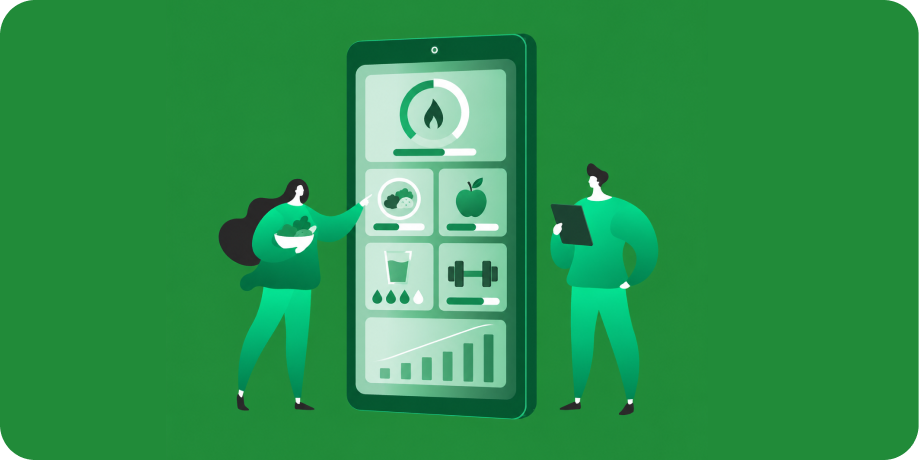
Building an app like MyFitnessPal costs $50,000 to $120,000 in 2026 for most founders and wellness brands. Where you land inside that range comes down to one strategic choice (license a food database or build your own) plus the depth of your logging experience, barcode scanning, streaks, and subscription infrastructure. The market rewards getting it right: Business of Apps reports fitness apps generated $3.4 billion in revenue in 2025, a 24.5% jump, with 540 million people using them worldwide. The problem is that nutrition apps live or die on logging speed, and most budgets fund flashy features while starving the two-second interaction that decides retention. Here is the honest math, feature by feature.
Key Takeaways
- A nutrition tracking app like MyFitnessPal costs $50,000 to $120,000 to build in 2026, with 4 to 8 months from kickoff to launch.
- The food database is the biggest strategic decision: licensing one costs $6,000 to $15,000 to integrate plus ongoing fees, while building your own can add $30,000 or more.
- Logging speed drives retention more than any other feature, so barcode scanning, favorites, and quick-add flows deserve real budget.
- Subscriptions sold inside the app must run through Apple In-App Purchase or Google Play Billing, at 30% commission or 15% under Apple’s Small Business Program.
- AI and agent-assisted coding have cut typical 2020 to 2023 build costs and timelines roughly in half.
How Much Does It Cost to Build an App Like MyFitnessPal in 2026?
Expect $50,000 to $120,000 for a credible nutrition tracker: food search and logging, barcode scanning, progress dashboards, streaks, and paid subscriptions on iOS and Android. A leaner first version focused on one logging loop can come in near the bottom of the range, while AI coaching, wearable sync, and photo-based logging push builds toward $120,000 and beyond.
Across 500+ launches since 2009, the pattern we see in nutrition apps is consistent: the winners are not the ones with the most features, they are the ones where logging a meal takes seconds instead of minutes. MyFitnessPal earned its position through database depth and logging convenience. Your version does not need 10 million foods on day one. It needs a fast, forgiving logging flow, a database that covers what your specific audience actually eats, and a reason to come back tomorrow. That focus is what keeps a build near $50,000 to $75,000 instead of drifting past six figures.
Feature-by-Feature Cost Breakdown
Here is how the budget actually distributes across a MyFitnessPal-style build in 2026. Ranges assume a cross-platform React Native app (native quality without paying for two separate builds) with a Node.js backend.
| Feature | What it covers | Typical 2026 cost |
|---|---|---|
| Accounts, onboarding, and goals | Profiles, goal setup, calorie and macro targets, reminders | $4,000 to $8,000 |
| Food logging experience | Search, quick add, favorites, recents, portions, saved meals and recipes | $8,000 to $18,000 |
| Food database integration | Licensed database connection, search tuning, caching, custom foods | $6,000 to $15,000 |
| Barcode scanning | Camera scanning tied to packaged-food records with graceful misses | $3,000 to $8,000 |
| Streaks, charts, and gamification | Progress dashboards, weight trends, streak logic, milestone badges | $5,000 to $12,000 |
| Subscriptions and paywall | Apple In-App Purchase, Google Play Billing, entitlement management | $5,000 to $10,000 |
| Health and wearable sync | Apple Health and Google Fit integrations for steps, exercise, weight | $4,000 to $10,000 |
| Backend, admin, and analytics | Content management, user administration, engagement reporting | $10,000 to $25,000 |
| Quality assurance (QA) and launch | Device testing, performance passes, store submission | $5,000 to $12,000 |
Add the columns and you get roughly $50,000 at the disciplined end and about $118,000 with everything turned on. Design is woven through all of it: user interface and user experience (UI/UX) work is what makes a logging flow feel effortless instead of tedious.
The Food Database Decision: License or Build
Licensing an established nutrition database is the right call for almost every founder. Providers in the Nutritionix and FatSecret mold charge integration-friendly monthly or per-call fees, and connecting one adds $6,000 to $15,000 to your build. Building your own database can add $30,000 or more before you serve a single user.
The build-your-own route usually starts from free government data like USDA FoodData Central, which is genuinely useful but incomplete for branded and restaurant foods. You then face data cleanup, deduplication, portion-size normalization, and a moderation system for user-submitted foods (the same user-generated approach that gave MyFitnessPal both its depth and its famous accuracy complaints). Our advice after hundreds of scoping conversations: license first, and only consider owning the data layer once your niche demands foods no commercial database covers, such as regional cuisines or clinical formulations. Budget for the application programming interface (API) fees as an operating cost, not a build cost.
What Moves the Number Up or Down
Three decisions swing a nutrition app budget by $30,000 or more: how much intelligence you add on top of logging, how many integrations you support at launch, and how much content infrastructure your coaches or team need behind the scenes.
AI meal coaching, photo-based food recognition, and personalized recommendations are the biggest upward drivers, and they are also where 2026 users increasingly expect magic. Each is achievable, but they belong in a phase two funded by revenue unless they are your core differentiator. Wearable integrations beyond Apple Health and Google Fit, clinician or coach portals, and community features (forums, challenges, direct messages) each add five figures. Downward pressure comes from scope discipline: one platform strategy via React Native, a licensed database, one subscription tier, and a launch feature set built around a single daily habit loop.
Get Your Free 45-Minute App Roadmap
Meet 1-on-1 with our senior product team. We’ll map your MVP or enterprise app and hand you a personalized plan—clear scope, a realistic timeline, and fixed monthly costs—for iOS & Android, web, tablets & wearables, and AI.
How AI-Assisted Development Changes the 2026 Math
The ranges above are roughly half of what the same scope cost between 2020 and 2023. Agent-assisted coding with tools like Claude Code and Cursor lets senior engineers move dramatically faster on well-understood patterns such as logging flows, charts, and subscription plumbing.
The honest caveat: this is not “vibe coding.” At Chop Dawg, every AI-generated change is reviewed, tested, and owned by an experienced engineer, because a health app that miscalculates calories or loses a streak destroys trust instantly. The savings are real, and so is the need for senior judgment. Teams that skip the review layer typically pay the difference back in rework and refunds.
The App Store Fees Founders Forget
Nutrition app subscriptions are digital goods, so they must be sold through Apple In-App Purchase and Google Play Billing. Both stores take 30%, but the App Store Small Business Program drops Apple’s cut to 15% until you pass $1 million in annual proceeds, and Google has a comparable tier. Bake that margin into your pricing model from day one.
Two logistics items surprise first-time founders: a DUNS number takes about a month to obtain, and Apple developer account approval runs 2 to 3 weeks, all in your own name. Plan for them early. A clean submission is usually reviewed within 24 to 48 hours in 2026; the real timeline risk is rejection cycles, especially since AI-generated submissions made reviewers stricter about health claims.
How Chop Dawg Builds Nutrition and Wellness Apps
This category is home turf for us. We designed and built the Overcoming MS app, which unifies meal, supplement, exercise, and meditation logging into one daily tracker with goal streaks. It reached 50,000+ installs in its first 90 days with 90% daily retention on key features, and its team told us: “We thoroughly vetted numerous app development agencies before choosing Chop Dawg. I couldn’t be more delighted with our decision.” (Alex Twersky, Senior Global Marketing Manager at OvercomingMS). For Diet Meetings, we built progress dashboards with streaks, coach-led classes, and a Stripe subscription console; co-founder Frank McCoy said the team “stayed on schedule, never charged extra, and delivered exactly what we needed…” And Slay by Mari, with its nutrition insights and progress tracking, hit the Top 10 in both stores with 15,000+ users in 24 hours and 100% return on investment in under 12 hours.
Here is how we work. Chop Dawg is US-headquartered and US-led: Americans own leadership, product and project management, senior engineering, senior design, and senior quality assurance, backed by our in-house Brazilian design team and in-house development, QA, and project management teams in Pakistan and India. Everyone is a Chop Dawg employee assigned directly to your project, fluent in English and working US hours. That structure exists to eliminate the two fears founders bring us: the lone American salesperson fronting hidden offshore developers with zero accountability, and the faceless overseas shop with no US business norms and no time-zone overlap. You can choose a fully American team (the route for regulated work) or the US-plus-offshore blend most partners pick to get the same quality and timeline for less. Organizations that have trusted us include Jefferson Health, Penn Medicine, and NASA. Explore our design services, our development services, and our transparent pricing breakdown to see exactly how we scope builds like this.
Frequently Asked Questions
How much does it cost to build an app like MyFitnessPal in 2026?
Plan on $50,000 to $120,000 for a nutrition tracker with food search, barcode scanning, streaks, progress dashboards, and subscriptions on iOS and Android. The low end reflects a licensed food database and disciplined scope; AI coaching, photo logging, and wearable ecosystems push budgets toward and past $120,000.
How long does it take to build a nutrition tracking app?
A focused build takes about 4 to 6 months from kickoff to the Apple App Store and Google Play Store, including design, development, and quality assurance. Adding AI coaching, coach portals, or community features extends timelines to 6 to 9 months. Store logistics like DUNS numbers and developer accounts should start in month one.
Can I launch a simpler calorie tracker for less?
Yes. A focused minimum viable product (MVP) with one clean logging loop, a licensed database, and basic progress tracking runs $25,000 to $60,000. That is a legitimate strategy for proving retention before investing more, while complex builds with coaching, integrations, and AI land in the $75,000 to $150,000 tier.
Should I license a food database or build my own?
License one. Integration costs $6,000 to $15,000 plus ongoing fees, and you inherit millions of verified foods immediately. Building your own adds $30,000 or more, plus permanent moderation overhead for user-submitted entries. Only own the data layer if your niche depends on foods no commercial database covers well.
How do nutrition apps make money in 2026?
Subscriptions dominate: a free logging tier with premium analytics, coaching, or meal plans behind a paywall. In-app subscriptions must use Apple In-App Purchase or Google Play Billing, at 30% commission or 15% under Apple’s Small Business Program while you earn under $1 million annually. Partnerships and commerce add secondary revenue.
Do I need HIPAA compliance for a nutrition app?
Usually not for a consumer wellness tracker. HIPAA generally applies when you handle protected health information on behalf of covered entities such as providers or insurers. If you plan clinician dashboards, employer wellness contracts, or medical integrations, architect for HIPAA-grade encryption and access controls from day one, since retrofitting costs far more.
Get a Real Number for Your Nutrition App
The short version: $50,000 to $120,000 buys a genuinely competitive MyFitnessPal-style app in 2026, and the food database decision plus logging speed determine most of your outcome. If you want a number built on your actual feature list instead of a blog range, bring it to a free 45-minute consultation. We will map scope, budget, and timeline with you whether you are a first-time founder or an established company adding nutrition tracking to your platform, and the roadmap is yours to keep whether or not we ever work together. Since 2009, now in our 18th year, Chop Dawg has launched 500+ products used by more than 1 billion people, holding a 92% repeat-partner rate and 300+ five-star reviews across trusted directories like Clutch, GoodFirms, G2, Google, and TopDevelopers. Book your consultation and let’s price your app for real.



 16 Min