

















 14 Min


An app like Duolingo costs $40,000 to $90,000 to build as a focused learning minimum viable product (MVP) in 2026, and $100,000 or more for a full-featured platform with speech recognition, adaptive lessons, and deep gamification. The cost to build an app like Duolingo is driven by three systems: the lesson engine that structures and serves content, the gamification loop of streaks, experience points (XP), and leaderboards, and the audio layer for listening and speaking practice. The prize is real: Duolingo passed $1 billion in annual revenue in 2025 with 128 million monthly users, according to Business of Apps. Here is what each piece costs, and where a lean version starts.
Key Takeaways
- A focused learning app with lessons, quizzes, streaks, and leaderboards runs $40,000 to $90,000 in 2026; a Duolingo-class product with speech recognition and adaptive difficulty starts at $100,000+.
- The lesson engine (how content is structured, sequenced, and served) is the hidden cost most founders underestimate.
- Gamification is cheaper than founders expect; audio and speech features are where budgets jump.
- Freemium subscriptions plus ads remain the proven monetization model for education apps.
- AI-assisted development has roughly halved 2020 to 2023 costs, and AI now also generates lesson content that used to require large content teams.
What Does It Cost to Build an App Like Duolingo in 2026?
A focused language or learning MVP costs $40,000 to $90,000: a structured lesson engine, quiz mechanics, streaks and leaderboards, and freemium subscriptions on iOS and Android. A full Duolingo-class build, with speech scoring, adaptive difficulty, stories, and multiple course tracks, starts around $100,000 and climbs with content ambition.
Education is one of the friendlier app classes on budget because the core loop is well understood and does not require heavy infrastructure. What separates a $40,000 build from a $100,000+ build is rarely the visible screens. It is the depth of the lesson engine, whether difficulty adapts to each learner, and whether the app listens to users speak. Decide those three things first and your quote stops moving.
Feature-by-Feature Cost Breakdown for a Learning App
These 2026 bands assume cross-platform development in React Native, one codebase serving both the Apple App Store and Google Play Store.
| Feature | What It Covers | Typical Cost Band |
|---|---|---|
| Lesson engine and content management | Course structure, units, sequencing, admin tools to add lessons without code | $12,000 to $25,000 |
| Quiz and exercise mechanics | Multiple choice, matching, fill-in, typed answers, instant feedback | $8,000 to $18,000 |
| Gamification loop | Streaks, XP, leaderboards, badges, daily reminders | $6,000 to $15,000 |
| Accounts and progress tracking | Profiles, progress sync across devices, placement logic | $6,000 to $12,000 |
| Audio playback | Listening exercises, pronunciation audio, text-to-speech integration | $5,000 to $12,000 |
| Speech recognition and scoring | Microphone exercises graded by speech application programming interfaces (APIs) | $12,000 to $30,000 |
| Adaptive difficulty | Spaced repetition, weak-skill practice, personalized review | $10,000 to $25,000 |
| Monetization | Freemium subscriptions (RevenueCat), ad placements between sessions | $6,000 to $14,000 |
| Quality assurance (QA), analytics, and launch | Testing, Firebase analytics and crash reporting, store submission | $6,000 to $14,000 |
A $40,000 to $60,000 MVP ships the first four rows plus basic audio and monetization. Speech scoring and adaptive difficulty are the two rows that push a build past $100,000, and both can be added in version two once retention proves out.
What Moves the Number Up or Down
Across 500+ launches since 2009, education apps reward founders who scope content before code. These are the levers that move the quote.
- Content volume and format. Ten structured units cost far less to model and test than ten full courses. AI-generated draft lessons reviewed by subject experts have collapsed what content used to cost.
- Speech features. Listening exercises are cheap. Speaking exercises graded by speech recognition add $12,000 to $30,000 plus per-use API fees.
- Adaptivity. Fixed lesson paths are affordable. Spaced repetition and skill-decay models add engineering and testing time.
- Social pressure mechanics. Leaderboards and streaks are inexpensive and drive retention harder than almost any feature. MathDistract, below, is proof this loop works outside languages.
- Live or human elements. Tutor scheduling, live classes, or instructor messaging push you toward a marketplace or telehealth-style budget.
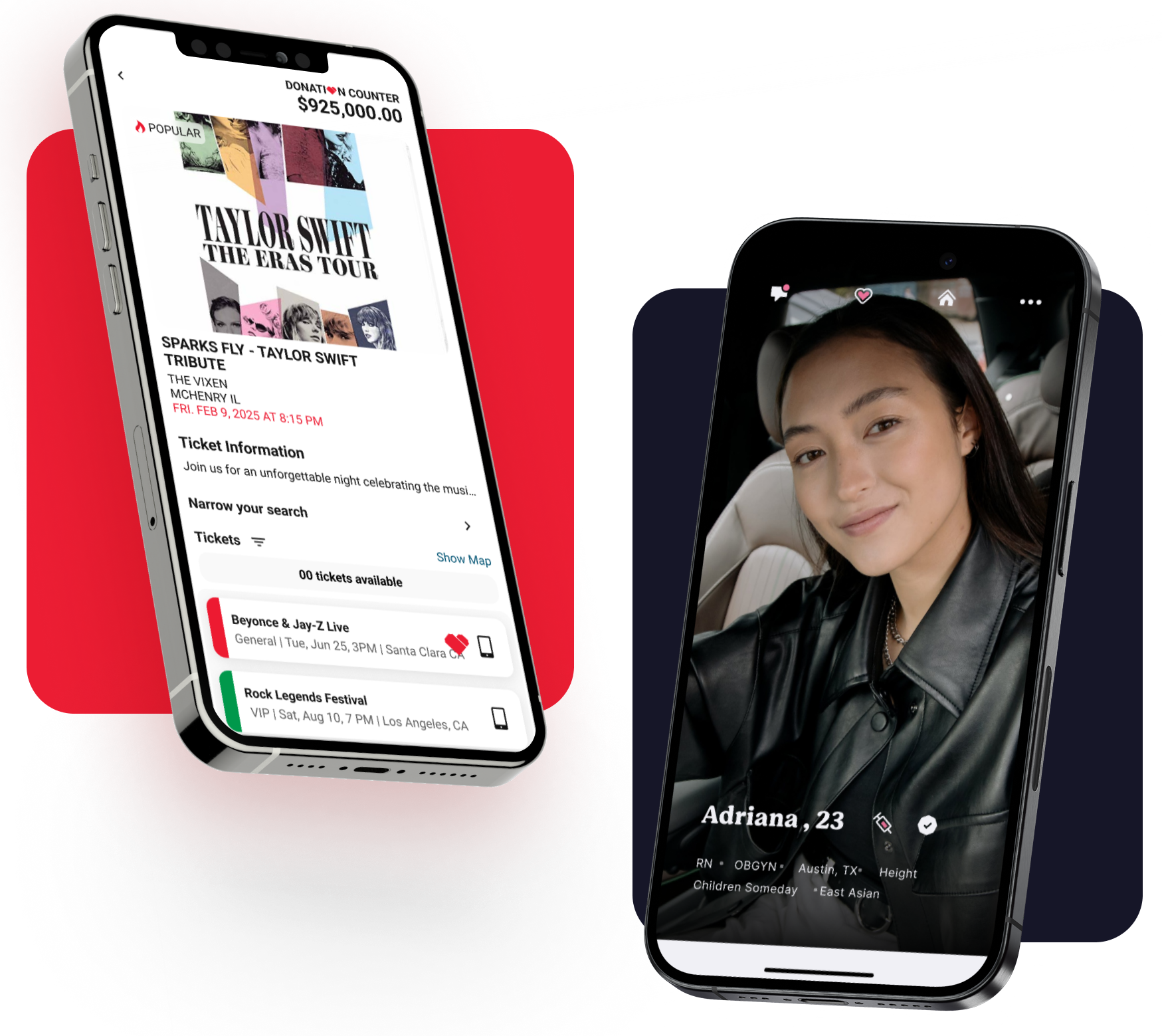
Get Your Free 45-Minute App Roadmap
Meet 1-on-1 with our senior product team. We’ll map your MVP or enterprise app and hand you a personalized plan—clear scope, a realistic timeline, and fixed monthly costs—for iOS & Android, web, tablets & wearables, and AI.
The AI and Agent-Assisted Coding Cost Reality
AI changed this category twice. First, agent-assisted coding with Claude Code and Cursor, with senior engineers reviewing every change, cut development costs and timelines roughly in half compared to 2020 to 2023, which is why a credible learning MVP now starts near $40,000 instead of $80,000. Second, AI now drafts lesson content, generates natural text-to-speech audio in dozens of voices, and powers conversational practice partners, work that previously required teams of linguists and voice actors. The discipline still matters: education apps live or die on correctness, so every AI-generated exercise and every AI-written line of code needs expert review before it reaches a learner. That is our standard, and it is why the savings arrive without the rework.
The Apple and Google Fee Note
Learning subscriptions are digital goods, so in-app purchases must run through Apple In-App Purchase and Google Play Billing at a 30% commission, or 15% via the Apple App Store Small Business Program under $1 million in annual revenue. Most education apps price with this baked in and offer annual plans on their website through Stripe where no commission applies. Remember the prerequisites founders miss: a DUNS number takes about a month and developer account approval takes 2 to 3 weeks, registered in your own name.
How Chop Dawg Builds Learning and Gamified Products
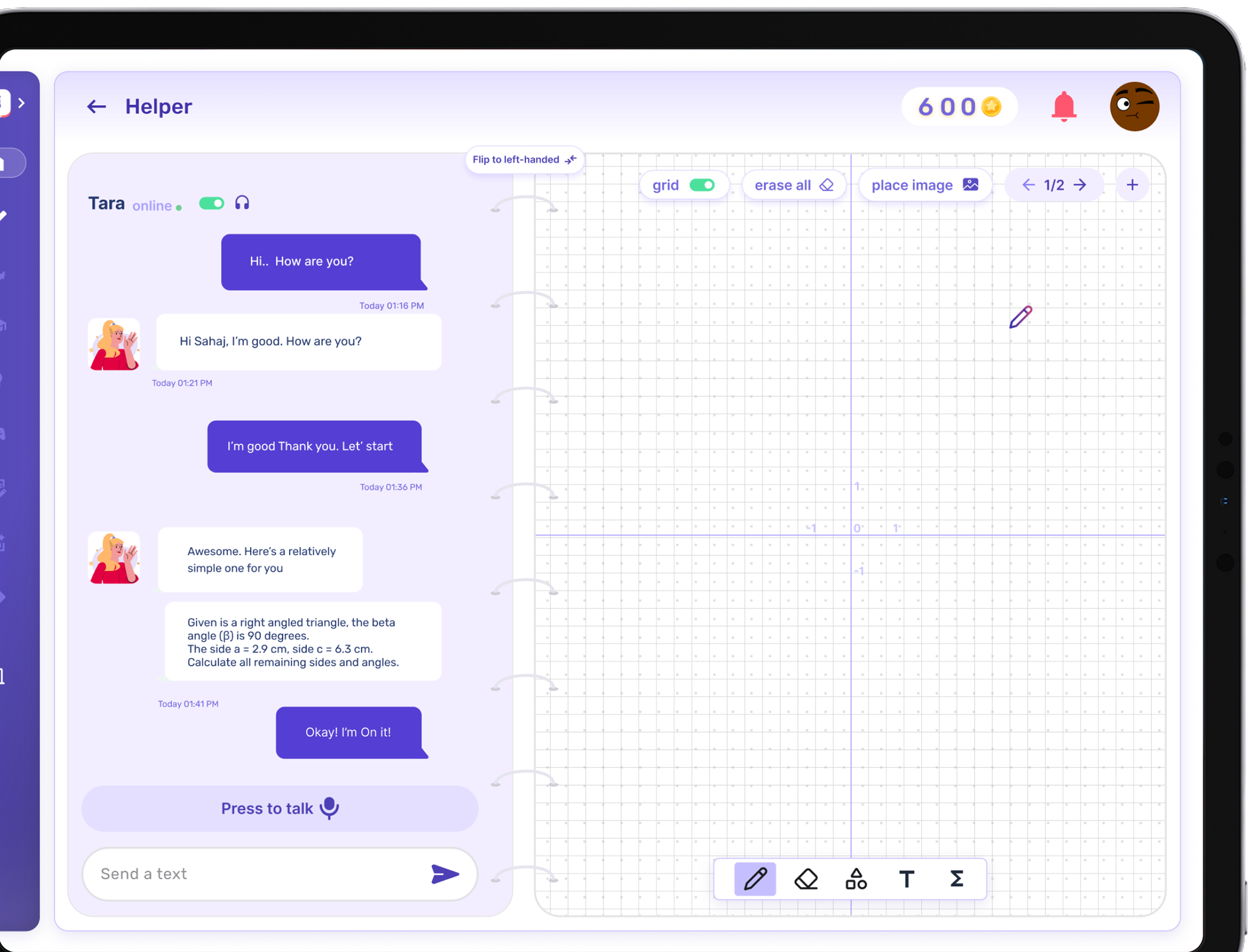
This category is a sweet spot for our team. MathDistract is a quick-hit mental math app we designed and launched as a full MVP on both stores: one-tap timed quizzes, five difficulty levels, streaks and leaderboards, and a freemium split with RevenueCat subscriptions and Google AdMob ads, all on a single React Native codebase. It is the Duolingo habit loop applied to a different subject, built lean.
For the United States Navy’s Brain Bee, we delivered a dual-app ecosystem pairing customizable trivia (solo play, bracket tournaments, live events) with a verified professional network, drawing 300,000+ early beta players and networkers despite limited marketing and cutting admin overhead by 80%. “Chop Dawg’s quality of work has been impressive, showcasing their exceptional development knowledge,” said Shadi Azoum, Program Manager at the United States Navy. And when a founder needs to validate before building, we design first: Visionz Group engaged us for a high-fidelity, clickable non-functional prototype (NFP) of a youth eLearning app, complete with curriculum pathways, quizzes, leaderboards, and badge gamification, giving stakeholders and investors something real to react to ahead of development. An NFP starts around $10,000 and is the cheapest way to test a learning product.
Chop Dawg is US-headquartered and US-led. Americans run leadership, product and project management, senior development, senior design, senior quality assurance, and marketing, working alongside our in-house Brazilian design team and in-house development, QA, and project management teams in Pakistan and India. Everyone is Chop Dawg staff assigned directly to your project, fluent in English, on US hours. That model was built to kill the industry’s two nightmares: the American salesperson fronting hidden offshore developers with no accountability, and the faceless overseas shop with no US business norms and no overlap with your workday. Go fully American for government and regulated work (as the Navy did) or choose the blended team most partners prefer for the same quality at a lower cost. Organizations that have trusted Chop Dawg include MIT, Rutgers University, Southern New Hampshire University, and Sauk Valley Community College. Focused MVPs run $25,000 to $60,000, complex builds $75,000 to $150,000 or more, with fixed monthly budgets and precise timelines throughout our proven process. Explore our design services and pricing guide to see how we scope education products.
Frequently Asked Questions
How much does it cost to build an app like Duolingo?
A focused learning app with lessons, quizzes, streaks, leaderboards, and freemium subscriptions costs $40,000 to $90,000 in 2026. A full Duolingo-class product adding speech recognition, adaptive difficulty, and multiple course tracks starts around $100,000 and rises with content volume and personalization depth.
How long does it take to build a language learning app?
A focused learning MVP takes about 3 to 6 months from design through launch on both stores. Adding speech scoring and adaptive lesson logic extends timelines to 6 to 9 months. Content production runs in parallel, so structuring your curriculum early keeps development from waiting on lessons.
Is there a cheaper alternative to custom-building a learning app?
Yes. Course platforms like Teachable or quiz tools built on templates can validate demand for a few hundred dollars a month. They cannot deliver streak mechanics, adaptive practice, or app store presence, which is why founders move to custom builds once engagement, not just content, becomes the product.
What does gamification cost to build?
Streaks, XP, leaderboards, badges, and reminder notifications together typically cost $6,000 to $15,000, making gamification one of the highest-return investments in any learning app. The mechanics are well proven; the design skill lies in tuning them to your audience, which is where testing budgets earn their keep.
How much does speech recognition add to the budget?
Microphone exercises graded through modern speech APIs add roughly $12,000 to $30,000 in development, plus small per-request usage fees at scale. Most founders ship listening comprehension first, prove retention, then add graded speaking practice in a second release once subscription revenue supports it.
How do apps like Duolingo make money?
The proven model is freemium: free core lessons supported by ads, with a paid subscription removing ads and unlocking harder levels or unlimited practice. Duolingo converts under 10% of users to paid, yet passed $1 billion in revenue, showing the model scales when retention is strong.
Turn Your Curriculum Into a Habit
A learning app that people open every day is buildable for $40,000 to $90,000 in 2026, and the gamification science is no longer a secret. Whether you are a founder with a course idea or an institution modernizing training, bring it to a free 45-minute consultation, offered whether or not you ever hire us. Chop Dawg has been shipping since 2009, now in our 18th year: 500+ products launched, more than 1 billion people served, 92% of partners returning, and 300+ five-star reviews across trusted directories like Clutch, GoodFirms, G2, Google, and TopDevelopers.


 16 Min