












 17 Min

Your nonprofit has a mission. You want to use technology to serve your communities better. But your budget is constrained. You can’t spend $200,000 on an app like a for-profit startup can. So how do you fund nonprofit technology?
The answer is thinking strategically about funding sources, building in phases, and using cost-saving programs designed specifically for nonprofits. Here’s how to build technology on a nonprofit budget.
Grant Funding for Technology Projects
Grants are the primary funding mechanism for nonprofit technology. Unlike commercial loans, grants don’t require repayment. They support your mission.
There are several categories of grants for nonprofit technology:
Foundation grants. Large foundations like the Gates Foundation, Ford Foundation, and MacArthur Foundation fund technology projects that support their giving priorities. Check out National Council of Nonprofits for a comprehensive list of opportunities. Search foundation databases like GuideStar and Foundation Directory Online. Look for foundations that fund your nonprofit’s focus area (education, healthcare, environment, etc.) and have expressed interest in technology.
Government grants. Federal agencies award grants for nonprofit projects that align with government priorities. Search grants.gov for opportunities. State and local governments also fund nonprofit technology. Contact your state’s nonprofit association for leads.
Corporate grants. Some corporations fund nonprofit technology projects. Companies like Google, Microsoft, and Amazon have nonprofit grant programs. These often come with product discounts (see below).
Community foundation grants. Local community foundations fund nonprofits in their geographic area. These grants are often smaller but more achievable for smaller nonprofits.
Grant writing is a skill. If your nonprofit doesn’t have grant-writing expertise, invest in hiring a part-time grant consultant. A good consultant can identify funding opportunities and improve your proposal quality significantly.
Writing Technology into Funding Proposals
When you’re seeking grant funding for an app or technology project, here’s how to write a compelling technology proposal:
Start with your mission impact, not the technology. Donors fund mission outcomes, not technology for its own sake. How will this app help your clients? How will it improve service delivery? How will it increase efficiency? Focus on outcomes.
Connect technology to your strategic plan. Show how the app aligns with your organization’s 3-5 year strategic goals. Frame technology as a tool for achieving strategy, not as a project unto itself.
Be specific about what the app will do. Generic descriptions don’t fund. Detailed descriptions of features, workflows, and user experience do. “A mobile app to connect volunteers” is vague. “A mobile app that allows volunteers to browse opportunities by location and availability, sign up for shifts, receive reminders, and log hours toward recognition milestones” is specific.
Clearly state the timeline and budget. When will development start? When will it launch? What’s the total cost? Break down costs (development, hosting, maintenance, training). Foundations want specificity.
Measure impact. How will you know the app is working? What metrics will you track? How will you report results? Foundations want to see that you’ll measure and communicate impact.
Propose a phased approach. Rather than requesting funding for a complete, fully-featured app, propose building in phases. Phase 1 might be core features. Phase 2 adds reporting. Phase 3 adds advanced features. This is realistic and shows thoughtful planning.
Include a sustainability plan. How will you pay for ongoing maintenance and hosting after grant funding ends? Foundations increasingly ask this. Show that you’ve thought about long-term sustainability.
Phased Development Strategy
Building apps in phases is smart for nonprofits with limited budgets.
Phase 1: Minimum Viable Product (MVP). What are the core features your users need? Build only those. Launch Phase 1 to real users. Get feedback. Learn what works.
Phase 2: Essential additions. Based on Phase 1 feedback, what features do users want most? Build Phase 2 focused on those features.
Phase 3: Advanced features. Once users are comfortable with the core functionality, add advanced features, integrations, or enhanced reporting.
This approach has multiple benefits. It spreads cost over time, aligning with grant cycles. It reduces risk by validating assumptions with real users before building everything. It lets your team learn and improve the product iteratively.
When writing grant proposals, present phased development as your plan. Many foundations appreciate this approach. It’s realistic and shows careful thinking about sustainability.
Cost-Saving Technology Programs for Nonprofits
Multiple programs offer free or heavily discounted technology services for nonprofits. Leverage these aggressively.
AWS Nonprofit Credit Program. Amazon offers $2,000 annually in AWS credits to qualified 501(c)(3) nonprofits through TechSoup nonprofit technology resources. Your app infrastructure can run on AWS using these credits. You pay only for usage exceeding the $2,000 annual grant.
Google for Nonprofits. Google offers free or heavily discounted access to Google Workspace (email, docs, sheets), Google Ads (promotional budget), YouTube nonprofit features, and more. For app development, the key benefit is free Google Workspace for your team.
Microsoft for Nonprofits. Microsoft offers free or discounted access to Office 365, developer tools, and other services. Smaller nonprofits can get 10 free Microsoft 365 licenses. Larger ones can get substantial discounts.
TechSoup Global. TechSoup provides discounted technology for nonprofits, including software licenses, hardware discounts, and vendor pricing. It’s a registry where software vendors offer nonprofit pricing. You post your nonprofit profile and access discounts directly.
Open source software. Many app development tools are free and open source. Open source databases, development frameworks, and hosting solutions can significantly reduce development costs. Work with developers experienced in open source technology.
Shared infrastructure. Instead of building custom infrastructure, use Platform-as-a-Service (PaaS) solutions like Heroku, Firebase, or AWS Lambda. These are cheaper than custom infrastructure for small-to-medium nonprofits.
Combining these programs can reduce ongoing technology costs by 50-70%. If your nonprofit app runs on AWS (using credits), uses free Google Workspace for your team, and leverages open source components, costs are dramatically lower.
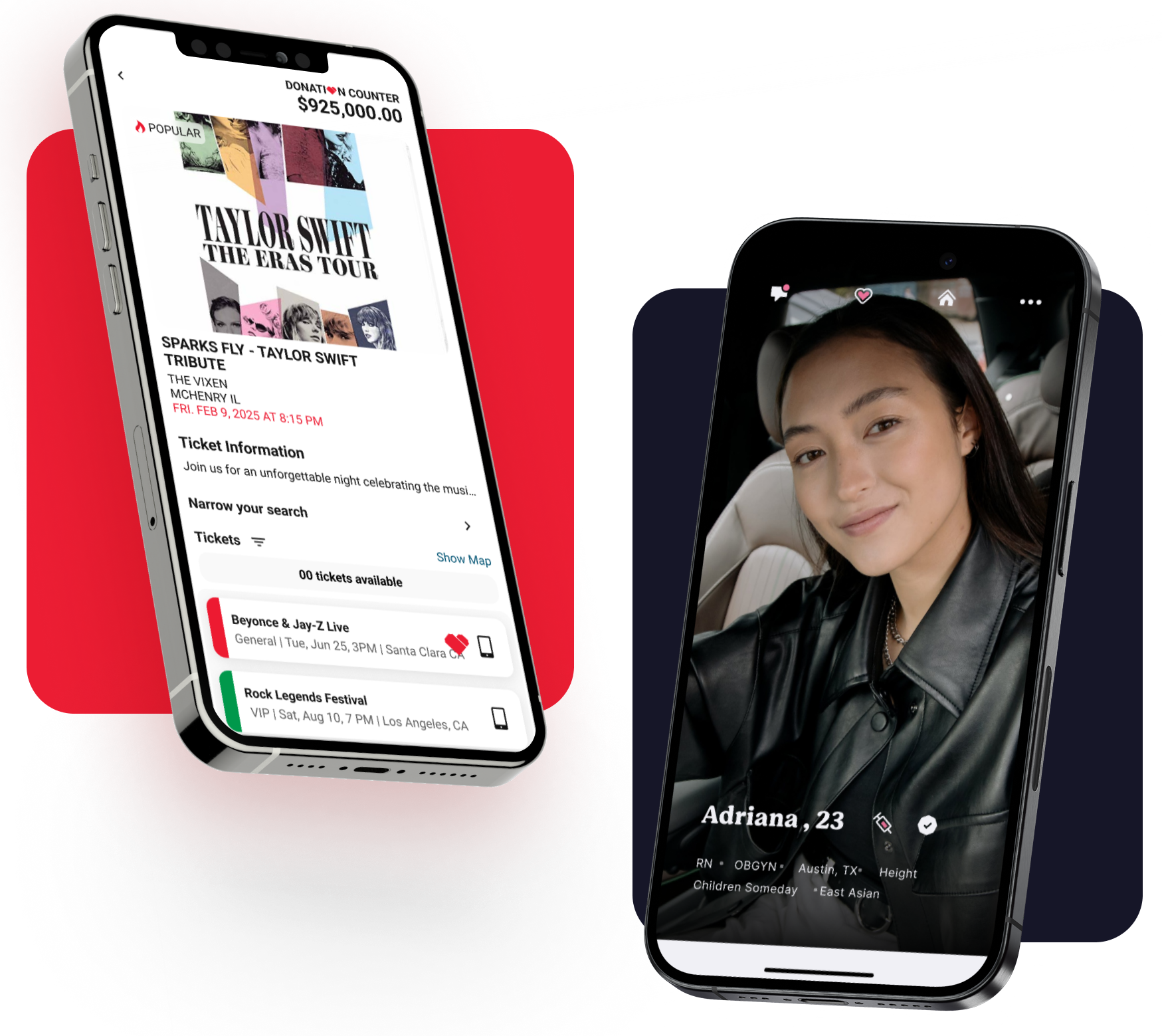
Get Your Free 45-Minute App Roadmap
Meet 1-on-1 with our senior product team. We’ll map your MVP or enterprise app and hand you a personalized plan—clear scope, a realistic timeline, and fixed monthly costs—for iOS & Android, web, tablets & wearables, and AI.
Measuring ROI for Your Board
Nonprofit boards want to understand whether technology investments are paying off. How do you measure app success when you’re a nonprofit focused on mission outcomes, not profit?
Identify success metrics before you build. What will success look like? More user engagement? Faster service delivery? Reduced administrative burden? Define metrics in your grant proposal.
Example metrics:
User adoption. How many people use the app? Track downloads, active users, and engagement frequency. Compare to your user base. Is adoption growing?
User satisfaction. Survey users. Are they satisfied with the app? Would they recommend it? Net Promoter Score (NPS) is a standard satisfaction metric.
Service delivery impact. If the app supports service delivery, measure impact. Faster intake? More efficient case management? Track these metrics.
Volunteer impact. If the app supports volunteers, measure volunteer hours logged, volunteer retention, or volunteer satisfaction.
Cost savings. If the app reduces administrative work, measure the staff time saved. If each staff member saves 5 hours per week using the app, and your organization has 20 staff, that’s 100 hours per week saved. Value that at your average staff rate.
Mission impact. Ultimately, does the app help your nonprofit fulfill its mission better? Can you show improved outcomes for your constituents?
Report these metrics to your board quarterly. Show progress. Demonstrate that technology is delivering on its promise. Use these metrics when seeking funding for Phase 2 or other technology projects.
Common Nonprofit Technology Mistakes
We’ve worked with many nonprofits. Here are mistakes we see repeatedly:
Building with limited input from staff. The staff who will use the app day-to-day need to be involved in design and development. If you build without their input, they often won’t use it. Involve staff early and often.
Underestimating training and change management. A new app requires staff training. People resist change. Plan for training and support. Dedicate resources to helping staff adopt the app.
Underestimating ongoing maintenance. Apps require updates, bug fixes, security patches, and OS updates. Nonprofits often fund development but not ongoing maintenance. This leads to apps that break when systems update. Budget for ongoing support from day one.
Building without a clear success plan. What does success look like? How will you measure it? If you don’t define success upfront, you can’t measure it or report it to funders and boards.
Over-scoping Phase 1. Nonprofits often try to solve every problem with the first phase. Build the MVP. Launch it. Learn from users. Phase 2 will be better informed.
Not planning for sustainability. How will you pay for hosting, maintenance, and support after grant funding ends? Plan for this from the start. Include recurring costs in future fundraising.
Working with Developers on Nonprofit Budgets
Finding developers experienced with nonprofit budgets is important. Nonprofits have different constraints and priorities than commercial clients.
Look for developers who:
Understand nonprofit timelines and budgeting. Nonprofits operate on grant cycles and fiscal years that don’t align with commercial timelines. Good nonprofit developers understand this.
Have nonprofit experience. Ask for nonprofit clients and references. Developers with nonprofit experience understand nonprofit constraints and build accordingly.
Support phased development. Build Phase 1, launch, learn, then build Phase 2. Some developers specialize in phased, iterative delivery.
Are willing to discuss open source solutions. Open source can dramatically reduce costs. Developers who embrace open source are good partners for nonprofits.
Offer post-launch support. Apps need ongoing maintenance. Look for developers who offer reasonable post-launch support packages.
At Chop Dawg, we’ve worked with dozens of nonprofits building apps from grants, using phased development, and leveraging nonprofit discount programs. We understand nonprofit constraints and deliver accordingly. We’ve helped nonprofits maximize every grant dollar and build technology that actually serves their missions.
The Bottom Line
Nonprofit technology doesn’t require commercial budgets. It requires strategic planning, phased development, smart use of grant funding, and leveraging nonprofit discount programs. Define your mission outcomes. Measure your success. Report your results. Plan for sustainability.
Your nonprofit’s mission deserves technology that supports it. Build strategically, spend wisely, and focus on impact.
Ready to plan your nonprofit app strategy? Book a free consultation. We’ll help you identify funding sources, plan your development approach, and build the technology your mission needs.
Frequently Asked Questions
Where do nonprofits find grant funding for app development?
Search foundation databases like GuideStar and Foundation Directory Online for foundations funding your nonprofit’s focus area. Search grants.gov for federal opportunities. Contact your local community foundation. Look for corporate grant programs from tech companies like Google, Microsoft, and Amazon. Hire a grant consultant if you lack grant-writing expertise. Many foundations fund technology that advances nonprofit missions.
How much AWS credit do nonprofits get?
The AWS Nonprofit Credit Program offers $2,000 annually in AWS credits to eligible 501(c)(3) nonprofits through TechSoup. Nonprofits with annual budgets of any size are eligible. Credits can be used for all AWS on-demand services (except reserved instances or AWS Marketplace). For small nonprofits, this can cover most infrastructure costs.
What’s a phased development approach?
Phased development means building an app in multiple phases. Phase 1 is the Minimum Viable Product (MVP) with core features. Phase 2 adds essential features based on user feedback. Phase 3 adds advanced features. This spreads cost over multiple grant cycles, reduces risk, and lets you learn from real users before building everything.
How should I measure whether my nonprofit app is working?
Define success metrics upfront: user adoption (downloads, active users), user satisfaction (surveys, NPS), service delivery impact (speed, efficiency), staff time saved, or mission-related outcomes. Track these metrics quarterly and report to your board. Use metrics to justify requests for Phase 2 funding and demonstrate impact to future donors.
What are the best cost-saving technology programs for nonprofits?
AWS Nonprofit Credits ($2,000 annually through TechSoup), Google for Nonprofits (free Workspace, ads credits), Microsoft for Nonprofits (discounted Office 365), TechSoup Global (software discounts), and open source software. Combining these programs can reduce technology costs by 50-70%. Leverage all available programs for your nonprofit.
How do I write technology into grant proposals?
Start with mission impact, not technology. Connect the app to your strategic goals. Be specific about features and workflows. State clear timelines and budgets. Measure impact with defined metrics. Propose phased development. Include a sustainability plan for post-grant operations. Foundations fund mission outcomes, not technology for its own sake.
What ongoing costs should I budget for after the app launches?
Plan for hosting (cloud infrastructure costs), maintenance and bug fixes (10-15% of development cost annually), security updates and patches, OS updates (when iOS/Android updates), and staff training (for new team members). Many nonprofits fund development but forget ongoing costs, leading to apps that break when systems update. Budget for sustainability from the start.



 16 Min