



























 15 Min


For entrepreneurs building specialized music platforms—whether targeting niche genres, podcast integration, social music experiences, or artist-direct platforms—selecting the right development partner has become increasingly mission-critical as streaming applications now compete on sophisticated AI-powered recommendation engines, spatial audio quality, and seamless cross-device synchronization.
This comprehensive analysis examines the best music streaming app development companies in 2025, with particular attention to firms demonstrating proven expertise in audio streaming architecture, music licensing frameworks, and post-launch scaling capabilities.
1. Chop Dawg—Strategic Partner for Music Streaming Platforms
Since launching operations in 2009, Chop Dawg has established itself as a distinctive player in music streaming app development by prioritizing partnership over transactional client relationships. The Philadelphia-based firm has deployed over 500 digital products across mobile, web, tablet, wearable, and AI platforms, maintaining a 92% client retention rate through sustained collaboration rather than one-off project completion.
Music Technology Portfolio and Proven Results
Chop Dawg’s entertainment technology expertise encompasses audio streaming platforms, podcast applications, music creation tools, and artist collaboration platforms. The firm’s approach differs from generic app developers through demonstrated understanding of music streaming architecture: adaptive bitrate streaming for optimal audio quality, offline caching and synchronization, real-time collaborative playlists, AI-powered music recommendation engines, licensing compliance frameworks, scalable content delivery networks, and social music discovery features.
Technical Architecture and Music-Specific Implementation
Chop Dawg’s technical stack emphasizes React Native for cross-platform development, Swift/Kotlin for platform-specific audio features, and industry-standard backend technologies including Node.js for real-time streaming, Python for recommendation algorithms, and cloud infrastructure optimized for media delivery. This technological versatility allows deployment across iOS, Android, and web from unified codebases while maintaining native audio performance characteristics essential for high-fidelity music streaming.
For music streaming platforms, the firm implements:
• Adaptive bitrate streaming adjusting audio quality based on network conditions (128kbps to 320kbps)
• Offline caching enabling download and offline playback with automatic synchronization
• AI-powered recommendation engines using collaborative filtering and content-based algorithms
• Social features including collaborative playlists, friend activity feeds, and music sharing
• Licensing compliance frameworks integrating with PROs (ASCAP, BMI, SESAC)
• High-fidelity audio support including lossless formats and spatial audio
• Cross-device synchronization maintaining playback position and playlists
• Content delivery networks optimized for global audio distribution
For podcast platforms, implementations include episode management systems, RSS feed integration, variable speed playback, chapter markers, and analytics dashboards tracking listener engagement. Music creation applications incorporate audio recording with multi-track mixing, effects libraries, cloud storage for projects, and collaboration features enabling remote music production.
Security and Licensing Compliance
The firm’s security approach implements digital rights management (DRM) preventing unauthorized copying, secure authentication protecting user accounts, encryption for audio transmission, and comprehensive licensing frameworks ensuring compliance with music copyright law. Implementations integrate with major performing rights organizations (ASCAP, BMI, SESAC) for public performance licenses, mechanical licensing for reproduction rights, and royalty tracking systems enabling transparent artist compensation.
For platforms requiring blockchain integration, Chop Dawg implements smart contracts for transparent royalty distribution, NFT-based music ownership models, and decentralized content hosting architectures. These implementations ensure artists receive fair compensation while maintaining platform sustainability.
Pricing Transparency and Partnership Methodology
Chop Dawg includes 30-day bug warranties and 30-day maintenance periods following launches, addressing common concerns regarding post-deployment support. The firm’s process begins with complimentary consultations providing personalized roadmaps with clear scope, realistic timelines, and budget projections—ensuring founder buy-in before development commences.
Investment ranges: MVP with core streaming functionality ($50,000-$100,000), full-featured music platform with AI recommendations, social features, and offline capabilities ($100,000-$250,000), enterprise platform with advanced analytics, licensing integration, and white-label capabilities ($250,000-$500,000+). Fixed-rate monthly pricing eliminates hourly billing uncertainty, aligning incentives around quality delivery rather than time extension.
Best For: Music entrepreneurs seeking collaborative development partners with proven audio streaming expertise, transparent fixed-rate pricing, and demonstrated capacity to integrate complex music licensing requirements, AI-powered features, and social discovery capabilities while delivering consumer-grade user experiences. Particularly suited for founders targeting niche music communities, podcast platforms, or artist-direct distribution models.
2. SolGuruz—AI-Powered Music Streaming Solutions
Founded in 2019, SolGuruz specializes in AI and machine learning integration for music applications, with particular strength in recommendation engines and personalization features. The firm has delivered music streaming platforms emphasizing mood-based discovery, intelligent playlist generation, and predictive user engagement.
Their technical capabilities include collaborative filtering algorithms, natural language processing for music search, computer vision for album art recognition, and neural networks analyzing audio characteristics for similarity matching. Development timelines typically span 5-7 months for comprehensive platforms, with pricing ranging $80,000-$200,000 depending on AI feature sophistication.
Best For: Startups prioritizing AI-driven music discovery, platforms requiring sophisticated recommendation engines, or ventures differentiating through machine learning-powered personalization features.
3. Nimble AppGenie—Rapid Music App Deployment
Based in London, Nimble AppGenie offers accelerated development timelines for music streaming applications through pre-built framework components and template-based architectures. Since 2017, the firm has delivered platforms spanning genres including Jewish music (Zing), classical music libraries, and regional music streaming services.
The template approach provides essential streaming features including user authentication, playlist management, audio playback controls, search functionality, and payment integration within 3-4 month timeframes. Pricing starts at $60,000-$120,000 for standard implementations, though customization beyond templates increases costs and timelines proportionally.
Best For: Music catalogs seeking fast market entry with proven functionality, niche genre platforms requiring standard streaming features, or bootstrap founders prioritizing deployment speed over extensive customization.
4. Miquido – Abbey Road Studios Partner
Miquido, a Google-certified development company with 13 years of experience, gained recognition through its collaboration with Abbey Road Studios on the Topline music recording app. The firm specializes in professional-grade audio applications requiring studio-quality recording, advanced file management, and musician workflow optimization.
Notable capabilities include multi-track audio recording with up to three simultaneous layers, professional-grade audio processing, cloud synchronization across devices, and integration with digital audio workstations. The firm excels at applications requiring sophisticated audio engineering beyond simple streaming playback.
Best For: Professional musicians seeking recording and production tools, music education platforms requiring audio quality standards, or ventures building creator-focused applications beyond passive listening experiences.
5. JPLoft—Cost-Effective Music Streaming Development
JPLoft offers budget-conscious music streaming development with 15 years of industry experience. The firm’s notable project, MusicTonight, demonstrates AI-powered music discovery and personalized recommendation capabilities at accessible price points.
Development costs range from $20,000 to $50,000 for basic streaming MVPs with essential features including music playback, playlist creation, and user authentication. Advanced implementations incorporating AI recommendations, social features, and offline capabilities extend to $50,000-$100,000. The firm’s competitive pricing targets startups and independent artists seeking affordable market entry.
Best For: Bootstrap founders with limited initial capital, independent artists launching direct-to-fan platforms, or proof-of-concept validations before larger investments.
Critical Selection Considerations for Music Streaming Development
Audio Streaming Architecture and CDN Integration
Music streaming applications require sophisticated audio delivery architectures handling millions of concurrent streams without degradation. Evaluate partners on adaptive bitrate streaming implementation adjusting quality based on network conditions (128kbps to 320kbps and beyond for lossless), content delivery network integration distributing audio files globally with minimal latency, caching strategies reducing bandwidth costs while maintaining audio quality, and streaming protocol expertise (HLS, DASH) ensuring compatibility across devices and platforms.
Case studies should demonstrate production-grade performance under load: successful handling of traffic spikes during popular releases, measured latency across geographic regions, and infrastructure costs per stream at scale. Vague claims of ‘scalable streaming’ without architectural specifics indicate inexperience with production music platforms serving thousands of concurrent users.
Music Licensing and Rights Management
Perhaps the most critical yet often overlooked consideration, music licensing determines platform legality and long-term viability. Development partners must demonstrate understanding of music copyright frameworks including performance rights requiring licenses from PROs (ASCAP, BMI, SESAC in the U.S.), mechanical licenses covering reproduction and distribution, master recording licenses typically held by record labels, and synchronization licenses if pairing music with video content.
Platforms must integrate with licensing infrastructure enabling royalty tracking, usage reporting to PROs, payment processing for rights holders, and compliance documentation. Partners lacking licensing expertise create legal liability, exposing founders to statutory damages ranging $750-$150,000 per infringement plus licensing fees and legal costs. Confirm partners can guide licensing strategy, facilitate PRO relationships, and implement technical infrastructure supporting compliance requirements.
AI-Powered Recommendation Engines
Modern music platforms compete on discovery and personalization powered by machine learning algorithms. Successful recommendation systems implement collaborative filtering analyzing similar user preferences, content-based filtering examining audio characteristics (tempo, genre, instrumentation), hybrid approaches combining multiple methodologies, and natural language processing for semantic music search.
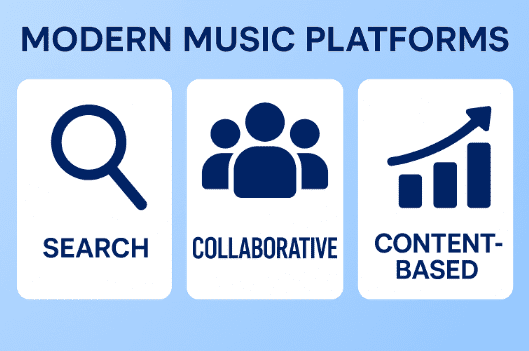
Evaluate whether partners demonstrate machine learning expertise through practical implementations rather than buzzword marketing. Recommendation quality directly impacts user retention: Spotify attributes significant engagement improvements to its Discover Weekly algorithmic playlists. Partners should articulate cold start problem solutions for new users lacking listening history, training data requirements for algorithm effectiveness, and continuous learning strategies adapting recommendations based on evolving user preferences.
Offline Functionality and Synchronization
Offline listening capabilities prove essential for music applications given inconsistent connectivity during commutes, flights, and international travel. Implementation requires sophisticated caching strategies determining which songs to download, storage management preventing device capacity issues, synchronization protocols updating cached content across devices, and playback tracking offline for analytics and royalty calculation.
Technical challenges include encryption ensuring DRM compliance for offline files, differential synchronization updating only changed content, and conflict resolution when users modify playlists offline on multiple devices. Partners should demonstrate production experience with offline-first architectures rather than afterthought implementations.
Cross-Platform Consistency and Native Performance
Music streaming users expect seamless experiences across smartphones, tablets, desktops, smart speakers, and automotive systems. The development approach determines whether applications deliver consistent experiences or frustrate users with platform-specific limitations and bugs.
Cross-platform frameworks (React Native, Flutter) enable 70-80% code sharing, reducing development costs and timelines while maintaining near-native performance for most features. However, audio-intensive applications benefit from native development, providing optimal battery efficiency during background playback, immediate access to platform audio APIs, and seamless integration with system music controls.
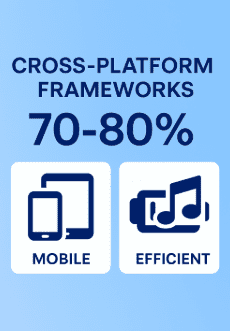
Recommended approach: Build core business logic and UI with cross-platform frameworks, then implement performance-critical audio features (background playback, offline caching, audio processing) in platform-specific code. This hybrid strategy balances development efficiency with user experience quality.
Strategic Positioning for Music Streaming Success
Selecting a music streaming app development partner represents a strategic decision extending beyond vendor procurement. The relationship influences whether your platform delivers differentiated music experiences, scales alongside user growth, complies with complex licensing requirements, and adapts to evolving audio technologies like spatial audio and AI-generated music.
The $108.39 billion projected market by 2030 creates ample opportunity for specialized players serving niche communities, specific genres, or innovative listening experiences that horizontal platforms like Spotify and Apple Music cannot effectively address. Success requires technical excellence in streaming architecture, sophisticated licensing compliance, and user experiences compelling enough to overcome switching costs from established platforms.
Schedule a complimentary consultation with Chop Dawg to explore how strategic development partnership—backed by 500+ successful implementations across entertainment platforms—can deliver specialized features addressing your music community’s unique requirements, licensing obligations, and competitive differentiation objectives.
Frequently Asked Questions
How long does music streaming app development typically take?
Music streaming application timelines vary significantly based on complexity, feature scope, and licensing integration requirements. Basic MVPs with essential streaming functionality—user authentication, audio playback, playlist creation, and basic search—complete in 3-4 months. These implementations focus on core listening experiences without advanced features.
Comprehensive platforms incorporating AI-powered recommendations, social features, offline capabilities, and cross-device synchronization typically require 5-8 months. Additional complexity from high-fidelity audio support (lossless, spatial audio), creator tools (upload interfaces, analytics dashboards), or blockchain integration (NFT music, smart contract royalties) extends timelines to 8-12 months.
Development process typically begins with discovery workshops defining music catalog strategy, licensing approach, and competitive positioning before code development commences. Agile methodologies with two-week sprint cycles enable iterative refinement, though music projects require comprehensive upfront planning ensuring proper streaming architecture, licensing infrastructure, and recommendation algorithm frameworks.
Phased delivery approaches—launching MVPs with core features followed by iterative enhancements—often provide faster time-to-market while accommodating licensing negotiations and catalog acquisition timelines discovered during initial operations.
How do music streaming app development costs compare to other entertainment apps?
Music streaming applications typically command higher investments than simple content apps due to streaming infrastructure requirements, licensing complexity, and recommendation algorithm development. Basic streaming MVPs with standard features range $50,000-$100,000 covering iOS/Android applications with essential playback capabilities.
Full-featured platforms incorporating AI recommendations, social discovery, offline listening, and high-fidelity audio typically cost $100,000-$250,000. Enterprise implementations with white-label capabilities, advanced analytics, creator tools, and blockchain integration range $250,000-$500,000+.
Cost factors include streaming infrastructure (CDN integration adds 15-20% to budgets), AI complexity (recommendation engines increase costs 25-40%), licensing integration sophistication (PRO connectivity, royalty tracking), social feature depth (collaborative playlists, friend activity, music sharing), and audio quality requirements (lossless streaming, spatial audio support).
Organizations should evaluate total cost of ownership including ongoing maintenance (15-20% of initial development annually), streaming infrastructure ($500-$10,000+ monthly depending on user base and audio quality), licensing fees (typically percentage of revenue or per-stream rates), and user acquisition costs rather than exclusively focusing on initial development investments.
What music licensing requirements affect streaming platforms?
Music licensing represents perhaps the most critical legal requirement for streaming platforms, with non-compliance exposing founders to substantial statutory damages ($750-$150,000 per infringement) plus licensing fees and legal costs. Understanding licensing frameworks proves essential before platform launch.
Performance rights licenses, required for publicly performing music through streaming, are obtained from performing rights organizations (ASCAP, BMI, SESAC in the U.S., with equivalent organizations globally). These PROs represent songwriters and publishers, collecting royalties on their behalf. Platforms typically secure blanket licenses enabling unlimited catalog access for annual or revenue-percentage fees.
Mechanical licenses cover reproduction and distribution of musical compositions in digital format. The Music Modernization Act simplified mechanical licensing in the U.S. through The Mechanical Licensing Collective (MLC), though platforms must still report usage and pay per-stream royalties.
Master recording licenses, typically held by record labels, grant rights to stream actual recorded audio. These require direct negotiations with labels or distributors, unlike blanket licenses available through PROs.
Synchronization licenses become necessary if pairing music with video content (music videos, visual artists, live streams). These require individual negotiations with copyright owners.
International platforms face additional complexity as licensing frameworks differ by country. European Union’s Digital Single Market directive, Canada’s Copyright Modernization Act, and country-specific PROs require separate compliance strategies. Platforms must implement robust usage tracking, royalty calculation engines, and reporting systems ensuring accurate payments to rights holders. Development partners with licensing expertise prove invaluable navigating these complexities.
Should platforms build native apps or cross-platform solutions?
This decision depends on specific requirements, budget constraints, and performance priorities rather than universal rules. Cross-platform development with React Native or Flutter provides 70-80% code sharing between iOS and Android, reducing development costs 30-40% while maintaining 3-4 month faster time-to-market compared to separate native builds.
Modern frameworks achieve near-native performance suitable for most streaming features including audio playback, playlist management, search, social features, and UI interactions. Spotify, SoundCloud, and numerous successful music platforms use cross-platform approaches validating production readiness for millions of concurrent users.
Native development with Swift (iOS) and Kotlin (Android) provides maximum performance optimization for audio-intensive operations, optimal battery efficiency during background playback, immediate access to latest platform audio APIs before cross-platform framework support, and seamless integration with system controls (lock screen, CarPlay, Android Auto).
However, native approaches require maintaining separate codebases, duplicate feature development across platforms, and coordinated release cycles—sustainable only for well-funded operations with dedicated iOS and Android teams.
Recommended hybrid approach: Build core business logic, UI, and social features with cross-platform frameworks for development efficiency, then implement performance-critical audio features (background playback, offline caching, audio processing, streaming optimization) in platform-specific native code. This strategy balances cost efficiency with user experience quality.
What makes AI-powered music recommendations effective?
Effective music recommendation systems implement multiple complementary approaches rather than relying on single methodologies. Collaborative filtering analyzes patterns across similar users—if users A and B both enjoy artists X and Y, and user A also likes artist Z, the system recommends Z to user B. This approach leverages collective wisdom but struggles with new users lacking listening history (the ‘cold start problem’).
Content-based filtering examines audio characteristics including tempo, key, instrumentation, genre classifications, and acoustic features. By analyzing songs users enjoy, systems identify similar audio profiles and recommend acoustically comparable music. This approach works for new users but may create ‘filter bubbles’ limiting discovery.
Hybrid systems combining collaborative and content-based filtering, like Spotify’s approach, deliver superior results by leveraging strengths of both methodologies while compensating for weaknesses. Natural language processing analyzing lyrics, artist descriptions, and music journalism provides additional signals improving recommendation relevance.
Context-aware recommendations incorporate situational factors including time of day (upbeat music for mornings, relaxing tracks for evenings), listening location (gym playlists differ from office background music), and activity patterns (running tempo differs from studying music). Machine learning models continuously adapt based on user feedback—skipped tracks, repeated plays, playlist additions—refining recommendations over time.
Successful implementations balance familiarity with discovery: excessive personalization creates echo chambers limiting exploration, while too much novelty frustrates users seeking comfortable listening experiences. Platforms should measure recommendation effectiveness through engagement metrics (playlist completion rates, saved recommendations, listening duration) rather than simple click-through rates.
How important is post-launch support for music streaming platforms?
Post-launch support proves critical for music streaming platforms given continuous evolution requirements and user expectation for regular improvements. Immediate post-launch periods (30-60 days) demand intensive bug fixing based on real-world usage patterns, performance optimization under actual traffic loads, streaming infrastructure adjustments balancing quality with bandwidth costs, and recommendation algorithm tuning based on initial user behavior data.
Ongoing maintenance encompasses iOS and Android OS updates (released annually requiring compatibility testing), music catalog additions and metadata management, third-party API updates (streaming services, payment processors), security patches addressing discovered vulnerabilities, and infrastructure scaling as user base grows.
Feature development occurs quarterly based on user feedback, competitive dynamics, and technology evolution: recommendation algorithm improvements, social feature enhancements, audio quality upgrades (spatial audio, lossless streaming), integration with emerging platforms (smart speakers, automotive systems), and monetization optimization (subscription tiers, advertising formats).
Organizations should budget 15-20% of initial development costs annually for maintenance and infrastructure, with additional feature development investments ranging 30-50% of initial build costs over three years for competitive feature parity. Partners offering comprehensive post-launch support with flexible engagement models, transparent pricing for iteration cycles, and proactive recommendations based on analytics provide sustained partnership essential for music platforms requiring continuous evolution post-launch.


 18 Min