Harrison Smith and Dylan Palumbo see something most apps ignore. The elevator ride, the backseat before practice, the quiet minute between meetings are usually surrendered to social feeds and notifications that leave people feeling drained, not energized. Originally envisioned as Math Genius and refined into MathDistract, their idea was simple and bold. Build a tiny habit engine that turns those throwaway seconds into short, skill based challenges that remind you your brain still works beautifully when you give it a chance.
As brother in laws and co founders at Seven Six LLC, Harrison brings a systems and feedback loop mindset, while Dylan obsesses over how an experience makes someone feel in the first three seconds. Together they wanted a product that did not look like a classroom, did not lecture, and did not care what grade you were in. No grade labels. No cartoon mascots. No sterile dashboards. Just a universal loop. Open the app, take a short quiz, get clear feedback, feel good, and go on with your day a little more confident than before. To make that vision real on iPhone and Android, they partnered with Chop Dawg to design, build, and launch the MathDistract MVP from end to end.
Before MathDistract, the default choice for idle time rarely felt healthy. Kids, teens, and adults alike would fall into doomscrolling, hyper tuned feeds, and notification loops that offered stimulation without any real sense of progress. The market was full of learning apps that felt like school and brain training apps that felt clinical, but very few experiences lived in the sweet spot. Something light, quick, and affirming that respected both a 13 year old’s attention span and a 40 year old’s schedule.
Harrison and Dylan also faced a product design challenge. They needed an experience that was truly one tap, with no sign up wall, that still supported meaningful stats, streaks, and a freemium business model later. The quiz engine had to feel fair and fun, not punishing. The app needed to work for casual users who only touch addition and subtraction, but also for number lovers who crave fractions, percentages, and roots. All of this had to be wrapped in a minimal, modern interface that could be deployed on both iOS and Android and monetized through ads and subscriptions without ever feeling predatory or pushy.
Designing And Launching A Focused Quiz App Built Around One Core Loop
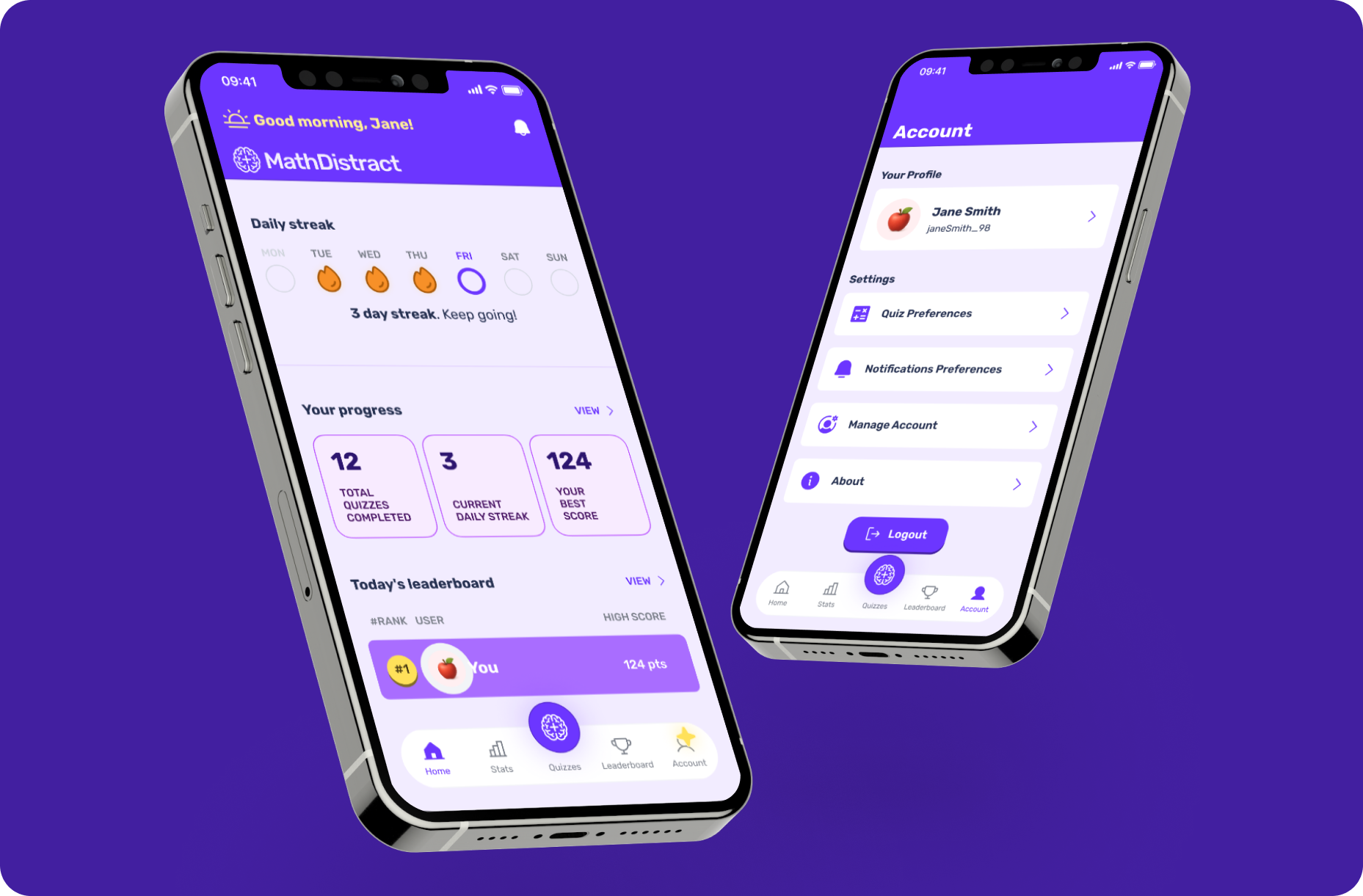
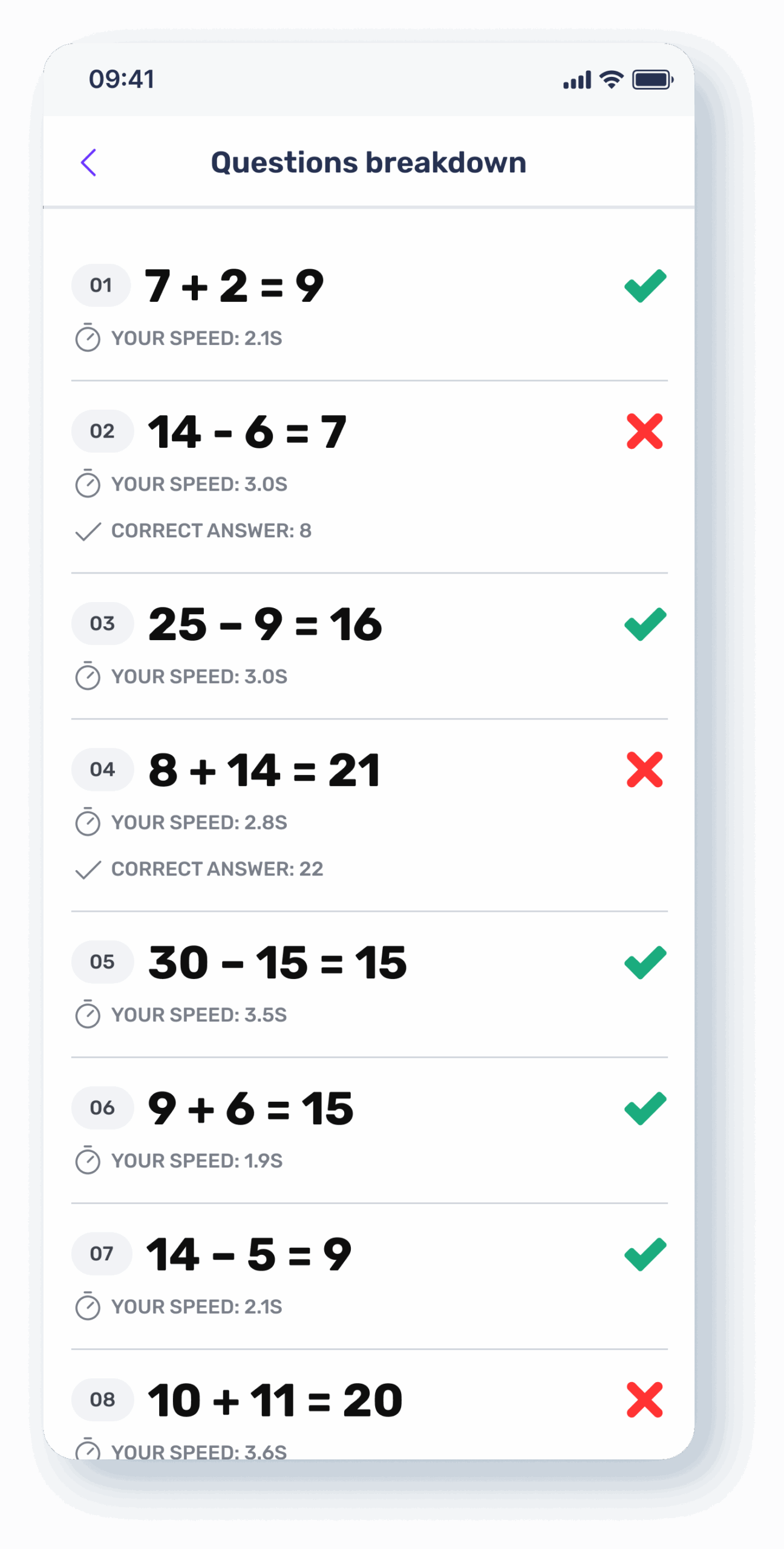
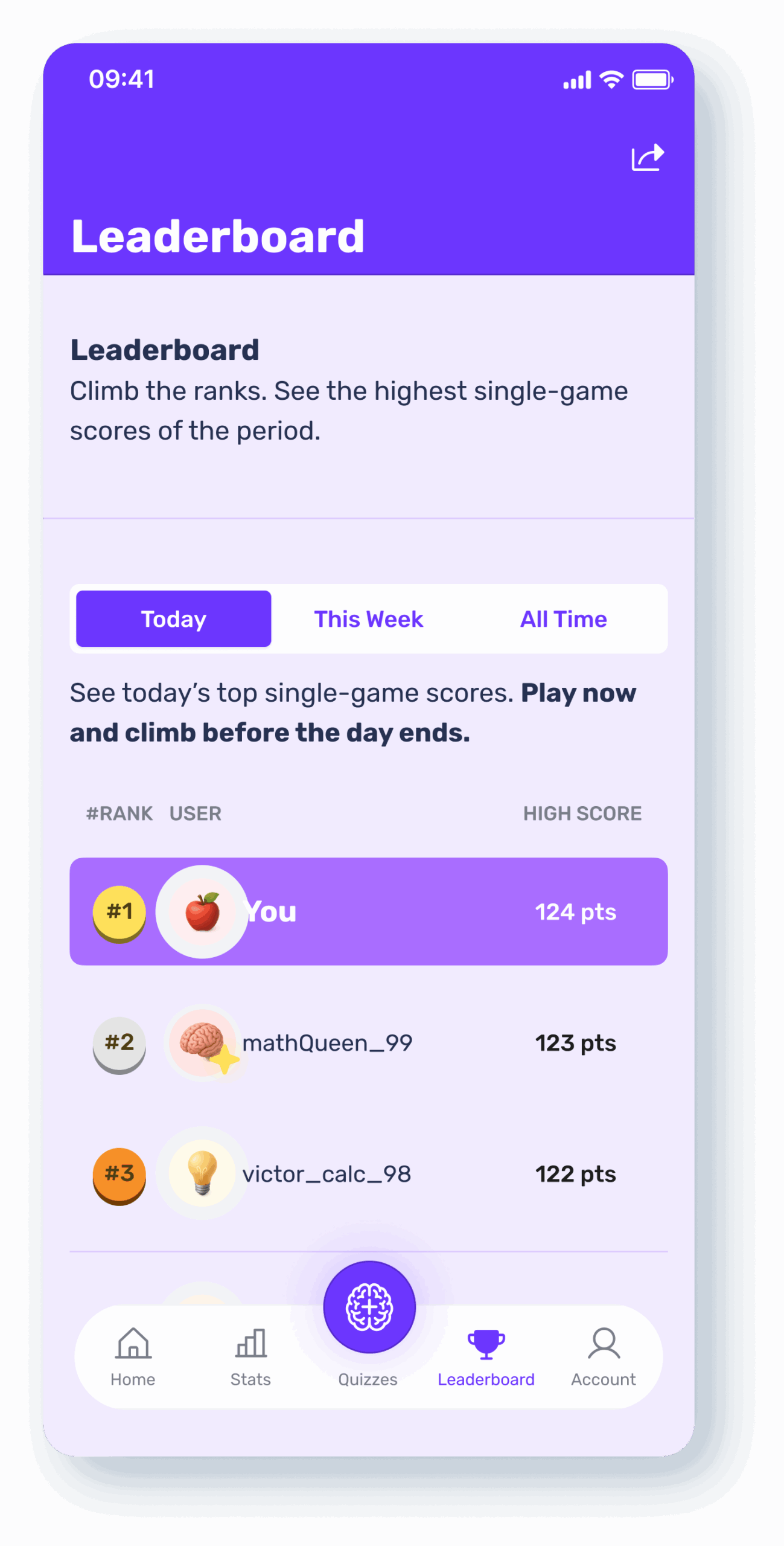
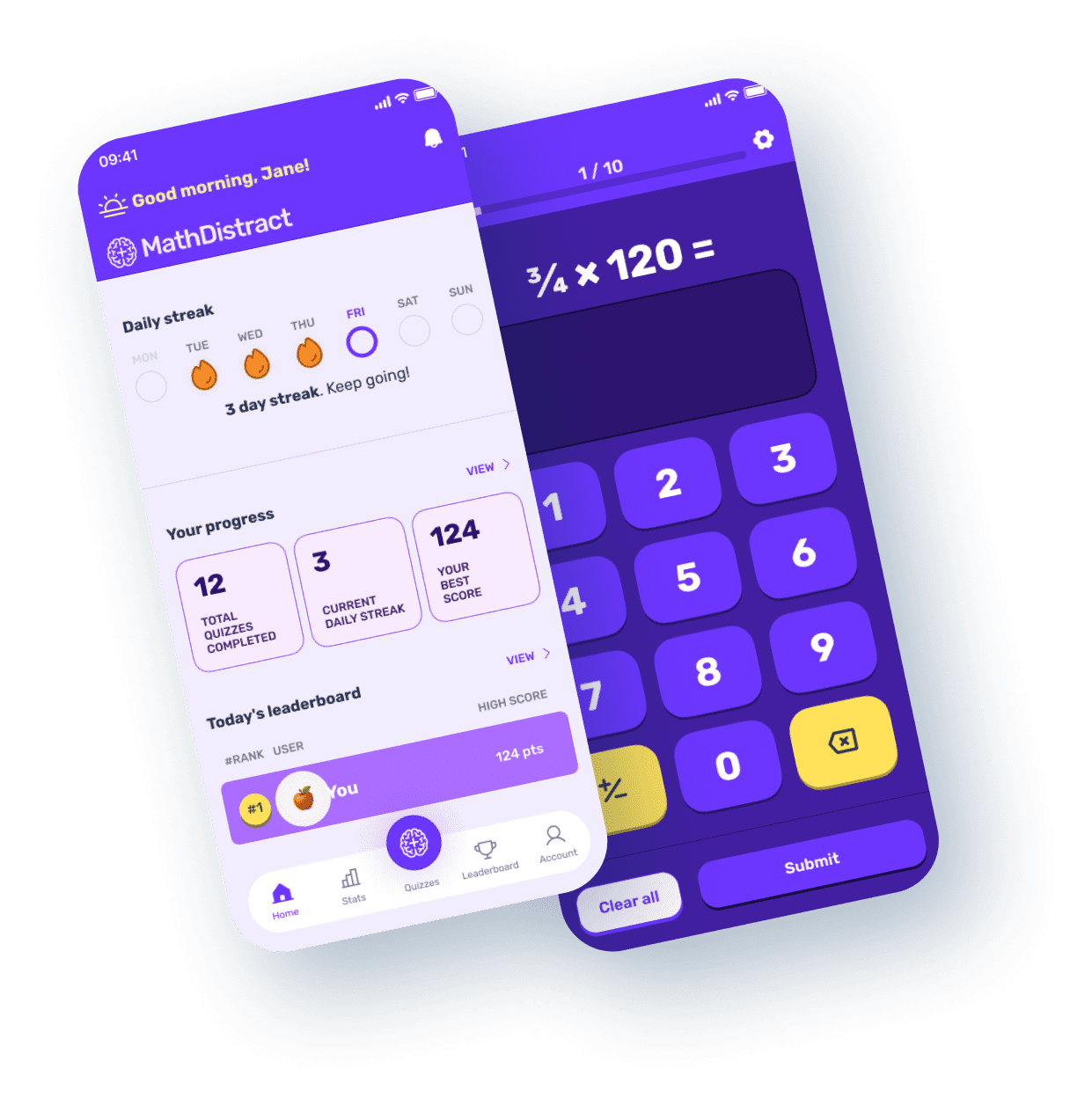
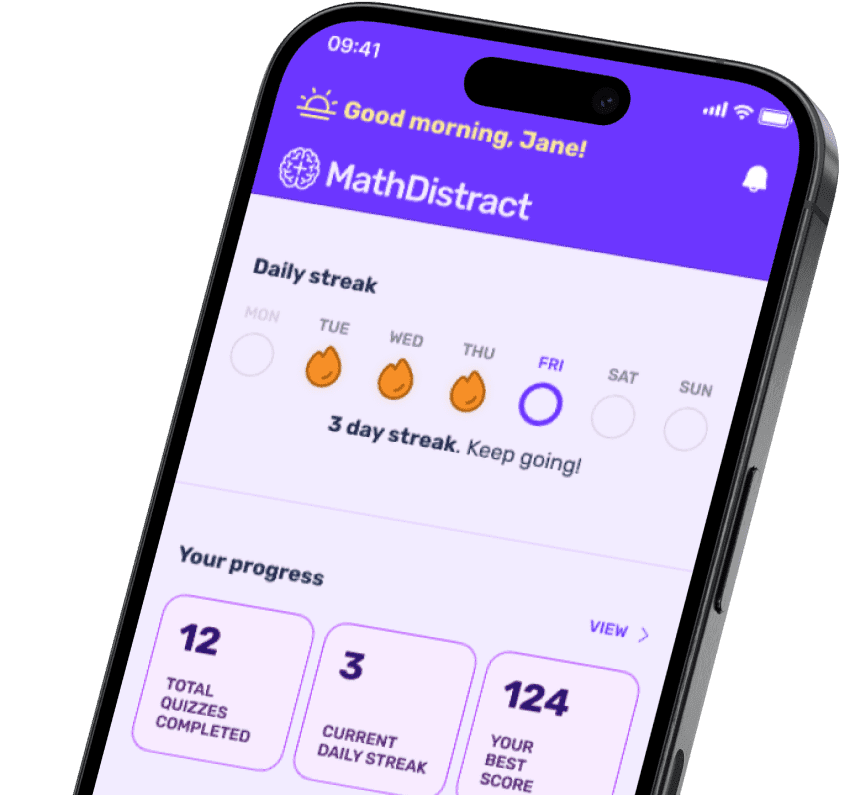
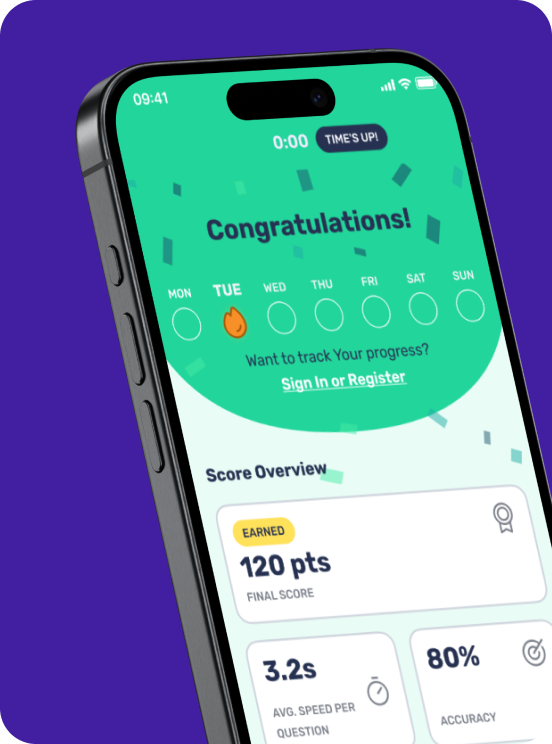
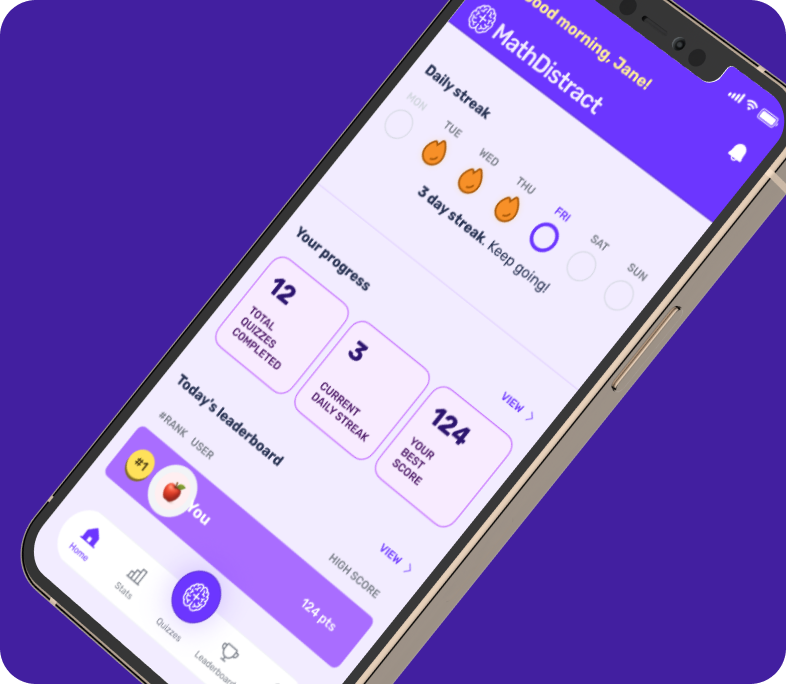
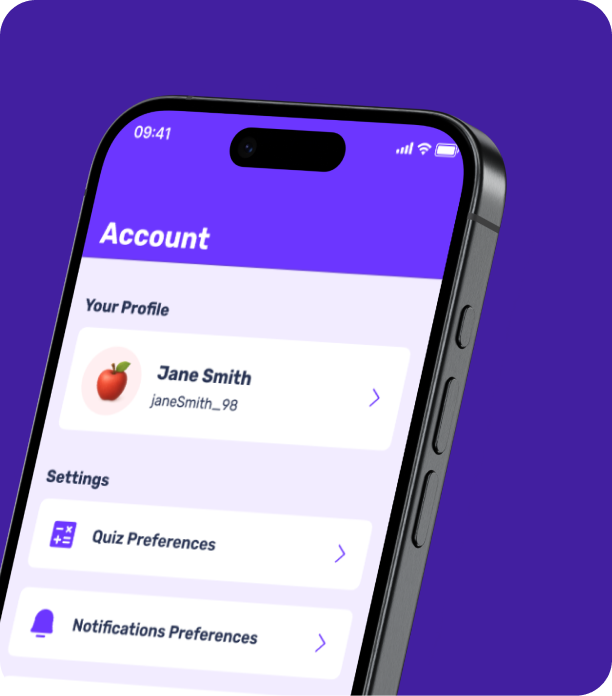
From the start, we agreed that MathDistract would live or die by one loop. Open the app, complete a short quiz, receive instant feedback, and walk away feeling a little more capable than before. Working with Harrison and Dylan, we unpacked their stories about Tyler, Deja, and Logan, the archetype players who would use the app in real life. Together we turned those narratives into clear user journeys for guests and registered users. We defined how Quick Start should feel, how Custom Quiz should work for Premium players, how streaks and leaderboards should appear, and what information actually matters in a post quiz summary.
Figma became our shared canvas as we iterated on splash screens, onboarding, dashboard layouts, quiz flows, results screens, leaderboards, and settings. In parallel, we helped formalize a technical approach centered on React Native, Firebase, RevenueCat, and Google AdMob so that one codebase could support both app stores with a lean, reliable backend. Through weekly Zoom calls, active Slack channels, and Jira tracked sprints, every decision stayed grounded in the core promise. This app should be so easy to open and so rewarding to finish a round that people instinctively choose it over the infinite scroll.
We designed and developed an iPhone and Android experience that turns quick breaks into satisfying math wins for players of all ages.
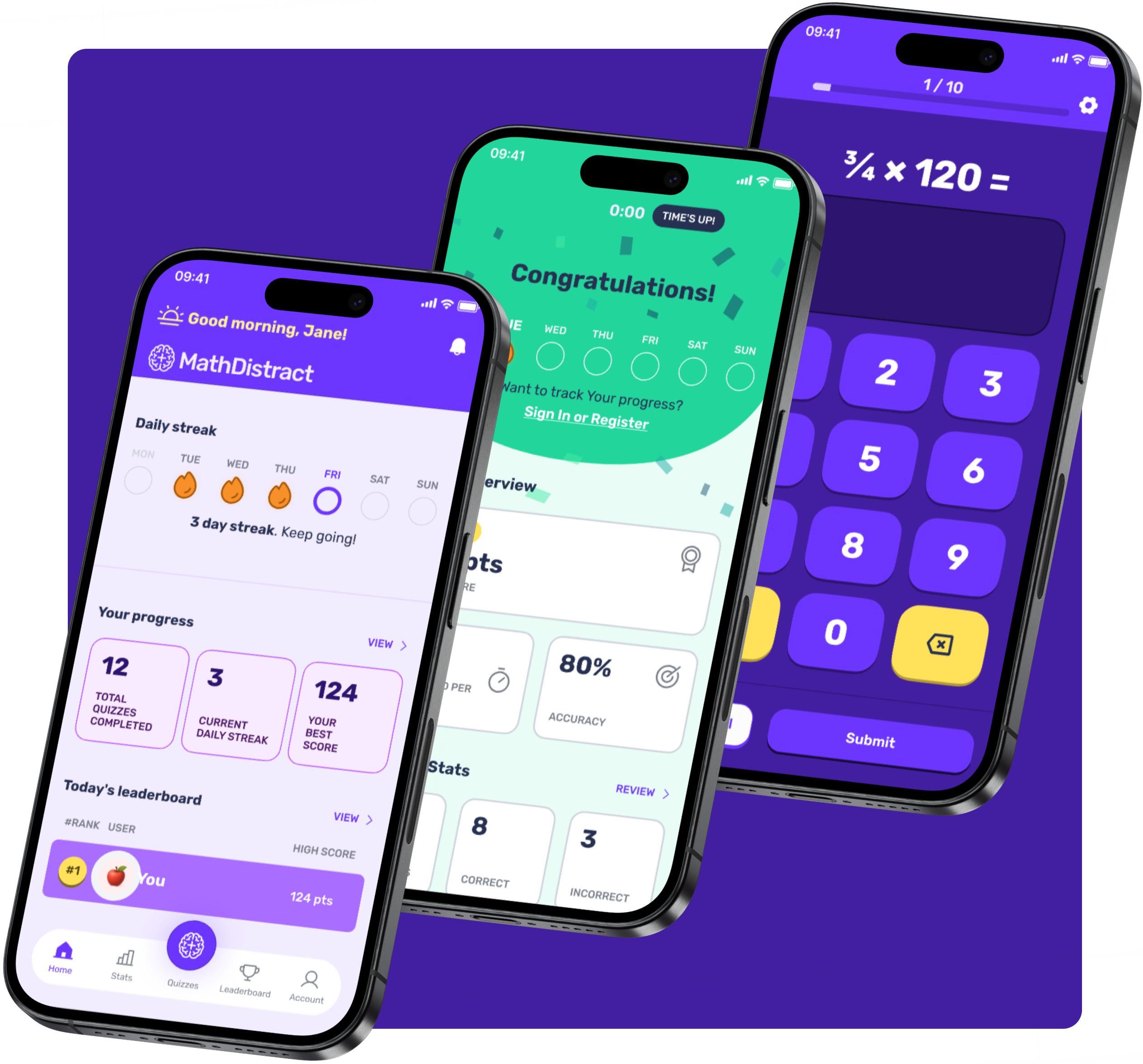
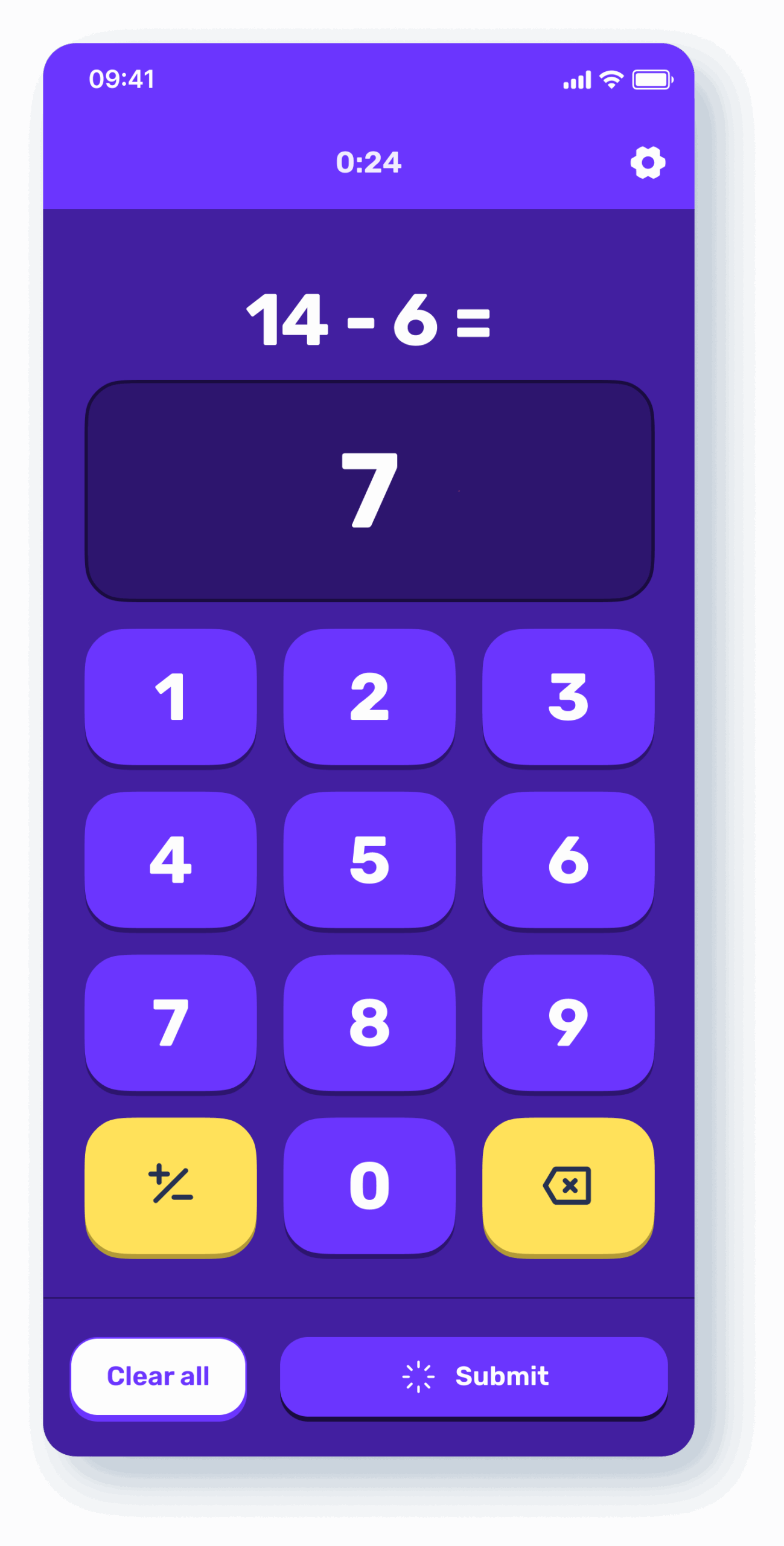
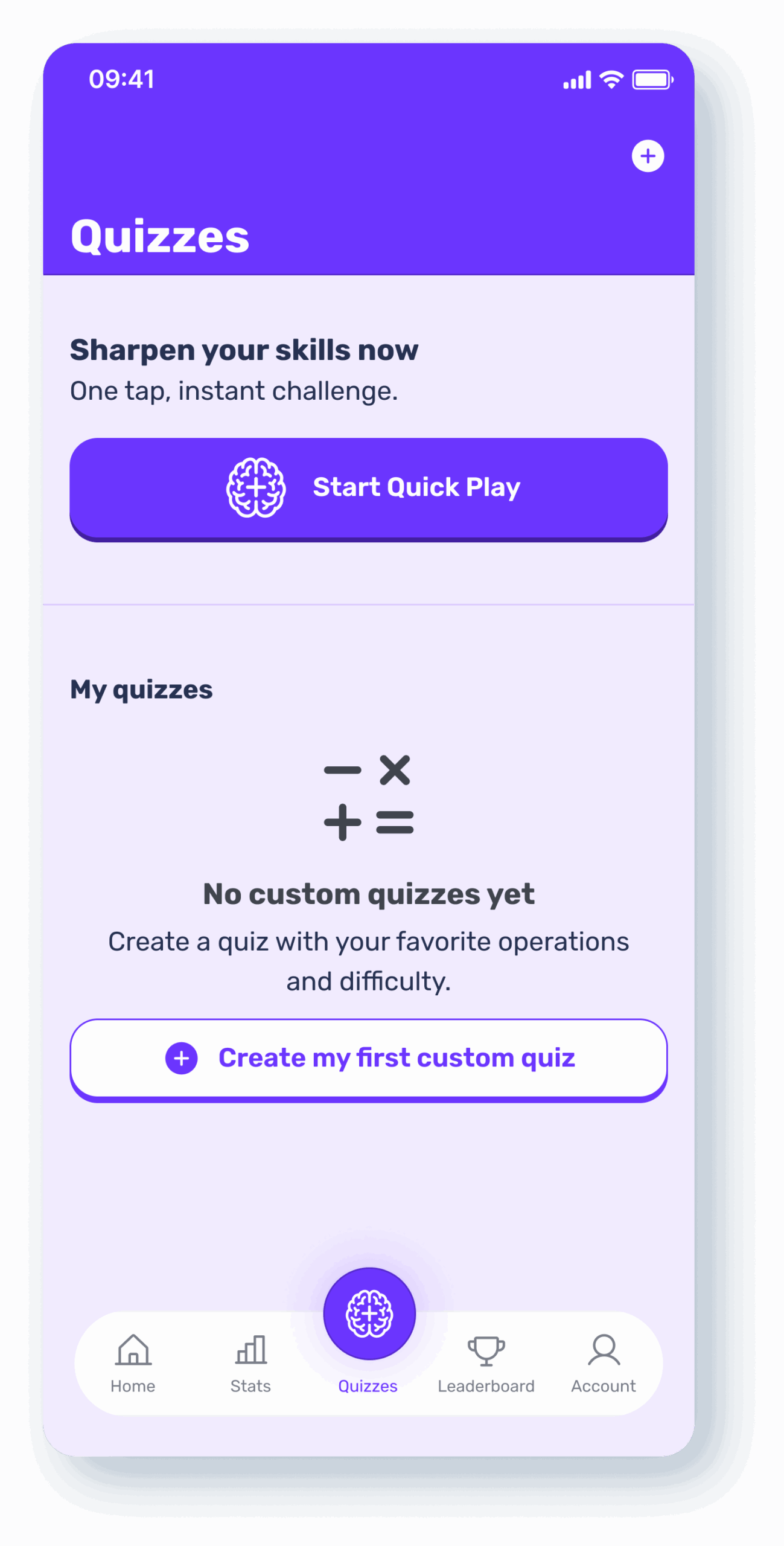
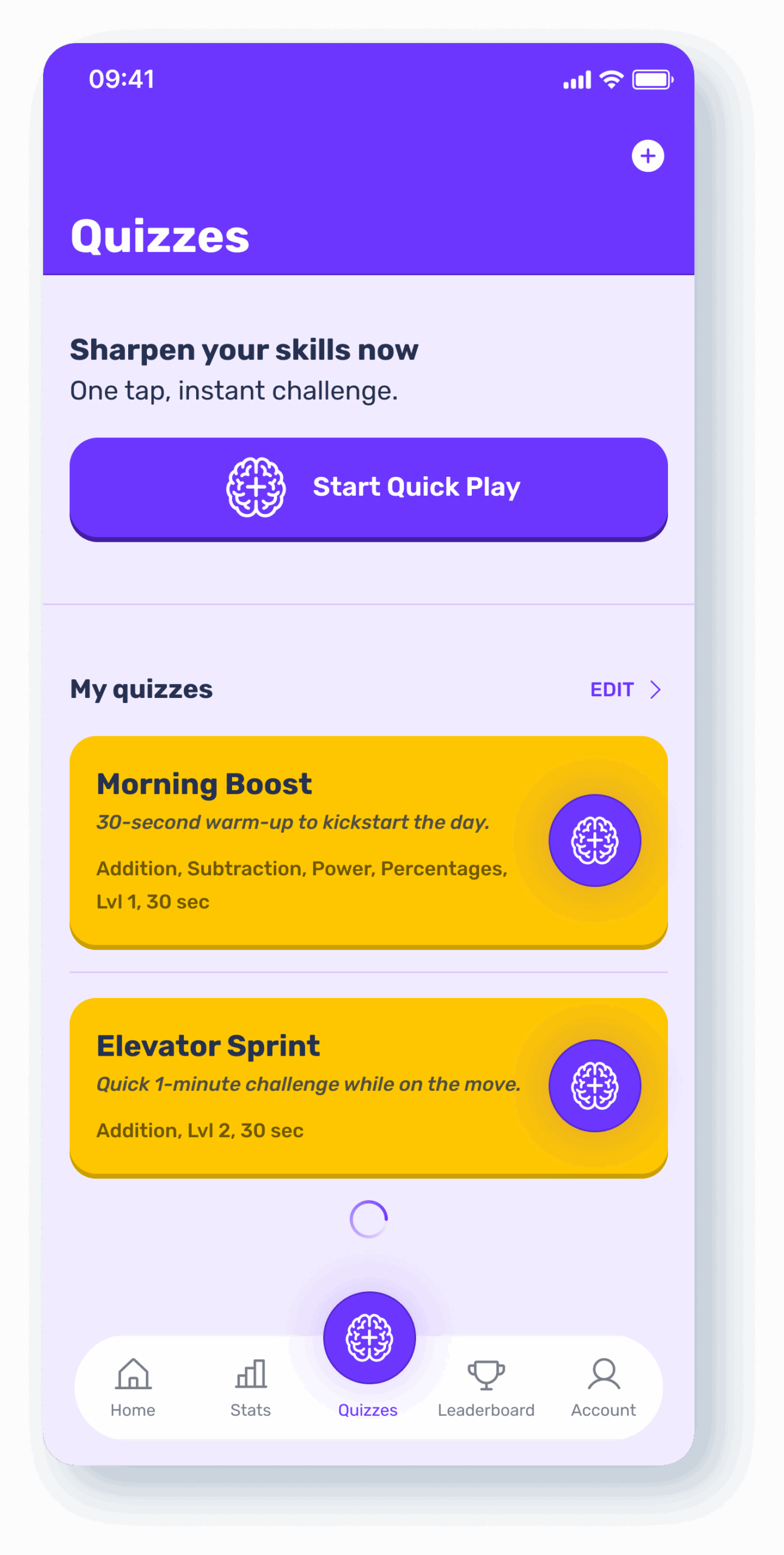
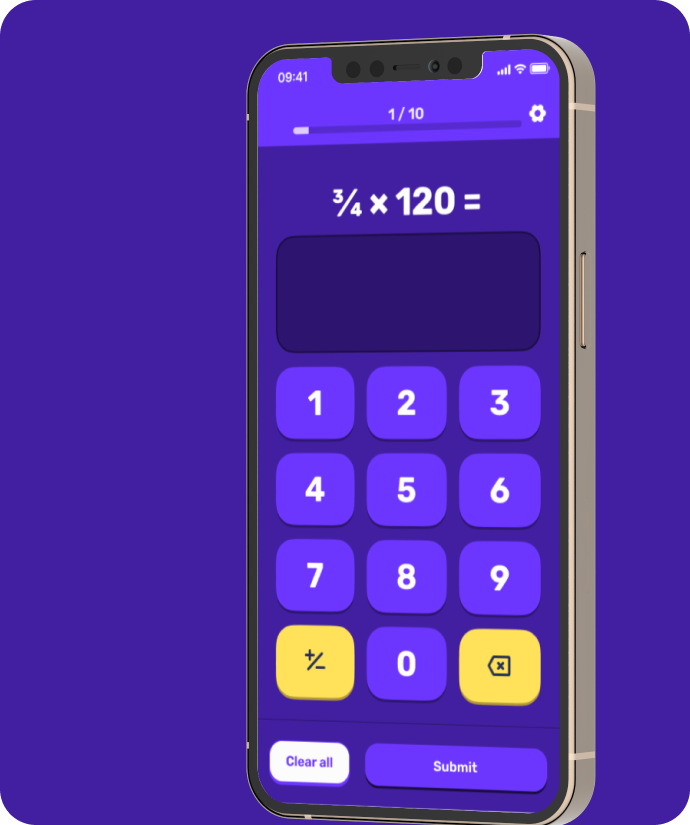
MathDistract is built for the 30 to 60 second window. From the home screen, users can launch Quick Start with a single tap and immediately drop into a timed quiz with no forms, no setup, and no tutorials. The engine serves up a stream of mentally manageable questions that can be answered with calculator style input, not multiple choice guessing. Whether you are in an elevator, on a couch, or waiting in line, you can open the app, complete a round, and close it again without friction. The app does not ask for a commitment. It simply offers a quick chance to feel sharp.
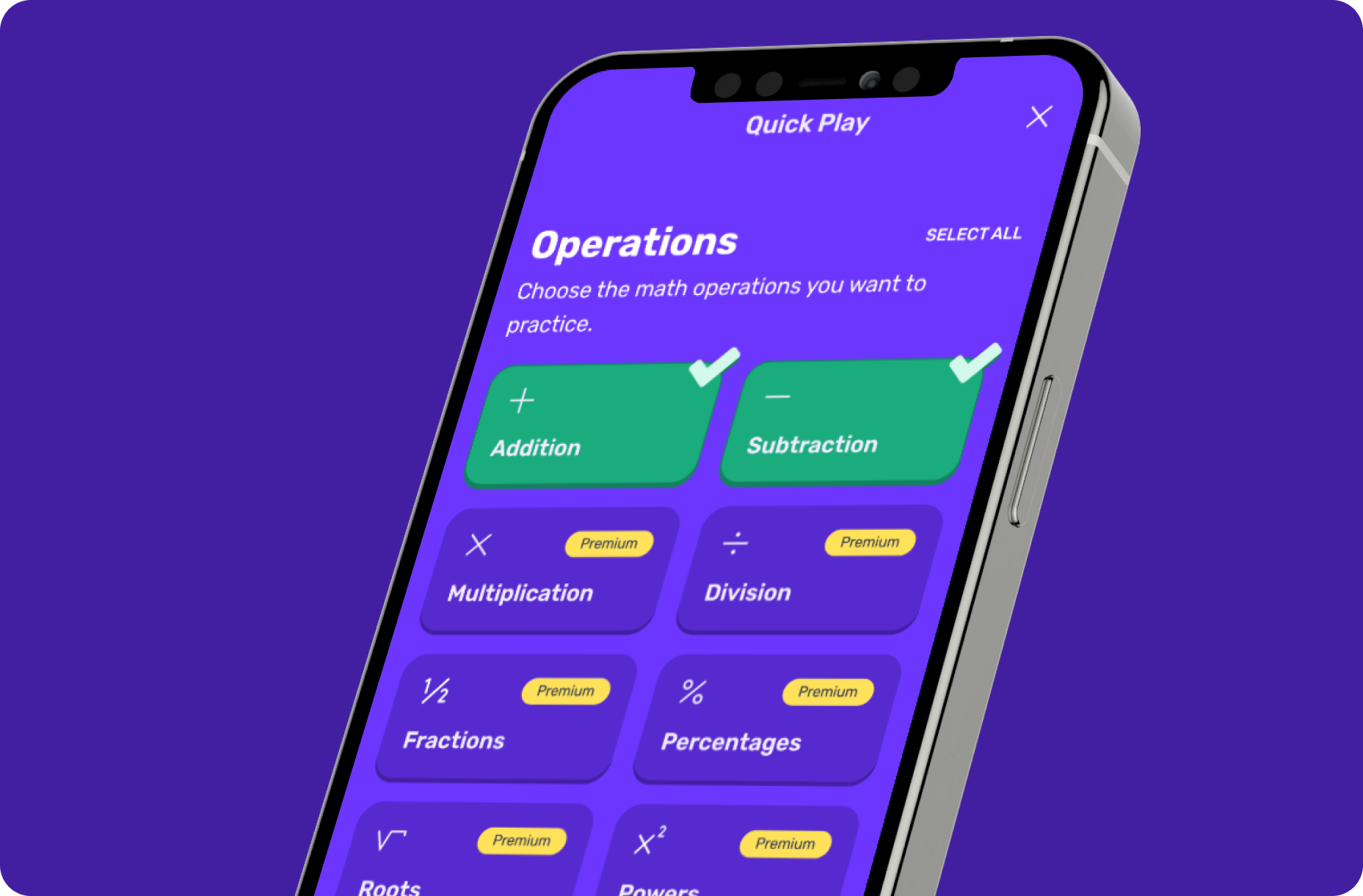
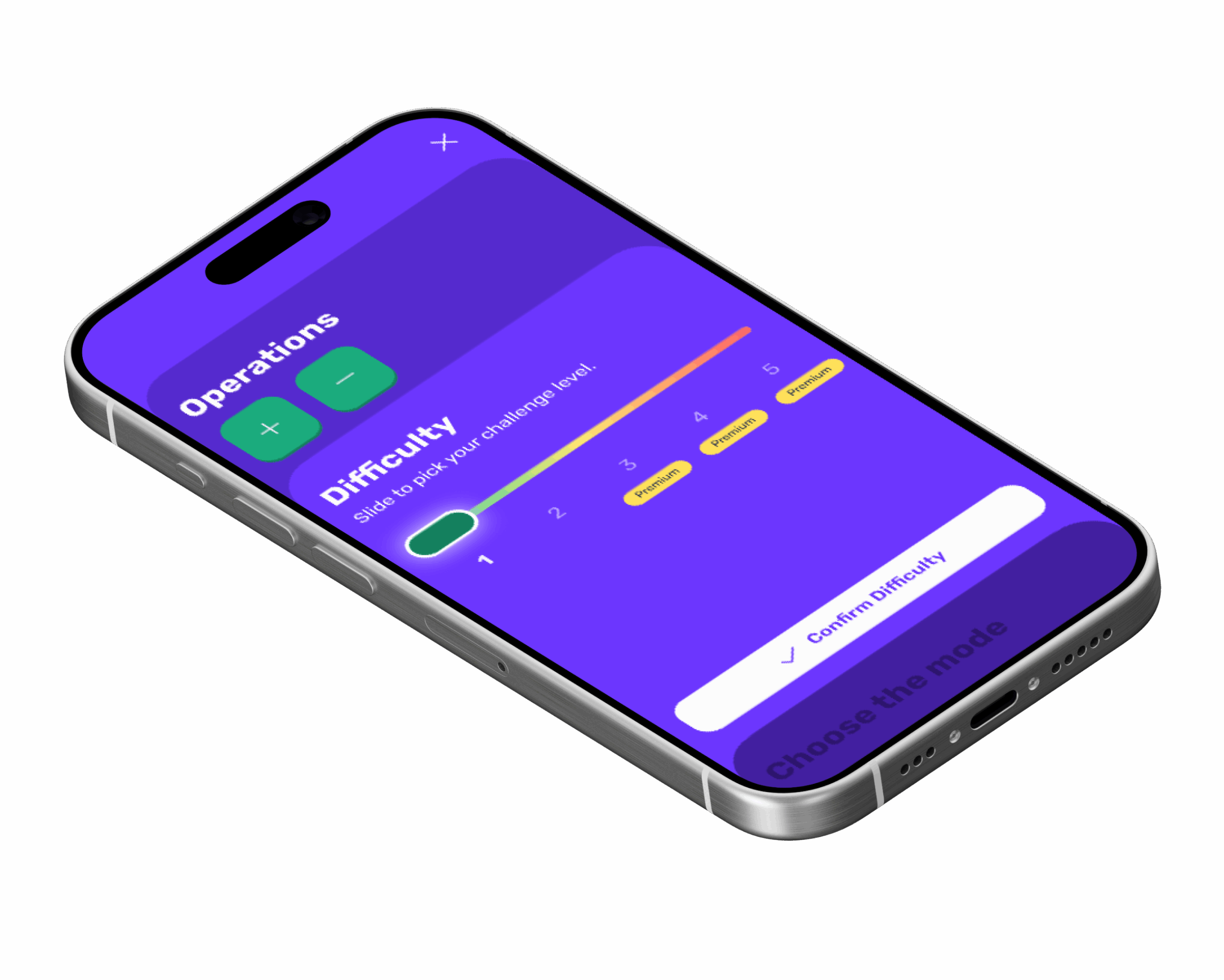
For Premium subscribers, MathDistract unlocks a full Custom Quiz Mode that lets players design the exact challenge they want. Users can choose operations, mix and match addition, subtraction, multiplication, division, fractions, percentages, powers, and roots, set a time limit between 30 seconds and 5 minutes, or pick a fixed number of questions such as 5, 10, or 20. The interface remains simple and touch friendly, so designing a custom challenge takes seconds, not minutes. The result is a game loop that feels personal without ever feeling complicated.
Under the hood, we implemented a five level difficulty system that respects mental math reality. Free players access Levels 1 and 2, which focus on clean two digit addition and subtraction with results that can be solved in your head. Premium unlocks Levels 3 through 5, which introduce multi step operations, longer division, fractions with unlike denominators, percentage changes, and basic powers and roots. Each level has carefully tuned number ranges, so quizzes feel challenging and satisfying, but never impossible. The app does not teach new concepts. It honors the skills users already have and challenges them to apply those skills with speed and confidence.
Beyond the player experience, we implemented tools and infrastructure that make it simple to manage content, monetization, and performance at scale.
Behind the scenes, MathDistract runs on a configurable quiz engine that Harrison and Dylan can adjust as they learn from real players. The system supports tuning difficulty ranges, adding or retiring question templates, and evolving what belongs in free versus Premium play. Because logic is centralized in a modern backend, new operations, question patterns, or difficulty tweaks can be introduced without rewriting the entire app. This gives Seven Six LLC the flexibility to refine the feel of the game as they gather more data on what keeps users engaged.
To make monetization seamless, we integrated RevenueCat for subscription management and Google AdMob for non intrusive ads in the free experience. RevenueCat handles free trials, monthly and annual plans, entitlement checks, and restore flows across both the Apple App Store and Google Play Store. AdMob manages interstitial placements between sessions so that no quiz is ever interrupted in progress. From the admin dashboards, Harrison and Dylan can see subscription performance, adjust pricing strategies, and experiment with new offers without needing to touch store specific boilerplate or custom billing infrastructure.
MathDistract is engineered to be data informed from day one. Using Firebase Analytics and Crashlytics, the team can track how many quizzes are completed, which difficulty levels players prefer, how often users return after their first session, and where crashes or edge case bugs might appear. On the engineering side, we established a GitHub driven workflow with staging builds and automated checks, so new iterations can be tested on real iOS and Android devices before reaching the stores. This combination of insights and release discipline lets Seven Six LLC evolve the product quickly while maintaining stability.
Throughout the project, we acted as more than just developers for Seven Six LLC. We were a sounding board, strategist, and technical guide, helping Harrison and Dylan make confident choices about scope, stack, monetization, and launch.
We helped narrow a wide field of ideas into a focused MVP that does one thing exceptionally well. Instead of chasing multiplayer, classroom dashboards, or deep curriculum on day one, we aligned around the Open → Solve → Feedback → Reward loop as the core value. Together we defined exactly which features supported that loop, such as Quick Start, Custom Quiz, scoring, streaks, and leaderboards, and which ideas should live on the roadmap. This focus keeps the product lean, launchable, and easy to understand for new users.
From the very beginning, we paired product design with a realistic monetization and infrastructure plan. We advised on how to structure free versus Premium access, where ads could appear without harming the experience, and how to use RevenueCat and AdMob to keep billing and advertising reliable and compliant across stores. We also recommended React Native and Firebase to balance speed, cost, and performance, so MathDistract could ship quickly without boxing itself in for future growth.

In addition to the build, we helped Harrison and Dylan think through how MathDistract should show up in the Apple App Store and Google Play Store. We worked together on messaging that highlights reclaiming idle moments and building confidence, not just math practice. At the same time, we sketched a post launch roadmap that includes ideas like multiplayer competitions, classroom dashboards, AI curated practice loops, and branded challenges. The team now has a clear view of what to do next once the MVP is in players’ hands and the core loop has been validated.

Our partnership with Seven Six LLC was built on fast feedback and shared ownership of the experience. Weekly Zoom calls kept us aligned on priorities, while Slack gave Harrison and Dylan direct access to designers, developers, and their project manager for day to day decisions. Figma prototypes made it easy to comment on flows and micro interactions, and Jira provided transparency into each sprint. Every time we refined the scoring model, adjusted a difficulty level, or tuned the animation on a correct answer, we did it together. By the time MathDistract headed to the stores, the app felt like a true reflection of their vision and our shared craft.


MathDistract now gives players a clean, reliable way to turn spare seconds into something meaningful. The one tap Quick Start flow, short quizzes, and instant feedback make it easy to form a daily habit without pressure. Users are not told to study. They are invited to feel capable for a moment, whether that means a teen climbing the leaderboard or a busy parent squeezing in a minute of mental challenge at lunch. The result is an app that fits naturally into the rhythm of a day and leaves people feeling better when they close it than when they opened it.
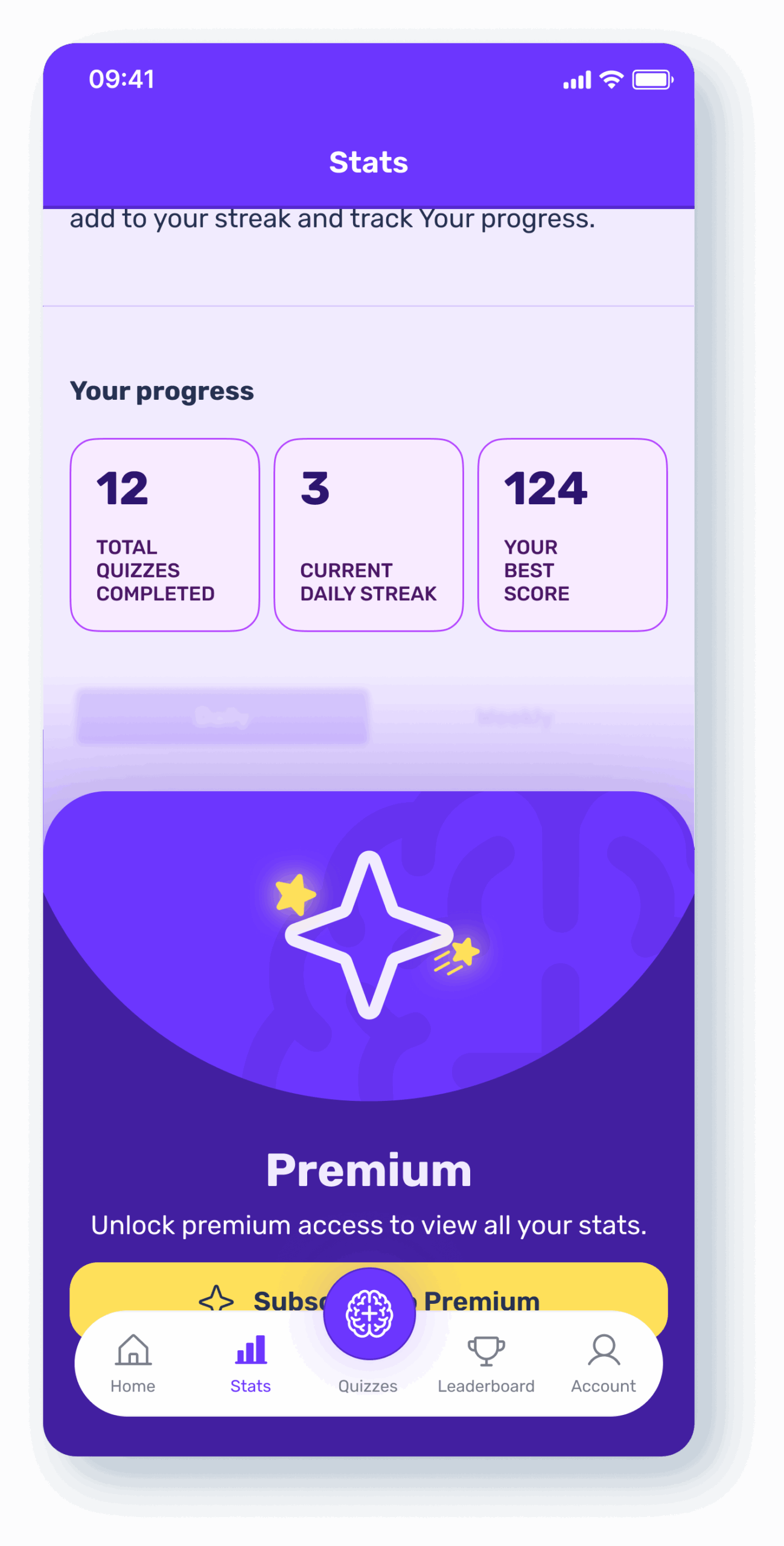
With a thoughtful split between the free tier and Premium, MathDistract launches with a monetization model that feels fair. Free users can enjoy real value through unlimited Quick Start access within a daily play cap, while Premium unlocks deeper difficulty, custom quizzes, rich stats, and an ad free experience. RevenueCat and AdMob handle the details behind the scenes, so Harrison and Dylan can focus on product and marketing, not payment edge cases. This positions MathDistract to generate revenue from its earliest players while keeping the experience accessible and inviting.
Because MathDistract is grounded in a modern stack and intentionally modular design, it already serves as a launchpad for future features. The quiz engine, profiles, streaks, leaderboards, analytics, and notification systems are all in place and ready to support multiplayer modes, classroom tooling, AI driven practice, and sponsored challenges without needing to rebuild the foundations. Seven Six LLC now has not just an app in the stores, but a flexible platform that can grow alongside user feedback and opportunity.
Imagine giving your audience an experience that fits into the tiniest corners of their day and still leaves them feeling accomplished. Whether you are dreaming about a brain training app, a language challenge, a fitness streak tracker, or another behavior changing product, our team can help you design the right core loop, build it on a scalable stack, and launch it on both major app stores with confidence. If you are ready to transform quick breaks into real value, we would love to collaborate with you.