







 9 Min
9 Min 

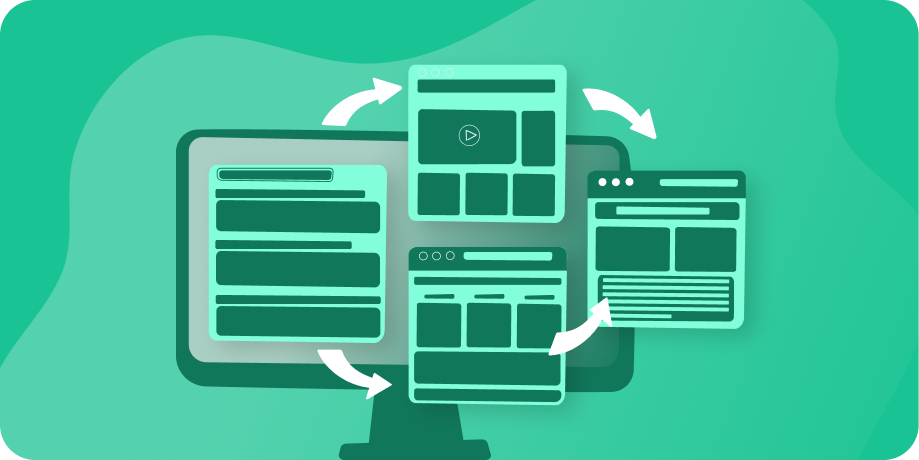
It is time to replace your legacy app when it slows your team, racks up maintenance costs, exposes you to security risk, cannot scale, or frustrates users, and those warning signs are showing up across more businesses every year. Spending reflects the pressure, with the legacy modernization market estimated at USD 29.39 billion in 2026. This guide walks through the signs, what to do about each, and how to choose between modernizing and rebuilding.
Key Takeaways
- Watch for five warning signs: slow performance, security risk, scaling limits, rising maintenance cost, and poor user experience.
- Climbing maintenance bills and scarce talent for old technology are often the clearest signals to act.
- Security and compliance gaps in aging apps can turn into expensive breaches and failed audits.
- Modernizing updates parts of the app; rebuilding starts fresh. The right call depends on how deep the problems run.
- A capable partner can assess your app honestly and recommend the lower-risk path for your situation.
The Warning Signs Your Legacy App Needs Replacing
A legacy app is older software that still runs your business but no longer keeps up with your needs or modern standards. The signs below rarely show up alone. When two or more overlap, it is usually time to plan a change.
1. Slow or Unreliable Performance
If the app lags, crashes, or buckles under normal load, your team loses time and your users lose patience. Performance problems that worsen as you add data or users point to an architecture that has outgrown its design and needs serious attention.
2. Security and Compliance Risk
Old software often runs on unsupported frameworks that no longer receive security patches, leaving known holes open. If you cannot meet current standards like HIPAA, GDPR, or SOC 2, you face breach risk and failed audits. This sign alone can justify replacement.
3. It Cannot Scale With You
When the app cannot handle more users, more transactions, or new features without breaking, it is capping your growth. If every new requirement triggers fragile workarounds, the foundation can no longer support where your business is heading.
4. Rising Maintenance Costs
Aging apps cost more to keep alive each year, and developers who know the old technology grow scarce and expensive. When you spend more patching the app than you would building something durable, the math has tipped toward replacement.
5. Poor User Experience
A clunky, dated interface frustrates users and pushes them toward competitors with smoother tools. If support tickets pile up, adoption drags, or your team avoids the app, the experience itself has become a liability worth fixing.
Get Your Free 45-Minute App Roadmap
Meet 1-on-1 with our senior product team. We’ll map your MVP or enterprise app and hand you a personalized plan—clear scope, a realistic timeline, and fixed monthly costs—for iOS & Android, web, tablets & wearables, and AI.
What to Do When You Spot the Signs
Spotting the signs is step one. Step two is deciding how to respond. Use this quick map to match the problem to a likely path.
| Warning Sign | Likely Cause | Typical Path |
|---|---|---|
| Slow performance | Outgrown architecture | Re-architect or rebuild core |
| Security risk | Unsupported frameworks | Modernize stack or rebuild |
| Cannot scale | Rigid foundation | Rebuild on scalable architecture |
| Rising maintenance cost | Outdated, scarce technology | Modernize or rebuild for return on investment (ROI) |
| Poor user experience | Dated user interface (UI) and workflows | Redesign front end; modernize |
Modernize or Rebuild?
Modernizing means updating parts of the app, the interface, the framework, or the database, while keeping what still works. It is faster and less costly when the core is sound. Rebuilding means starting fresh on modern architecture, which costs more upfront but pays off when the foundation is too fragile to save. The right choice depends on how deep the problems run, which is why an honest assessment matters before you commit either way. Explore the broader picture in our custom software development work.
Chop Dawg as the Worked Example
When an aging app is holding you back, here is how we approach it. We are Chop Dawg, a United States-headquartered and United States-led company, and we start with an honest assessment of whether to modernize or rebuild, rather than pushing the bigger project. American leadership runs product and project management, senior development, design, and QA, supported by in-house design teammates in Brazil and in-house development, QA, and project-management teammates in Pakistan and India, all assigned directly with no subcontractor in between. You can pick a fully American team or a cost-effective US-plus-offshore blend at the same quality and timelines. We work as your partner, not a faceless agency, with fixed monthly budgets, transparent pricing, daily Slack, and weekly Zoom, so the path forward is clear from day one.
Since 2009 we have launched more than 500 products, reaching over 1 billion users, and we handle HIPAA, GDPR, and SOC 2 work, which matters when security gaps are the trigger for replacement. Modernization runs on the same fixed-monthly model as a new build, with design from $5,000 per month, development from $7,500 per month, a focused rebuild that generally runs about $25,000 to $60,000 all in, complex or enterprise rebuilds at $75,000 to $150,000 or more, and maintenance from $2,500 per month. A free 45-minute strategy call scopes the work, the full numbers are in our pricing breakdown, and you own the resulting code and IP outright. Our 92% partner retention rate and 300+ five-star reviews across trusted directories like Clutch, GoodFirms, G2, Google, and DesignRush reflect that approach. Organizations that have trusted Chop Dawg include Siemens, Hilton, Jefferson Health, and Penn Medicine. We include a free bug-and-maintenance warranty, so your new app stays healthy. See how we revamped Ventura Orthopedics into a scalable web platform and modernized MyVilla for today’s standards, explore our support services, and review how we work in our proven process.
Frequently Asked Questions
How do I know if my app is truly a legacy app?
If it runs on outdated frameworks, costs more to maintain each year, struggles to scale, or no longer meets current security standards, it qualifies. The clearest tell is when keeping it running consumes more effort and budget than the value it delivers to your business.
Is it cheaper to modernize or rebuild?
Modernizing is usually cheaper upfront when the core architecture is still sound and you only need to update parts. Rebuilding costs more initially but pays off when the foundation is too fragile to scale or secure. An honest assessment of the core determines which path saves more.
What are the biggest risks of keeping a legacy app?
The biggest risks are security breaches from unpatched frameworks, failed compliance audits, rising maintenance costs, and lost growth when the app cannot scale. Poor user experience also drives customers to competitors. Together, these often cost far more than a planned modernization or rebuild would.
How long does it take to replace a legacy app?
It depends on scope. A targeted modernization can take weeks, while a full rebuild can run several months. A clear assessment of what to keep and what to replace gives you a realistic timeline. A good partner will share precise milestones rather than a vague estimate.
Can I replace a legacy app without disrupting operations?
Yes, with the right plan. Phased rollouts, careful data migration, and parallel running let you transition gradually instead of all at once. A capable partner maps this out before any code changes, so your team and customers stay supported throughout the move to the new app.
Time to Modernize? Let’s Talk
If your app is showing these signs, the smart move is an honest assessment before problems grow. Whether you are modernizing an aging product or starting a brand-new build from scratch, book a free 45-minute consultation, and we will review your situation and recommend the lower-risk path, modernize, rebuild, or build fresh, with no pressure. Browse our success stories or read more on the Chop Dawg blog.


 21 Min