











 12 Min

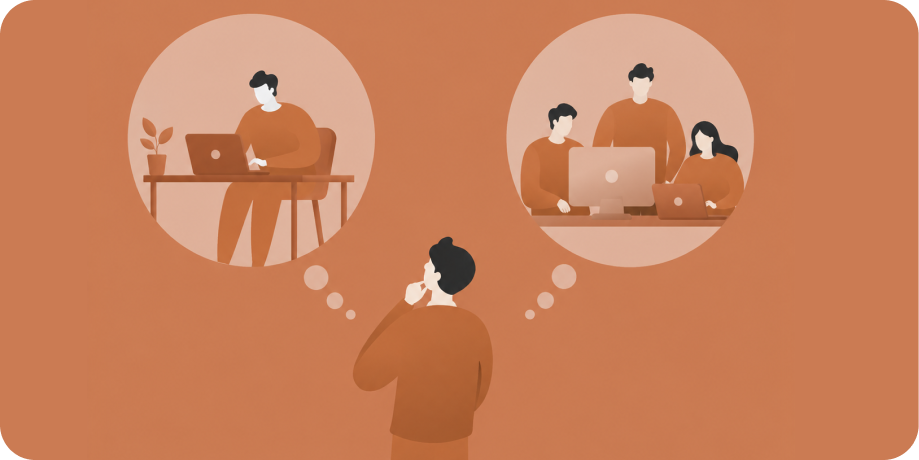
The freelancer versus agency decision comes down to scope and risk: hire a freelancer for a small, well-defined piece of work on a tight budget, and hire an agency or studio when you need a full team, broad skills, and accountability for an entire app. Freelancing is now a serious, capable profession, with Upwork reporting that 64 million Americans freelanced in 2023, adding $1.27 trillion to the United States economy. The real question is fit, not which is “better.” This guide weighs both fairly, then shows where a studio like ours earns its place.
Key Takeaways
- Freelancers are cost-effective and flexible for focused, well-scoped work with clear requirements.
- Agencies and studios bring a full multidisciplinary team, broader capacity, and end-to-end accountability.
- A single freelancer is one point of failure: if they get sick, busy, or leave, the project stalls.
- Studios cost more than one freelancer but reduce risk through senior teams, process, and continuity.
- Choose a freelancer for a feature or phase, and a studio for a complete, long-lived product.
Hiring a Freelancer
A freelancer is an independent professional you hire directly, usually for a specific skill like design or development. For a clearly scoped task, a strong freelancer is fast, affordable, and easy to engage. Many are excellent at their craft, and for the right job they are the smart, lean choice. The tradeoffs show up as scope grows and you start needing skills beyond any one person.
Pros:
- Lower cost than a full agency for a focused scope.
- Direct, one-to-one communication with the person doing the work.
- Flexible and quick to engage for short or specific tasks.
- Deep specialist skill in their particular craft.
- Easy to scale a single, well-defined piece of work.
Cons:
- One person is a single point of failure if they get sick, overbooked, or step away.
- Limited range: most cover one skill, not design, development, QA, and project management together.
- Capacity is capped, so larger or urgent work can bottleneck.
- Accountability and continuity rest entirely on one individual.
- Vetting quality and reliability is on you, and it varies widely.
Hiring an Agency or Studio
An agency or product studio gives you a full team across strategy, design, development, QA, and project management, coordinated under one roof. You trade a higher cost than a single freelancer for broad skills, real capacity, and accountability for the whole product. The catch is that quality varies between firms, so the right studio, with senior talent and clear process, matters more than the label.
Pros:
- A complete, multidisciplinary team from day one.
- Broad skills under one roof: design, development, QA, and management.
- No single point of failure, since the team covers for one another.
- Established process, project management, and continuity over the long haul.
- Accountability for the entire product, not just one slice.
Cons:
- Higher cost than a single freelancer.
- Quality varies between firms, so vetting still matters.
- A weak agency can feel distant or layered with middlemen.
- Often more than a tiny, single-feature task requires.
Freelancer vs Agency: Side-by-Side Comparison
| Factor | Freelancer | Agency / Studio |
|---|---|---|
| Cost | Lowest for focused work | Higher; a full team’s value |
| Capacity | Capped at one person | Scales across a team |
| Skill range | One specialty | Design, dev, QA, and PM together |
| Risk | Single point of failure | No single point of failure |
| Accountability | One individual | The whole studio |
| Best for | A feature, phase, or task | A complete, long-lived product |
How to Choose Between Them
Match the choice to the job. A freelancer is the right call when the work is small and well-defined, the requirements are clear, the budget is tight, and you can manage the work yourself, such as a single screen, a logo, or a bug fix. A studio is the better fit when you need a complete app built and supported, the scope spans multiple skills, timelines and accountability matter, and you cannot afford a single person becoming a bottleneck. Some teams do both: a studio for the core product and freelancers for occasional overflow. The key is being honest about scope, risk tolerance, and how much you want to manage yourself.
Where Chop Dawg Fits
When your project outgrows one person, you want a senior team without the risk, and that is where we come in. We are Chop Dawg, a remote-first, United States-led product studio building apps since 2009, with more than 500 launches and over 1 billion users reached. You get a full, senior team across strategy, design, development, QA, and project management, so there is no single point of failure: if one teammate is out, the project keeps moving. We position ourselves as a partner, not a faceless agency, and you are assigned directly to the people doing the work, with no middleman.
Get Your Free 45-Minute App Roadmap
Meet 1-on-1 with our senior product team. We’ll map your MVP or enterprise app and hand you a personalized plan—clear scope, a realistic timeline, and fixed monthly costs—for iOS & Android, web, tablets & wearables, and AI.
Our model is built to kill the two fears that make founders distrust agencies. The first is the horror story of one smooth salesperson out front while unaccountable, unseen offshore developers do the real work with zero visibility. The second is the opposite trap, a fully overseas shop with no accountability, no grasp of American business norms, and no time-zone overlap. Our answer is to be neither. You get direct access to the real senior team, never a middleman: American leadership, product and project management, and senior design, development, QA, and marketing, plus an in-house Brazilian design team and in-house development, QA, and project-management teammates in Pakistan and India, all in-house, fluent in English, and working United States hours. You choose a fully American team or a cost-effective United States-plus-offshore blend at the same quality, timeline, and experience, and the fully American option is there for government and regulated work. Weekly Zoom for design, bi-weekly for development, daily Slack, and shared Figma, GitHub, Jira, and Confluence give you 24/7 visibility into exactly who is building your app and where it stands.
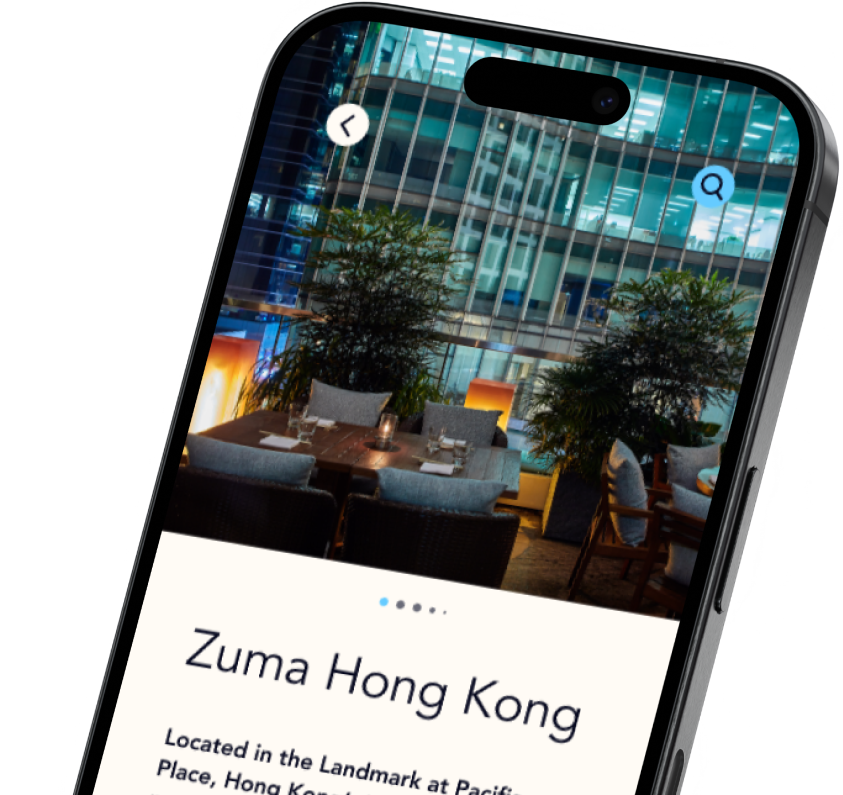
That breadth is why organizations from Siemens, Hilton, and NASA to the U.S. Navy and the NFL have trusted Chop Dawg with work no single freelancer could shoulder. That closeness is the whole point, and partners feel it. When Mangia Rewards set out to build a premium dining-membership platform, we fielded a complete team across strategy, design, iPhone and Android development, backend, and quality assurance, coordinated through weekly Zoom, daily Slack, and shared Jira and Figma. The co-founder put the difference plainly: he has every contact number, including the CEO’s, and the team is available 24/7, which is exactly the opposite of a faceless agency. Fixed-monthly pricing keeps budgeting predictable, you can end a project anytime, and you own all code and intellectual property, with nothing held hostage. Our record holds up to scrutiny, with 300+ five-star reviews across trusted directories like Clutch, GoodFirms, G2, Google, and TopDevelopers, plus a 92% partner retention rate and an Inc. 5000 listing. On our fixed-monthly model, development starts from $7,500 per month and design from $5,000 per month, with a focused MVP from about $25,000 to $60,000 all in, and complex or enterprise builds $75,000 to $150,000 or more. The full numbers are in our app development costs and pricing guide. Explore our development services and proven process, or see what we will do for you.
Frequently Asked Questions
Is a freelancer or an agency cheaper for building an app?
A single freelancer is usually cheaper for a focused, well-scoped task. For a complete app, the comparison shifts, because you would need to hire and coordinate several freelancers to match a studio’s range. An agency costs more than one freelancer but bundles design, development, QA, and management with accountability for the whole product.
When does hiring a freelancer make the most sense?
Hire a freelancer when the work is small and clearly defined, your requirements are firm, your budget is tight, and you can manage the work yourself. A single screen, a logo, a specific integration, or a bug fix are great fits. Many freelancers are excellent specialists, so for the right scope they are the smart, lean choice.
What is the biggest risk of using one freelancer for a whole app?
The single point of failure. If one person gets sick, overbooked, or leaves mid-project, everything stalls, and an entire app usually needs design, development, QA, and project management beyond any one specialty. A studio spreads that work and risk across a team, so the project keeps moving even when one person is unavailable.
How is a studio different from a faceless agency?
A strong studio assigns you directly to the senior people doing the work, with no middleman layering communication. You get transparent pricing, a steady team, and accountability for the whole product. The difference from a weak agency is closeness and ownership: you should always know who is building your app and exactly where it stands.
Will I own my code if I hire an agency?
You should, with the right partner. With Chop Dawg, you own all of your code and intellectual property outright, with nothing held hostage. Always confirm IP ownership and transfer terms in writing before work begins, whether you hire a freelancer or a studio, so the rights clearly belong to you on delivery.
Outgrown the Freelancer Stage? Let’s Talk.
If your app needs a full senior team without the risk of one person, we are your partner. Book a free 45-minute consultation with our team, and we will help you weigh freelancer versus studio honestly for your project, with no pressure. See how we work in our proven process and browse our success stories.


 21 Min