




 13 Min


Push notifications that work without getting your app flagged come down to one principle: earn the opt-in, then respect it. Ask permission at the right moment, segment your audience, keep frequency low, deep-link every message to the exact screen it promises, and personalize for relevance. Send spam and you risk a much harsher penalty than people tuning out, because Apple states that abusing push notifications “may result in revocation of your privileges.” Push remains one of the strongest retention tools in mobile: Business of Apps reports push notification benchmarks for 2026 showing opt-in and engagement still drive meaningful reactivation. This guide shows you how to use that power without burning trust or breaking the rules.
Key Takeaways
- Ask for notification permission with context, after a user sees value, not on first launch, to protect your opt-in rate.
- Segment your audience so each message is relevant; a blast to everyone is the fastest way to drive opt-outs and uninstalls.
- Keep frequency disciplined and always deep-link the notification to the exact screen it promises.
- Personalize with real user data and behavior, not just a first name, to lift engagement and reduce annoyance.
- Follow Apple’s rules strictly; misuse of push can get your notification privileges revoked, which is far worse than a few opt-outs.
Permission and Opt-In: Earn the Yes
The single biggest mistake apps make is asking for notification permission the instant the app opens, before the user understands why notifications would help. Once someone taps “Don’t Allow,” winning them back is hard. The fix is the pre-permission pattern: let users experience value first, then ask with context that explains the benefit. For a ride-scheduling app, ask after a parent books a ride so the prompt clearly ties to “get notified when your driver confirms.”
This matters because opt-in rates vary widely and are sensitive to how and when you ask. The 2026 push benchmark data shows opt-in remains a critical lever, and small timing changes move it meaningfully. Treat the permission prompt as a feature you design, not a checkbox you fire on launch. Our design team builds these moments into the user flow so the ask feels earned rather than intrusive.
Segmentation: Right Message, Right Person
Blasting the same notification to your entire user base trains people to ignore you, then to turn you off. Segmentation fixes that. Group users by behavior (active, lapsed, new), by role (a buyer versus a seller, a parent versus a driver), by lifecycle stage, and by what they actually do in the app. Then send each segment messages that make sense for them.
Our family ride-scheduling partner Commute My Kids is built around role-based access, with distinct experiences for parents, drivers, and staff. That structure is exactly what good push segmentation needs: a parent gets a pickup confirmation, a driver gets a ride assignment, and nobody gets noise meant for someone else. When notifications map to roles and real activity, they feel like a service, not marketing.
Frequency: Less Is More
Every extra low-value notification chips away at trust and pushes people toward the off switch. Set a frequency discipline: cap how many messages a user can receive in a day or week, suppress notifications that are not time-sensitive, and respect quiet hours. Promotional and re-engagement messages especially should be rationed, because they are the ones users resent when overdone.
A good test before sending any push: would this notification be genuinely useful to this specific user right now? If you cannot answer yes, do not send it. Restraint is what keeps your high-value notifications, the ones that drive real retention, landing in front of an audience that still trusts you.
Deep Links: Send Them Where You Promised
Nothing erodes trust faster than a notification that dumps the user on a generic home screen instead of the thing it promised. Every notification should deep-link directly to the relevant screen: the confirmed ride, the new message, the order update, the specific content. Deep linking is both a courtesy and a conversion tool, because it removes the friction between the tap and the payoff.
This is an engineering decision as much as a content one. The app needs proper deep-link routing so any notification can open any screen with the right context loaded. Building that in from the start is far cheaper than retrofitting it, which is why our development team plans deep-link architecture early.
Get Your Free 45-Minute App Roadmap
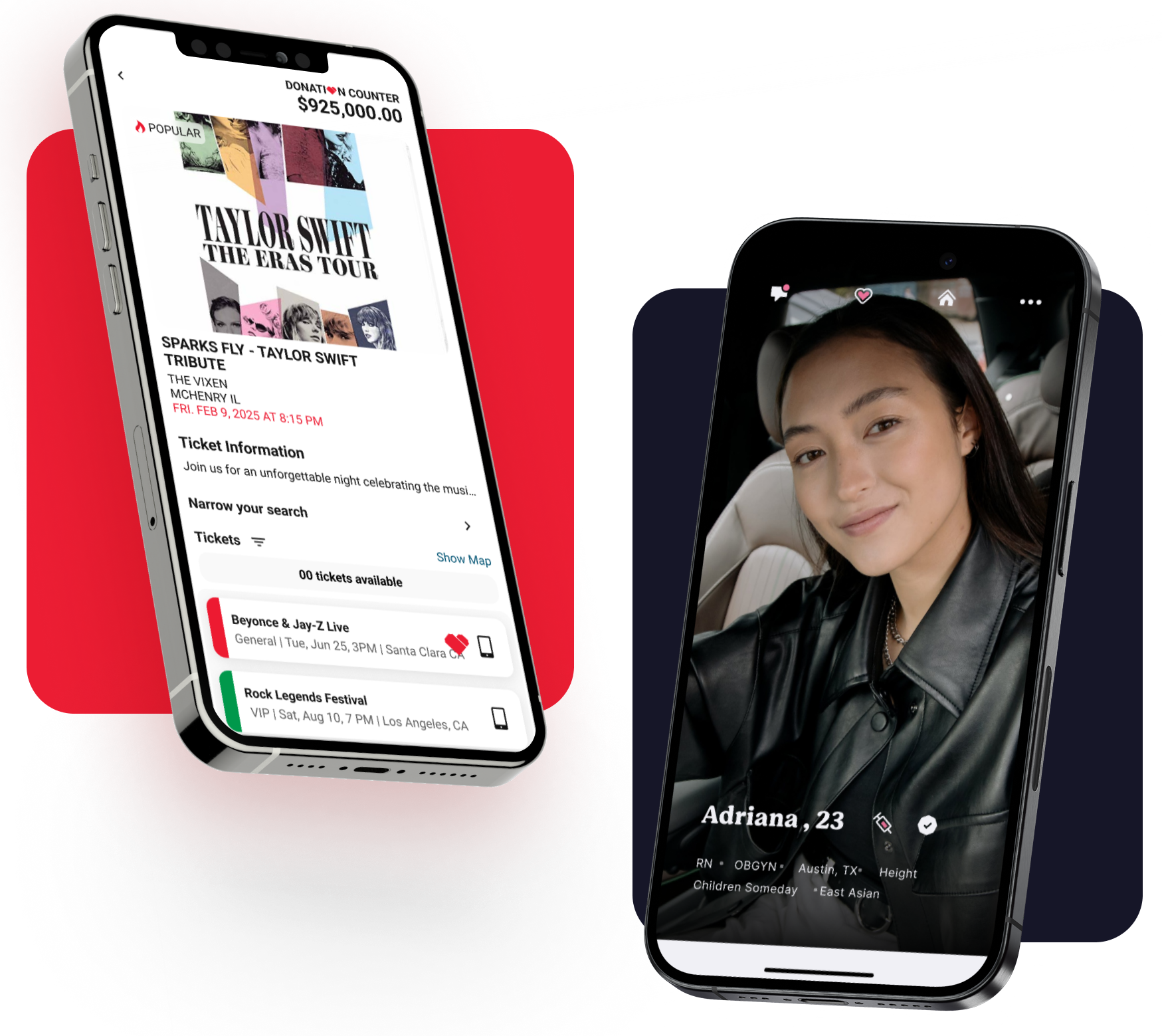
Meet 1-on-1 with our senior product team. We’ll map your MVP or enterprise app and hand you a personalized plan—clear scope, a realistic timeline, and fixed monthly costs—for iOS & Android, web, tablets & wearables, and AI.
Personalization: Relevance Over Gimmicks
Personalization is not pasting a first name into a template. It is using real behavior and data to make the message matter: what the user did last, what they left unfinished, what they care about. A reminder that a specific item is back in stock, a nudge about an abandoned booking, or an alert tied to a user’s own activity all outperform generic blasts because they are relevant.
Done well, personalization is the difference between a notification that feels helpful and one that feels like spam, even at the same send volume. Combine it with segmentation and frequency discipline and your push program becomes a retention engine instead of an uninstall trigger.
Push Notification Do and Do-Not Table
| Do | Do not |
|---|---|
| Ask permission after the user sees value, with clear context | Fire the permission prompt on first launch with no explanation |
| Segment by behavior, role, and lifecycle stage | Blast the same message to your entire user base |
| Cap frequency and respect quiet hours | Send frequent low-value or repetitive notifications |
| Deep-link every notification to the exact screen it promises | Drop users on a generic home screen after they tap |
| Personalize with real behavior and data | Treat a first name as if it were personalization |
| Get explicit opt-in for promotions and offer easy opt-out | Use push to spam, phish, or send unsolicited marketing |
| Reserve push for genuinely useful, timely messages | Make push required for the app to function |
Apple’s Rules Are Strict, So Respect Them
Apple is explicit in its App Review Guidelines: push notifications must not be required for the app to function, must not send sensitive personal information, and must not be used for promotions or direct marketing unless the user has explicitly opted in and can opt out. Crucially, Apple warns that abuse of these services “may result in revocation of your privileges,” and that you must not use Apple services to spam, phish, or send unsolicited messages.
That is a far steeper penalty than a few opt-outs. Losing push privileges, or getting your app flagged in review, can cripple retention overnight. The good news is that the rules and the best practices point the same direction: be relevant, be respectful, and be honest about consent. Do that, and push stays a powerful, compliant retention channel. For more on staying in good standing, see our coverage of mobile app development.
Frequently Asked Questions
When should my app ask for push notification permission?
Ask after the user has experienced value and in a moment where notifications obviously help, such as right after booking, ordering, or starting something they will want updates on. Avoid prompting on first launch with no context. A well-timed, clearly explained request protects your opt-in rate, which is hard to recover once someone declines.
Can my app really get penalized for sending too many notifications?
Yes. Beyond driving opt-outs and uninstalls, Apple’s guidelines state that abusing push notifications may result in revocation of your privileges, and prohibit using push to spam or send unsolicited messages. That penalty is far more damaging than losing a few subscribers, so disciplined frequency and genuine consent are both good practice and a compliance requirement.
What is a deep link and why does it matter for push?
A deep link sends a tapped notification straight to the specific in-app screen it references, such as a confirmed order or a new message, rather than the home screen. It removes friction between the tap and the payoff, which improves conversion and trust. It requires deep-link routing built into the app, ideally planned early rather than retrofitted later.
How is segmentation different from personalization?
Segmentation groups users so each group gets relevant messages, by behavior, role, or lifecycle stage. Personalization tailors the content of a message to an individual’s data and actions. They work together: segmentation decides who should hear from you, and personalization shapes what you say. Used together, they make push feel like a useful service rather than noise.
Do promotional notifications need separate consent?
Yes. Apple requires explicit opt-in for promotions and direct marketing through push, with an in-app way to opt out. Bundling marketing into general notification permission is risky. Offer a clear, separate choice for promotional messages, honor it, and keep those sends infrequent and relevant, since promotional pushes are the ones users resent most when overdone.
Are push notifications still worth it in 2026?
Absolutely. Push remains one of the most effective retention and reactivation tools in mobile, and 2026 benchmark data still shows strong opt-in and engagement when notifications are relevant. The apps that win are the ones that earn the opt-in and send disciplined, personalized, deep-linked messages, not the ones that blast everyone and hope volume works.
Let’s Build a Push Program That Retains, Not Repels
Push notifications can be your best retention channel or your fastest path to uninstalls and store trouble. The difference is strategy and clean engineering: smart opt-in timing, real segmentation, frequency discipline, deep linking, and full compliance with Apple’s rules. We build all of that into the product from the start, whether you are launching a brand-new app or fixing a noisy notification program in a product you already run. Chop Dawg is a partner, not an agency: you work directly with our senior, United States-led team plus in-house design and engineering in Brazil, Pakistan, and India, you own your code, and you budget on a fixed monthly rate, backed by 300-plus five-star reviews across trusted directories like Clutch, GoodFirms, G2, Google, and TopDevelopers. Book your free 45-minute consultation and we will design a push strategy that keeps users engaged and your app in good standing.


 15 Min