













 10 Min


Choosing an enterprise app development partner in the U.S. comes down to five things: proven security and compliance, the ability to scale, real client references, clear service-level agreements, and a communication style your team can live with for a year or more. Get those right and you avoid the costly rebuilds that sink so many enterprise projects. With the global enterprise software market on track to reach $750.03 billion by 2033 at a 12.8% CAGR (Grand View Research), the stakes for picking the right partner have never been higher. This guide gives you the checklist, the red flags, and a worked example.
Key Takeaways
- Vet security and compliance first: ask for HIPAA, SOC 2, and GDPR experience in writing, not just a sales claim.
- Confirm the partner can scale your app and your engagement as needs grow.
- Always check references and verified reviews on platforms like Clutch and GoodFirms.
- Insist on clear service-level agreements (SLAs) covering response times, uptime, and post-launch support.
- Watch for red flags: vague pricing, no real case studies, weak communication, and unrealistic promises.
The Enterprise Partner Checklist
Use this checklist to compare vendors apples to apples. Each item maps to a risk that shows up later if you skip it, so treat them as must-haves rather than nice-to-haves.
| Criterion | What to Ask For | Why It Matters |
|---|---|---|
| Security and compliance | Proof of HIPAA, SOC 2, GDPR, or Payment Card Industry Data Security Standard (PCI DSS) work | Regulated data demands it; a breach is catastrophic |
| Scalability | Examples of apps serving high user volumes | Your platform must grow without breaking |
| References | Verified reviews and direct client contacts | Past performance predicts future delivery |
| SLAs | Written response times, uptime, support terms | Defines accountability after launch |
| Communication | Cadence, tools, and a dedicated point of contact | Most delays trace back to poor communication |
| Full-service capability | Strategy, design, dev, QA (quality assurance), launch, maintenance | Fewer handoffs means fewer gaps |
For a deeper list of interview questions, our guide on questions to ask an app development agency pairs well with this checklist.
Security and Compliance Come First
For enterprise apps, security is not a feature you bolt on later. It shapes the architecture from day one. Ask any candidate how they handle encryption, access control, audit logging, and data residency. If your industry is regulated, ask for specific HIPAA, SOC 2, or PCI DSS project experience and how they passed audits. A partner who gives vague answers here is a partner who will learn compliance on your dime, and that is a risk no enterprise should take.
Can They Scale With You?
Scalability runs in two directions. First, the app itself: can the partner architect for millions of users, peak loads, and future feature growth without a costly rewrite? Second, the engagement: can they staff up senior engineers, designers, and QA when your roadmap expands? A boutique shop that does great work but cannot add capacity may stall your second phase. Look for a team with both technical depth and bench strength.
References and Verified Reviews
Claims are easy; proof is harder. Ask for two or three references in industries close to yours and actually call them. Then verify the partner’s reputation on independent platforms. Reviews on Clutch, GoodFirms, and DesignRush are vetted, which makes them far more reliable than testimonials on a vendor’s own site. Pay attention to retention: a high percentage of repeat clients signals a partner worth keeping. Our overview on choosing the best app development company walks through how to read these signals.
SLAs and Post-Launch Support
The launch is the start, not the finish. A strong enterprise partner offers clear service-level agreements: how fast they respond to issues, what uptime they target, and what ongoing maintenance includes. Ask whether bug fixes and monitoring after launch are covered or billed separately. Vague support terms are a common source of friction and surprise costs, so get the specifics in writing before you sign.
Get Your Free 45-Minute App Roadmap
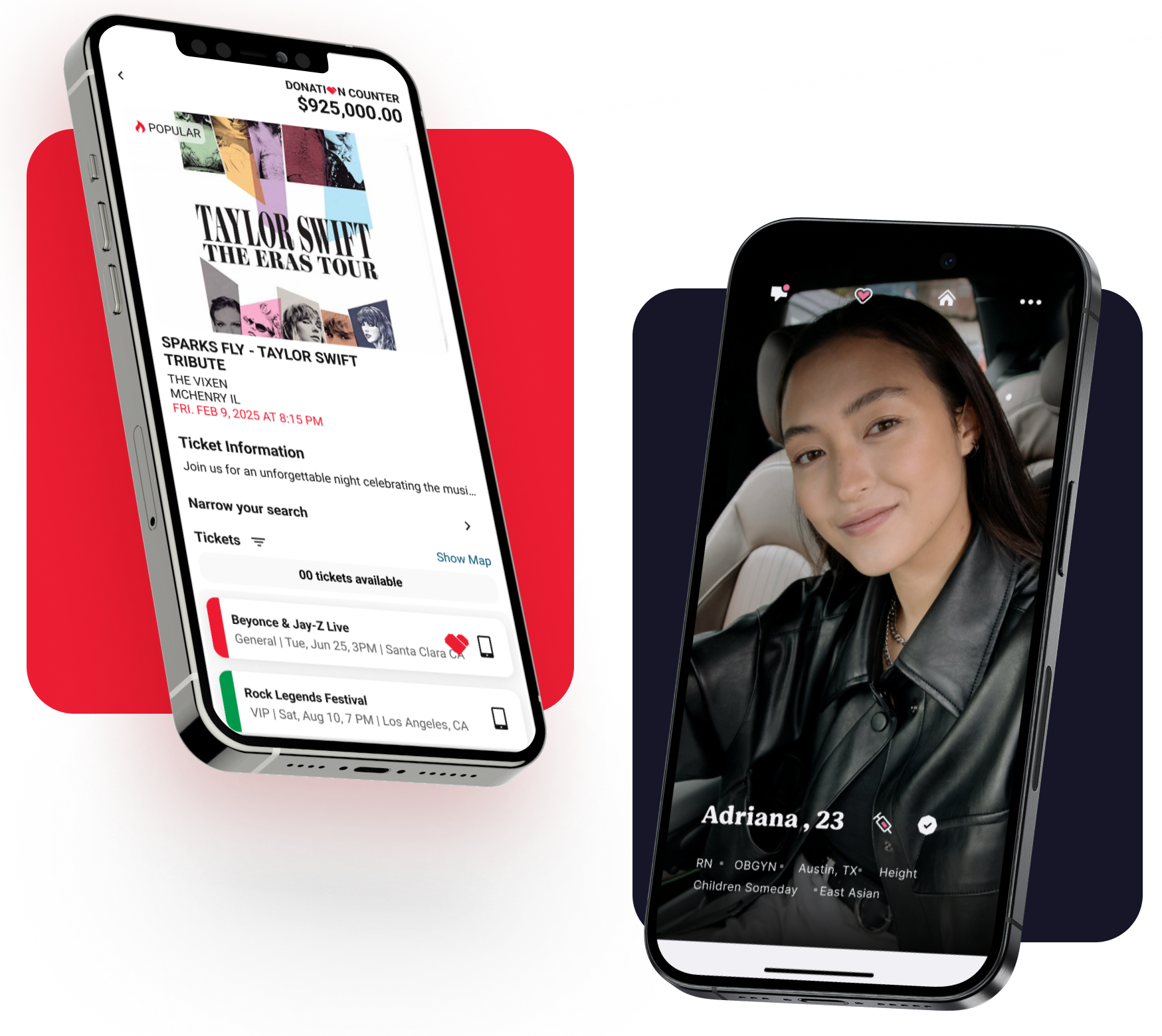
Meet 1-on-1 with our senior product team. We’ll map your MVP or enterprise app and hand you a personalized plan—clear scope, a realistic timeline, and fixed monthly costs—for iOS & Android, web, tablets & wearables, and AI.
Red Flags to Walk Away From
Some warning signs are worth ending a conversation over. Vague or shifting pricing means you cannot budget. No real case studies means no proof of delivery. Poor responsiveness during the sales process predicts poor responsiveness once you are a client. And promises that sound too good, like a complex enterprise app in six weeks for $30,000, signal a partner who either misunderstands your needs or is telling you what you want to hear. Trust the partner who gives you honest, sometimes inconvenient, answers.
Chop Dawg as a Worked Example
Here is how we, Chop Dawg, stack up against that checklist. On security and compliance, we build to HIPAA, GDPR, and SOC 2 standards, proven on platforms like The Art of Medicine, a HIPAA-compliant prescription management app. On scale and references, we have launched 500 plus products used by more than a billion people, including the City of Peachtree Corners smart city platform, the Ninth Wave enterprise-grade open finance developer portal, and the C.A. Short employee recognition platform. Those are exactly the kind of named, callable references an enterprise checklist should demand.
On references and reviews, we hold 300 plus five-star reviews across trusted directories like Clutch, GoodFirms, G2, Google, DesignRush, Business of Apps, and TopDevelopers, with 92% of our partners returning for repeat work and recognition as a multiple-time award-winning, Inc. 5000 honoree. On SLAs and support, we offer transparent fixed-monthly budgets with maintenance from $2,500 per month, a free bug-and-maintenance warranty, a shared Slack channel for daily contact, and weekly Zoom on design with bi-weekly Zoom on development, plus Figma, GitHub, Jira, and Confluence for 24/7 visibility. You own your code and IP outright and can end a project at any time. We are US-based and US-led, with an American team for leadership, product and project management, senior development, design, and QA. That team is complemented by an in-house Brazilian design team and in-house development, QA, and project-management teams in Pakistan and India, all in-house, fluent in English, and assigned directly with no middleman or subcontractor. So you can choose a fully American team or a cost-effective US-plus-offshore blend with the same quality and timelines. That directly defuses the two enterprise nightmares: the agency that parades one American salesperson while concealed offshore developers build with zero accountability, and the fully overseas vendor that does not grasp American business norms or share your working hours. You always have direct access to the senior people doing the work. Every engagement opens with a free 45-minute strategy call and the most comprehensive proposal in the industry, so there is no vague range to budget around; the full numbers are in our app development costs and pricing guide. We are a partner, not an agency, which is why organizations that have trusted Chop Dawg include NASA, the U.S. Navy, Siemens, and Hilton. See exactly how we deliver in our proven process.
Frequently Asked Questions
What is the most important factor when choosing an enterprise app partner?
Security and compliance come first, because they shape the entire architecture and a failure here is catastrophic. After that, scalability, verified references, clear SLAs, and strong communication round out the essentials. The best partner combines all five rather than excelling at one and falling short on the rest.
How do I verify an app development partner’s track record?
Call two or three client references in industries close to yours, then check independent review platforms like Clutch, GoodFirms, and DesignRush, which vet their reviews. Look for a high partner retention rate and detailed case studies. Avoid relying solely on testimonials posted on the vendor’s own website.
What red flags should make me walk away from a vendor?
Vague or shifting pricing, no real case studies, slow responsiveness during sales, and promises that sound too good to be true are all serious warning signs. A partner who cannot give you a clear scope, timeline, and reference list is one who will likely create surprises and cost overruns later.
Should an enterprise partner handle everything in-house?
Full-service capability matters because every handoff between separate vendors is a chance for gaps, delays, and finger-pointing. A partner who covers strategy, design, development, QA, launch, and maintenance keeps accountability in one place. That continuity is especially valuable on long, complex enterprise builds.
How important are SLAs for an enterprise app?
Very. SLAs define response times, uptime targets, and what post-launch support includes, which is what holds a partner accountable after the build. Without clear SLAs, you risk slow bug fixes and surprise charges. Confirm whether monitoring and bug fixes are complimentary or billed before you sign anything.
Let’s Talk About Your Enterprise Project
Put us to the test against your own checklist, whether you are an established enterprise modernizing an existing system or a growing venture choosing your first serious partner. Book a free 45-minute consultation and we will walk through security, scale, references, and SLAs so you can choose your partner with total confidence.


 15 Min