





 15 Min

To build a food delivery app in 2026, you are really building three connected apps: a customer ordering app, a driver app, and a restaurant dashboard, all tied together by menus, payments, real-time tracking, and dispatch logic. A focused minimum viable product (MVP) takes about six to eight months and lands in the $25,000 to $60,000 range, while a multi-sided platform built to scale runs $75,000 to $150,000 or more. The market justifies the ambition: revenue in the United States online food delivery market is projected to reach US$473.49 billion in 2026 according to Statista. The challenge is coordination, since an order has to flow flawlessly across three parties in real time. This guide covers the features, the build process, the stack, realistic timelines and costs, and the pitfalls.
Key Takeaways
- A food delivery app is three products in one: customer app, driver app, and restaurant dashboard, plus an admin backend that ties them together.
- Real-time order tracking and dispatch are the hardest engineering problems, so build and test them first.
- Plan for six to eight months to a quality MVP, including 24 to 48 hours for Apple App Store review in 2026, plus a one to two week buffer in case of rejections.
- Budget $25,000 to $60,000 for a focused MVP; full three-sided platforms with live dispatch and payouts run $75,000 to $150,000+.
- Use React Native for the apps, React for the dashboards, and a Node.js backend on a scalable cloud platform.
What Is a Food Delivery App and What Are the Core Features?
A food delivery app lets customers browse restaurants, order food, pay, and track delivery in real time, while restaurants manage menus and orders and drivers accept and fulfill deliveries. It is a marketplace with three sides, and every side needs its own well-designed experience.
The customer side needs:
- Restaurant discovery with search, filters, and location-based results.
- Dynamic menus with photos, modifiers, pricing, and availability.
- Cart, checkout, and secure payments, including saved cards and digital wallets.
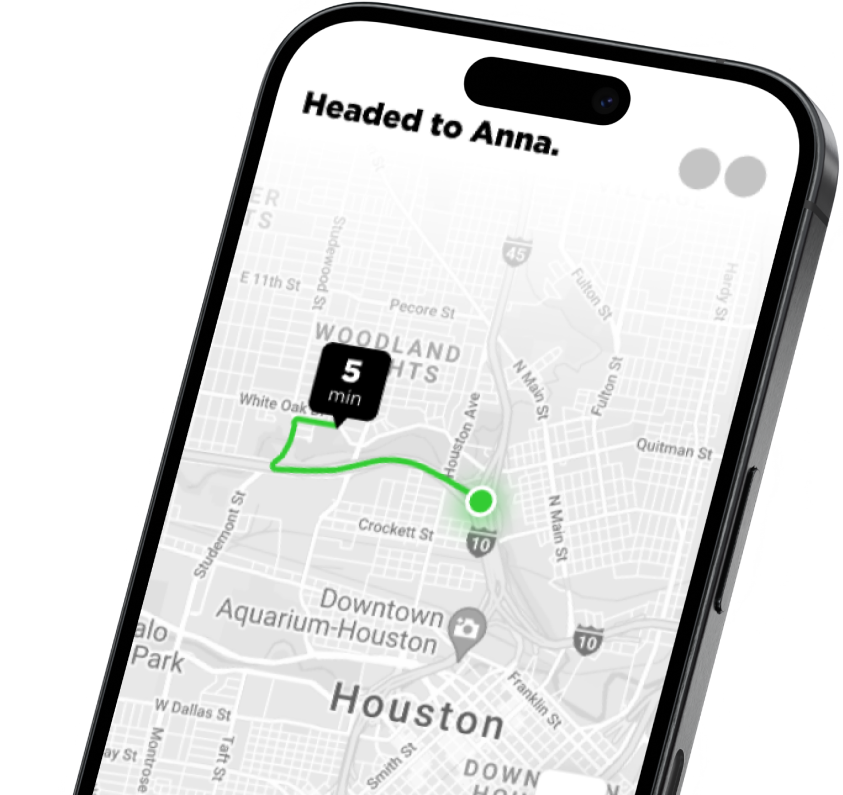
- Real-time order tracking on a live map with status updates and ETAs.
- Ratings, reviews, order history, and reordering.
The driver side needs:
- Order assignment and accept-or-decline flow.
- Turn-by-turn navigation and live location sharing.
- Earnings tracking, delivery history, and availability toggles.
The restaurant side needs:
- Menu management with items, modifiers, hours, and pricing.
- Incoming order management with accept, prep-time, and ready states.
- Sales reporting and payout visibility.
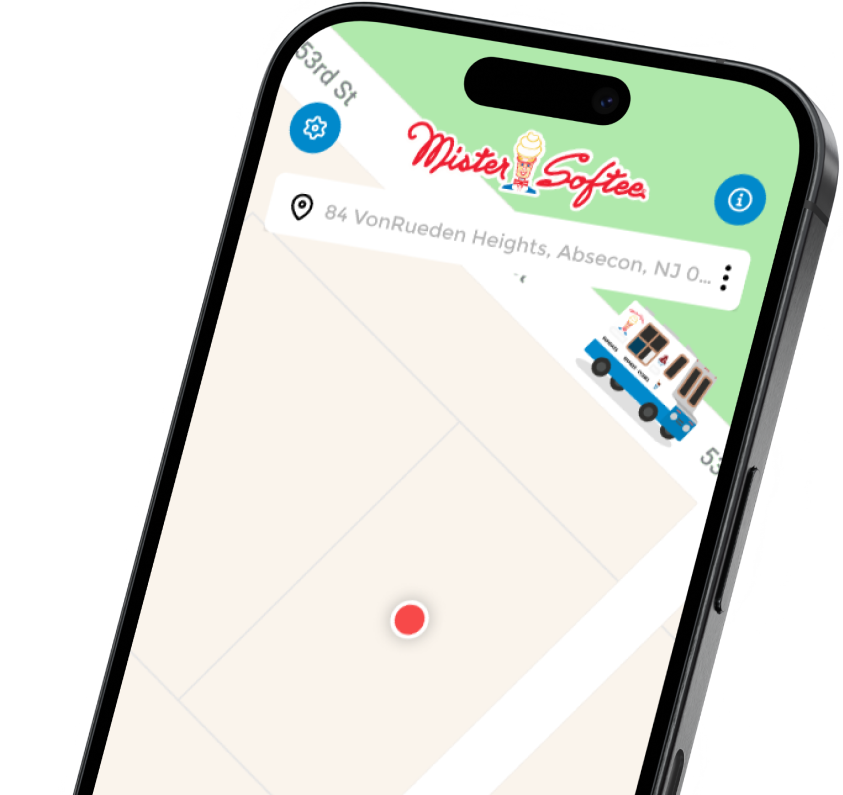
Tying it all together is an admin backend for dispatch logic, commissions, customer support, and analytics. Real-time location and live truck tracking are exactly what we built into the Mister Softee app, where customers track ice cream trucks on a live map and franchise owners manage routes and menus from a central dashboard. The restaurant-and-customer side has its own demands, and our Kitchen Stage work, a social platform built to unite food lovers and restaurants, shows how we design discovery, menus, and engagement that make the ordering side feel effortless.
How to Build a Food Delivery App: Step by Step
- Validate the idea. Decide your model: marketplace aggregator, single-restaurant ordering, ghost kitchen, or grocery and convenience. Talk to restaurants and customers in your launch area and confirm the unit economics work before building.
- Define the MVP. Pick one model and one launch market. The MVP needs ordering, payments, real-time tracking, basic dispatch, and the three core apps. Loyalty programs, scheduled orders, and subscriptions can wait.
- Design wireframes to prototype. Build a clickable, non-functional prototype (NFP) of all three experiences in Figma, since a clunky driver app or a confusing restaurant dashboard breaks the whole system. Test the order flow end to end before development. Our design services team designs all three sides in parallel.
- Choose your stack. Lock in the technology before building so real-time features and integrations are planned from the start. See the recommended stack below.
- Build the product. Develop in sprints, prioritizing the order lifecycle and real-time tracking first because they touch all three apps. Integrate payments, maps, and push notifications early.
- Test and run QA. Test the full order flow across customer, driver, and restaurant simultaneously. Simulate peak load, dropped connections, canceled orders, and failed payments. A thorough QA pass is essential when three apps must stay in sync.
- Launch and clear Apple App Store review. You will submit multiple apps, so budget 24 to 48 hours for review in 2026, plus a one to two week buffer for any rejections, and prepare for questions about location use, payments, and background tracking on the driver app.
- Iterate after launch. Track order completion time, driver utilization, restaurant acceptance rates, and customer retention. Refine dispatch logic and ETAs with real delivery data.
Recommended Tech Stack
- React Native for the customer and driver apps on iOS and Android, so you maintain one codebase per app instead of four.
- Native Swift and Kotlin modules for background location, navigation, and battery-efficient tracking on the driver app, where native performance matters most.
- React for the restaurant dashboard and admin backend, where a fast, data-heavy web interface is the right tool.
- Node.js for the backend, real-time order events, and dispatch, since it handles many concurrent connections and live updates efficiently.
- Amazon Web Services (AWS), Google Cloud Platform, or Microsoft Azure for hosting, mapping and geolocation services, push notifications, and the scaling you need at dinner-rush peaks.
We do not recommend no-code platforms or Flutter for a marketplace this real-time and integration-heavy; live tracking, dispatch, and split payments need the control of a custom React Native and Node.js build. Explore our development services.
Get Your Free 45-Minute App Roadmap
Meet 1-on-1 with our senior product team. We’ll map your MVP or enterprise app and hand you a personalized plan—clear scope, a realistic timeline, and fixed monthly costs—for iOS & Android, web, tablets & wearables, and AI.
Realistic Timeline and Cost Band
| Phase | Timeline | Cost Band |
|---|---|---|
| Discovery, strategy, and planning | About 1 month | $6,000 to $14,000 |
| UX/UI design for three apps | 1 to 2 months | $10,000 to $20,000 |
| Development and QA (MVP) | 4 to 5 months | $9,000 to $26,000 |
| Apple App Store review and launch | About 1 to 2 weeks (24 to 48 hour review, buffer for rejections) | Included above |
| Focused MVP total | 6 to 8 months | $25,000 to $60,000 |
| Full multi-sided platform at scale | 8 to 12 months | $75,000 to $150,000+ |
These bands are realistic in 2026 partly because artificial intelligence (AI) and agent-based coding has cut the cost and timeline of comparable 2020 to 2023 builds roughly in half. For more detail, see our app development costs and pricing guide and our case study on the true cost of building an app in 2026.
Compliance and Pitfalls
Payments are the first compliance hurdle. Use a PCI-compliant payment processor so card data never touches your servers directly, and plan how you split payouts between the platform, restaurants, and drivers. Driver classification, food safety rules, and local delivery regulations vary by market, so know the rules where you launch. Apple and Google also scrutinize background location use heavily, so your driver app must justify and disclose it clearly.
The traps that catch food delivery teams:
- Underestimating real-time complexity. Live tracking and dispatch across three apps are far harder than a single ordering screen. Build and stress-test them first, not last.
- Undefined edge cases. What happens when a driver cancels mid-delivery, a restaurant rejects an order, an address is wrong, or a payment fails after pickup? Map these flows early or they become support nightmares.
- Scope creep. Loyalty, subscriptions, scheduled orders, and group ordering all add value later, but each one delays launch. Ship the core order loop first.
- Cold-start liquidity. A delivery marketplace needs enough restaurants, drivers, and customers in one area to function. Launch narrow and dense, not wide and thin.
- Apple App Store rejection. Unclear location justification or payment handling can stall your launch. Prepare your compliance story before submitting.
Frequently Asked Questions
How much does it cost to build a food delivery app in 2026?
A focused MVP with customer, driver, and restaurant apps typically costs $25,000 to $60,000. A full multi-sided platform built to scale, with advanced dispatch and payouts, runs $75,000 to $150,000 or more. Real-time tracking and dispatch are the biggest cost drivers.
How long does it take to build a food delivery app?
Plan for six to eight months to a quality MVP. That includes about a month of planning, one to two months designing three apps, four to five months of development and QA, and 24 to 48 hours for Apple App Store review in 2026 plus a one to two week buffer for any rejections.
How many apps do I actually need?
Usually three: a customer ordering app, a driver app, and a restaurant dashboard, plus an admin backend for dispatch, commissions, and support. They share a backend but each needs its own purpose-built experience.
How does real-time order tracking work?
The driver app shares live location through the backend, which pushes updates to the customer app over real-time connections, displayed on a live map with status changes and ETAs. We built exactly this kind of live map tracking into the Mister Softee app.
How do food delivery apps handle payments?
Through a PCI-compliant payment processor that tokenizes card data, with the backend splitting each payment between the platform, restaurant, and driver. Build payments and payouts early, since retrofitting split payments later is difficult and risky.
What is the hardest part of building a food delivery app?
Keeping three apps in sync in real time. An order must move from customer to restaurant to driver and back without losing state, even when connections drop or someone cancels. Dispatch logic and live tracking are where the real engineering lives.
Should I build native or cross-platform?
React Native covers iOS and Android per app from one codebase, which fits most budgets. Add native Swift and Kotlin modules for background location and navigation on the driver app, where battery efficiency and accuracy matter most.
Build Your Food Delivery App With a Proven Partner
A food delivery platform is a coordination problem as much as a coding problem, and the difference between a smooth launch and a stalled one is experience with real-time, multi-sided systems. Since 2009, Chop Dawg has launched 500+ products used by more than a billion people worldwide, for both first-time founders with an idea and established operators scaling or modernizing an existing platform. We work as a partner, not an agency, with a United States-headquartered, United States-led team for leadership, project management, and senior design, development, and QA. That core team is backed by our in-house Brazilian design team and in-house development and QA teams in India and Pakistan, everyone in-house and assigned directly with no middleman. You also get weekly and bi-weekly Zoom calls, daily Slack, and Figma, GitHub, Jira, and Confluence for full visibility, fixed monthly pricing, and full ownership of your code and intellectual property (IP). We have shipped live tracking and dispatch in projects like Mister Softee and built restaurant-and-rewards experiences like Mangia Rewards, which earned its place across hundreds of restaurants, so we know where these builds get hard. Food and restaurant brands that have trusted Chop Dawg include Zuma Restaurants and Wawa, alongside the founders we partner with every day. We will also be honest about the part many teams forget: building the apps is only half the equation, since a delivery marketplace still has to be marketed, seeded, and distributed to reach the density it needs, and we will help you plan for that too. That experience shows up in 300+ five-star reviews across trusted directories like Clutch, GoodFirms, G2, Google, and TopDevelopers. Book your free 45-minute consultation and we will scope your three apps, timeline, and budget together. Learn more about what we will do for you or explore our success stories.


 15 Min