






















 17 Min


Your technicians are in the field. Some are in basements without cell signal. Others are in rural areas where coverage is spotty. One is out of range entirely for hours at a time. Your dispatcher is calling technicians on their phones to ask about job status, sending paper tickets via text, and manually updating timesheets based on photos technicians email back.
This is where most field service businesses operate today. And it’s chaotic.
A modern field service or workforce management app transforms this. Technicians see jobs on their phones with customer information, requirements, and completion checklists. The dispatcher tracks real-time location without harassment. Jobs update automatically as they’re completed. Invoices generate instantly. The office has live visibility into what’s happening in the field.
Building this right requires understanding the unique challenges of field service work. Let’s break down what you need to know.
The Core Challenge: Offline-First Architecture
The biggest mistake companies make when building field service apps is assuming workers have reliable internet. They don’t.
Your technician arrives at a job in a basement. No signal. The app needs to work. They need to see the job details, customer information, required parts, and what needs to be done. They complete the job, take photos, capture the customer’s signature, and mark the job done. All of this happens offline.
When they regain signal, the app syncs. Job status updates the dispatcher. Photos upload. The invoice generates. The timesheet reflects their work.
This is called offline-first architecture. The app works perfectly well without the internet. It stores data locally and syncs when connectivity returns. This is a fundamental requirement for field service apps that’s often overlooked.
Building offline-first is more complex than a typical web app. You need local databases (SQLite), intelligent sync strategies that handle conflicts, and UI that adapts based on connectivity. But without it, your app fails when your technicians need it most.
The Core Features You Actually Need
Field service apps often try to do too much. Focus on what drives real business value.
Job Scheduling and Dispatch. Technicians see their daily jobs with customer addresses, job notes, required parts, and estimated duration. The dispatcher creates and reassigns jobs, optimizes routes to minimize travel time, and communicates directly with technicians. No more phone calls figuring out who’s doing what.
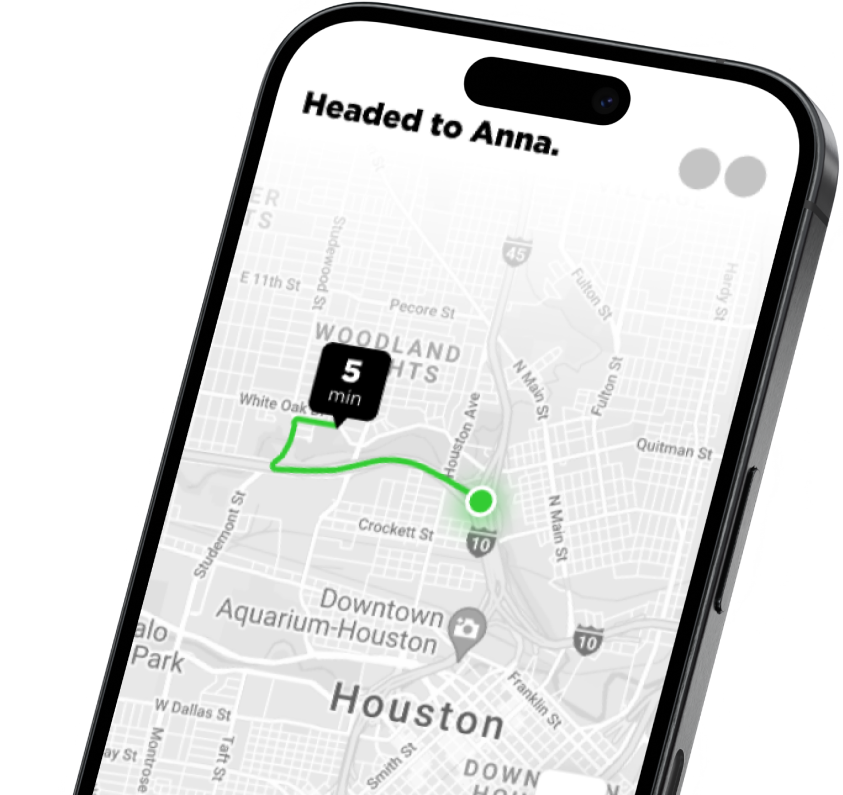
GPS Tracking and Location Services. You see where technicians are on a map. This serves multiple purposes: optimizing routes by dispatching the nearest technician, ensuring safety by knowing where your team is, and proving to customers that your technician is on the way. Google Maps Platform and Mapbox provide the foundation for this.
Digital Forms and Inspections. Instead of paper checklists, technicians complete digital forms on their phones. Checklist items, before and after photos, customer signature, notes. Everything is captured digitally and stored. This replaces binders full of paperwork.
Real-Time Communication. Dispatchers message technicians directly in the app. Technicians flag urgent issues. The system sends alerts when important events occur. This replaces the constant phone calls and text messages.
Time Tracking and Timesheets. Automatic clock-in when arriving at a job, clock-out when leaving. No manual timesheet entry. No disputes about hours worked. This data feeds directly into payroll.
Integration with Accounting and ERP Systems. When a job completes, it automatically creates an invoice. Parts used update inventory. Labor costs are recorded. This eliminates manual entry and ensures accuracy.
Why Offline-First Matters in Practice
Consider a plumber arriving at a residential job in a basement. Service providers like ServiceTitan and Jobber exist, but they’re cloud-dependent. Without signal, the technician can’t see the job details or complete it.
With a proper offline-first app, the technician downloaded the job details before leaving the office. They complete the job offline: take photos, capture the customer’s signature, write notes, log the parts used. When they leave the basement and regain signal, everything syncs automatically. The dispatcher sees the job is done. The customer sees a finished invoice. There’s no waiting for someone to manually update the system.
This matters for construction, plumbing, HVAC, electrical work, and any field service where signal is unreliable. It’s not a nice-to-have; it’s essential.
Technology Stack for Field Service Apps
Building a proper field service app requires thoughtful technology choices.
Mobile. React Native works well for both iOS and Android, reducing development cost by sharing code. Swift and Kotlin are best if you need platform-specific performance or features. Most field service apps use React Native because technicians typically use older phones or mixed devices.
Backend. Node.js and Python both handle the data synchronization complexity field service apps require. AWS, GCP, or Azure all provide the infrastructure you need. AWS AppSync is specifically designed for offline-first sync, making it particularly well-suited for field service.
Local Storage. SQLite on the phone stores job data, customer information, and historical records. When the app syncs with the server, it resolves conflicts intelligently (the most recent update usually wins, but your business logic might differ).
Maps and GPS. Integrate Google Maps Platform for routing, distance calculation, and map display. Mapbox is an alternative if you need offline maps or more customization.
Accounting and ERP Integration
Field service apps create tremendous value when they connect to your existing business systems. This is where offline-first design pays dividends.
When a technician completes a job offline and sync happens, the system creates an invoice in your accounting software. Parts used update inventory. Labor is logged in your payroll system. Customer contact information syncs back to your CRM.
This integration eliminates the manual steps that slow down invoicing, create errors, and leave gaps in your data. A technician finishing a job at 5 p.m. doesn’t mean accounting waits until morning to process it. The system handles it automatically.
Get Your Free 45-Minute App Roadmap
Meet 1-on-1 with our senior product team. We’ll map your MVP or enterprise app and hand you a personalized plan—clear scope, a realistic timeline, and fixed monthly costs—for iOS & Android, web, tablets & wearables, and AI.
Real-Time Communication
Dispatcher to technician communication should happen in the app, not via text or phone. The dispatcher can message a technician, call them through the app, or send notifications about job changes. Technicians can alert the dispatcher if they encounter issues or need additional parts.
This keeps communication organized and creates a record of interactions. It also means the dispatcher doesn’t need multiple phone systems or email threads. Everything flows through one platform.
Safety and Compliance Considerations
Field service apps collect sensitive data. GPS tracking reveals where technicians work and when. Digital forms might capture customer information. Photo uploads include sensitive locations.
You need clear privacy policies, secure data transmission, and proper access controls. Technicians should only see their own jobs. Customers should understand what data is collected. Data retention policies should be clear.
Consider what happens if a technician’s phone is lost or stolen. Can you remotely wipe sensitive data? Can you disable access if someone is no longer employed? These aren’t afterthoughts; they’re core features.
The Real Cost of Development
A focused field service app for a small to mid-size business costs roughly $40,000 to $80,000 depending on complexity and integration requirements.
A basic MVP (minimum viable product) with job scheduling, GPS tracking, digital forms, and time tracking is on the lower end. If you need complex integrations with existing accounting systems, more sophisticated routing optimization, or advanced analytics, the cost increases.
Compare this to existing field service platforms that charge $50 to $200 per technician per month. For a team of 20 technicians, you’re paying $12,000 to $48,000 annually. A custom app pays for itself within one to two years, and you own it.
Development Timeline and Milestones
A typical field service app development timeline follows this pattern:
Months 1 to 2: Requirements and Design. Define exactly what you need. Design the user interfaces for technicians and dispatchers. Plan the data synchronization logic.
Months 2 to 4: Core Development. Build the mobile app’s core features. Develop the backend systems. Implement offline-first sync.
Months 4 to 5: Integration and Testing. Connect to your accounting system, maps provider, and other integrations. Comprehensive testing in realistic conditions (including no signal situations).
Month 6: Pilot and Launch. Roll out with a small group of technicians. Gather feedback. Make adjustments. Launch to the full team.
This timeline assumes experienced developers and clear requirements. Ambiguous requirements or unclear integrations extend timelines.
Common Pitfalls to Avoid
Building features you don’t need. A dashboard with beautiful analytics is nice, but if your primary need is job scheduling and tracking, build that first. Advanced features can come later.
Assuming connectivity. Don’t build on the assumption that field workers have reliable internet. Design for offline-first from day one.
Ignoring user experience. Dispatchers and technicians will use this app all day. A confusing interface or slow performance makes them hate the system. Test with actual users regularly.
Poor integration planning. If the app doesn’t connect to your accounting system, you’ve replaced one manual process with another. Plan integrations early.
Inadequate security. Field service apps handle sensitive location and customer data. Security can’t be an afterthought.
Choosing a Development Partner
Field service apps require developers with specific expertise. They need to understand offline-first architecture, mobile development, real-time systems, and business logic integration.
Ask potential partners about previous field service projects. How did they handle offline sync? What integration experience do they have? Can they explain the trade-offs in their technical approach? A good partner will ask detailed questions about your business before proposing a solution.
You should also see a clear development roadmap with realistic timelines and defined milestones. Field service apps are complex enough that vague timelines are a red flag.
The Competitive Advantage
A custom field service app gives you advantages over competitors using standard platforms. You can optimize for your specific business model. You can integrate with your existing systems without awkward workarounds. You can deploy features your team needs without waiting for a vendor’s roadmap.
More importantly, you get a system that your team actually wants to use because it’s built for how you work, not how a generic vendor thinks field service should work.
Getting Started
If you’re considering building a field service app, start by documenting your current pain points. What takes your dispatcher too long? What causes errors? Where does manual work eat up hours? What would make your technicians’ jobs easier?
Then get a realistic estimate from an experienced development partner. A focused field service app for your team shouldn’t take more than 4 to 6 months and typically costs $40,000 to $80,000.
If you’re ready to explore whether custom field service software makes sense for your business, Chop Dawg has built workforce management solutions for hundreds of service companies across industries. We start with a free 45-minute consultation to understand your specific needs. Visit chopdawg.com to schedule a conversation about your project.
Frequently Asked Questions
What’s the difference between offline-first and cloud-first architecture?
Cloud-first apps require internet to function. Everything syncs to the cloud immediately. Offline-first apps work without internet by storing data locally, then syncing when connectivity returns. For field service, offline-first is essential because technicians frequently lose signal. Cloud-first causes your app to fail exactly when workers need it most.
How much does a field service app cost?
A focused field service app typically costs $40,000 to $80,000 depending on features and integrations. This is a one-time development cost. Most field service platforms charge $50 to $200 per technician monthly, so a custom app often pays for itself within one to two years while giving you complete control over features.
How long does it take to build a field service app?
A focused field service app typically takes 4 to 6 months from requirements to launch. Basic apps with core scheduling and GPS tracking are on the faster end. Complex integrations with multiple systems take longer. A good development team will give you a specific timeline based on your requirements.
Can we integrate a custom field service app with our existing accounting system?
Yes. A custom app should integrate with whatever accounting or ERP system you use. When a technician completes a job, it automatically creates an invoice, updates inventory, and logs labor. This is one of the major advantages of custom development over off-the-shelf platforms.
What happens if a technician’s phone is lost or stolen?
A well-designed field service app should allow you to remotely wipe sensitive data or disable access. This is a critical security feature that should be built into the app from the start, not added later. Talk to your development partner about device security and access controls.
Do we need custom development or will an existing platform work?
Existing platforms like ServiceTitan and Jobber work well for many field service businesses. Consider custom development if you have unique business requirements, need specific integrations, want offline-first functionality, or have a team size large enough that per-technician fees become expensive.
How do we ensure the app actually works in the field?
Test extensively with real technicians in real field conditions, including areas with no signal. Have beta users work with the app for 2 to 4 weeks before full launch. Gather feedback on usability, performance, and whether it actually solves the problems you intended to solve.
What’s the difference between a field service app and workforce management?
Field service apps focus on job scheduling, tracking, and completion in the field (for trades, delivery, service calls). Workforce management is broader, including scheduling, labor cost optimization, capacity planning, and performance analytics across various work types. A field service app can be part of a larger workforce management system.


 15 Min