















 14 Min

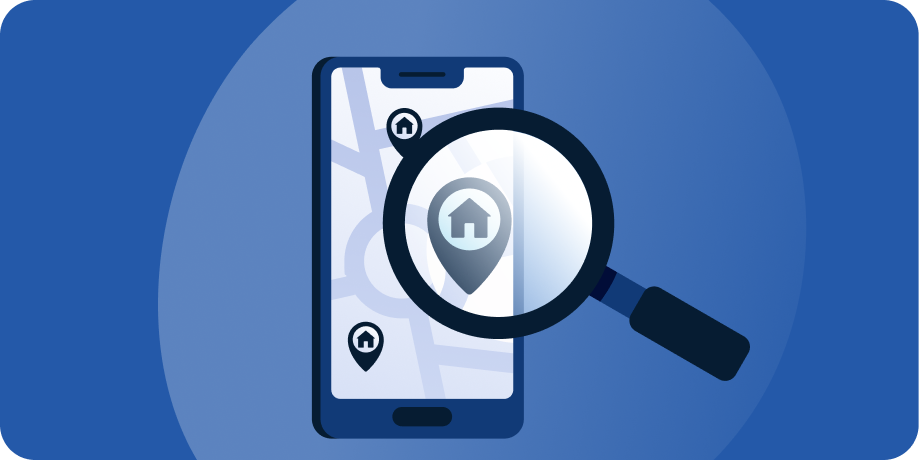
To build a booking and reservation app in 2026, you need a focused core: real-time availability, a smooth booking flow, payments, automated confirmations and reminders, and an admin dashboard for the business managing the calendar. A quality minimum viable product realistically takes about six to eight months and lands in the $25K to $75K range for a focused build, or $75K to $150K and up for multi-location or marketplace platforms. The demand is clear: according to SchedulingKit’s 2026 online booking statistics, 82% of consumers prefer to book online rather than call. The challenge is not the calendar widget. It is preventing double bookings, reducing no-shows, and making reservations feel effortless. This guide shows you how to build a booking app people trust.
Key Takeaways
- A focused booking and reservation minimum viable product takes roughly six to eight months and $25K to $75K; multi-location or marketplace platforms run $75K to $150K and up.
- Real-time availability and conflict-free scheduling are the foundation: a single double booking erodes trust faster than any feature can rebuild it.
- Automated confirmations, reminders, and easy rescheduling cut no-shows and save staff hours of phone tag every week.
- React Native with native Swift or Kotlin where needed, a React web app and admin dashboard, and a Node.js back end on Google Cloud Platform, Amazon Web Services, or Microsoft Azure handle real-time load reliably.
- Decide early whether you are building for one business, many locations, or a two-sided marketplace, because that choice shapes the entire architecture.
What Is a Booking and Reservation App and What Are the Core Features?
A booking and reservation app lets customers see what is available and reserve it in real time, whether that is a restaurant table, a hotel room, a salon chair, a class spot, an appointment, or equipment. On the other side, it gives the business a reliable way to manage its calendar, capacity, and customers without the friction of phone calls and paper books.
The core features most booking apps need are: customer profiles and authentication, a real-time availability calendar, a guided booking flow, secure payments or deposits, automated confirmations and reminders via push notification and email, easy rescheduling and cancellation, and an admin dashboard where staff manage bookings, hours, capacity, and customer preferences. More advanced builds add waitlists, recurring reservations, loyalty rewards, multi-location management, and analytics on peak times and party sizes.
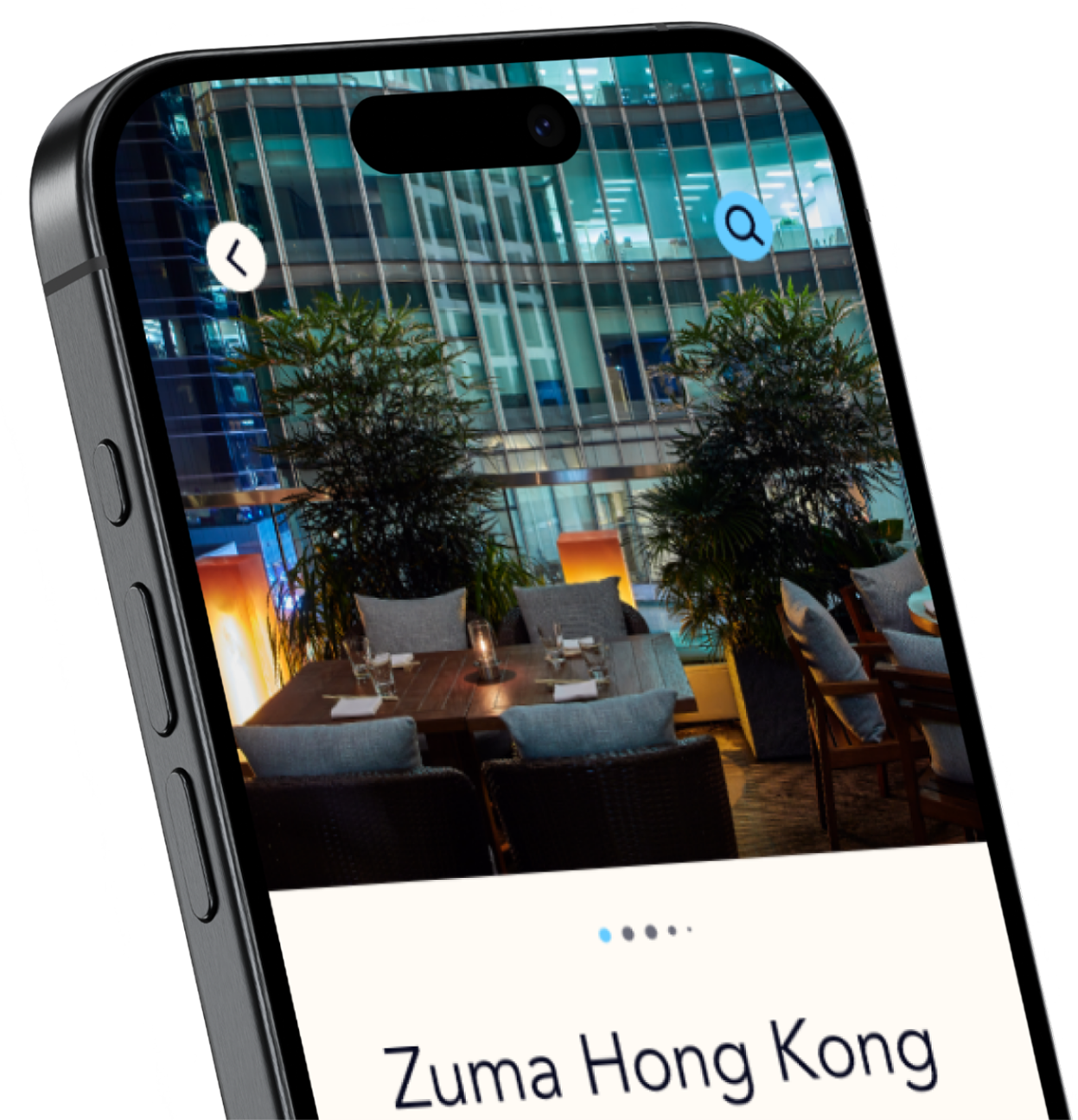
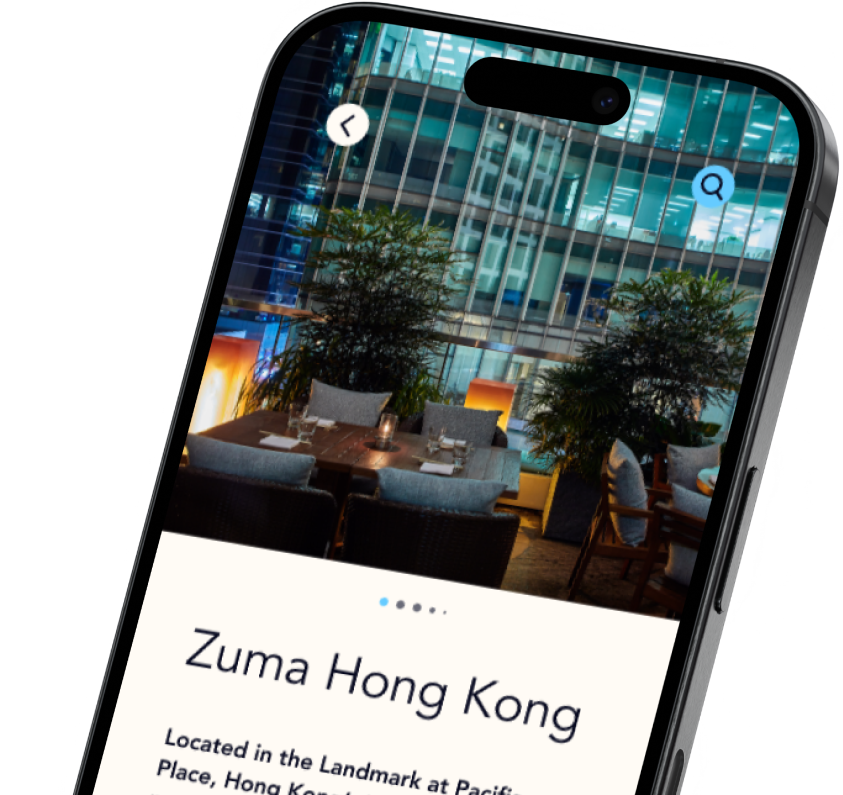
We built exactly this kind of experience for Zuma, the globally renowned Japanese izakaya-inspired restaurant brand operating across more than 20 cities. Their VIP platform handles priority reservations, personalized diner profiles, and curated menus, with a custom reservation engine integrated into their existing systems through application programming interfaces (APIs) like SevenRooms. An admin portal lets managers sync menus, set booking limits, and track usage analytics across locations. The result was a reported 95% improvement in VIP reservation efficiency, the kind of measurable win a well-built booking flow delivers. We have also built dining discovery and engagement for Kitchen Stage, a social platform connecting food lovers and restaurants, which shares the same foundations of real-time data, clean profiles, and reliable scheduling that any reservation product depends on.
Get Your Free 45-Minute App Roadmap
Meet 1-on-1 with our senior product team. We’ll map your MVP or enterprise app and hand you a personalized plan—clear scope, a realistic timeline, and fixed monthly costs—for iOS & Android, web, tablets & wearables, and AI.
How to Build a Booking and Reservation App: Step by Step
- Start with the idea and validate the demand. Be specific about who books what and how often. A booking app for a single high-end restaurant has very different needs than a marketplace connecting hundreds of providers. Talk to both the businesses and the customers you intend to serve.
- Define the minimum viable product. Pin down the smallest end-to-end flow that works: find availability, book, pay or deposit, get confirmed, get reminded. Push waitlists, loyalty programs, and multi-location dashboards to a roadmap until the core loop is proven.
- Design wireframes, then a clickable prototype. Map the customer booking flow and the admin side as wireframes, then build a clickable, non-functional prototype (NFP) in Figma. An NFP is a clickable mockup of your screens and flows, not a working coded app. Test it with real users, because the moment of confusion in a booking flow is the moment of abandonment.
- Choose your tech stack. Select a stack that handles real-time availability, concurrent bookings, and payments without conflicts, and that serves mobile and web from one core codebase. (Our recommended stack is below.)
- Build the product. Senior engineers build the availability engine, booking flow, payment integration, notification system, and admin dashboard in iterative sprints, wiring in calendar logic that prevents double bookings under load.
- Test and run quality assurance. Test concurrent bookings, time zones, cancellations, refunds, and reminder delivery on real devices. The make-or-break test is simple: two people trying to book the last slot at the same time should never both succeed.
- Launch and clear store review. Submit to the Apple App Store and Google Play Store, allowing 24 to 48 hours in 2026 for review, plus a one to two week buffer for any rejections. Coordinate launch with the businesses whose inventory you are listing so day-one availability is real.
- Iterate from real data. Track booking completion rates, no-show rates, peak demand, and where customers drop off. Use that to refine reminders, deposit rules, and the flow itself.
Recommended Tech Stack
For a booking and reservation app that stays reliable under real-time demand, we recommend React Native for the iOS and Android customer apps from a single core codebase, with native Swift or Kotlin modules where you need them. Use React for the web booking experience and the staff admin dashboard, and Node.js for the back end powering availability, the booking engine, payments, and notifications. Host on Google Cloud Platform, Amazon Web Services, or Microsoft Azure so the system scales during demand spikes and keeps real-time calendars in sync. This is the same class of architecture behind the Zuma platform, where a custom reservation engine connects to third-party systems through APIs and uses real-time triggers and caching to deliver fast, reliable bookings across continents.
Timeline and Cost by Phase
| Phase | Typical Timeline | Cost Band |
|---|---|---|
| Idea validation and strategy | 2 to 4 weeks | Included in planning |
| Wireframes to clickable prototype | 3 to 6 weeks | $8K to $20K |
| Focused MVP build (single business or vertical) | 4 to 6 months | $25K to $75K |
| Complex platform (multi-location or marketplace) | 6 to 9 months | $75K to $150K+ |
| Testing, QA, and store launch | 4 to 8 weeks | Included in build |
| Post-launch iteration and growth | Ongoing | Fixed-monthly |
Artificial intelligence (AI) and agent-assisted coding tools like Claude Code and Cursor, with senior engineers reviewing and editing every change, have cut typical 2020-to-2023 build costs and timelines by roughly half. See our app development costs and pricing to see where your booking app fits.
Common Pitfalls
- Double bookings under concurrency. The single most damaging bug in a booking app is letting two customers grab the same slot. Your availability engine must lock inventory correctly when many people book at once.
- Ignoring no-shows. Without reminders, deposits, or easy rescheduling, no-shows quietly drain revenue. Automated reminders and a frictionless cancel-and-rebook flow protect the business.
- A clunky booking flow. Every extra tap, form field, or unclear step loses customers. The booking path should be obvious, fast, and forgiving on mobile.
- Forgetting the business side. A beautiful customer app with a painful admin dashboard fails, because staff are the ones who use it every day. Design both sides with equal care.
- Underestimating time zones and edge cases. Bookings across time zones, daylight saving changes, partial availability, and group reservations create real complexity. Plan for them before launch, not after a customer complaint.
Frequently Asked Questions
How much does it cost to build a booking and reservation app in 2026?
A focused minimum viable product for a single business or vertical typically costs $25K to $75K. Multi-location systems and two-sided marketplaces run $75K to $150K and up. AI-assisted development has cut earlier build costs and timelines by roughly half.
How long does it take to build a booking app?
Plan on about six to eight months for a quality minimum viable product, covering discovery, design, development, and quality assurance. Add 24 to 48 hours in 2026 for Apple App Store and Google Play Store review, plus a one to two week buffer for any rejections, before your public launch.
What features does a booking app need at launch?
At minimum: real-time availability, a guided booking flow, payments or deposits, automated confirmations and reminders, easy rescheduling, and an admin dashboard for the business. Conflict-free scheduling under concurrent load is non-negotiable, because trust depends on it.
Should my booking app integrate with existing systems?
Often, yes. Many businesses already use reservation, point-of-sale, or calendar systems, and connecting through application programming interfaces (APIs) keeps availability accurate. We did this for Zuma by integrating a custom engine with their existing reservation infrastructure, so staff worked from one source of truth.
How do booking apps reduce no-shows?
The proven tools are automated reminders by push and email, required deposits or card-on-file for high-demand slots, simple self-service rescheduling, and waitlists that fill canceled spots. Together they protect revenue and keep calendars full without extra staff effort.
Can one app serve multiple locations or providers?
Yes, but multi-location and marketplace builds are more complex, with per-location settings, separate calendars, and role-based admin access. Decide on this scope early, because it shapes the architecture, the dashboard, and the cost from the start.
Build Your Booking App with a Partner Who Has Done It
A booking and reservation app succeeds when customers trust it and staff rely on it, and that comes from getting availability, payments, and reminders exactly right. That is how we approach every product as a true partner, not an agency. Since 2009, our United States-headquartered, United States-led team has shipped 500+ products used by more than a billion people, with 92% of partners returning for their next build and 300+ five-star reviews across trusted directories like Clutch, GoodFirms, G2, Google, and TopDevelopers. Hospitality and reservation-driven brands that have trusted Chop Dawg include Hilton and Zuma Restaurants, alongside the founders we help launch new booking products. Leadership, product and project management, and senior development, design, and QA sit on the American team, complemented by an in-house Brazilian design team and in-house development, QA, and project-management teams in Pakistan and India, every one of them in-house Chop Dawg rather than a subcontractor or middleman and assigned directly to your project. That lets you keep a fully-American team for government or regulated work, or pick a cost-effective United States-plus-offshore blend with the same quality, timelines, and experience. In every case you own all the code and intellectual property, work directly with the real senior people, and stay in the loop through weekly to bi-weekly Zoom calls and daily Slack. Whether you are a founder launching a new booking product or an established business replacing phone-and-paper scheduling with a dependable app, book your free 45-minute consultation and let’s plan it together. Want to see how we work first? Explore what we’ll do for you, our proven process, and our success stories.


 21 Min